Floods kill more drivers than most people realize. When water rises faster than expected, traditional SUVs become death traps. Engine compartments flood, electrical systems fail, and doors won’t open against water pressure. Every year, drivers drown in vehicles that should have offered escape.
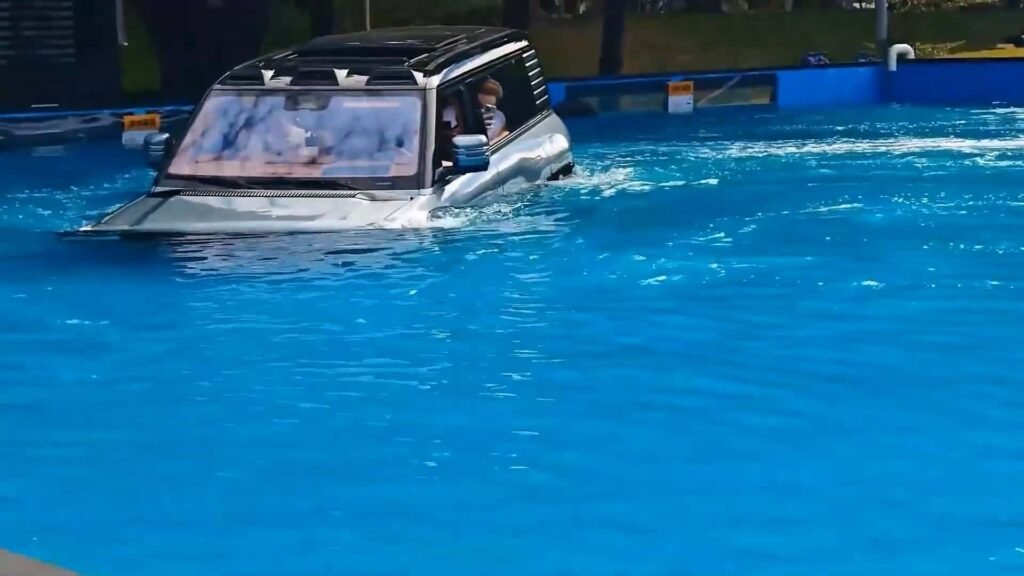
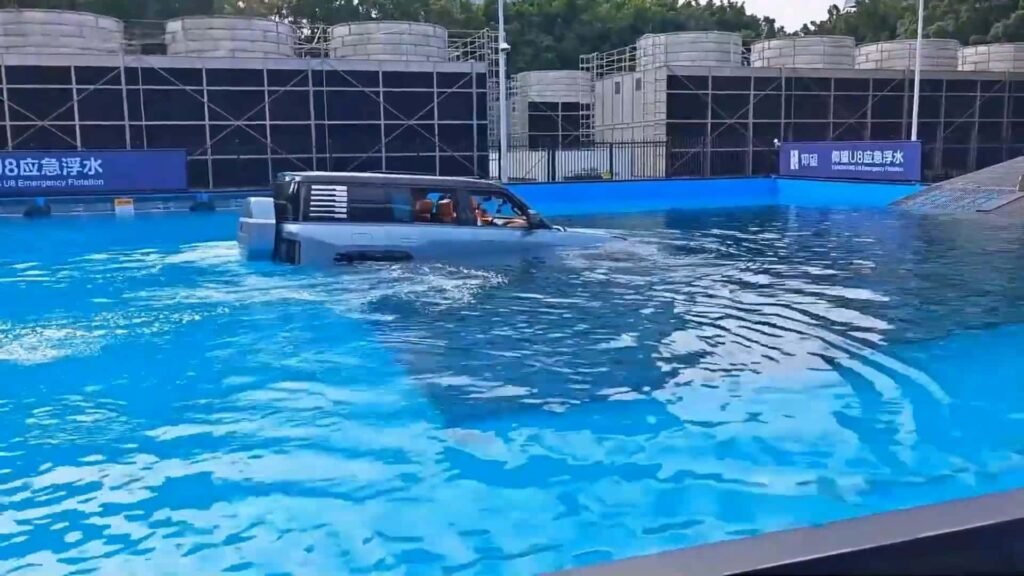
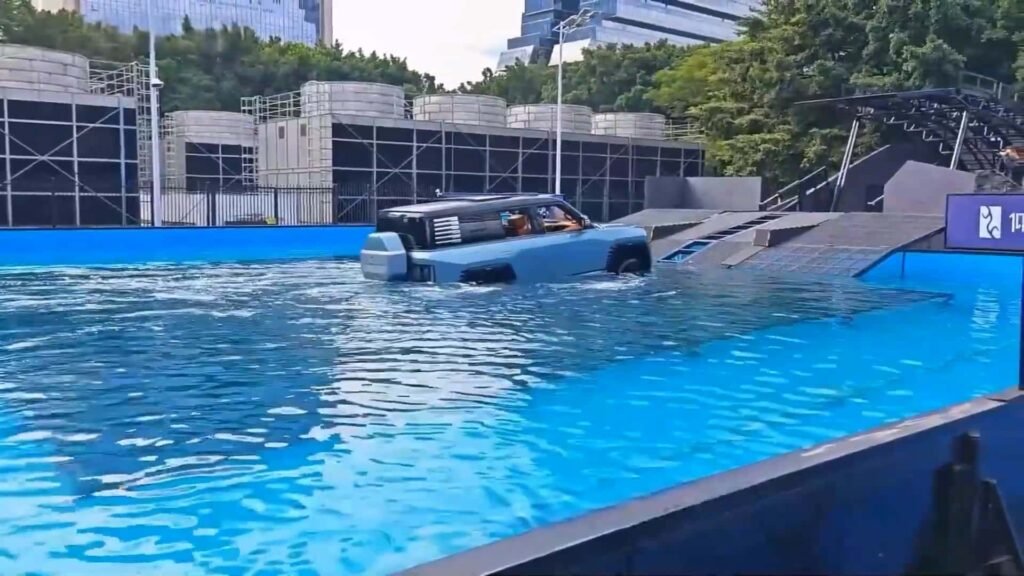
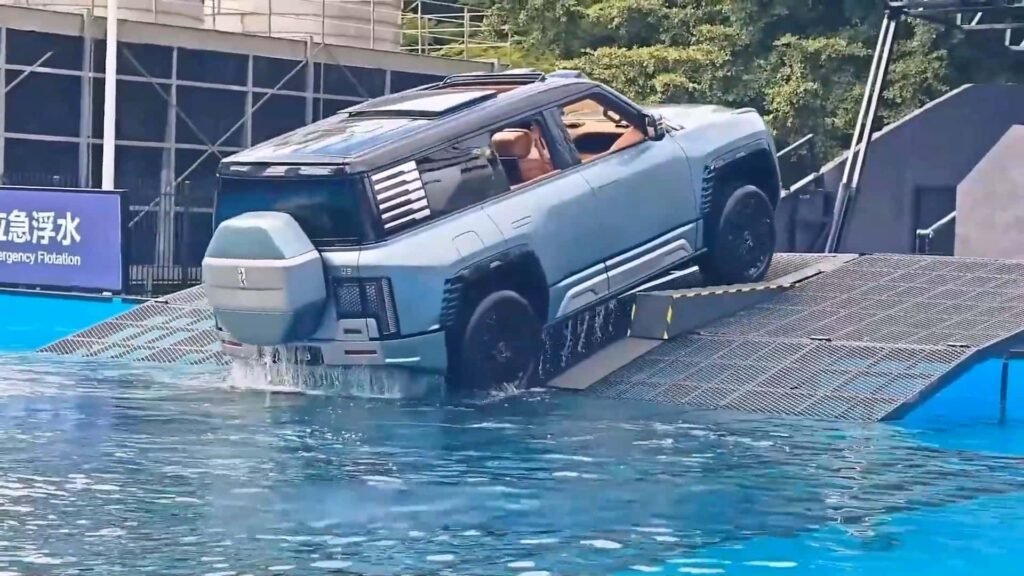
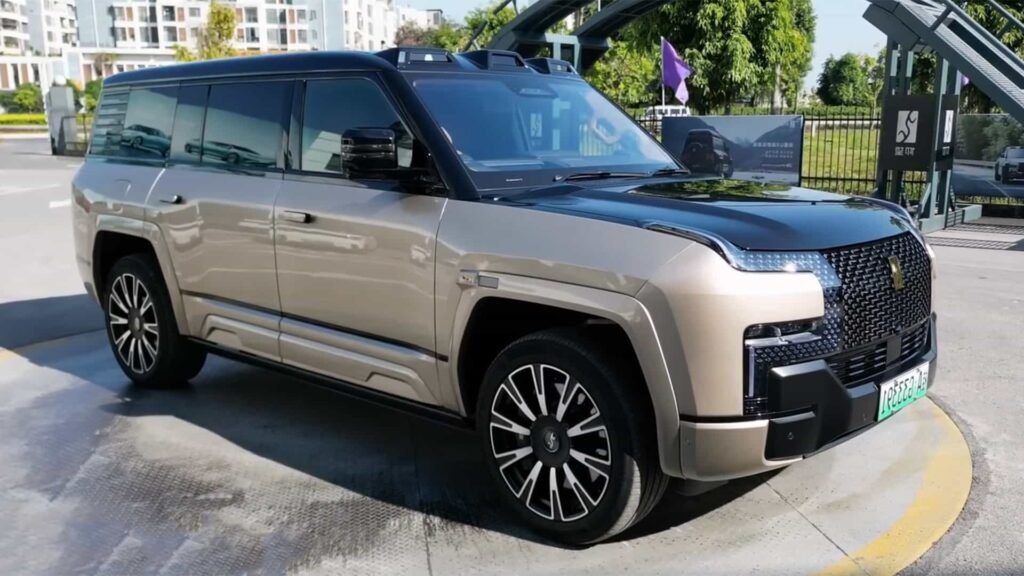
BYD Yangwang U8L changes this equation entirely. This isn’t marketing hyperbole—the vehicle genuinely floats and propels itself through water for up to 30 minutes. During 2025 flood seasons in southern China, U8 owners demonstrated capabilities previously reserved for amphibious military vehicles. One owner in Nanning floated through 28 minutes of flash flooding with zero water intrusion. Another crossed a dried riverbed in Hunan that would have swallowed any conventional SUV.
This analysis examines the technology behind the U8L’s amphibious capability, real-world performance data, and whether this feature justifies the six-figure price tag.
Why Amphibious Capability Matters Beyond Novelty
Most automotive “innovations” solve problems that don’t exist. The U8L’s floating capability addresses a genuine safety gap. Consider the statistics:
| Flood-Related Vehicle Deaths | Annual Average |
|---|---|
| United States | 50-100 deaths |
| China | 200-400 deaths |
| Europe | 30-60 deaths |
| Global Total | 500+ deaths |
Source: National Weather Service, China Emergency Management Ministry, European Flood Awareness System
The majority of these deaths occur when drivers underestimate water depth or become trapped in rapidly rising floods. Traditional vehicles offer no escape once water reaches critical levels. The U8L provides a survival window that didn’t previously exist in production automobiles.
The Emergency Float Mode: How It Actually Works
BYD didn’t bolt pontoons onto an SUV. The floating capability emerges from integrated engineering across multiple systems. Understanding the mechanism explains why competitors haven’t replicated this feature.
Passive Trigger System
The float mode cannot be activated manually. This design choice prevents reckless behavior—owners can’t treat the U8L as a recreational boat. Instead, sensors monitor conditions continuously:
| Sensor Type | Function | Trigger Threshold |
|---|---|---|
| Water Depth Sensors | Measure external water level | 1 meter minimum |
| Body Position Sensors | Detect vehicle attitude and tilt | 15-degree angle change |
| Wheel Slip Sensors | Monitor traction loss patterns | 80% slip ratio |
| Cabin Pressure Sensors | Detect water intrusion risk | Negative pressure threshold |
When all conditions align, the system activates automatically. Drivers receive dashboard notification but cannot override the safety protocol.
Sealing Mechanisms
Thirty separate systems engage during float mode activation:
Immediate Actions:
- Engine shuts down (except off-road version with snorkel)
- Air suspension raises to maximum height
- All windows close automatically
- Air conditioning vents switch to internal circulation
- Cooling fans enter adaptive control mode
- Sunroof opens slightly to equalize pressure
Structural Protections:
- 3,000+ high-precision weld points prevent water intrusion
- Battery pack sealed to IP68 standard
- Motor housings waterproofed beyond automotive norms
- Door seals compressed automatically
- Cable entry points sealed with expanding gaskets
The sunroof behavior seems counterintuitive—opening during flooding. This prevents cabin pressure buildup that could crack windows or make doors impossible to open. The opening is minimal, just enough for pressure equalization without significant water entry.
Propulsion in Water
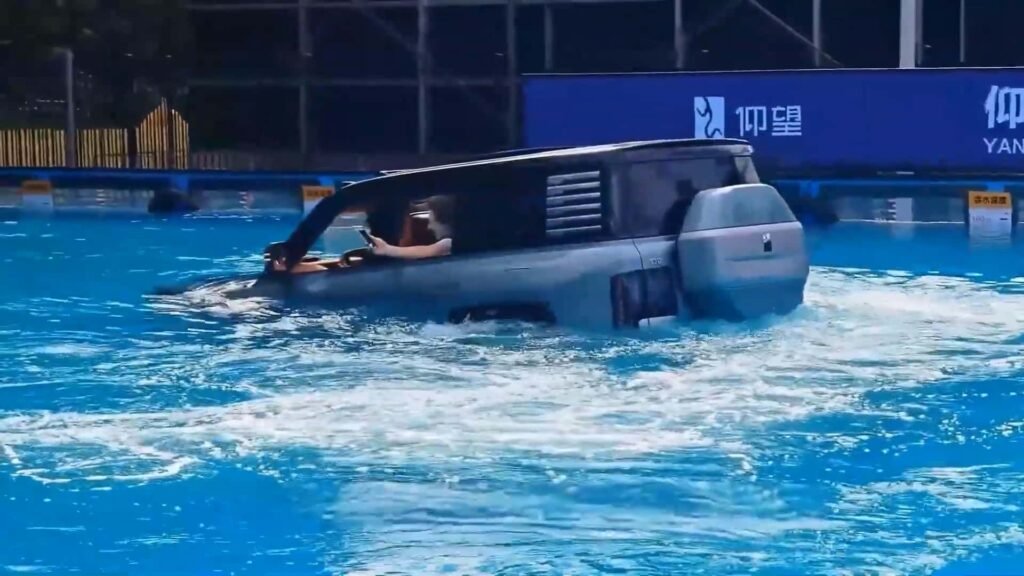
Four independent motors enable directional control while floating. Each wheel generates thrust by rotating through water. The system isn’t efficient—maximum speed reaches only 3 km/h (1.8 mph). But efficiency isn’t the goal. Survival is.
| Movement Type | Capability | Speed |
|---|---|---|
| Forward | Yes | 3 km/h |
| Reverse | Yes | 3 km/h |
| Turn Left/Right | Yes | Variable |
| Stationary Float | Yes | N/A |
| Maximum Duration | 30 minutes | Full battery |
The 30-minute window provides enough time to reach shallow water or safety. It’s not designed for extended water travel—just emergency escape.
Yangwang U8L vs. Standard U8: What Changed
The U8L extends the already-capable U8 platform. Understanding the differences clarifies whether the upgrade justifies additional cost.
| Specification | Yangwang U8 | Yangwang U8L |
|---|---|---|
| Length | 5,315 mm | 5,400 mm |
| Wheelbase | 3,050 mm | 3,250 mm |
| Third Row Legroom | 780 mm | 980 mm |
| Cargo Volume | 480 L | 620 L |
| Curb Weight | 3,460 kg | 3,580 kg |
| 0-100 km/h | 3.6 seconds | 3.6 seconds |
| Float Capability | 30 minutes | 30 minutes |
| Price (China) | 1.098M RMB | 1.28M RMB |
The L variant targets buyers needing genuine three-row usability. The 200 mm wheelbase extension transforms third-row seating from occasional emergency use to legitimate adult transportation. For families or executive transport, this difference matters substantially.
Both variants share identical float technology. The added length doesn’t compromise amphibious performance because buoyancy comes from sealed volume rather than specific dimensions.
Real-World Flood Testing: What Owners Report
Marketing claims differ from actual performance. U8 owners have documented the float function in genuine emergency conditions.
Nanning Flood Event (2024)
A rental car operator encountered flash flooding during monsoon season. Water depth exceeded 1.2 meters within minutes. The U8’s sensors triggered float mode automatically.
Documented Performance:
- Float duration: 28 minutes
- Water intrusion: None detected
- Distance traveled: Approximately 400 meters to safety
- Battery remaining: 67%
- Post-event inspection: Zero electrical damage
The owner later stated the vehicle required only interior sanitization before returning to service. No mechanical repairs were necessary.
Hunan River Crossing (2025)
An off-road enthusiast intentionally tested the float capability during dry season. Water depth measured 1.5 meters with slow current.
Documented Performance:
- Float duration: 22 minutes
- Steering response: Functional but sluggish
- Speed maintained: 2.8 km/h average
- Exit successful: Yes, on opposite bank
- Post-event inspection: Seals intact, no corrosion
This test demonstrated controlled water navigation rather than passive floating. The four-motor system provided genuine directional control.
Shenzhen Media Demonstration (2025)
American streamer iShowSpeed tested the U8L during a Shenzhen visit. The demonstration reached millions of viewers globally.
Documented Performance:
- Water entry: Controlled pool environment
- Float activation: Automatic at 1-meter depth
- Duration: 15 minutes (demonstration limited)
- Viewer reaction: 2.3 million concurrent viewers
- Social media reach: 50+ million impressions
While not an emergency scenario, this demonstration proved the technology functions as advertised under observation.
Technical Architecture: The e4 Platform Advantage
The float capability wouldn’t exist without BYD’s e4 platform architecture. Four independent motors create possibilities that single-motor EVs cannot match.
Motor Configuration
| Motor Position | Power Output | Control Independence |
|---|---|---|
| Front Left | 220 kW | Fully independent |
| Front Right | 220 kW | Fully independent |
| Rear Left | 220 kW | Fully independent |
| Rear Right | 220 kW | Fully independent |
| Total System | 880 kW | Coordinated vector control |
Each motor operates independently. If one fails, three continue functioning. In water, this enables differential thrust for steering without traditional mechanical linkages.
Battery Protection
The Blade Battery pack sits at the vehicle’s lowest point—normally a vulnerability during flooding. BYD addressed this through:
- IP68 waterproof rating (submersion to 1 meter for 30 minutes)
- Structural integration with chassis (not removable pack)
- Thermal management sealed from water exposure
- Automatic disconnect if water intrusion detected
- Post-submersion diagnostic protocols
Battery fires during flooding represent a legitimate concern for EVs. BYD’s LFP chemistry reduces thermal runaway risk compared to nickel-based alternatives. No U8 battery fires have been reported during float mode activation.
Suspension System
The Yunrui-P hydraulic suspension raises the vehicle before water entry. Maximum ground clearance reaches 310 mm in off-road mode. During float activation, suspension locks at maximum height to maintain stability.
| Suspension Mode | Ground Clearance | Use Case |
|---|---|---|
| Normal | 210 mm | Highway driving |
| Sport | 190 mm | Performance driving |
| Off-Road | 310 mm | Rough terrain |
| Float Mode | 310 mm (locked) | Water emergency |
The locked position prevents suspension movement that could compromise seals during water exposure.
Limitations Owners Must Understand
The float function isn’t magic. Specific limitations determine whether it saves lives or creates false confidence.
What Float Mode Cannot Do
| Limitation | Reality Check |
|---|---|
| Not a boat | Maximum 3 km/h speed |
| Time limited | 30 minutes maximum |
| Depth limited | Effective to approximately 2 meters |
| Not recreational | Emergency use only |
| Battery dependent | Requires minimum 30% charge |
| Current vulnerability | Strong water currents overwhelm thrust |
| Post-flood service required | Seals must be inspected |
Critical Warnings
Do not intentionally drive into deep water. The float function is emergency equipment, not an invitation for water adventures. BYD’s warranty explicitly excludes damage from intentional water entry.
Always seek higher ground first. Floating should be the last resort when escape routes are blocked. Traditional avoidance remains safer than relying on emergency systems.
Post-flood inspection mandatory. After any float mode activation, the vehicle requires dealer inspection. Seals may need replacement. Electrical systems require diagnostic verification.
Insurance implications vary. Some insurers treat float mode activation as a comprehensive claim event. Others recognize it as safety equipment usage. Verify coverage before relying on the feature.
Price Analysis: Does Amphibious Capability Justify Cost?
The U8L starts at 1.28 million RMB in China (approximately $180,000 USD). European pricing is expected between €200,000-250,000. US availability remains uncertain due to tariff policies.
| Competitor | Price | Amphibious Capability |
|---|---|---|
| BYD Yangwang U8L | $180,000 | Yes (30 minutes) |
| Rolls-Royce Cullinan | $350,000 | No |
| Mercedes-Maybach GLS | $185,000 | No |
| Range Rover Autobiography | $165,000 | No |
| Lexus LX 600 | $130,000 | No |
| Cadillac Escalade | $110,000 | No |
The U8L undercuts European luxury competitors while offering capability none can match. Whether this justifies purchase depends on buyer priorities.
Value Proposition by Buyer Type
Flood-Prone Region Residents: For buyers in Miami, Bangkok, Jakarta, or Guangzhou, the float capability provides genuine insurance value. Annual flood risk makes this feature more than novelty.
Off-Road Enthusiasts: Serious overlanders encounter water crossings regularly. The float function adds safety margin for remote expeditions where rescue isn’t guaranteed.
Luxury Buyers: For status-focused purchasers, the technology demonstrates innovation leadership. Being first with amphibious luxury carries social capital in certain markets.
Fleet Operators: Emergency services, government agencies, and disaster response organizations could utilize the capability operationally. Several Chinese municipalities have added U8s to emergency fleets.
Safety Certification and Regulatory Status
The float function exists in a regulatory gray zone. Most vehicle safety standards don’t address amphibious operation because production cars haven’t offered this capability.
Current Certification Status
| Region | Status | Notes |
|---|---|---|
| China | Approved | Included in vehicle type certification |
| European Union | Under Review | Separate water vehicle regulations may apply |
| United States | Not Certified | NHTSA has no framework for amphibious passenger vehicles |
| Australia | Under Review | ADR standards being evaluated |
| Southeast Asia | Case-by-Case | Individual country approval processes |
European approval faces the most complexity. Watercraft regulations differ from automotive standards. The U8L may require dual certification in some markets.
Insurance Industry Response
Insurance companies are developing policies specific to amphibious vehicles. Early indicators suggest:
- Float mode activation during genuine emergencies: Covered under comprehensive
- Intentional water entry: Excluded from coverage
- Post-flood mechanical damage: Requires inspection approval
- Liability during water operation: May require special endorsement
Buyers should obtain written confirmation from insurers before relying on coverage assumptions.
Maintenance Requirements After Water Exposure
Float mode isn’t “use and forget.” Specific maintenance protocols ensure long-term reliability after water exposure.
Mandatory Post-Float Inspection
| Component | Inspection Requirement | Replacement Interval |
|---|---|---|
| Door Seals | Visual and pressure test | Replace after 3 activations |
| Battery Pack | Diagnostic scan, insulation test | Replace if any fault detected |
| Motor Housings | Water intrusion check | Replace seals if moisture found |
| Suspension | Hydraulic system inspection | Service if contamination detected |
| Electrical Connectors | Corrosion check | Replace any corroded connectors |
| Cabin Air System | Filter replacement, duct inspection | Replace filters mandatory |
Recommended Service Timeline
- Within 24 hours: Dealer diagnostic scan
- Within 7 days: Full seal inspection
- Within 30 days: Complete system verification
- Annually: Preventive seal replacement (if float mode used)
BYD offers complimentary post-float inspection for first activation. Subsequent inspections carry standard service charges.
The Competition: Who Else Makes Amphibious Vehicles?
The U8L occupies unique territory. No direct competitors offer similar capability at any price point.
Historical Amphibious Vehicles
| Vehicle | Era | Production Status | Notes |
|---|---|---|---|
| Amphicar Model 770 | 1961-1968 | Discontinued | True amphibious car, 3,878 built |
| Gibbs Aquada | 2003-2005 | Discontinued | High-speed amphibious vehicle |
| Rinspeed sQuba | 2008 | Concept only | Submersible concept, not production |
| Mercedes-Benz G-Class Amphibious | 1940s | Military only | WWII era, not civilian |
| BYD Yangwang U8 | 2023-Present | Active Production | Emergency float only |
The Amphicar represents the only successful civilian amphibious car. It sold modestly before emissions and safety regulations made production untenable. The U8L avoids these issues by positioning float mode as emergency equipment rather than primary function.
Why Competitors Haven’t Followed
Several factors explain the absence of competing amphibious luxury SUVs:
Engineering Complexity: Sealing a modern vehicle with hundreds of electronic systems requires substantial R&D investment. BYD spent approximately 10 years developing the technology.
Liability Concerns: Manufacturers fear lawsuits if owners misuse amphibious capability. BYD’s passive trigger system addresses this partially.
Market Size: Flood-prone luxury buyers represent a narrow segment. Most competitors don’t see sufficient ROI.
Regulatory Uncertainty: Classification as vehicle versus watercraft creates compliance complexity in multiple jurisdictions.
Who Should Actually Buy the U8L
This vehicle serves specific buyers. Understanding fit prevents expensive mistakes.
Ideal Buyer Profiles
Geographic Fit:
- Coastal cities with hurricane/typhoon risk
- River delta regions prone to seasonal flooding
- Areas with inadequate drainage infrastructure
- Remote locations with limited rescue access
Usage Patterns:
- Daily driving in flood-prone zones
- Frequent off-road expeditions
- Emergency service applications
- Government or corporate fleet use
Financial Position:
- Can absorb $180,000+ vehicle purchase
- Understands maintenance costs exceed standard luxury SUVs
- Has appropriate insurance coverage
- Values safety technology over brand prestige
Who Should Avoid the U8L
Geographic Mismatch:
- Arid climate residents (Dubai, Phoenix, Las Vegas)
- Areas with no flood history
- Regions with excellent drainage infrastructure
Usage Mismatch:
- Buyers wanting recreational water capability
- Those unwilling to follow post-flood service protocols
- Owners expecting boat-like water performance
Financial Mismatch:
- Stretching budget to afford purchase
- Unable to maintain premium service requirements
- Insurance costs create financial strain
The Bottom Line: Innovation With Purpose
The Yangwang U8L’s amphibious capability isn’t gimmick engineering. It solves a genuine safety problem that kills hundreds annually. The technology works as advertised—multiple real-world flood events have proven this.
However, the feature doesn’t justify purchase for most buyers. Flood-prone region residents, serious overlanders, and emergency services gain tangible value. Status-focused luxury buyers in dry climates purchase capability they’ll never use.
For the right buyer, the U8L represents meaningful innovation. For everyone else, it’s an expensive conversation starter.
The automotive industry will watch whether BYD’s amphibious luxury experiment triggers competitor responses. If sales justify the R&D investment, expect similar features from Mercedes, BMW, and Land Rover within five years. If not, the U8L remains a fascinating technological dead end.
Either way, the car that swims has arrived. Whether it should depends entirely on where you live and what you drive through.
Note: Specifications and pricing reflect February 2026 information. Float mode capability is emergency equipment only—not for recreational water use. Always follow manufacturer safety guidelines and local regulations regarding water operation. Insurance coverage varies by provider and region—verify before purchase.