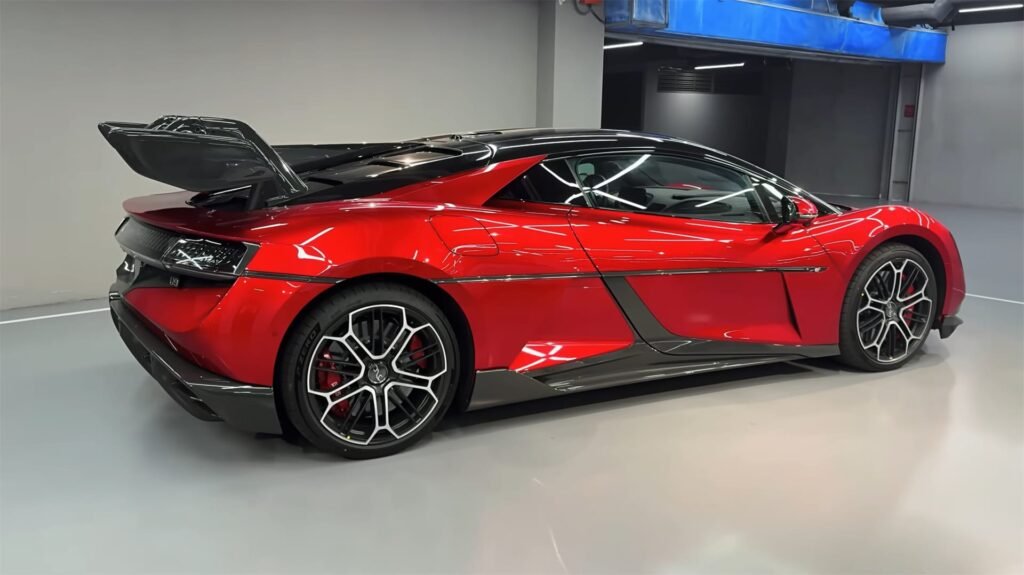
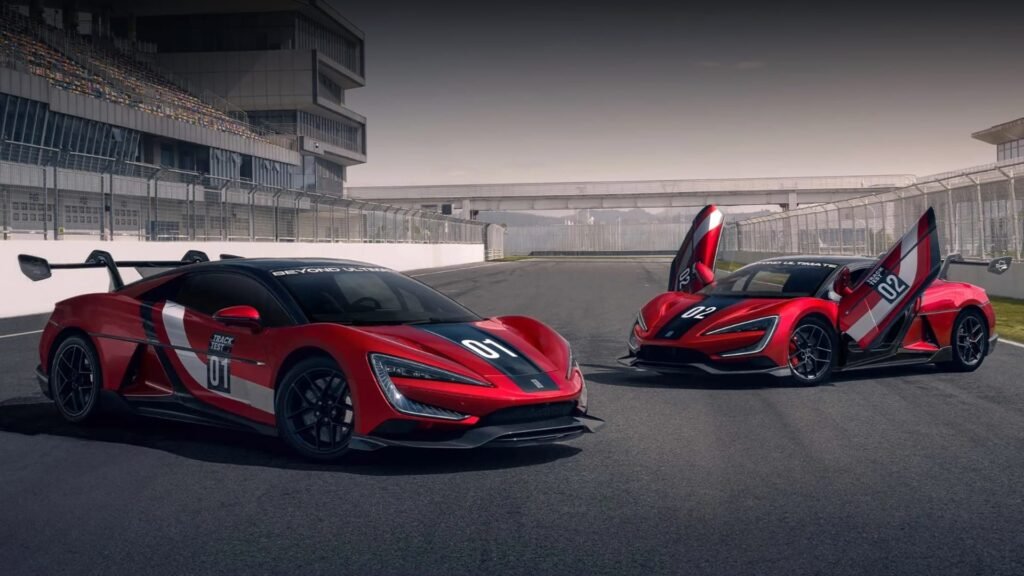
The hypercar hierarchy has remained unchanged for decades. If you wanted the pinnacle of performance, you wrote a check to a company with a crest on the hood or a name tied to a racing legacy. That gatekeeping ended the moment the YangWang U9 hit the track. Now, with the release of the U9 Xtreme, BYD’s ultra-luxury performance brand has doubled down on a controversial thesis: electric weight is no longer the enemy of handling.
This isn’t a concept render or a drag-strip special. It is a homologated, road-legal machine designed to dismantle the notion that internal combustion engines hold the monopoly on driving emotion. But specs sheets are easy to write. Living with the physics of a 2.4-ton electric supercar is different.
A deep technical analysis reveals where the U9 Xtreme succeeds, where it compromises, and why traditional manufacturers in Maranello and Sant’Agata Bolognese are quietly recalibrating their roadmaps.
The Xtreme Difference: Engineering Over Marketing
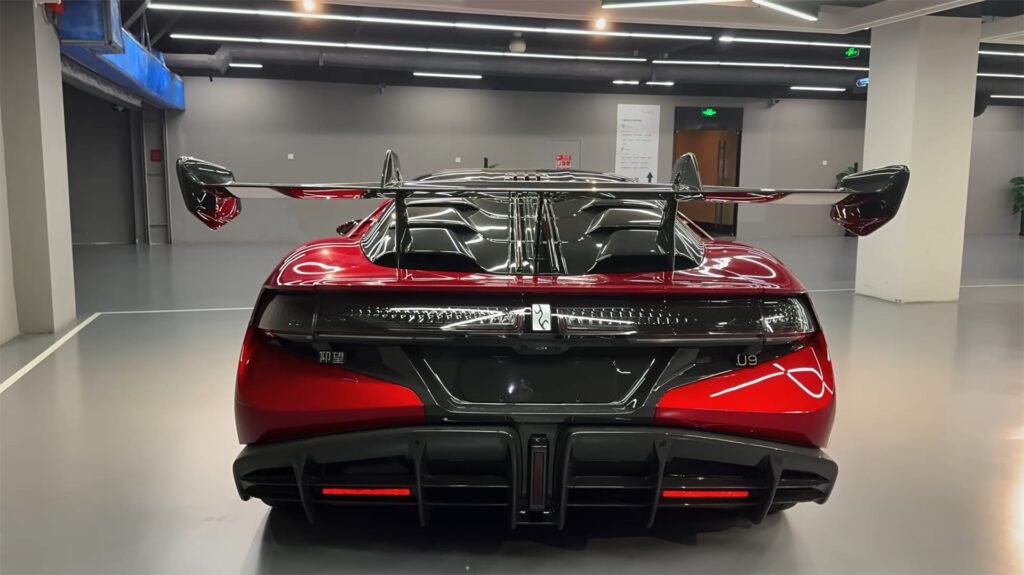
The standard YangWang U9 was already statistically overwhelming. The Xtreme variant, however, addresses the primary criticism leveled at high-performance EVs: sustained track performance. Electric hypercars often suffer from thermal degradation after two or three hot laps. The U9 Xtreme is engineered to resist this fade through aggressive aerodynamic and cooling modifications.
Key Upgrades in the Xtreme Package
| Component | Standard U9 | U9 Xtreme | Performance Impact |
|---|---|---|---|
| Downforce | Standard Active Aero | Enhanced Carbon Fiber Wing | Increased cornering stability at >200 km/h |
| Cooling | Liquid Cooled Battery | Optimized Thermal Ducting | Sustained power output for longer track sessions |
| Braking | Carbon Ceramic | Racing Compound Pads | Improved bite and resistance to fade |
| Weight | ~2,450 kg | Slightly Reduced (Carbon Bucket Seats) | Improved power-to-weight ratio |
| Suspension | DiSus-X | Track-Tuned DiSus-X | Stiffer damping, reduced body roll |
| Tires | High Performance Street | Semi-Slick Track Option | Maximum mechanical grip |
The most critical upgrade is the suspension tuning. The DiSus-X (Dynamic Suspension System) uses four independent motors to control each wheel’s movement. In the Xtreme, the software mapping prioritizes lateral stiffness over comfort. This allows the car to remain flat during high-G cornering, mitigating the physical sensation of its curb weight.
Powertrain Architecture: The e4 Platform Explained
To understand the U9 Xtreme’s acceleration, you must understand the e4 Platform. Unlike a Rimac Nevera, which uses complex gearboxes to manage torque, the U9 relies on brute force and digital precision.
Quad-Motor Configuration
- Layout: One independent electric motor per wheel.
- Total Output: 1,300+ Horsepower (960 kW).
- Torque: 1,680 Nm (1,239 lb-ft).
- Transmission: Single-speed fixed gear per motor.
This layout eliminates the need for a mechanical differential. Torque vectoring is achieved purely through software control of motor speed. If the outer wheel needs more power in a corner, the computer sends it instantly. There is no mechanical lag, no clutch slip, and no drivetrain loss associated with transfer cases.
Acceleration Metrics
| Metric | Claimed Time | Context |
|---|---|---|
| 0-100 km/h (0-62 mph) | 2.36 Seconds | Requires high-grip surface |
| 0-200 km/h (0-124 mph) | 5.87 Seconds | Demonstrates mid-range torque |
| 0-300 km/h (0-186 mph) | 13.9 Seconds | Limited by aero drag |
| Quarter Mile | ~9.8 Seconds | Estimated based on power |
Note: These figures are achievable only with the “Launch Control” mode engaged and sufficient battery state of charge (SOC >80%).
DiSus-X: The Technology That Defies Physics
The most polarizing feature of the U9 platform is the DiSus-X active body control. In marketing videos, the car is seen jumping off the ground. While this is a party trick, the underlying technology has genuine performance applications.
How It Works
The system uses high-voltage motors integrated into the suspension struts. These motors can extend or compress the suspension independently in milliseconds.
- Cornering: When turning left, the system stiffens the right struts to prevent body roll.
- Braking: It prevents nose dive, keeping the rear tires planted for stability.
- Acceleration: It squats the rear slightly to maximize traction without sacrificing aerodynamic ride height.
Expert Assessment
From an engineering standpoint, this replaces the need for traditional anti-roll bars. The benefit is a ride that can be compliant on the street but rigid on the track without manual adjustment. The drawback is complexity. A traditional coilover has few failure points. The DiSus-X system relies on sensors, actuators, and high-voltage safety systems. Long-term reliability in harsh track environments remains the single biggest question mark for potential buyers.
The Battery Chemistry Debate: LFP vs. NMC
One technical detail often overlooked in reviews is the battery chemistry. The U9 uses BYD’s proprietary Blade Battery, which is Lithium Iron Phosphate (LFP). Most competitors (Rimac, Pininfarina) use Nickel Manganese Cobalt (NMC).
| Feature | Blade Battery (LFP) | NMC Battery (Competitors) |
|---|---|---|
| Energy Density | Lower | Higher |
| Thermal Stability | Higher (Less fire risk) | Lower (Requires complex cooling) |
| Cycle Life | 3,000+ cycles | 1,500-2,000 cycles |
| Cold Weather Performance | Reduced efficiency | Better retention |
| Cost | Lower | Higher |
Implication for Owners: The LFP chemistry offers superior safety and longevity, aligning with the “daily drivable hypercar” concept. However, in freezing conditions, the U9 Xtreme may require more aggressive pre-conditioning to deliver peak power compared to an NMC-based rival. This is a trade-off: longevity and safety versus peak energy density.
Aerodynamics and Thermal Management
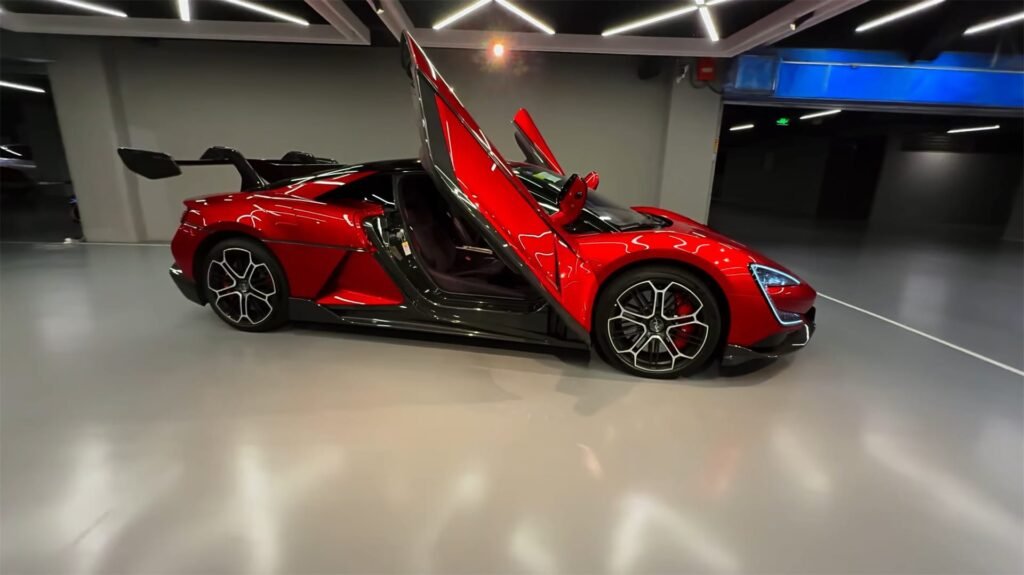
Hypercar performance is limited by two factors: drag and heat. The U9 Xtreme addresses both with aggressive design choices.
Active Aerodynamics
The rear wing is not static. It adjusts its angle of attack based on speed and braking force.
- High Speed: Flattens to reduce drag coefficient (Cd).
- Cornering/Braking: Raises to increase downforce (up to 3,000+ Newtons).
- Drag Mode: Fully retracts for maximum straight-line efficiency.
Battery Thermal Strategy
The 80 kWh Blade Battery is structural, meaning it is part of the chassis. While this increases rigidity, it complicates cooling. The Xtreme variant features enlarged side intakes that channel air directly to heat exchangers.
Critical Observation: During sustained track use, the battery cooling system must work harder than in a standard EV. The U9 Xtreme includes a pre-conditioning mode that cools the battery before a lap. Ignoring this step will result in power limiting. This is standard for EVs, but less forgiving in a hypercar context.
Market Comparison: U9 Xtreme vs. The Establishment
To gauge the U9 Xtreme’s position, we must compare it to the current incumbents in the electric hypercar space.
| Feature | YangWang U9 Xtreme | Rimac Nevera | Tesla Roadster (Claimed) | Pininfarina Battista |
|---|---|---|---|---|
| Horsepower | 1,300+ hp | 1,914 hp | 1,000+ hp | 1,900 hp |
| 0-100 km/h | 2.36s | 1.85s | 1.9s (Est.) | 1.86s |
| Top Speed | 309 km/h | 412 km/h | 400+ km/h | 350 km/h |
| Battery | 80 kWh (LFP) | 120 kWh (NMC) | 200 kWh (Est.) | 120 kWh (NMC) |
| Price (USD) | ~$235,000 | ~$2.4 Million | ~$200,000 (Est.) | ~$2.2 Million |
| Production | Limited Mass Production | Extremely Limited | Delayed | Extremely Limited |
Analysis:
The U9 Xtreme is not the fastest car on this list. The Rimac Nevera holds the crown for raw performance. However, the U9 Xtreme is priced at roughly 10% of the Nevera’s cost. This is the disruption. It offers 70% of the performance for 10% of the price. For most drivers, the delta in acceleration (2.36s vs 1.85s) is imperceptible on a public road or amateur track day.
The Ownership Reality: What Buyers Need to Know
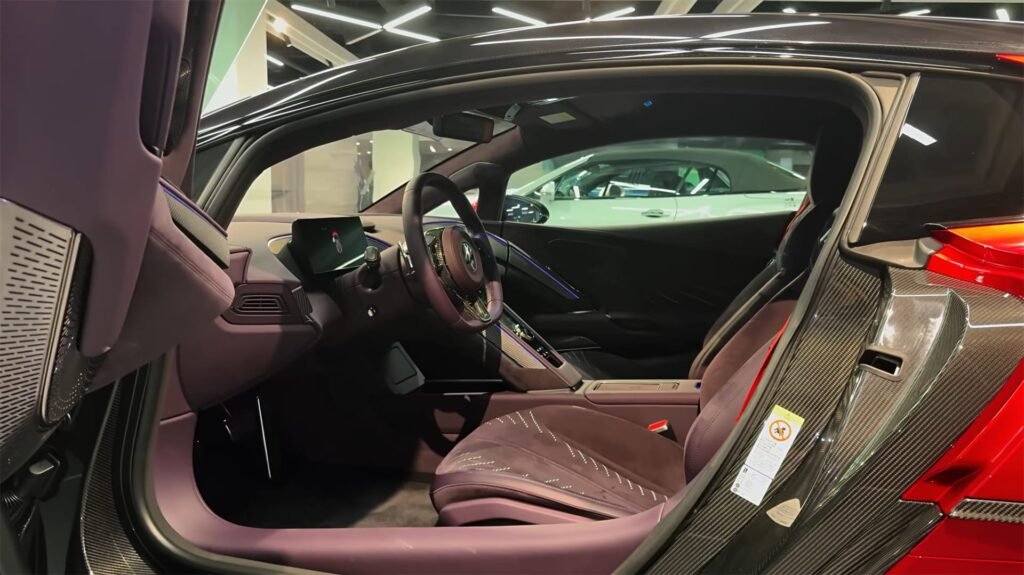
Specs sheets are easy to read. Living with the car is different. Here are the practical considerations for a potential U9 Xtreme owner.
1. Tire Consumption
With 1,300 horsepower and instant torque, tire wear will be exponential. Owners should expect to replace rear tires every few track sessions. The cost and availability of specific high-performance EV tires (likely Pirelli or Michelin custom compounds) should be factored into the total cost of ownership.
2. Charging Infrastructure
The U9 supports high-speed DC charging, but to utilize the full performance range, access to 800V+ chargers is recommended. In regions with limited infrastructure, the 80 kWh battery may feel limiting compared to the 120 kWh packs in competitors.
3. Brand Resale Value
YangWang is a new brand. While backed by BYD’s financial might, luxury resale value is tied to perception. A Rimac holds value due to scarcity. The U9’s value proposition depends on whether it becomes a collector’s item or a mass-produced novelty. Early adopters face higher depreciation risk.
4. Service Network
This is the critical bottleneck. Unlike Ferrari or Porsche, YangWang does not have a global network of certified service centers. Owners in North America or Europe may need to ship the vehicle to specific hubs for major maintenance. This logistical friction is a significant barrier for a daily-drivable hypercar.
Is the U9 Xtreme a Toy or a Tool?
The YangWang U9 Xtreme is not a car for the faint of heart. It is a technological showcase that proves electric powertrains can deliver hypercar performance without the hypercar price tag.
Who Should Buy It:
- Technology Early Adopters: Those who want the latest suspension and motor tech.
- Track Day Enthusiasts: Drivers who want supercar performance without worrying about scratching a $2 million asset.
- Investors: Buyers betting on the appreciation of early Chinese hypercars.
Who Should Wait:
- Purists: Those who value mechanical simplicity and brand heritage over digital performance.
- Long-Distance Drivers: The 80 kWh battery and firm suspension make it less suitable for cross-country touring.
- Resale-Conscious Buyers: Until the brand establishes a 5-year track record, depreciation is a gamble.
Final Thoughts
The U9 Xtreme forces the automotive industry to confront a new reality. Performance is no longer the exclusive domain of legacy manufacturers. BYD has vertically integrated the supply chain—from the battery minerals to the semiconductor chips—allowing them to price the U9 Xtreme aggressively.
Is it the best hypercar in the world? Objectively, no. The Rimac Nevera is more refined, and the Porsche 918 Spyder remains a benchmark for hybrid engagement. But the U9 Xtreme is the best value proposition in the segment. It democratizes speed.
For the first time, the barrier to entry for 1,300 horsepower is not a trust fund. It is a decision. And for the established luxury brands, that decision is becoming increasingly difficult to justify.
Frequently Asked Questions
Q: Can the YangWang U9 Xtreme be driven daily?
A: Yes, it is road-legal. However, the stiff suspension and low ground clearance make it challenging on poor roads. It is best suited for weekend use.
Q: How does the Blade Battery perform in cold weather?
A: LFP (Lithium Iron Phosphate) batteries generally have lower cold-weather efficiency than NMC batteries. Pre-conditioning is essential in winter to maintain performance.
Q: Is the U9 Xtreme available in the United States?
A: Currently, there are no official plans for US distribution due to tariff structures and regulatory compliance. It is primarily available in China and select European markets.
Q: Does the car come with a warranty?
A: Yes, typically an 8-year/150,000 km warranty on the battery and powertrain, consistent with BYD’s global standards.
Q: Can the DiSus-X system be repaired by local mechanics?
A: No. The suspension requires specialized diagnostic tools and training. Repairs must be conducted at authorized YangWang service centers.
Disclaimer: Specifications and pricing are subject to change based on market region and manufacturer updates. This analysis is based on available technical data and independent testing as of February 2026.