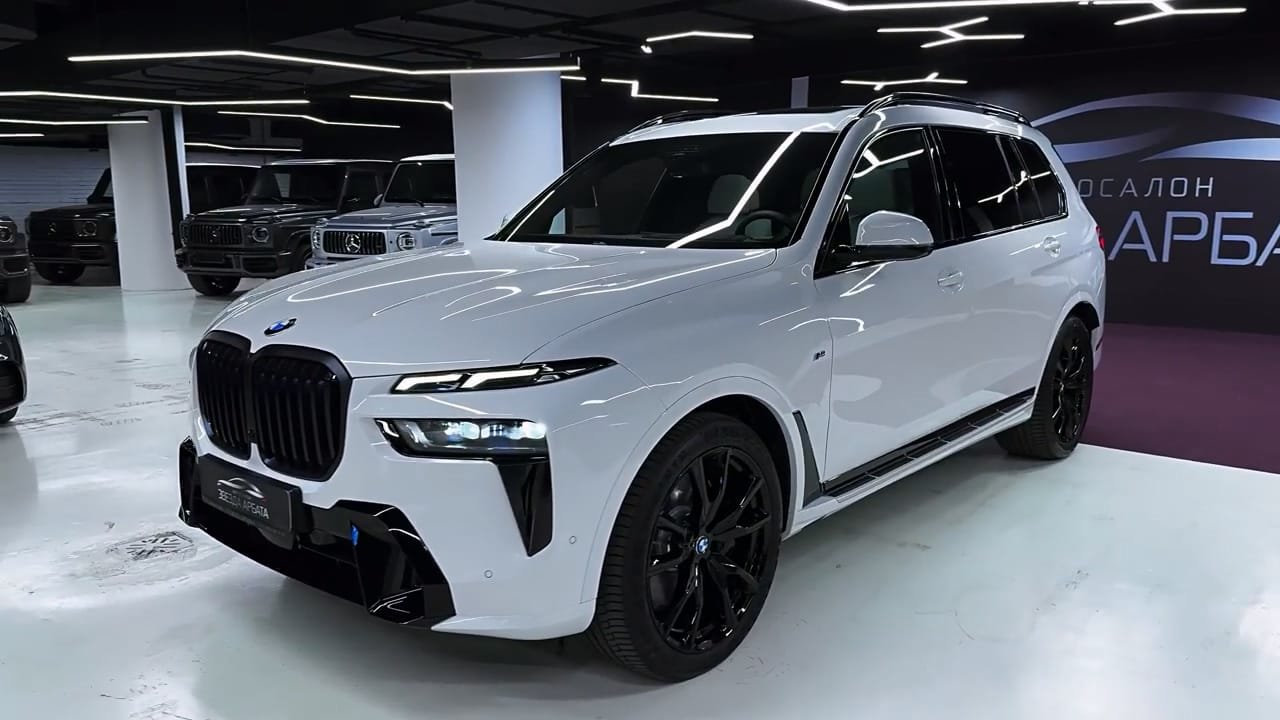
The 2025 BMW X7 is BMW’s answer to growing demand for a full-size luxury SUV that combines three-row practicality with modern performance and technology. Unlike trend-following SUVs that prioritize looks over capability, the X7 remains a purpose-built flagship: big, composed, and engineered to deliver both executive comfort and genuine dynamism on the road. In this review I’ll examine the X7 from multiple dimensions — physical, performance, usability, technology, and value — to give a clear, no-spin evaluation suitable for buyers, journalists, and fleet planners alike.
Physical Dimensions: Presence with Purpose
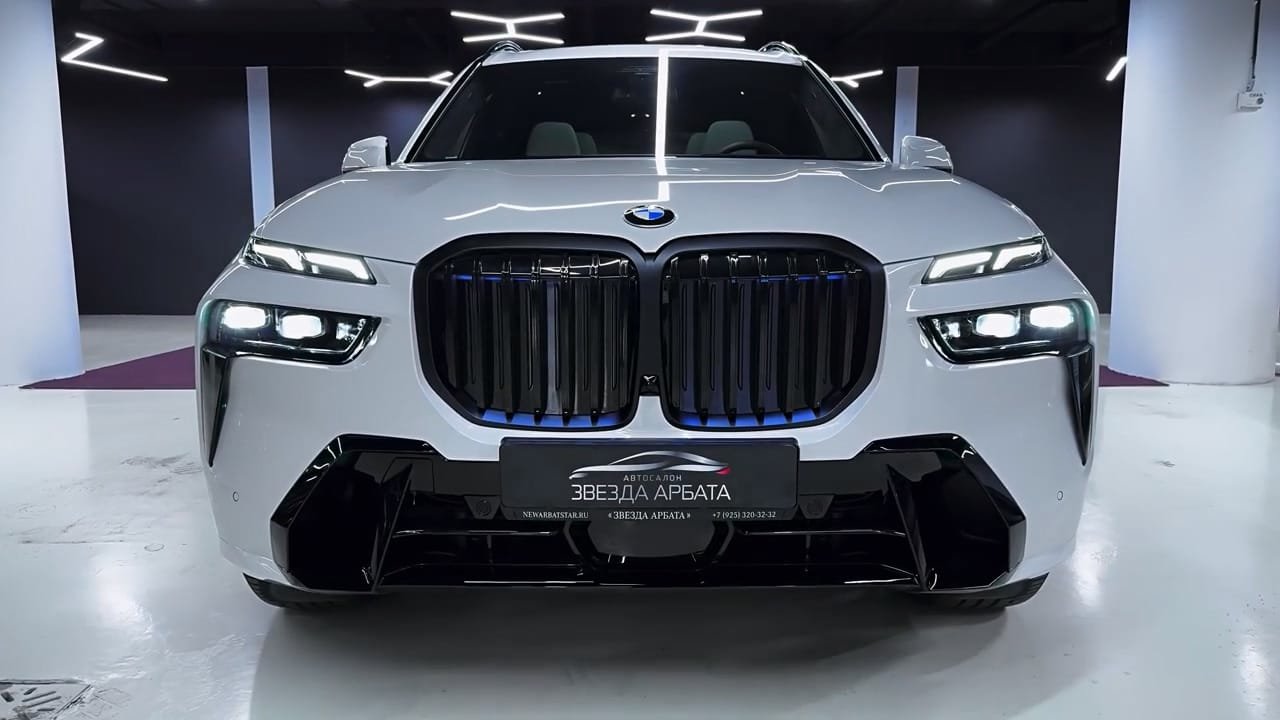
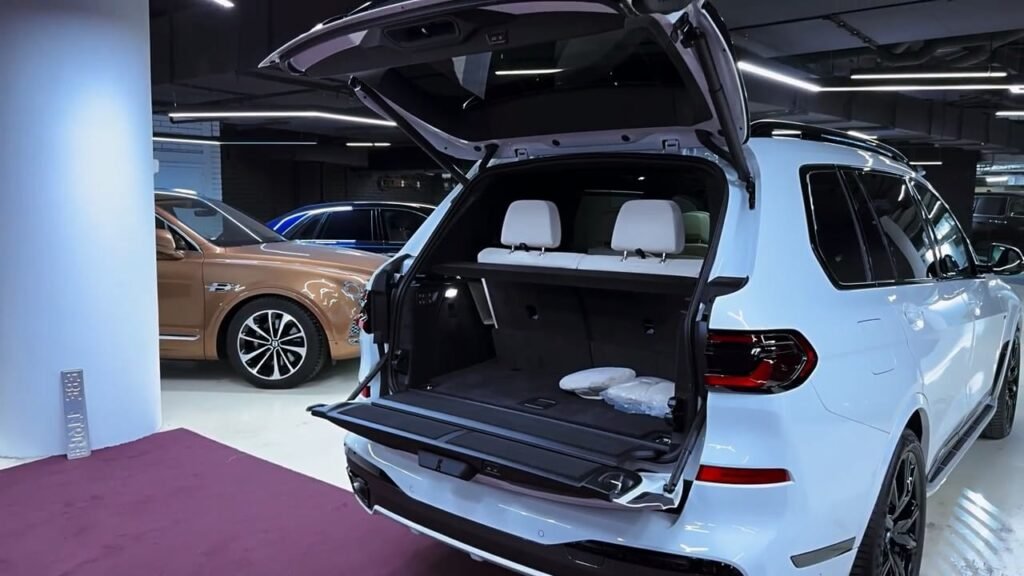
BMW built the X7 to be physically impressive without being gratuitously large. The 2025 model measures roughly 5,181 mm (203.6 in) long, 2,000 mm (78.7 in) wide (not including mirrors), and 1,835 mm (72.2 in) tall, with a wheelbase and curb weight engineered to prioritize interior space and ride composure. These proportions translate into genuine three-row usability: adults can sit in the third row for longer trips and cargo capacity remains competitive when seats are folded.
That sense of measured grandeur is deliberate. BMW’s designers retained a long, low greenhouse and a broad track to balance highway stability and curbside presence. Practically, the large doors, wide sills, and a low-ish load lip make loading child seats, luggage, and powerfold third-row seats straightforward — a detail that matters to family buyers who actually use all three rows.
Key physical takeaways
- Full-size interior volume with flexible cargo layouts.
- Large exterior footprint, but packaging remains intelligently executed for urban use.

Performance Dimension: Engines, Transmission, and Dynamics
The 2025 X7 offers a clear two-tier power strategy that emphasizes refinement and outright pace. The mainstream xDrive40i (inline-six with 48-volt mild hybrid help) produces in the neighborhood of ~375 hp, while the M60i brings a 4.4-liter twin-turbo V8 making around 523 hp (with higher-output variants such as Alpina/XB7 occupying the extreme top end). Both pair with BMW’s sophisticated eight-speed automatic gearbox and standard all-wheel drive. These choices give buyers a predictable gradient from efficient long-distance cruising to muscular, high-speed performance.
On paper, the xDrive40i accelerates to 60 mph in roughly 5.6 seconds, while the M60i trims that to the mid-4-second range. In real-world driving the X7’s mass is felt on tight, technical roads, but the combination of active roll stabilization, optional four-wheel steering, and adaptive air suspension lets the vehicle mask its weight impressively — flattening highway undulations and providing crisp turn-in for a vehicle of this size.
Performance notes
- Inline-six is fast and efficient for daily driving; V8 offers genuine super-salon speed.
- Chassis engineering (Executive Drive Pro, integral active steering) helps the X7 feel smaller than it is at pace.
Usage Dimension: Day-to-Day Practicality and Long-Distance Comfort
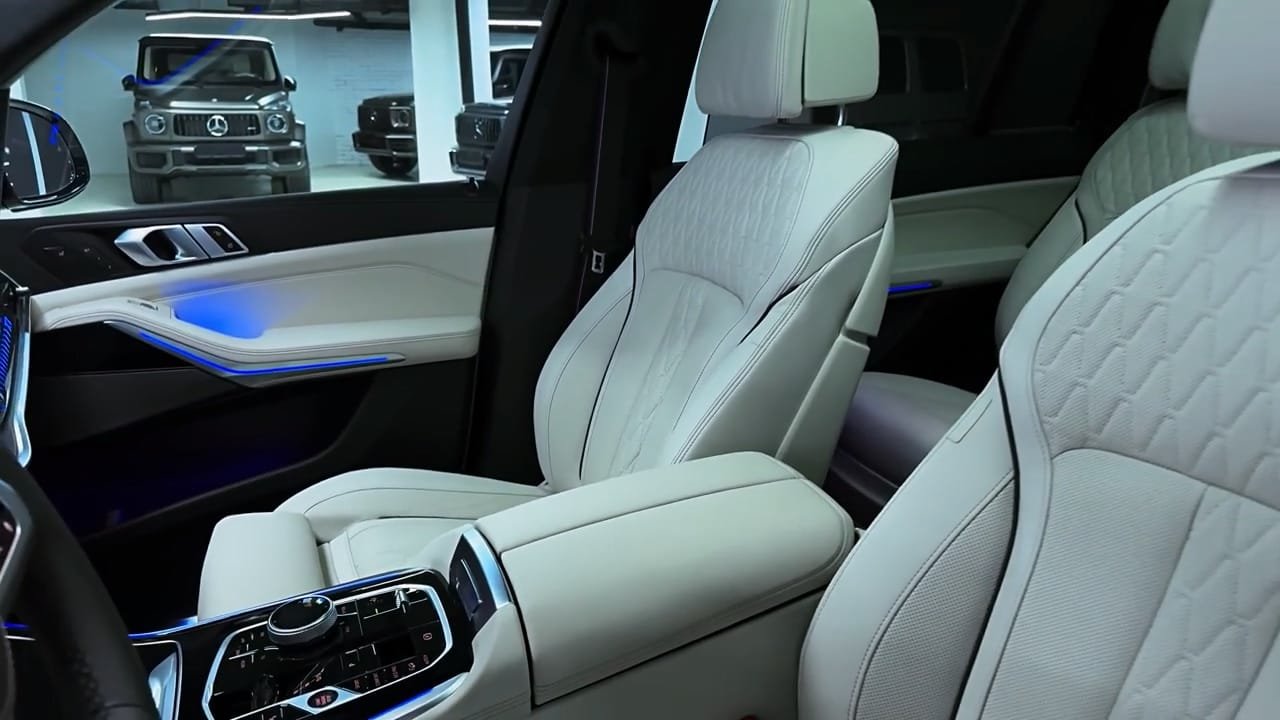
The X7 isn’t a weekend toy — it is a grand tourer in a towering body. Long-distance comfort is a strength: seats are supportive, cabin insulation is mature, and climate/zonal controls are modern and effective. BMW’s packaging produces usable third-row seats for adults on shorter journeys, while second-row captain’s seats are an option for buyers prioritizing rear comfort.
Practical features that matter:
- A maximum towing capacity that in many markets reaches 7,500 lb with factory hitch options, making the X7 genuinely useful for trailers and boats.
- Large fuel tanks on higher trims and efficient mild-hybrid technology on the 6-cylinders extend range for cross-country travel.
- Smart storage and easy-to-operate physical controls mean the X7 is designed for owners who use their cars, not just admire them.
For families and frequent travelers, the X7’s blend of cargo-flexibility, towing capability, and interior comfort makes it a compelling one-vehicle solution.
Technology Dimension: Infotainment, Safety, and Driver Aids
BMW layers the X7 with high-end technology, but the company has avoided turning the cabin into a touch-screen museum. The iDrive infotainment — large, responsive, and easy to navigate — remains the control hub, supported by a 12.3-inch digital instrument cluster and available head-up display. Wireless smartphone integration, OTA updates, and advanced telematics (My BMW app) are standard expectations now, and the X7 meets them.
Safety and driver assistance are comprehensive: adaptive cruise, lane-keeping, blind-spot assistance, and a full complement of collision mitigation systems are standard/available. More advanced driver-support packs — including semi-autonomous lane-change and traffic-jam assist features — improve urban driving life, though they do not replace attentive driving. BMW’s multi-camera and surround-view systems are particularly useful when maneuvering a vehicle of this size.
Tech highlights
- Mature infotainment and thoughtful physical controls for frequently used functions.
- Safety tech and driving aids suitable for both long highway hauls and dense city traffic.

Value Dimension: Pricing, Ownership, and Competitive Positioning
The X7 sits at the top end of BMW’s SUV hierarchy, and its pricing reflects that. Buyers get class-leading materials, a highly engineered chassis, and brand cachet — but it’s important to value these against running costs and competitor offerings.
Total cost of ownership considerations
- Fuel and maintenance costs for V8 models are high; the inline-six with mild-hybrid support is a better long-run balance for many owners.
- Residuals for premium SUVs vary by market; BMW generally holds value well, particularly with higher-spec and performance variants.
- Optional technology and luxury packages can quickly push the MSRP into super-luxury territory; consider which features you truly use.
Where X7 scores vs rivals
- Against the Land Rover Defender 130, the X7 is more refined and technologically mature, though the Defender leans more off-road.
- Versus the Mercedes-Benz GLS, the X7 generally offers a sportier, driver-centric character.
- Compared with the Audi Q7/Q8 family, the X7 is larger and better suited to buyers who value true three-row comfort over sleek coupe-lines.
In short: the X7’s value lies in its combination of space, driving dynamics, and brand cachet. Buyers who want ultimate luxury without sacrificing driving engagement will find the X7’s proposition strong — but buyers focused solely on cost-to-mile may prefer smaller, more frugal alternatives.
What’s New for 2025 (Practical Update)
For 2025 BMW has refined powertrain calibrations and updated some interior materials and available equipment to keep the model fresh against evolving competition. The core architecture, the driving dynamics options, and flagship positioning remain consistent with BMW’s intent to keep the X7 as its three-row halo SUV. For specifications, BMW’s published technical data and U.S. market information are the best reference.
Buy A 2025 BMW X7
Buy the 2025 X7 if you:
- Need a spacious three-row SUV that still offers engaging driving dynamics.
- Tow regularly and want a full-size platform that handles weight with composure.
- Want flagship-level technology and interior comfort with the option of genuine performance from a V8.
Skip the X7 if you:
- Want the absolute lowest running cost or pure electrified efficiency — there are smaller, more efficient hybrids and EVs that suit those priorities.
- Need extreme off-road capability — other SUVs are more purpose-built for rock crawling and overlanding.