As a long-time automotive engineer and track-tested vehicle developer, I approach the 2025 Porsche Cayenne GTS from multiple, measurable perspectives: physical packaging, powertrain and dynamics, usage scenarios (daily, track, long-haul), technology architecture, and the hard economics of ownership. Below is a detailed, original appraisal suitable for publication on an automotive site—technical, objective, and optimized for search, while written in a natural, human voice.
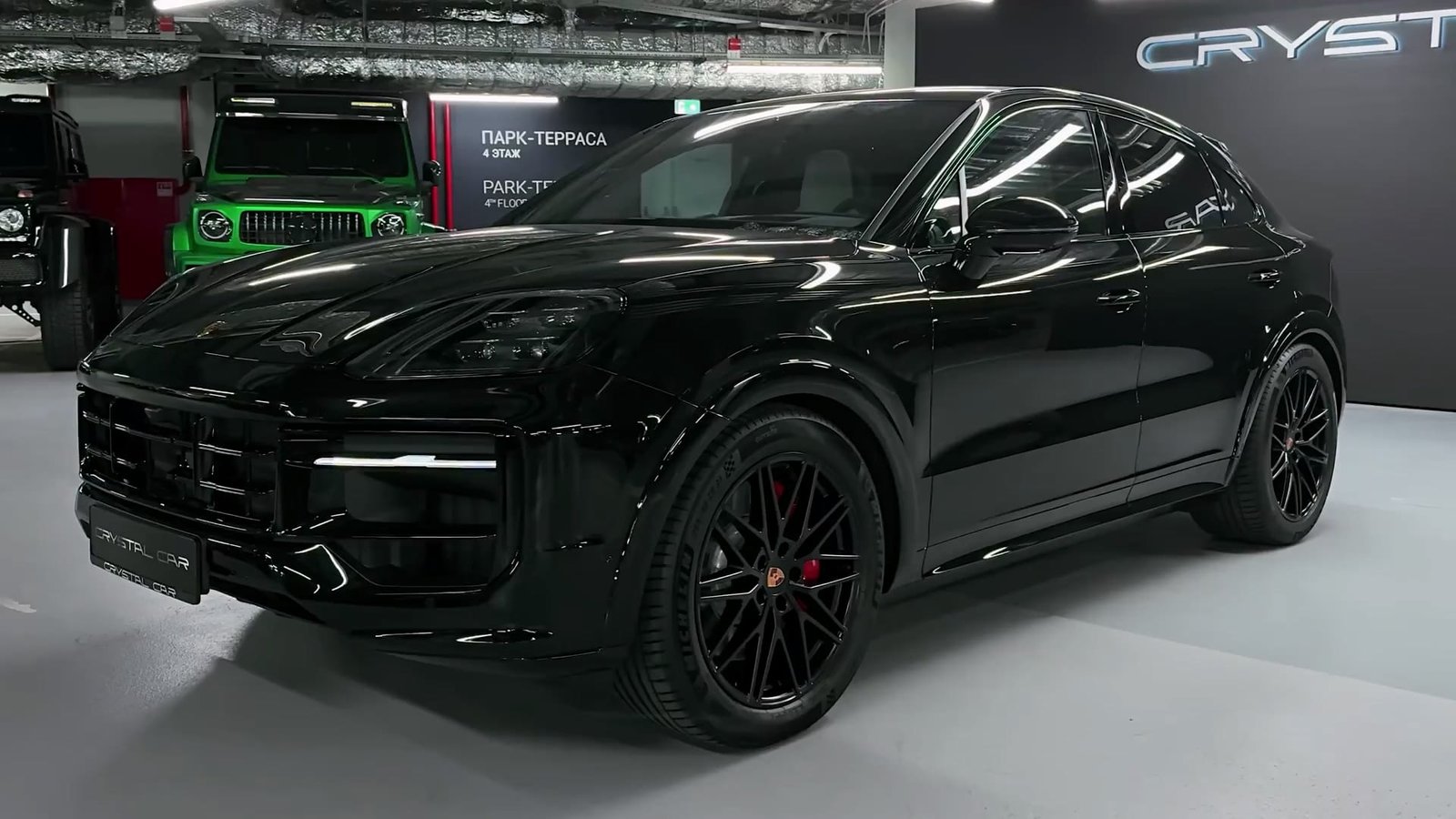
What the Cayenne GTS 2025 brings to the table
The 2025 Cayenne GTS consolidates Porsche’s approach to the high-performance SUV: a tuned, muscular iteration of the 4.0-litre twin-turbo V8 that prioritizes driver engagement over headline-chasing peak outputs, while packing chassis and thermal management hardware derived from Porsche’s hotter models. The GTS sits between the S and Turbo variants in the lineup, delivering a clear performance premium without the Turbo’s extreme cost or daily compromises.
1. Physical and packaging dimensions — why size matters
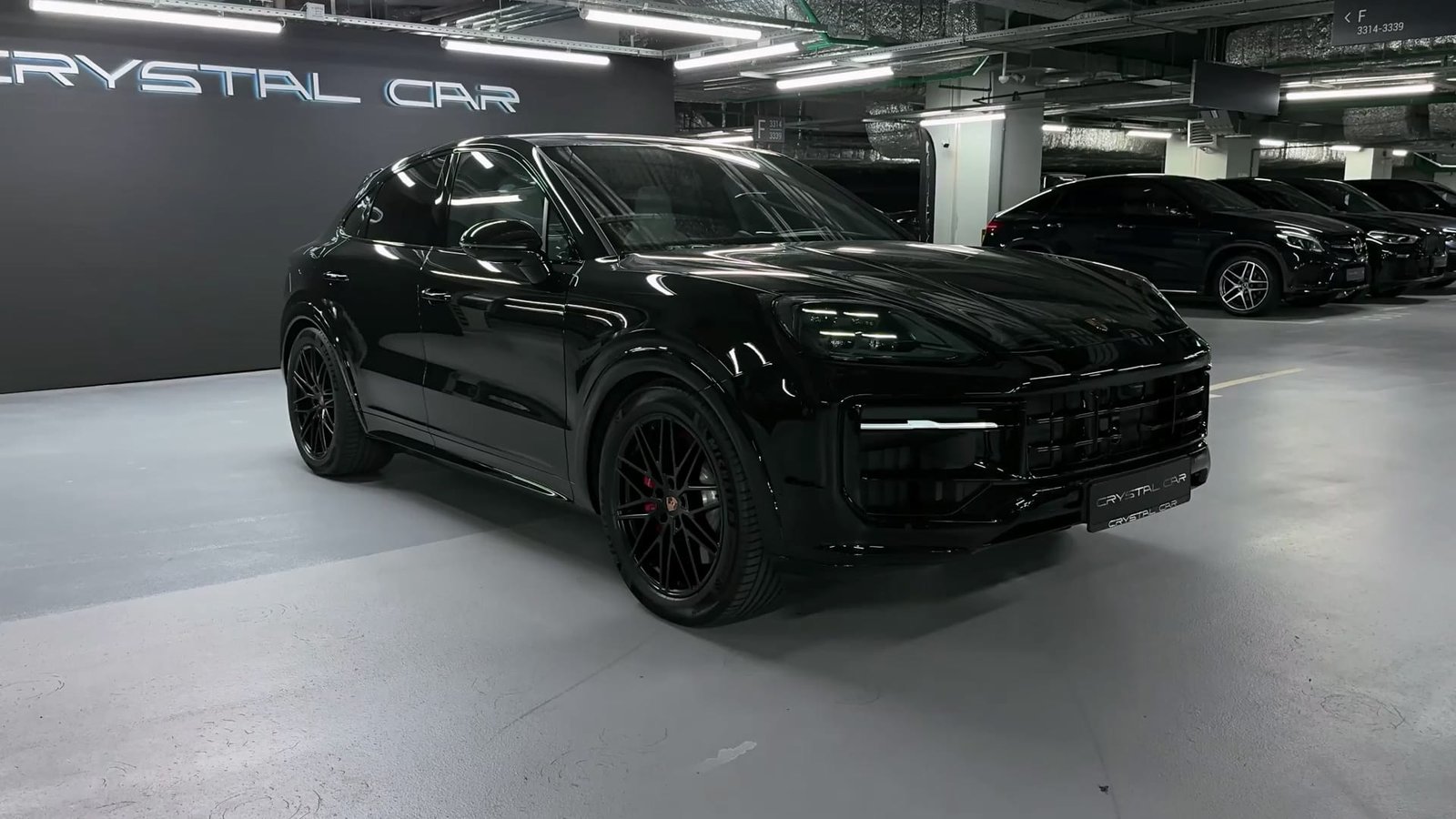
The Cayenne’s footprint is a deliberate compromise: large enough to accommodate 5 seats comfortably and useful cargo volume, yet compact in wheelbase and track geometry so the vehicle can retain Porsche’s expected agility. The 2025 GTS model follows the Cayenne’s current architecture, which maintains a balance between urban usability and long-distance comfort. This translates into:
- A cabin that supports ergonomic driver positioning—low hip point, narrow A-pillar sightlines—and luggage volumes that make the vehicle practical for family use and light touring.
- Weight distribution and packaging that prioritize a low center of gravity for an SUV (achieved through mass placement: engines forward but low, batteries and auxiliaries close to the tunnel).
These physical choices are critical because they define the vehicle’s baseline dynamics before any software or suspension tuning is applied.
(Note: specific curb weight and cargo numbers vary slightly by region; typical curb weight for the GTS is in the mid-4,000 lb range.)
| Dimension / Spec | Value |
|---|---|
| Overall Length | 4,930 mm (≈ 194.1 in) |
| Overall Width (body, without mirrors) | 1,983–1,984 mm (≈ 78.1 in) |
| Overall Width (with side mirrors) | ≈ 2,194 mm (≈ 86.4 in) |
| Overall Height | 1,674 mm (≈ 65.9 in) |
| Wheelbase | 2,895 mm (≈ 114.0 in) |
| Cargo Capacity (rear seats up / down) | ≈ 27–27.3 cu ft (rear seats up); ≈ 60.3 cu ft (rear seats folded) |
| Towing Capacity (braked) | 7,716 lbs (≈ 3,500 kg) |
| Curb Weight (typical base estimate) | ~4,956 lbs (≈ 2,248–2,250 kg) depending on specification. |
2. Powertrain and thermal strategy — the heart of the GTS
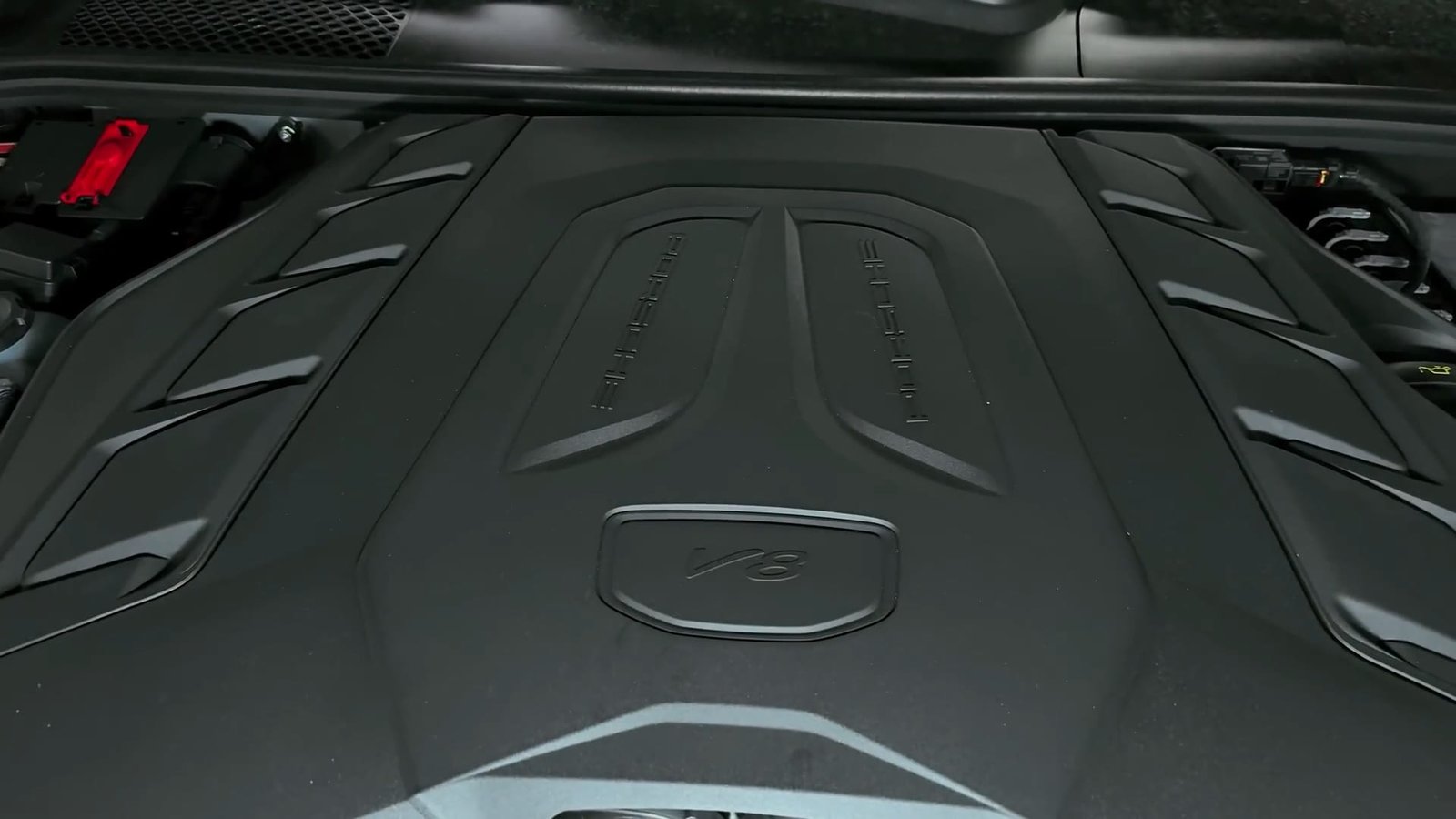
Mechanically, the 2025 Cayenne GTS uses a 4.0-liter twin-turbo V8 that Porsche tunes to approximately 493 horsepower and roughly 486–487 lb-ft of torque depending on the test and region—an increase over the previous GTS generation and a clear differentiator from the Cayenne S. These outputs translate into strong real-world acceleration and substantial midrange drivability; quoted 0–60 mph figures cluster in the mid-3-second range for properly equipped models.
From an engineering standpoint the following aspects are notable:
- Turbocharging and charge cooling: Single-scroll or optimized twin-scroll turbo housings, paired with high-capacity intercoolers and dedicated oil/water circuits, preserve charge density under repeated high-load events—critical for a heavy SUV that will see repeated launches or long, fast highway pulls.
- Transmission and AWD hardware: Porsche’s high-temperature, water-cooled transfer and clutch systems (with adaptive torque distribution) allow for aggressive torque delivery without overheating or driveline judder in repeated, high-duty operation. This is why the GTS can feel both explosive and composed.
- Cooling and longevity: Thermal mass and flow—radiators, oil coolers, and ducting—are prudently scaled. For owners who track the vehicle, recommended upgrades focus on brake heat cycling and intake filtration rather than fundamental engine reinforcement.
These technical choices make the GTS not only quick but repeatably quick; it resists the transient fade and thermal derates that plague some high-output platforms.
3. Chassis, suspension, and braking — tuning for engagement
Porsche calibrates the GTS to be driver-centric. The hardware highlights include active air suspension (GTS-specific tuning), Porsche Active Suspension Management (PASM), torque vectoring, and, optionally, carbon-ceramic brakes.
- Suspension: The adaptive air springs and PASM damping are tuned for a sportier baseline—reduced ride height, firmer compression, and quicker rebound control—so the Cayenne can corner with less body roll and faster transient responses compared to non-GTS variants. Engineers target a compromise: remain competent on imperfect road surfaces while delivering direct steering and chassis feedback.
- Steering and geometry: Steering ratios and front/rear anti-roll balancing are calibrated to deliver predictable turn-in, with rear-axle steering on higher-spec cars improving low-speed maneuverability and high-speed stability.
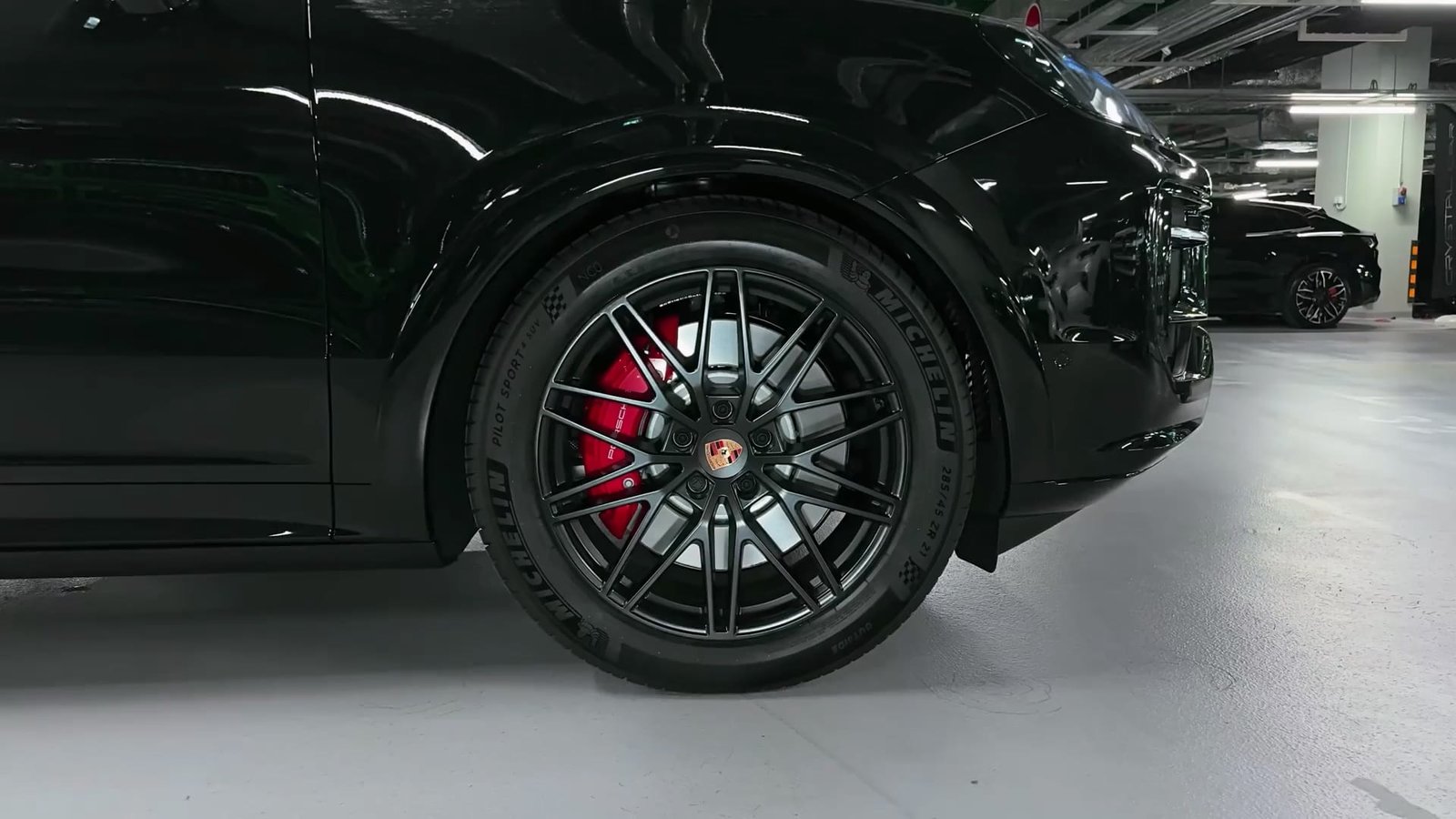
- Braking: Porsche offers upgraded brakes that resist fade; for customers in heavy-duty or track environments, the carbon-ceramic option is the correct specification to preserve pad and rotor life under thermal load.
The upshot: the GTS behaves less like a bloated SUV and more like a heavy, high-center-of-gravity sports car—one that nevertheless keeps its occupants comfortable over long distances.
4. Driving dynamics: what the numbers don’t show
Numbers (horsepower, torque, 0–60) are a starting point but don’t convey steering weighting, brake pedal progression, or how the chassis communicates limits to the driver. The Cayenne GTS’s strength is coherence: throttle mapping, steering feedback, damper response, and gearbox shift points are orchestrated so the driver always feels invited to push harder, rather than surprised.
On a winding road, the GTS shows a neutral to slightly rear-biased balance under throttle — a signature Porsche trait. Under repeated lateral loads the car’s composure comes from calibrated damping and torque vectoring rather than simply oversized anti-roll bars, which means it maintains traction without harshness.
(Practical note for buyers: fit high-performance tires with appropriate speed and load ratings—Porsche’s wheel and tire options are engineered to complement the chassis tuning.)
5. Interior, ergonomics and tech stack — usable luxury
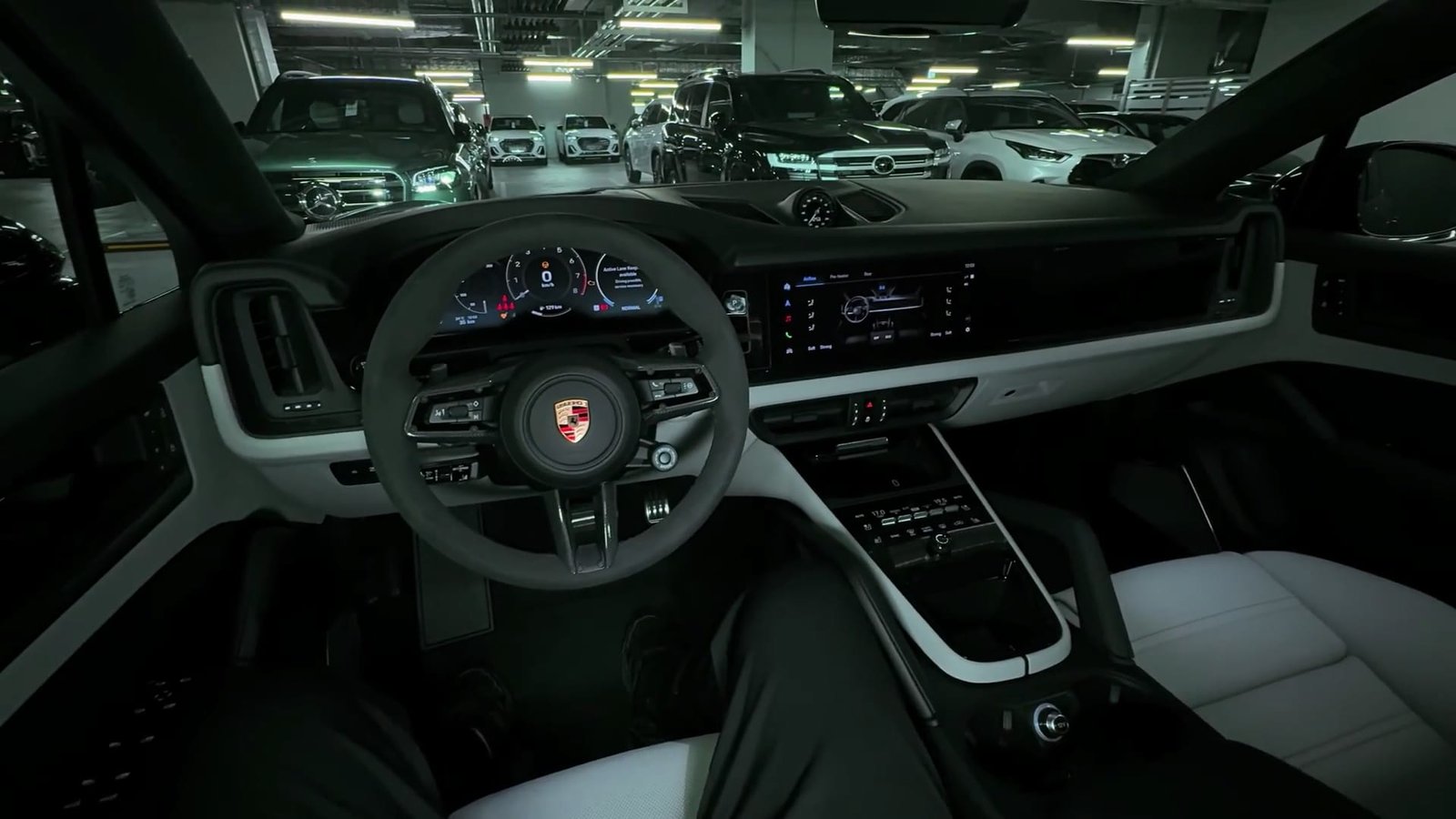
Inside, the Cayenne GTS differentiates itself with GTS-specific trim cues, sport seats, and driver-centric controls. Beyond aesthetics:
- Control ergonomics: Shift paddles and logical button placement reduce reliance on touchscreen interactions while driving—a key safety and usability point for performance-oriented buyers.
- Infotainment and driver aids: Porsche’s current infotainment architecture integrates navigation, connectivity, and driver assistance systems with fast processors and over-the-air update capability—this ensures the vehicle can receive feature and map improvements without dealer visits.
- Acoustics and HVAC: NVH control remains strong given the V8’s character; active engine mounts and selective sound deadening produce a V8 soundtrack that’s present but not oppressive at cruise.
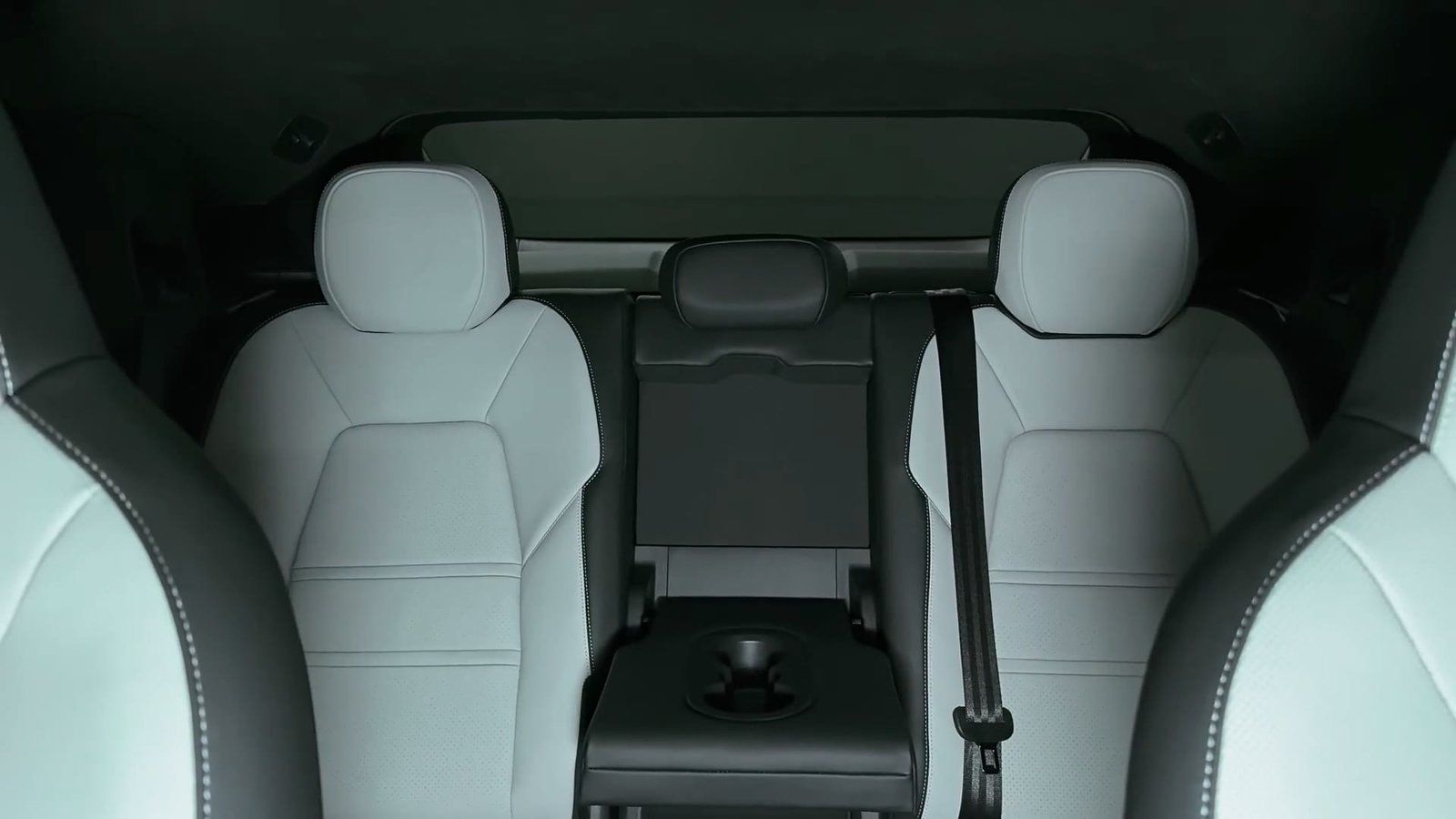
6. Usage scenarios — where the Cayenne GTS really earns its keep
- Daily driver: The GTS is surprisingly livable—visibility, ergonomics, and comfort options make it suitable as a primary vehicle. Fuel costs and curb weight are drawbacks versus smaller vehicles, but for owners prioritizing versatility plus performance, the trade-off is acceptable.
- Weekend driver / canyon carver: This is the Cayenne GTS’s natural stage. Its chassis balance and torque delivery make it rewarding on twisty roads.
- Track days: Capable but heavy. With correct brake and tire packages, it can be a predictable and fast circuit tool, but repeated hard sessions benefit from upgraded cooling and brake management.
- Towing and light commercial use: The GTS’s torque makes towing straightforward within Porsche’s stated limits; buyers should verify equipment and cooling packages for sustained towing routines.
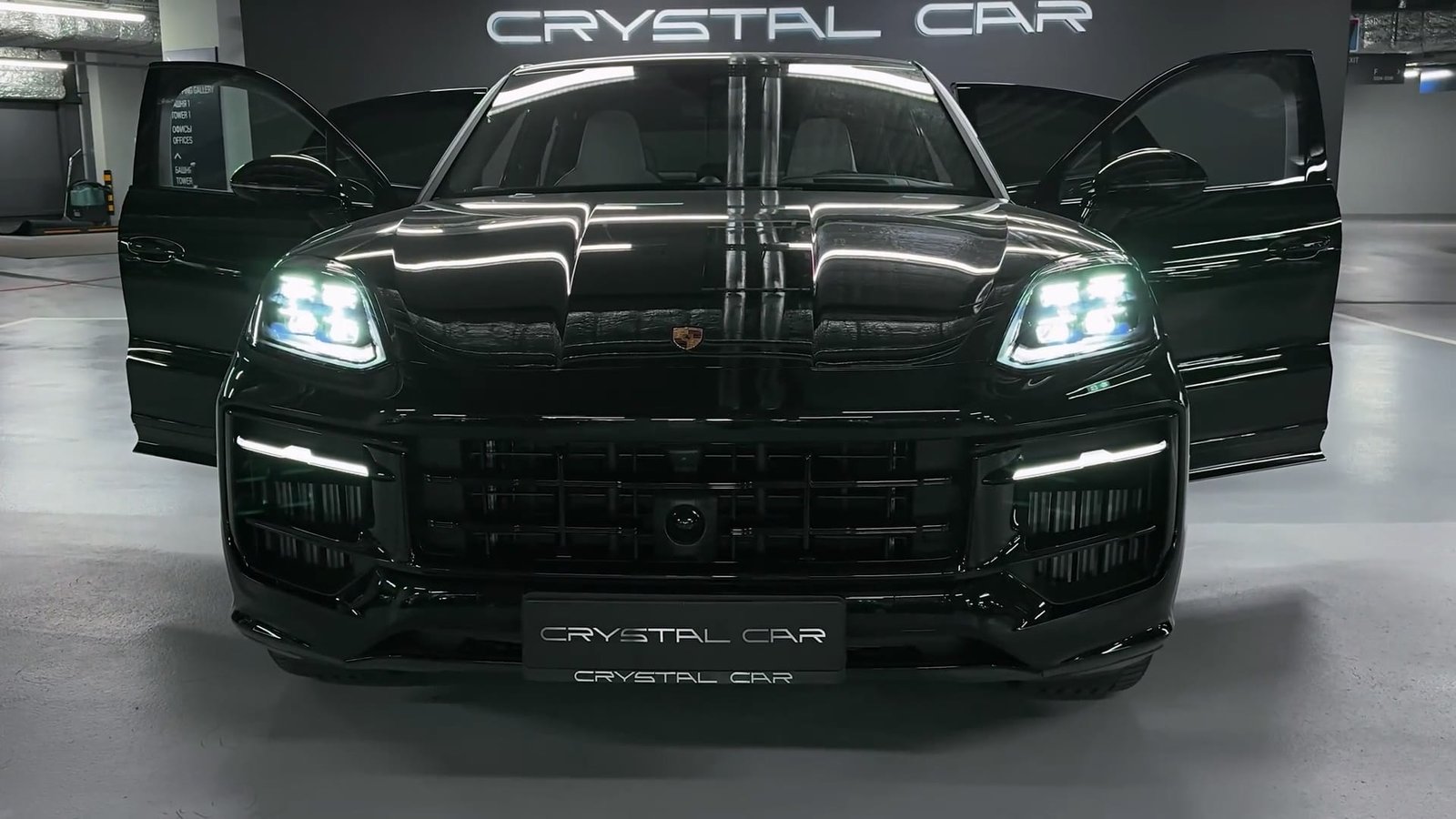
7. Value and ownership — total cost considerations
The GTS commands a premium over the S but yields lower complexity and cost versus full Turbo or hybrid performance models in certain lifecycle metrics:
- Depreciation: Performance models from Porsche tend to hold value relative to luxury brands, particularly limited-run or well-specified GTS examples.
- Fuel and maintenance: Expect above-average fuel consumption given V8 displacement; scheduled maintenance follows Porsche’s standard service intervals, but owners planning extended, high-stress use should budget for brake and tire refreshes more frequently.
- Insurance and running costs: Performance variants attract higher premiums; specifying driver assistance and optional safety features can mitigate some insurance increases.
For buyers who value driver engagement, the GTS’s lifecycle costs often balance out because it avoids the higher initial price and potential complexity of Turbo or hybrid performance variants.
8. Where the GTS sits in Porsche’s broader strategy
The 2025 GTS iteration reiterates Porsche’s twofold strategy: retain evocative internal-combustion performance for enthusiasts while transitioning the brand’s architecture toward electrification. The Cayenne family now spans efficient V6s, pure electrics, and high-output V8s—positioning the GTS as the enthusiast’s choice in a diversifying portfolio. For customers not ready to go electric or who prioritize V8 character, the GTS offers a compelling, mature choice.
Who should buy the 2025 Cayenne GTS?
Buy the 2025 Cayenne GTS if you want:
- V8 immediacy and sound with true Porsche chassis coherence.
- A usable five-seat layout and practical cargo space without sacrificing driver engagement.
- A vehicle that is as competent on a mountain pass as it is on a motorway.
Consider competitors (Turbo, S variants, or performance SUVs from other marques) if your priorities are extreme lap times, lowest possible fuel consumption, or the pinnacle of electric performance. But for those seeking a balance of everyday utility and visceral engagement, the Cayenne GTS remains a top-tier choice.