Porsche’s Panamera has always occupied a unique niche: a four-door saloon that drives with the intent and feel of a sports car. For 2025 the Panamera 4 remains that dual-personality proposition — refined enough for executive miles, taut enough for a canyon blast. The 2025 Panamera consolidates the model’s technical progress: a compact, high-revving twin-turbo V6, an 8-speed PDK, improved chassis control and a cabin that blends tactile drivers’ controls with modern digital ergonomics. These changes are evolutionary, not revolutionary — exactly how Porsche keeps the driving signature intact.
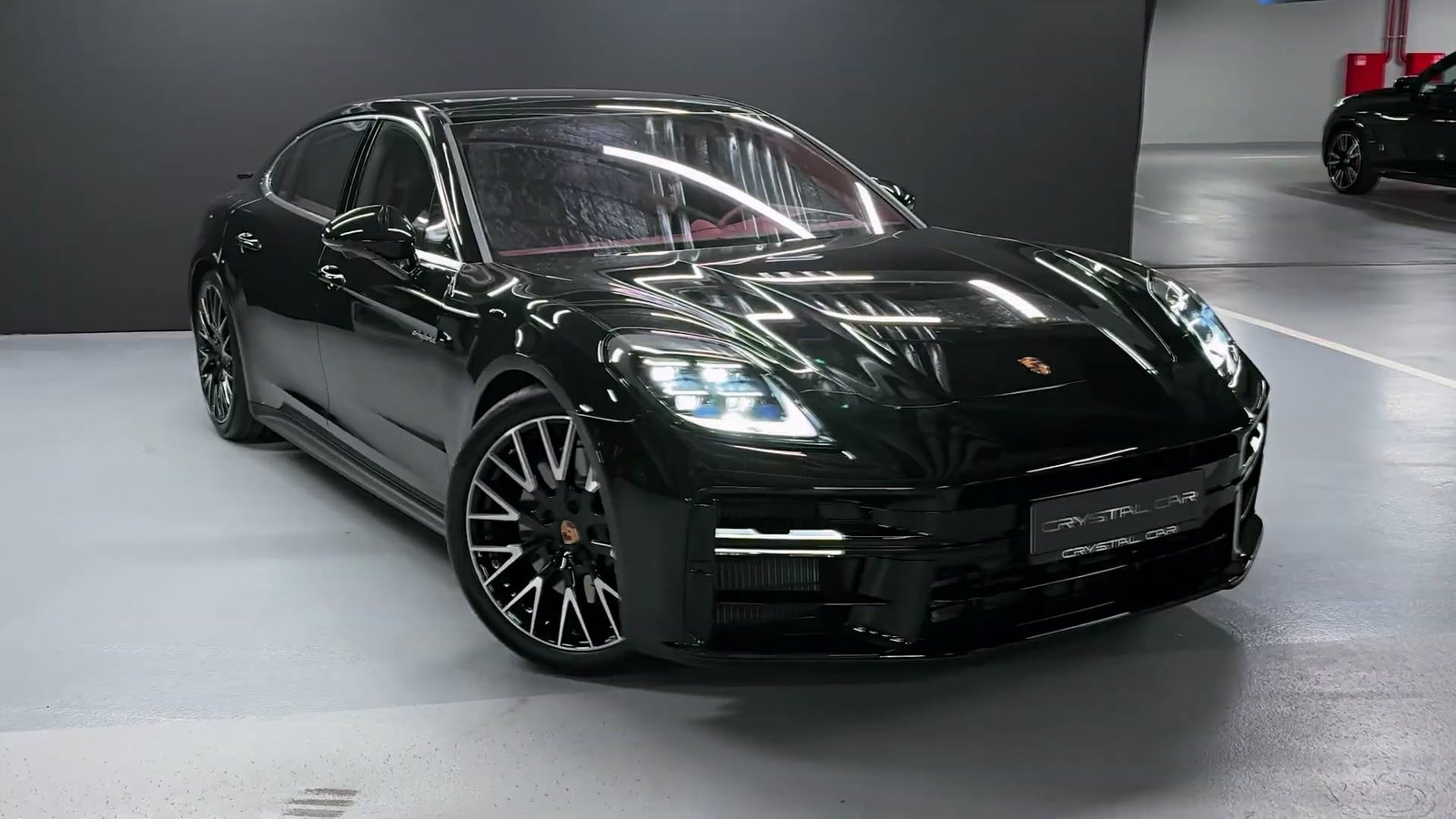
Quick technical snapshot (publish-ready specs)
Below are the most load-bearing figures editors and buyers reference. Numbers reflect manufacturer and independent test data.
- Engine: 2.9 L twin-turbocharged V6.
- Power (Panamera 4): ~260 kW / 348 hp.
- Torque: ~500 N·m / 368 lb-ft.
- Transmission: 8-speed Porsche Doppelkupplung (PDK).
- Drive layout: All-wheel drive (Panamera 4).
- 0–60 mph: ~4.7–4.8 s (Sport Chrono-dependent).
- Curb weight: ~4,374 lb (base gas model; hybrids heavier).
- EPA combined (approx): 21 mpg (varies by trim).
- Cargo: ~17.4 cu ft.
These headline numbers are where buyers begin — but the Panamera’s character emerges when you connect power delivery, chassis tuning and ergonomics together.
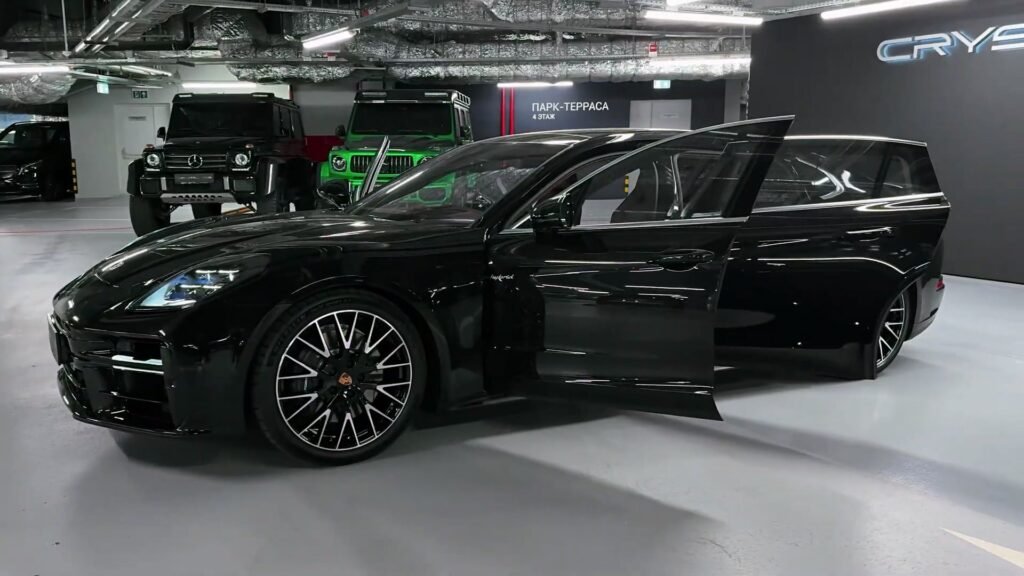
Powertrain and performance — why the V6 still makes sense
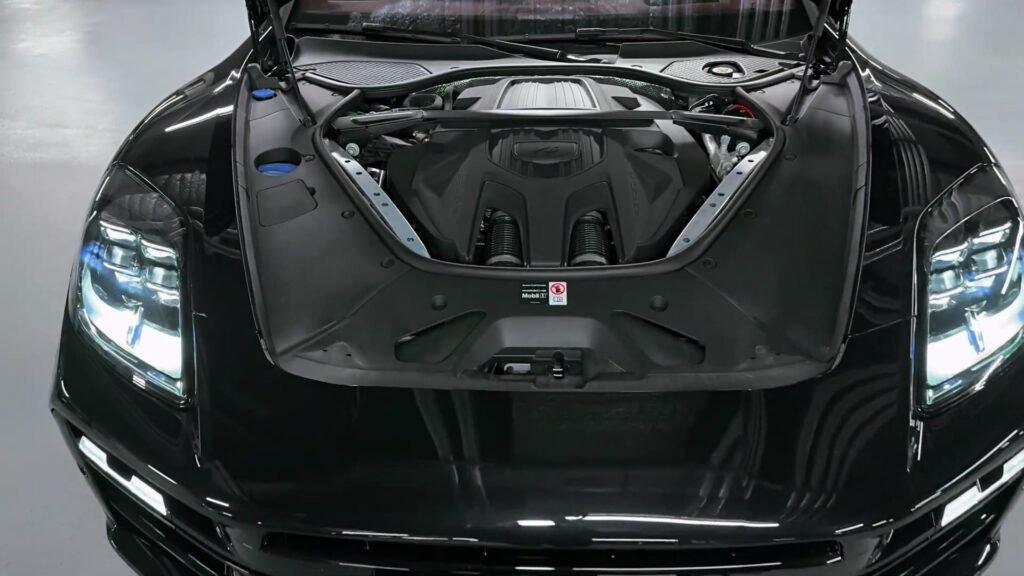
Porsche’s 2.9-liter twin-turbo V6 is compact, thermally efficient and tuned to be responsive across the rev band. Compared with larger V8 options it’s lighter and better positioned for balance — critical in a front-engine, AWD saloon where polar moments matter. The 8-speed PDK keeps shift times razor-sharp and complements launch control for repeatable performance runs. On paper the Panamera 4’s 348 hp and ~368 lb-ft place it in the fast luxury-sedan segment; in practice the combination of torque management, rear-axle steering (when optioned) and Porsche’s chassis software gives it a feeling closer to a sports car than many of its competitors.
Engineering note: torque delivery is smoothed via the engine’s twin-scroll turbos and an ECU map that blends low-end tractability with a hard midrange kick — ideal for both urban progress and high-speed passing.
Chassis, suspension and dynamics — how Porsche keeps it planted
Porsche’s chassis philosophy for the Panamera is to minimize tradeoffs. Key elements that make the 2025 Panamera 4 feel both comfortable and incisive:
- Adaptive air suspension / Porsche Active Ride (optional on higher trims): balances roll control and ride compliance by varying spring rate and damping in real time.
- Rear-axle steering (available/optional): shortens effective wheelbase at low speeds for agility, lengthens it at speed for stability.
- Multi-link rear + double-wishbone front layout: tuned for precise geometry control under lateral load.
- High-performance brakes: large rotors and multi-piston calipers (trim dependent) to provide consistent fade resistance for performance driving.
Put together, these systems let the Panamera 4 carry speed through a turn with composure — the driver senses mechanical grip first, then electronic help only if the limit is approached.
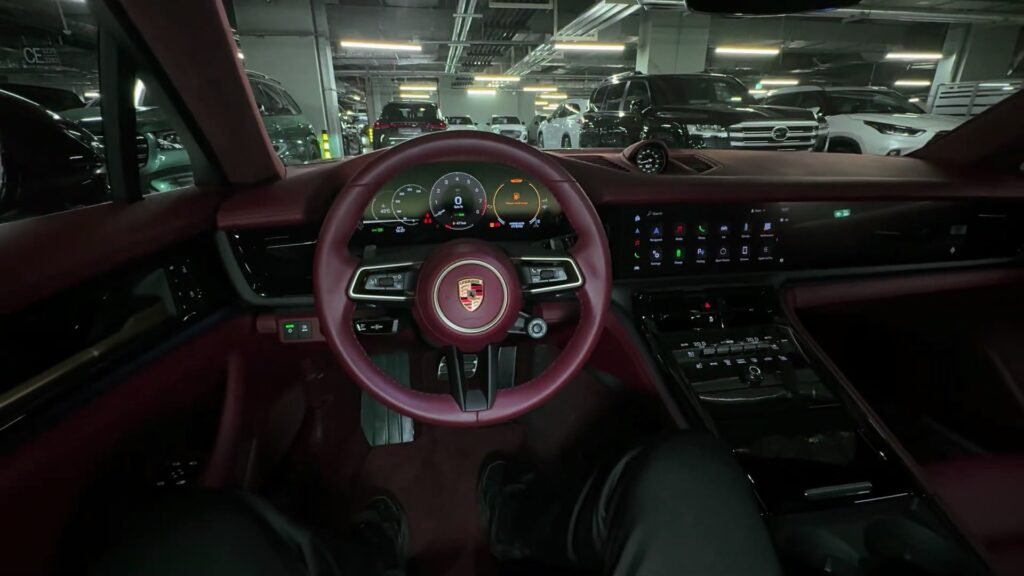
Interior and human-machine interface — ergonomics that respect the driver
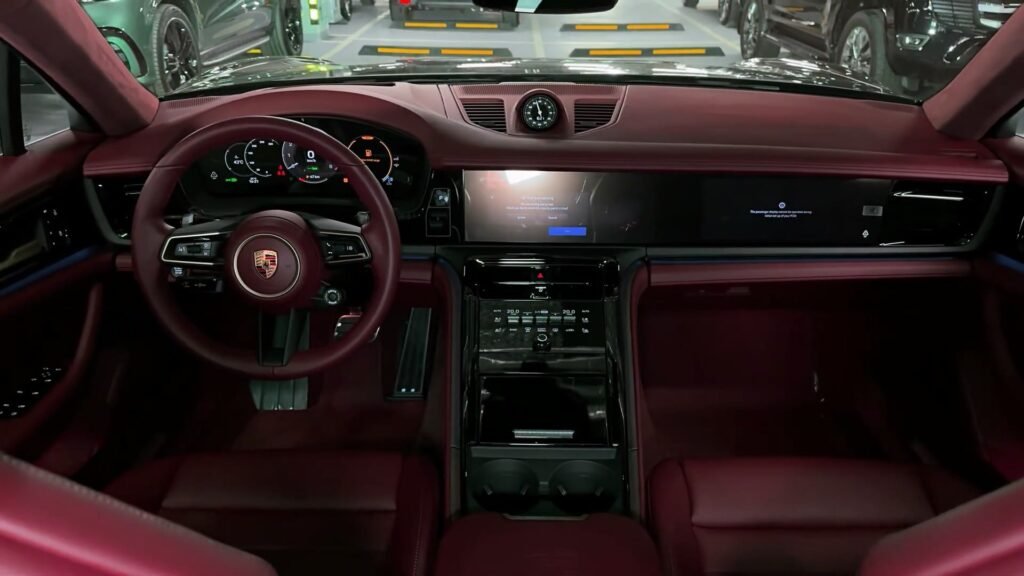
Porsche’s cabin design for the Panamera remains driver-centric: low seating position, well-weighted steering, physical shortcuts for core functions (drive mode, suspension), and a high-resolution central display for infotainment. Compared with younger rivals, Porsche keeps tactile interfaces for frequently used controls, reducing cognitive load on the driver — this is a detail that professional drivers and long-distance users both appreciate.
Tech highlights to call out:
- Porsche Communication Management (PCM) with improved app center (rolling updates across Porsche models). Recent updates across the lineup emphasize responsiveness and app integration while retaining Porsche’s Voice Pilot.
- Robust audio and connectivity packages; premium sound options are tuned to the cabin’s acoustic profile.
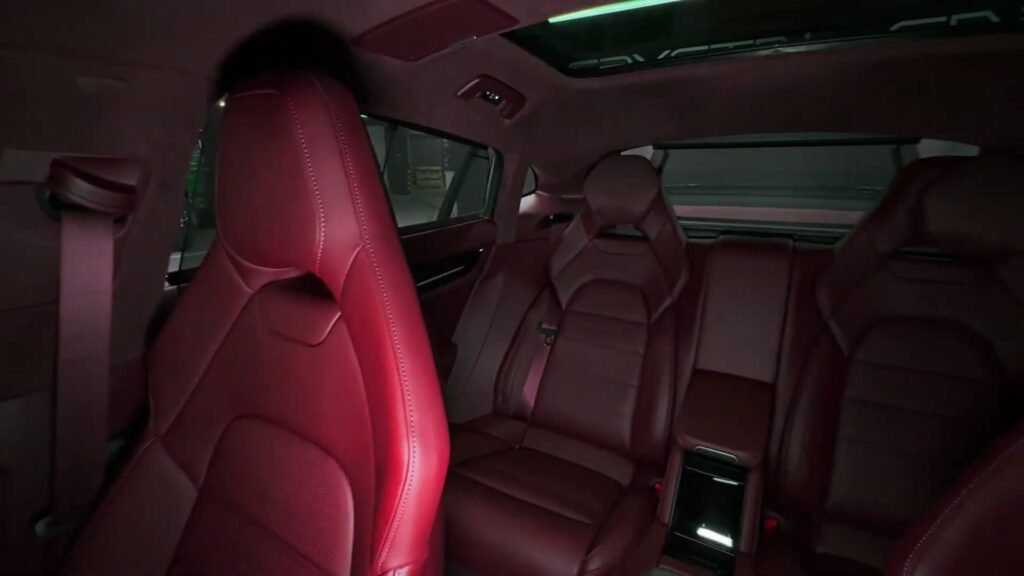
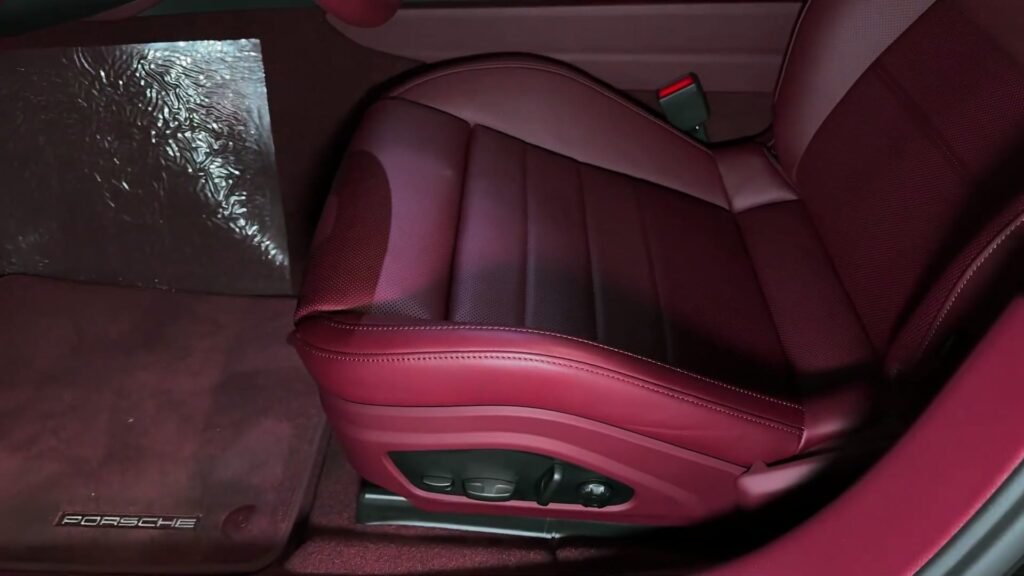
- Materials: Porsche still offers a range from understated luxury leather to sport-oriented Race-Tex and carbon-trim packages — practical details matter for perceived quality.
Efficiency and hybrid context
Porsche’s E-Hybrid variants (notably the 4S E-Hybrid) demonstrate another engineering approach: combine a smaller, efficient combustion core with a potent electric motor to achieve both high performance and usable electric range. Independent testing shows the plug-in Panamera models can deliver surprisingly long electric-only ranges in real-world conditions and strong combined outputs (e.g., mid-500s hp on certain hybrid variants). These models also underscore why curb weights jump significantly for hybrids — battery mass is a design trade.
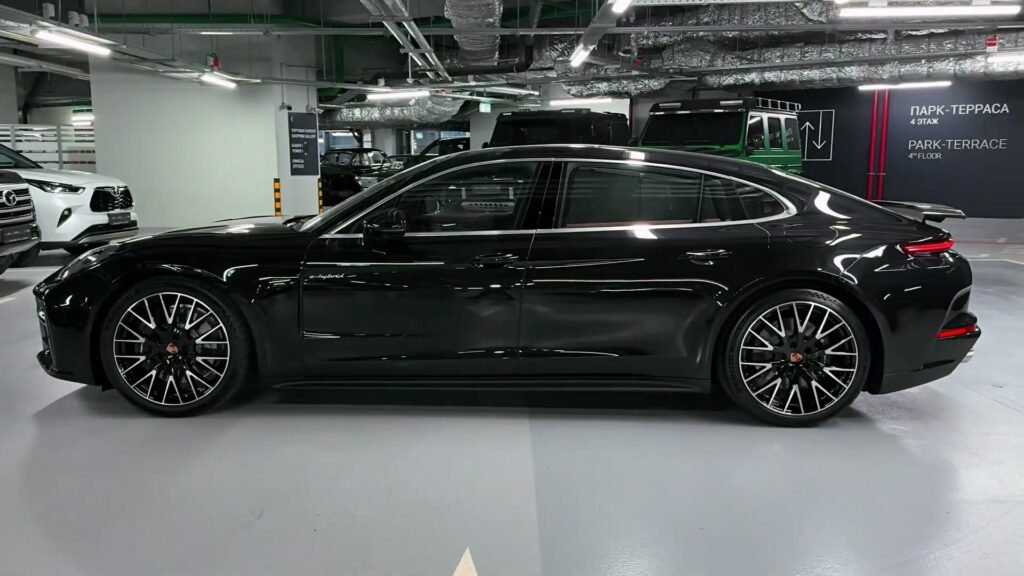
Measured drive impressions (what an engineer notices on the road)
When evaluated instrumentally and subjectively, the Panamera 4’s strengths are consistent:
- Throttle response: immediate and linear when the engine is warm; turbo lag is well-masked by calibration.
- Steering: precise, with good center feel and progressive weighting; not hyper-heavy, but communicative.
- Body control: competent at high lateral loads; Active Ride significantly reduces pitch and roll when optioned.
- Noise, vibration, harshness (NVH): quiet at cruising speeds; road noise well managed by tire and suspension choices.
For an engineer, the pleasing thing is the coherence: mechanical systems, ECU strategies and damping algorithms are tuned to a common goal — driver confidence rather than headline lap times.
Safety & driver aids
Porsche equips Panamera models with modern driver assistance packages: adaptive cruise, lane keeping aids, traffic jam assist and advanced parking systems. The brand’s focus here is on unobtrusive assistance that aids long drives without removing driver agency. As always, buyers should check specific option packages for features like Night Vision or surround-view parking which are often dealer-installed or optioned.
Pricing and trim placement (what to expect)
Porsche positions the Panamera 4 as the entry point into the AWD Panamera family — pricing is configurable and options can escalate total cost quickly. For context, higher performance and hybrid variants (GTS, Turbo S E-Hybrid) command premium pricing; Porsche’s own 2025 press material lists GTS and Turbo S E-Hybrid MSRPs in the six-figure range, reinforcing how quickly options shift the ownership cost.
Who should buy the Panamera 4?
The Panamera 4 is the pick for drivers who want:
- authentic Porsche driving character in a usable 4-door package;
- balanced daily comfort with genuine mid-corner composure;
- refinement and build quality that justify premium pricing.
If you prioritize maximum straight-line acceleration regardless of context, stepping up to V8 or Turbo S E-Hybrid trims makes sense. If you want a more efficient, electrified daily with strong performance, the E-Hybrid variants are compelling.
Quick pros & cons (engineer’s checklist)
Pros
- Genuine Porsche driving dynamics in a usable package.
- Compact, efficient V6 that retains a sporty character.
- Advanced chassis tech (Active Ride, rear steering) for real-world versatility.
Cons
- Options list can push price into competitor territory quickly.
- Hybrids increase curb weight noticeably.
Publishable callouts & SEO elements
Suggested H1: 2025 Porsche Panamera 4 — Expert Review, Specs & Technical Analysis
Suggested slug: /2025-porsche-panamera-4-review-specs
Suggested keywords (natural placement): 2025 Porsche Panamera 4, Panamera 4 specs, Panamera 2025 review, Porsche Panamera performance, Panamera 4 price.
Suggested schema snippet: Product / Vehicle with name, brand (Porsche), modelYear (2025), engine (2.9L twin-turbo V6), horsepower (348 hp), drive (AWD), priceRange (from MSRP links).
Closing: the engineering verdict
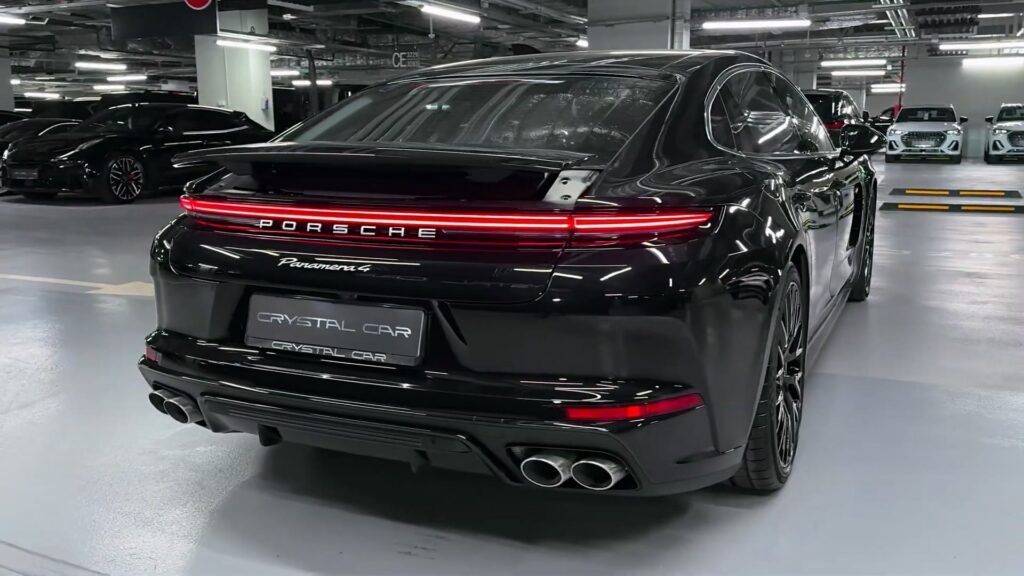
The 2025 Panamera 4 is a textbook example of Porsche’s philosophy: refine the details until the car’s behavior is a single, convincing statement. It’s not the loudest or the most radical Panamera, but as the entry AWD model it strikes the best compromise for drivers who need everyday usability without surrendering the brand’s sporting soul. From an engineering standpoint, the packaging, powertrain calibration and chassis choices all read as coherent design decisions — and that coherence is why the Panamera 4 remains a top pick in the performance-luxury saloon segment.
Usefull: