When Mercedes-Benz and BMW launch all-electric iterations of two of their best-selling mid-size SUVs within days of each other, the result is not merely market competition — it is a study in two divergent philosophies of premium mobility. The Mercedes-Benz GLC-EV (badged as the GLC with EQ technology) and the BMW iX3 occupy the same segment, the same price band and, to a degree, the same customer consideration set. Yet they answer different questions: What does a modern German luxury SUV look and feel like? and What should it prioritize — range and practicality, or presence and driving character?
Below is a compact, technical and judgment-based comparison that organizes the most relevant facts and offers a clear verdict for buyers whose priorities are engineering-led, rather than marketing-led.
Full Comparison Table
| Category | Mercedes-Benz GLC-EV | BMW iX3 |
|---|---|---|
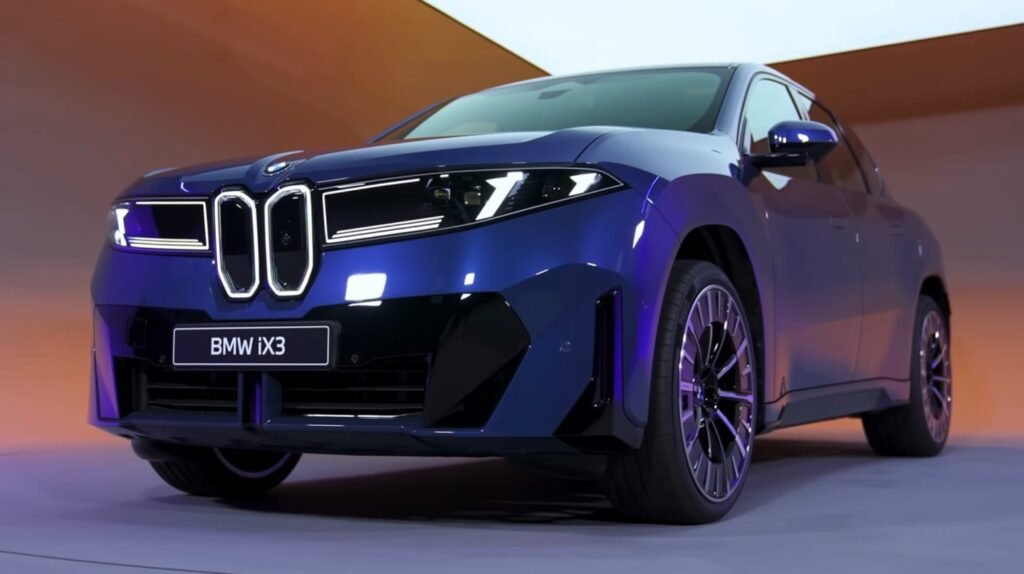
| Design Philosophy | Evolutionary, maintains classic Mercedes identity; blends familiar GLC proportions with modernized EV cues | More radical break from BMW’s ICE designs; a cleaner, futuristic EV identity |
| Front Design | Large central star, cohesive grille–headlight integration; premium but polarizing | Streamlined, EV-specific fascia with emphasis on aerodynamics and efficiency |
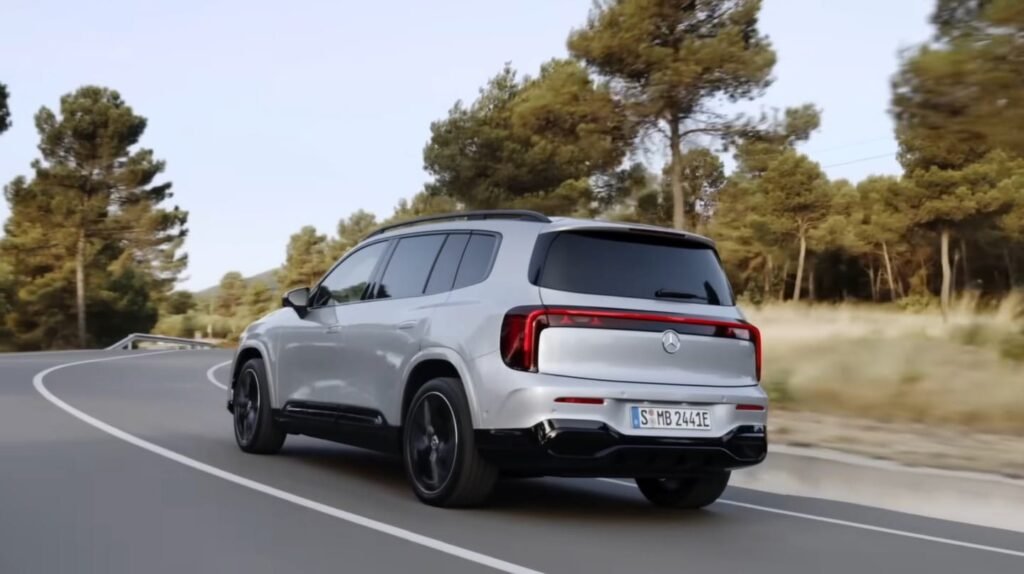
| Rear Design | New horizontal tail-light signature inspired by AMG GTXX concepts; wider, more athletic | More conservative rear styling; clean and functional |
| Interior Concept | Futuristic, tech-forward cabin dominated by the MBUX Hyperscreen | Minimalistic “shy tech” approach; more traditional BMW driver orientation |
| Main Display | 39.1-inch MBUX Hyperscreen (optional) spanning full dashboard | 17.9-inch central display + panoramic vision HUD (standard) |
| User Experience Philosophy | Maximalist, digital-first, immersive | Subtle, functional, less intrusive |
| Steering Wheel | New model-specific design; classic proportions with modern refinement | More angular, modern BMW design with tech-focused controls |
| Seating & Materials | Vegan package available; MB-Tex and leather optional; emphasis on comfort | High-quality BMW materials; less emphasis on theatrical luxury |
| Cargo Capacity (Seats Down) | 61.4 cu ft | 61.8 cu ft |
| Power Output | 483 hp (dual motor) | 463 hp |
| Driving Character | Slightly more performance-oriented; sharper throttle tuning | Balanced toward efficiency with smooth, predictable response |
| WLTP Range | ~713 km | ~805 km |
| Fast-Charging Top-Up (10 min) | ~303 km added | ~372 km added |
| Charging Convenience | Competitive, but not class-leading | Segment-leading in this comparison |
| Brand Tech Strategy | Tech as a visual showpiece; luxury expressed through digital immersion | Tech pushed into background; luxury expressed through restraint |
| ADAS & Safety | Full suite; similar to BMW; Hyperscreen-dependent functions | Full suite; panoramic vision HUD enhances lane and navigation awareness |
| Price Positioning | Expected close to iX3; exact pricing TBD | Starting just under $60,000 |
| Best For | Buyers who want design drama, in-cabin technology, and Mercedes character | Buyers who prioritize range, charging performance, and long-distance practicality |
| Overall Strength | Cabin experience, performance feel, design presence | Efficiency, long-range capability, real-world usability |
| Overall Weakness | Range and fast-charging slightly weaker vs BMW | Less visual impact and less “futuristic” interior |
Full Spec Comparison
| Specification / Metric | Mercedes-Benz GLC EV | BMW iX3 |
|---|---|---|
| Overall Length | 4,845 mm | 4,782 mm |
| Width | 1,913 mm | 1,895 mm |
| Height | 1,644 mm | 1,635 mm |
| Wheelbase | 2,972 mm | 2,897 mm |
| Trunk (rear boot) capacity | 570 litres | 520 litres |
| Front storage (“frunk”) | 128 litres | 58 litres |
| Total max cargo (rear seats folded + frunk + boot) | ≈ 1,740 litres (as quoted by some sources) | ≈ 1,750 litres (when seats folded, per some specs) |
| Battery usable capacity | 94.0 kWh | 108.7 kWh |
| Drivetrain / Motor Layout | Dual-motor AWD (permanent-magnet synchronous motors) | Dual-motor AWD (electrically excited synchronous rear + asynchronous front) |
| Max Power Output | 483 bhp (≈ 360 kW) | 463–469 bhp (≈ 345–349 kW) depending on spec |
| 0–100 km/h (0–62 mph) (claimed) | ~ 4.3–4.4 seconds | ~ 4.9 seconds |
| Top Speed | 210 km/h (≈ 130 mph) | 210 km/h (in higher-spec versions) |
| WLTP-rated Range | ~ 713 km | ~ 805 km |
| DC Fast-Charging Capability | Up to ~ 330 kW (800-volt architecture) | Up to ~ 400 kW (800-volt architecture) |
| Typical 10–80% DC Charge Time | ~ 24 minutes (per manufacturer claim) | ~ 21 minutes |
| Towing Capacity (braked) | 2,400 kg (per some sources) | 2,000 kg (typical spec, depending on market) |
Key Interpretation
- Size & Interior / Cargo — GLC EV leads: In absolute dimensions (length, width, height, wheelbase), the GLC EV is larger than iX3, which translates into a slightly more spacious cabin and a larger rear boot and front “frunk.” For buyers prioritizing cargo flexibility, family hauling, or larger luggage capacity, GLC EV presents a tangible advantage.
- Battery & Range — iX3 leads: The iX3 packs a significantly larger battery (108.7 kWh vs 94 kWh), which gives it a WLTP-rated range that is substantially longer (~805 km vs ~713 km). For buyers focused on long-distance driving and minimizing charging stops, iX3 holds a clear advantage.
- Performance & Driving Dynamics — GLC EV slightly sharper: GLC EV offers higher peak power and faster 0–100 km/h acceleration. For those who value strong throttle response, overtaking capability, or a more performance-oriented feel, GLC EV will likely deliver a slightly more engaging driving experience.
- Charging Speed & Architecture — iX3 has edge in charging headroom: While both use 800-volt architecture supporting high-power DC fast charging, iX3’s higher battery capacity and charging headroom (up to 400 kW) gives it a slight edge in practical long-distance usability and flexibility.
- Tow & Utility — GLC EV shows strength: GLC EV’s higher tow rating (when applicable) and larger cargo/frunk volume make it more appealing if you intend to tow or carry bulky loads.
Who Should Choose Which
- Choose the GLC EV if you prioritize space, cargo versatility, occasional towing, sharper performance and a more commanding “luxury SUV” presence. It is especially suitable for families or users needing storage flexibility, or those valuing a slightly sportier driving character.
- Choose the iX3 if your priority is maximum electric range, long-distance travel, minimal charging downtime, and a battery-efficient daily driver with simpler charging logic. It fits well for drivers commuting long distances or who frequently travel between cities.
Useful Link: