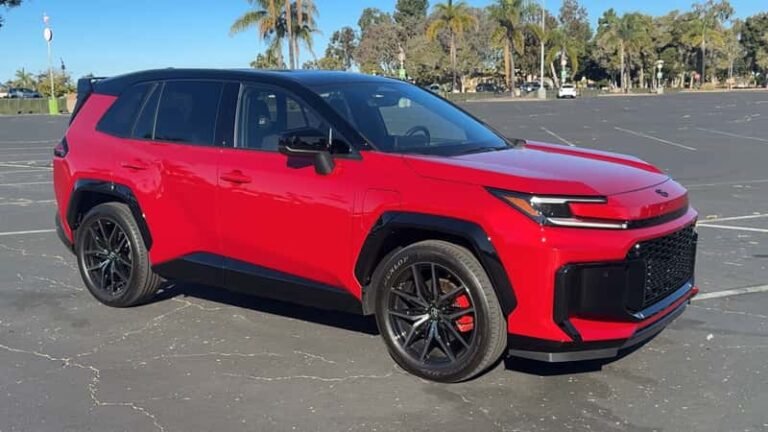
Few vehicles carry the global weight and expectations of the Toyota Hilux. In many regions, it is more than a consumer product—it is infrastructure. It serves as farm equipment, emergency response hardware, mining industry machinery, and in some countries, even a substitute for public transport.
So when Toyota unveiled the 9th-generation Hilux, the expectation across the industry was clear: a new powertrain, a modern transmission, and a clean-sheet leap forward to combat the surging competition.
Instead, Toyota doubled down on the familiar.
The new model retains the long-serving 2.4-liter and 2.8-liter GD-series diesel engines, the conventional six-speed automatic transmission, and the mechanical layout that has defined the Hilux for nearly a decade. In a segment where rivals are racing toward higher outputs, larger gear counts, and increasingly complex turbocharging systems, Toyota’s restraint has sparked debate from engineers, analysts, and loyal Hilux owners alike.
Yet this decision is not a misstep. Nor is it laziness. It is a targeted strategic stance rooted in Toyota’s decades of real-world data—and a very clear understanding of who buys the Hilux and why.
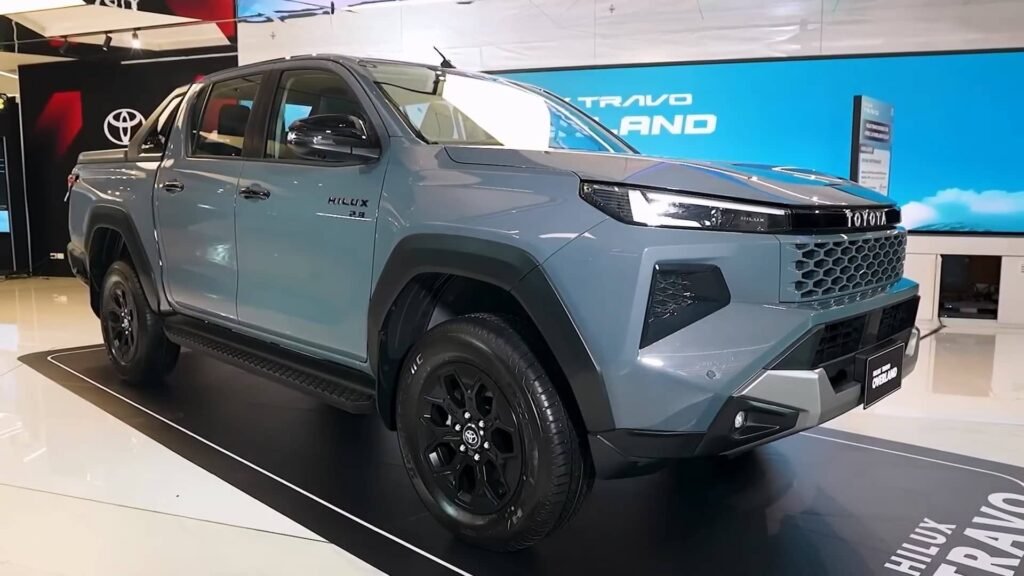
Summary Table: 2025 (9th-Gen) Toyota Hilux Powertrain & Strategy Analysis
| Category | Key Points | Professional Summary |
|---|---|---|
| Powertrain Strategy | Carryover 2.4 & 2.8 GD-6 engines | Toyota retains proven diesel engines instead of launching new, untested powertrains to preserve durability and global parts compatibility. |
| Engine Performance | 2.8 GD-6: 150 kW / 500 Nm | Maintains competitive torque output despite age; supports towing, overlanding, and harsh-duty use with minimal mechanical complexity. |
| Market Expectation vs. Reality | Expected new engine; Toyota kept current lineup | Buyers anticipated a modern diesel, hybrid, or twin-turbo setup. Toyota instead optimized reliability and lifecycle cost over brochures and marketing numbers. |
| Transmission Decision | 6-speed automatic retained; manual still offered | Toyota prioritizes simplicity and field reliability over higher-gear transmissions used by Ford, VW, and Chinese competitors. |
| Technical Rationale (Engine) | Timing chain; global durability data; fuel tolerance | GD-series engines withstand poor fuel quality, extreme climates, overloading, and low-skill maintenance better than rival high-output engines. |
| Technical Rationale (Transmission) | Proven Aisin 6AT | Fewer moving parts, predictable shifting, better heat tolerance under towing, easier to service globally, and aligned with part-time 4×4 architecture. |
| Competitor Benchmarking | Ford Ranger 2.0 Bi-Turbo discontinued; Amarok highly tech-loaded | Hilux positions itself as the long-term, low-risk alternative to newer, complex turbocharged platforms that face long-term reliability uncertainties. |
| Customer Segmentation | Fleet owners, farmers, government, NGOs | Toyota optimizes for high-volume, high-duty buyers who prioritize uptime, low running costs, and parts availability over advanced features. |
| Chassis & Platform Changes | New generation body & chassis | Despite powertrain continuity, the 9th-gen Hilux introduces modernized chassis dynamics, interior upgrades, and structural refinement. |
| Reliability Philosophy | “Durability over novelty” | Toyota adheres to a conservative engineering philosophy founded on long-term survivability rather than short-cycle technological escalation. |
| Serviceability | Global mechanic familiarity | Millions of technicians worldwide can service GD engines and Aisin 6AT without specialized equipment—critical in developing markets. |
| Resale Value Strategy | Highest residual value in the segment | Powertrain consistency reinforces Hilux’s strong resale performance, outpacing most rivals. |
| Off-Road & Towing Behavior | Predictable torque, stable gear holding | 6AT avoids gear hunting common in 8/9/10-speed units; superior for towing, mountain driving, and off-road load management. |
| AWD vs. 4×4 Constraints | Prado has 8-speed because it uses full-time AWD | Hilux uses a traditional part-time 4×4 system that is mechanically incompatible with Prado’s 8-speed layout without major redesign. |
| Manufacturing & Cost Controls | Rationalized global supply chain | Engine and transmission carryover reduces complexity, stabilizes parts logistics, and strengthens after-sales support. |
| Strategic Positioning | Toyota focuses on long-term dominance, not headline specs | The Hilux aims to stay the most trusted workhorse globally by doubling down on proven technology instead of chasing competitive marketing trends. |
| User Impact | Lower risk, lower cost of ownership | Owners benefit from predictable maintenance, lower repair costs, and fewer long-term risks compared to high-tech turbo platforms. |
| Future Outlook | Conservative but stable roadmap | Toyota may introduce hybridization in later cycles, but will not compromise global reliability priorities that form Hilux’s core identity. |
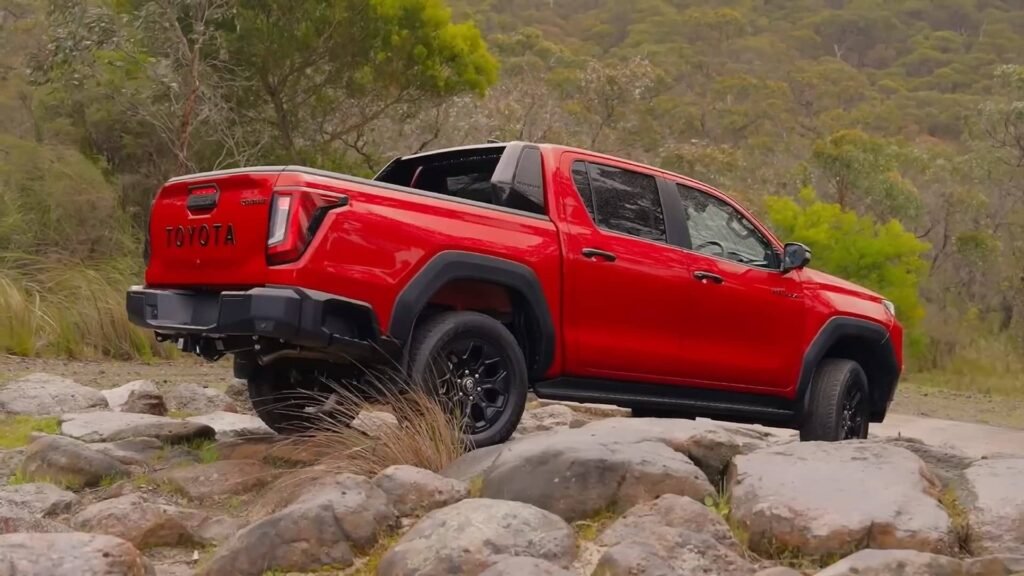
All-New Toyota Hilux 9th-Generation vs 8th-Generation Hilux
| Category | 9th-Generation Hilux (2025) | 8th-Generation Hilux (2015–2024) | Key Improvement |
|---|---|---|---|
| Platform | New TNGA-F body-on-frame platform (shared with Land Cruiser 300/Prado) | Old IMV platform | Stronger rigidity, better ride comfort |
| Powertrain Options | Diesel, petrol, 48V mild-hybrid diesel, first-ever full BEV version (region-dependent) | Diesel & petrol only (no BEV) | Major electrification upgrade |
| Electric Version | Yes – Hilux BEV launched in select markets | None | New electric model |
| Diesel Output | Updated diesel with higher torque and improved fuel efficiency | Older GD-series diesel | More torque + better NVH |
| Transmission | Updated 6AT / 6MT with optimized shift logic | 6AT / 6MT older tuning | More refined shifts |
| Chassis & Suspension | Wider tracks, improved suspension geometry, better wheel articulation | Narrower track, older geometry | Stability and off-road capability up |
| Towing Capacity | Increased (varies by region, up to 3.5t expected) | Up to 3.5t (region-dependent) | More consistent across trims |
| Payload | Improved payload capability | Slightly lower payload | Higher work capability |
| Ride Comfort | Significantly improved (NVH, body rigidity, suspension) | More utilitarian, harsher ride | More SUV-like refinement |
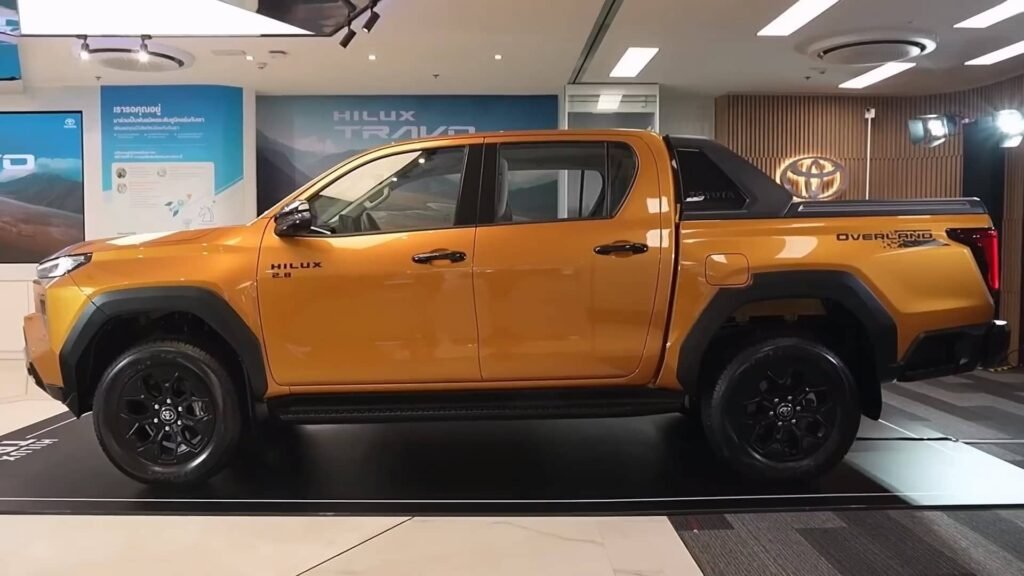
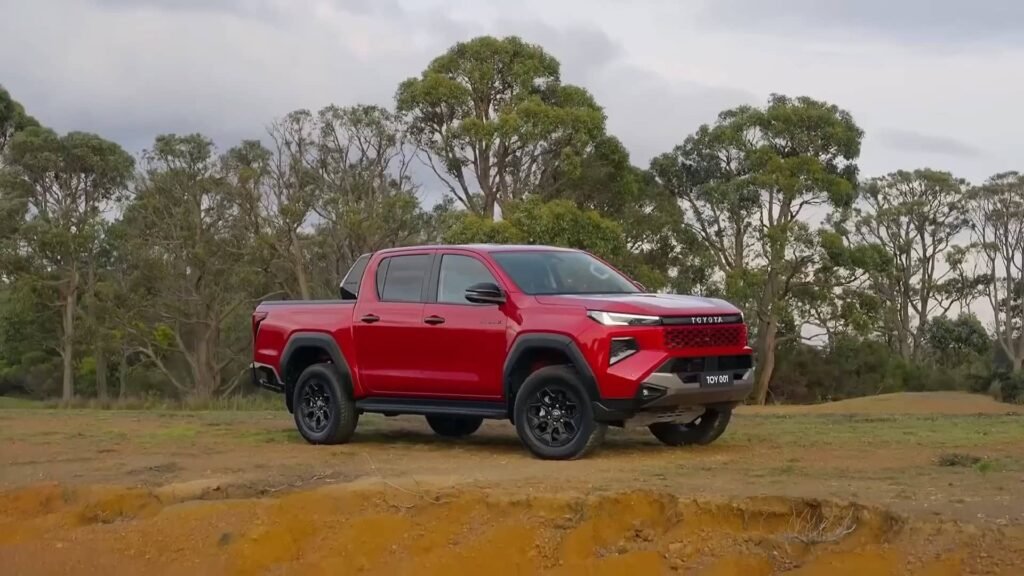
| Exterior Design | Larger grille, squared fenders, more aggressive stance | Softer, rounded styling | More modern, rugged look |
| Interior | New digital cluster, larger infotainment with wireless CarPlay/Android Auto | Older analog cluster, smaller screen | Major technology upgrade |
| Safety | Latest Toyota Safety Sense (TSS 3.0) | Earlier-gen TSS (limited features) | Better ADAS |
| Off-Road Tech | New multi-terrain select, 360° off-road camera, improved crawl control | Basic off-road assist systems | Higher off-road intelligence |
| Connectivity | Over-the-air (OTA) updates, cloud navigation | No OTA, limited connectivity | Modern connected features |
| Body Variants | Single, Extra, Double cab; BEV only in select configurations | Standard cab variations | Additional electric variant |
| Market Positioning | More premium, more tech-focused, fleet + lifestyle balanced | Work-focused with limited lifestyle emphasis | Broader target audience |
The 9th-Generation Hilux: What’s New
1. Full Platform Rewrite
Now built on TNGA-F, shared with the Land Cruiser series, enabling:
- Higher frame rigidity
- Better comfort and handling
- Better crash performance
- Better electrification compatibility
2. Electrification Arrives
For the first time in Hilux history:
- 48V mild-hybrid diesel
- Full battery-electric Hilux BEV (selected markets)
This significantly improves fuel efficiency, torque response, and operational cost for fleets.
3. Stronger Performance & Capability
- Improved diesel torque
- Enhanced towing and payload (depending on the region)
- Better off-road geometry and stability due to wider tracks
4. Dramatic Interior and Technology Upgrades
- New digital cockpit
- Large infotainment with wireless phone integration
- OTA updates
- Cloud-based services
- More premium materials
5. Safety Upgraded to Modern Standards
Toyota Safety Sense (TSS 3.0 or equivalent) adds:
- Better lane keeping
- Adaptive cruise
- Pre-collision with improved detection
- Advanced camera + radar fusion
6. Modernized Exterior Design
- More aggressive, squared styling
- Larger wheel arches
- Wider stance
Final Assessment
The 2025 Hilux is not the bold reinvention many anticipated. Instead, it is a focused refinement of Toyota’s core identity: durability, serviceability, and real-world robustness.
It may disappoint those who want cutting-edge performance, but it will deeply satisfy the buyers who depend on their vehicles for work, not weekend recreation.
For Toyota’s global customer base—especially in high-duty, low-infrastructure markets—the company has likely made the correct call.
The Hilux’s latest evolution is not flashy.
It is not headline-grabbing.
It is not engineered to impress on paper.
HiLux is engineered to endure.
And in the world of hard-use pickup trucks, endurance still wins.