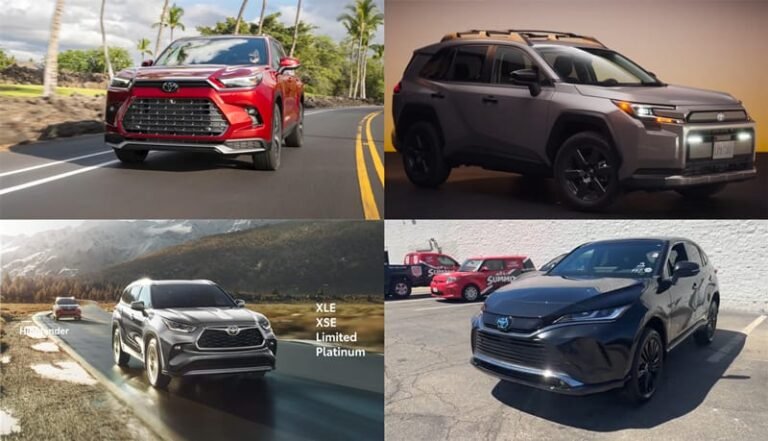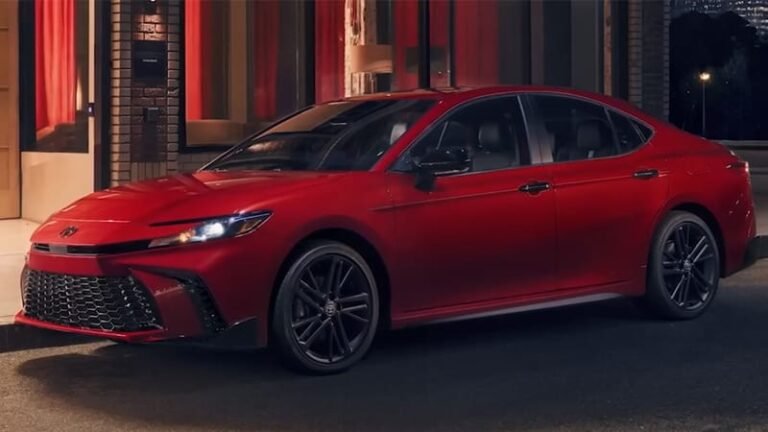
Walk into any Toyota dealership this month, and you’ll notice something strange happening. People who swore they’d only buy German badges are lingering around the RAV4 display. Parents who budgeted for a Honda CR-V are suddenly stretching their finances. And Tesla showroom traffic? It’s quieter than usual.
The 2026 Toyota RAV4 isn’t just another model year update. It’s a statement. Toyota looked at the compact SUV segment—dominated by cautious family haulers and overpriced luxury alternatives—and decided to rewrite every rule.
This is what happens when the world’s best-selling SUV decides it’s done playing safe.
The Numbers That Make Luxury Brands Nervous
Let’s start with what matters most: the price tag. Because when you hear what Toyota’s asking for the 2026 RAV4, you’ll understand why this launch has industry analysts scrambling to update their forecasts.
| Vehicle | Starting MSRP (USD) | Powertrain | Combined MPG/MPGe | 0-60 mph |
|---|---|---|---|---|
| 2026 Toyota RAV4 LE | $31,900 | 2.5L Hybrid | 47/40 | ~7.0 sec |
| 2026 Toyota RAV4 XSE AWD | $38,500 | 2.5L Hybrid AWD | 44/38 | ~6.5 sec |
| 2026 Toyota RAV4 Prime | $46,000 | Plug-in Hybrid | 94 MPGe | ~5.7 sec |
| 2026 BMW X3 xDrive25L | $47,900 | 2.0T Turbo | 26/29 | ~6.0 sec |
| 2026 Tesla Model Y RWD | $47,740 | Electric | 129 MPGe | ~5.0 sec |
Source: Manufacturer specifications, February 2026
That’s not a typo. Toyota’s asking $31,900 for a vehicle that delivers premium-level refinement, hybrid efficiency that embarrasses non-electrified competitors, and technology that was exclusive to $50,000+ SUVs just two years ago.
Meanwhile, BMW’s entry-level X3 starts nearly $16,000 higher. Tesla’s Model Y? Same story. Both require you to stretch deep into luxury territory for features Toyota includes as standard equipment.
Design Language: When “Sensible” Gets an Attitude Adjustment
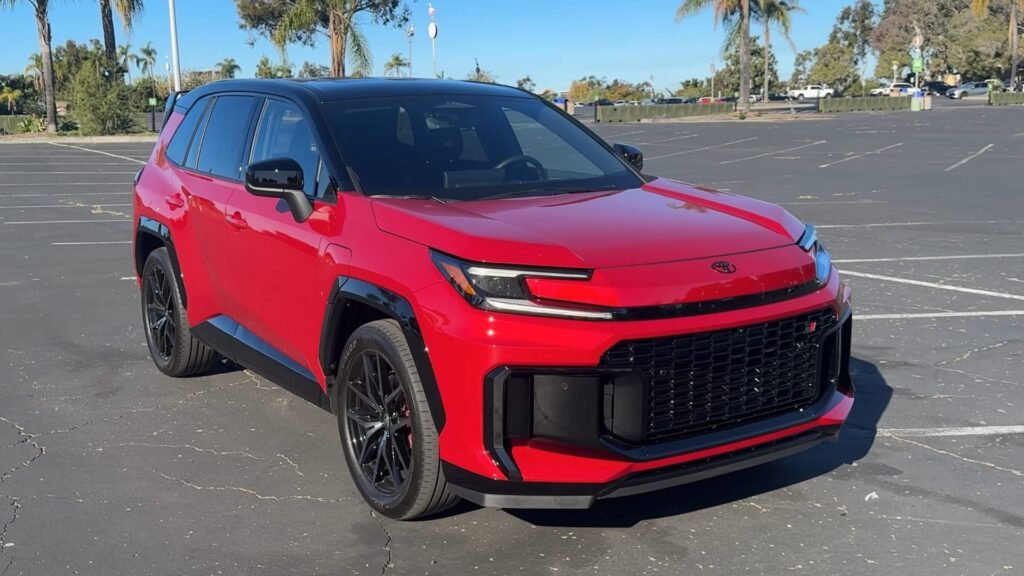
The previous-generation RAV4 earned praise for practicality but criticism for playing it safe. The 2026 model addresses that with a design philosophy that borrows confidence from premium competitors without copying their playbook.
Exterior Transformation
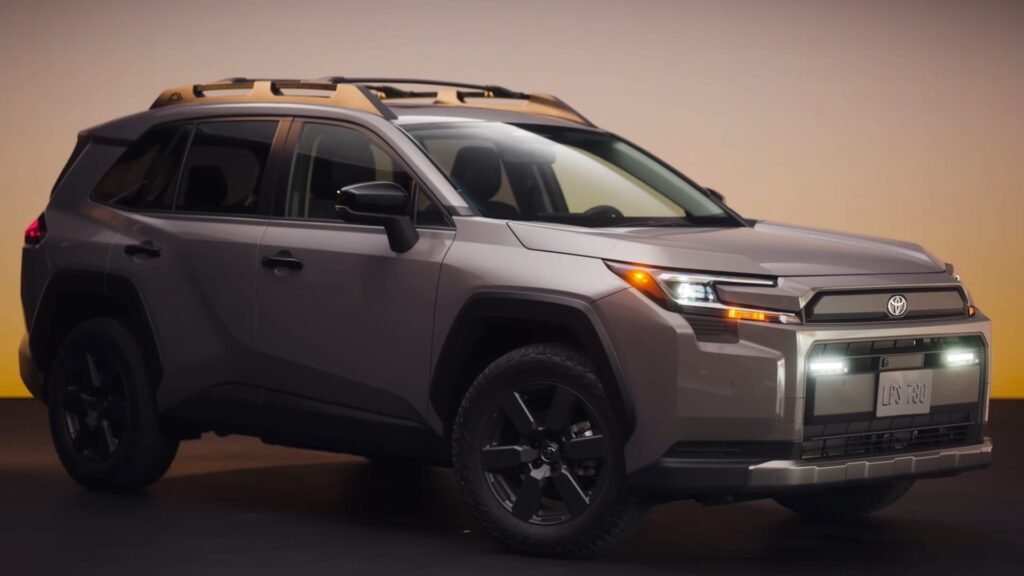
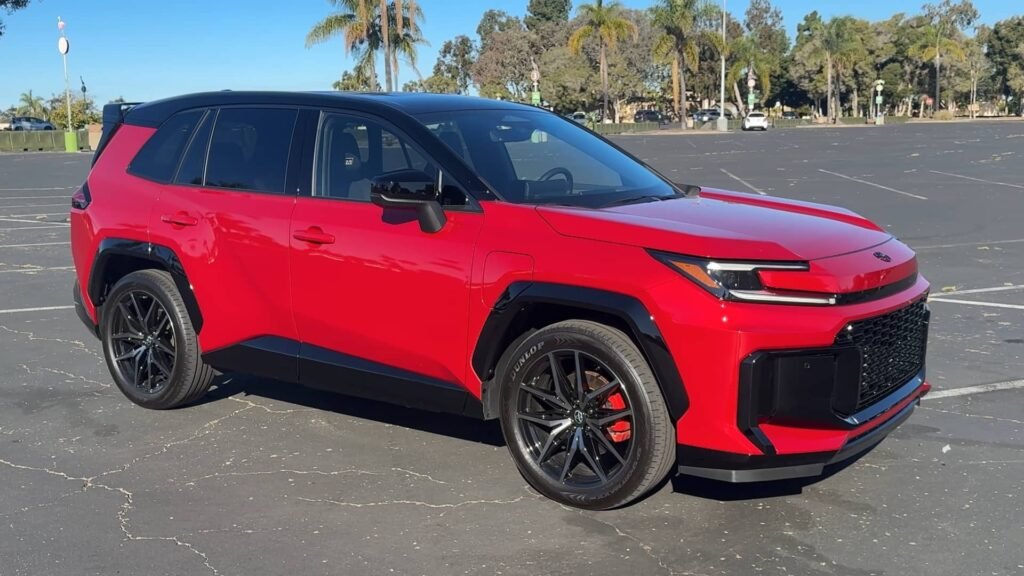
The front fascia dominates with a wider, more assertive grille treatment. LED headlight assemblies are slimmer and more angular, creating a piercing visual signature that reads expensive from thirty feet away. The character lines running along the doors aren’t decorative—they create actual shadow play as light moves across the body.
Wheel options extend to 20 inches with two-tone finishes typically reserved for performance variants. The rear treatment features wraparound LED taillights that slice horizontally across the tailgate, while a subtle roof spoiler adds sportiness without compromising cargo utility.
Color choices reflect Toyota’s new aspirational positioning. Deep metallic greens, pearlescent grays, and two-tone roof options create customization previously unavailable in this segment.
Interior: The Real Story
Step inside, and the budget-crossover narrative collapses completely.
| Interior Feature | 2026 RAV4 | 2026 BMW X3 | 2026 Tesla Model Y |
|---|---|---|---|
| Digital Instrument Cluster | 12.3″ Standard (Higher Trims) | 12.3″ Standard | None (Center Screen Only) |
| Center Touchscreen | 10.5″ Standard | 14.9″ Standard | 15.0″ Standard |
| Wireless CarPlay/Android Auto | Standard | Standard | Not Supported |
| Ambient Lighting | Available (Multi-Color) | Standard | Limited |
| Heated/Ventilated Seats | Available (Front) | Available (Front/Rear) | Available (Front) |
| Premium Audio | JBL Available | Harman Kardon Available | Tesla Premium Audio |
| Head-Up Display | Available | Available | Not Available |
The dashboard features soft-touch materials with contrast stitching throughout. Piano black accents frame the center console, while the gear selector receives genuine attention to detail. Climate controls use haptic-feedback sliders on higher trims, eliminating the touchscreen-only frustration common in modern vehicles.
Rear passengers aren’t an afterthought. USB-C ports with fast-charging capability, dedicated climate vents, and seatback pockets with bottle holders demonstrate Toyota’s understanding that family buyers make decisions based on everyone’s comfort—not just the driver’s.
Powertrain Revolution: Goodbye Gas, Hello Electrified Future
Toyota made a decisive call for 2026: no traditional gasoline-only RAV4 variants. Every model incorporates electrification, reflecting both regulatory pressures and genuine consumer demand for efficiency without range anxiety.
Hybrid System Breakdown
| Powertrain | Engine | Combined Output | EV-Only Range | Fuel Economy |
|---|---|---|---|---|
| Hybrid LE/XLE | 2.5L 4-Cyl + Motor | 226 hp (FWD) | N/A | 47/40 MPG |
| Hybrid XSE/Limited AWD | 2.5L 4-Cyl + Motors | 236 hp (AWD) | N/A | 44/38 MPG |
| Prime Plug-in | 2.5L 4-Cyl + Larger Battery | 320 hp | 42 miles | 94 MPGe |
The standard hybrid system uses Toyota’s fifth-generation hybrid technology, delivering smoother transitions between electric and gasoline power than previous iterations. Acceleration feels immediate thanks to electric motor torque, while highway passing power remains adequate without the drone common in continuously variable transmissions.
The Prime plug-in hybrid variant targets buyers wanting electric daily commuting with gasoline backup for longer trips. At 42 miles of EV-only range, most owners could complete a week of commuting without burning gasoline. Total combined range exceeds 600 miles when both power sources are utilized.
Real-World Performance Observations
- 0-60 mph: Hybrid variants achieve approximately 7.0 seconds, while the Prime drops to 5.7 seconds—genuinely quick for a compact SUV
- Braking: Regenerative braking feels natural, not grabby like some competitors
- Noise isolation: Significant improvement over previous generations; highway wind noise is well-controlled
- Ride quality: Tuned for comfort without excessive body roll in corners
Technology That Actually Works (No Subscription Required)
Toyota’s approach to technology deserves specific attention because it highlights a philosophical difference from both luxury German brands and Tesla.
Toyota Safety Sense 3.0: Standard Across All Trims
| Safety Feature | Availability |
|---|---|
| Pre-Collision System with Pedestrian Detection | Standard |
| Lane Departure Alert with Steering Assist | Standard |
| Full-Speed Range Dynamic Radar Cruise Control | Standard |
| Lane Tracing Assist | Standard |
| Automatic High Beams | Standard |
| Road Sign Assist | Standard |
| Blind Spot Monitor with Rear Cross-Traffic Alert | Standard (Most Trims) |
| 360-Degree Camera System | Available (Higher Trims) |
Unlike competitors that gate safety features behind expensive packages, Toyota includes comprehensive driver assistance across the entire lineup. This matters for insurance costs, resale value, and genuine peace of mind.
Infotainment: Practical Over Flashy
The multimedia system supports wireless Apple CarPlay and Android Auto without requiring subscription fees—a dig at BMW’s controversial paid feature model. Over-the-air update capability ensures the system doesn’t become obsolete within two years.
Physical controls remain for frequently-used functions. Climate adjustments don’t require diving through touchscreen menus. This isn’t nostalgia; it’s ergonomic intelligence that luxury brands abandoned prematurely.
The Luxury Comparison: Why This Matters
Here’s where the 2026 RAV4 creates genuine market disruption.
BMW X3: The Premium Benchmark Under Pressure
The 2026 BMW X3 received its own update with pricing starting at $47,900 in the U.S. market. It offers superior driving dynamics, more powerful engine options, and badge prestige. But consider what you’re paying extra for:
- $16,000+ price premium over base RAV4
- Higher maintenance costs (luxury brand servicing)
- More expensive insurance ratings
- Steeper depreciation in some markets
- Required premium fuel for optimal performance
For buyers prioritizing driving engagement and brand image, the X3 remains compelling. For families wanting 85% of the luxury experience at 65% of the cost? The RAV4 creates a difficult value proposition to ignore.
Tesla Model Y: Electric Advantage Meets Practical Reality
Tesla’s Model Y dominates EV sales for good reasons: acceleration, technology integration, and Supercharger network access. But the 2026 RAV4 Hybrid and Prime variants address EV weaknesses:
- No charging infrastructure dependency for standard hybrid
- Faster refueling for road trips (3 minutes vs. 30+ minutes)
- Lower purchase price without tax credit dependency
- Proven long-term reliability track record
- Dealer network for service accessibility
The Model Y wins on pure electric driving and cutting-edge tech. The RAV4 wins on flexibility, cost predictability, and practicality for buyers not ready to commit fully to electrification.
What Toyota Didn’t Get Perfect (Because Nothing Is)
Honest assessment requires acknowledging limitations. The 2026 RAV4 isn’t flawless.
Potential Concerns
- New Technology Reliability: The expanded electronics suite—including larger touchscreens, digital clusters, and advanced driver assistance—introduces complexity. Toyota’s reputation for durability is earned over decades, but these specific components lack long-term validation.
- Third-Row Absence: Unlike some competitors (Kia Telluride, Hyundai Palisade), the RAV4 remains strictly five-passenger. Families needing occasional third-row access must look elsewhere.
- Cargo Space Trade-offs: Hybrid battery placement slightly reduces cargo capacity compared to non-hybrid competitors. The difference is marginal (approximately 2-3 cubic feet) but worth noting for maximum-utility buyers.
- Road Noise at Highway Speeds: While improved, the RAV4 doesn’t match luxury competitors for acoustic isolation. Tire choice significantly impacts this characteristic.
- Infotainment Learning Curve: The updated system offers more functionality but requires time to master. Some users report occasional lag during complex menu navigation.
Who Should Buy the 2026 RAV4?
Ideal Buyer Profiles
| Buyer Type | Why It Works | Recommended Trim |
|---|---|---|
| Young Families | Safety, space, efficiency, value | XLE Hybrid AWD |
| Commuters | Fuel savings, reliability, comfort | LE Hybrid |
| Tech-Savvy Buyers | Modern features without luxury pricing | XSE Hybrid |
| Eco-Conscious (Not Ready for Full EV) | Electrification without range anxiety | Prime Plug-in |
| Downsizers | Premium feel without premium cost | Limited Hybrid |
Who Should Look Elsewhere
- Performance enthusiasts seeking sports-SUV dynamics (consider Porsche Macan, BMW X3 M40i)
- Maximum cargo haulers needing third-row seating (consider Kia Telluride, Honda Pilot)
- Full-EV committed buyers with home charging access (consider Tesla Model Y, Ford Mustang Mach-E)
- Luxury badge prioritizers for whom brand image drives purchase decisions
Resale Value and Ownership Cost Projections
Toyota’s historical strength in residual values extends to the 2026 RAV4. Industry analysts project:
| Ownership Metric | 2026 RAV4 | 2026 BMW X3 | 2026 Tesla Model Y |
|---|---|---|---|
| 3-Year Resale Value | ~62% | ~54% | ~58% |
| 5-Year Maintenance Cost | ~$3,200 | ~$6,800 | ~$4,100 |
| Insurance Rating (Average) | Moderate | High | Moderate-High |
| Fuel/Energy Cost (Annual) | ~$1,100 | ~$1,800 | ~$700 (Electric) |
Projections based on industry data, 15,000 miles/year
The total cost of ownership advantage becomes significant over five years. Lower maintenance, better resale, and reduced fuel costs create thousands in savings compared to luxury alternatives.
The Bottom Line: A Segment Redefined
The 2026 Toyota RAV4 accomplishes something rare in the automotive industry: it raises the baseline expectation for an entire vehicle category without requiring buyers to compromise on practicality or budget.
This isn’t about Toyota becoming a luxury manufacturer. It’s about Toyota recognizing that “affordable” no longer needs to mean “compromised.” The features, materials, and technology once exclusive to $50,000 SUVs now appear in a vehicle starting under $32,000.
BMW and Tesla should be concerned—not because the RAV4 outperforms their flagships, but because it makes their value propositions harder to justify for the majority of compact SUV shoppers. When 85% of the experience costs 65% of the price, the math becomes difficult to ignore.
For buyers currently cross-shopping this segment, the recommendation is straightforward: drive the RAV4 first. Experience the interior quality, test the hybrid powertrain, and evaluate the technology suite before committing to a premium badge. You might discover that the luxury you’re paying for isn’t in the features—it’s in the emblem.
And in 2026, that emblem costs an extra $15,000.
Specifications sourced from manufacturer data, February 2026. Pricing subject to regional variation and dealer adjustments. Test drive recommended before purchase decision.
Have questions about the 2026 RAV4 or comparing it to specific competitors? Share your thoughts in the comments below. Real buyer experiences help everyone make better decisions.