Few cars have shaped the collective imagination of enthusiasts the way the Lamborghini Countach has. The Countach wasn’t simply a fast Italian exotic; it was a seismic shift in automotive design and engineering philosophy. It embodied everything a supercar was supposed to be—loud, uncompromising, visually outrageous, and mechanically daring.
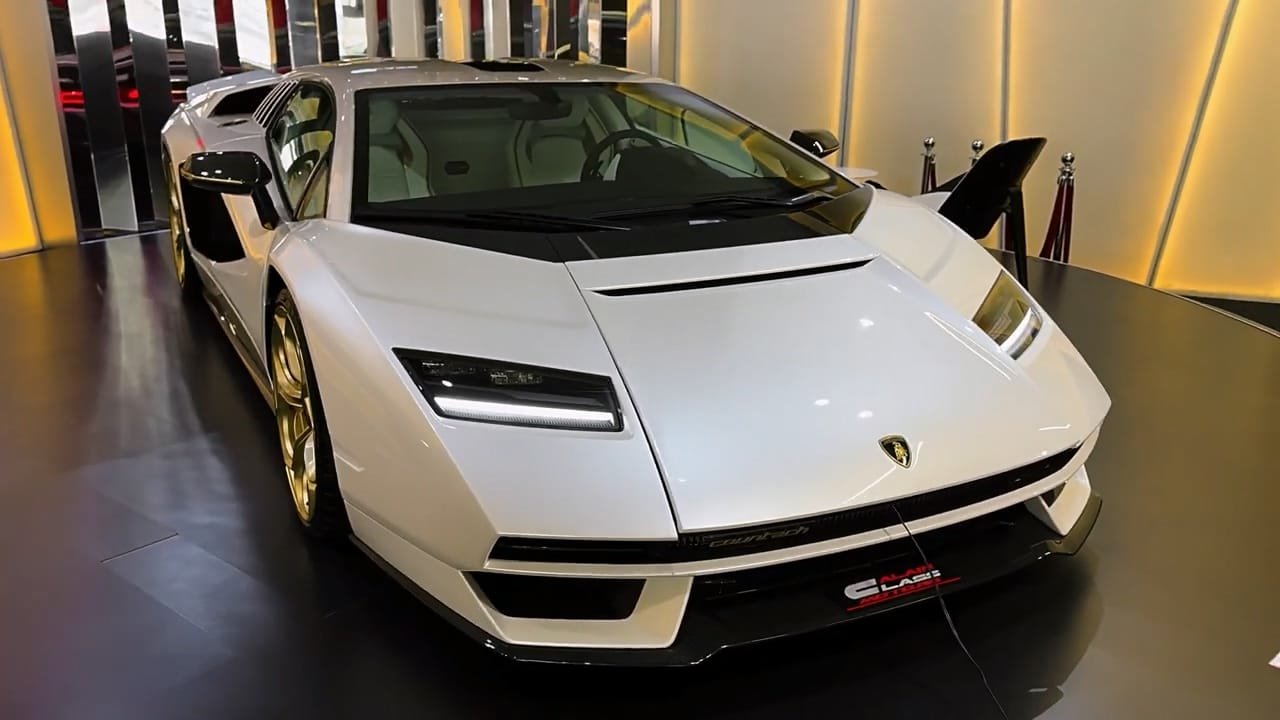
Physical Dimensions: A Shape That Bent the Rules of Aerodynamics
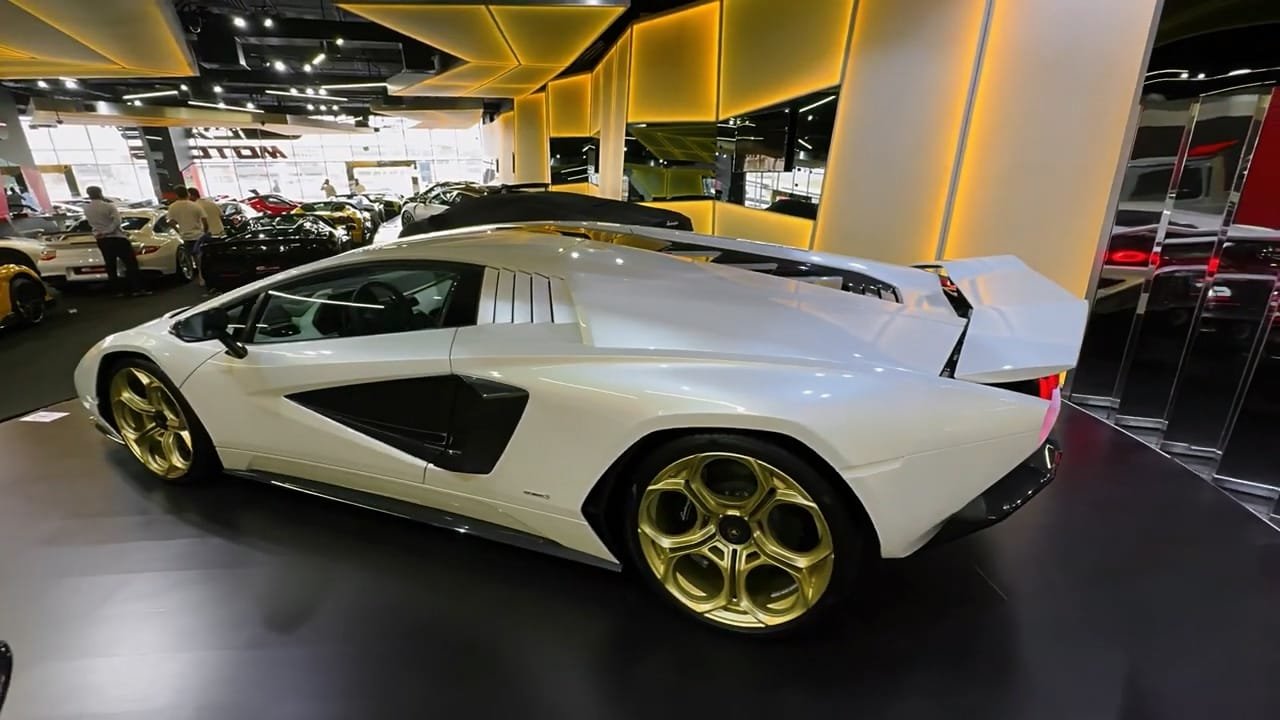
The Lamborghini Countach’s presence starts with its extraordinary proportions. It is a low, wide, wedge-shaped sculpture that seems more like a concept car made real. Even today, park one beside a modern supercar and the Countach still steals the spotlight.
Approximate dimensions (varied by model year):
- Length: ~4,140 mm
- Width: ~1,990 mm
- Height: ~1,070 mm
- Wheelbase: ~2,450 mm
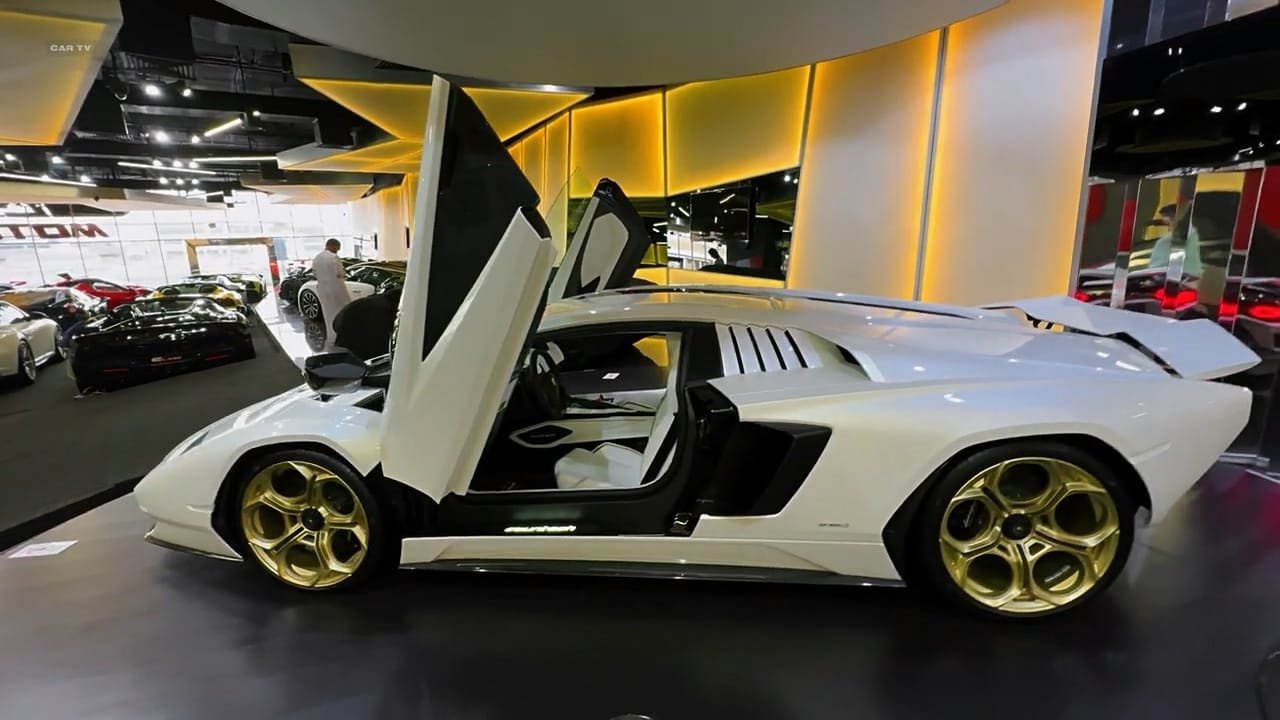
What makes these numbers significant isn’t their scale—modern supercars often exceed them—but the visual impact. The Countach’s height barely reaches an adult’s hip; its windshield is almost horizontal; its scissor doors rise vertically like theatre curtains.
The crisp edges and flattened surfaces weren’t merely for drama. Designers Marcello Gandini and Paolo Stanzani sought a shape that translated aerodynamic experimentation into something usable on the road. The Countach wasn’t shaped by computational fluid dynamics, but by fearless, intuitive design—giving it a raw, geometric purity.
Physical highlight:
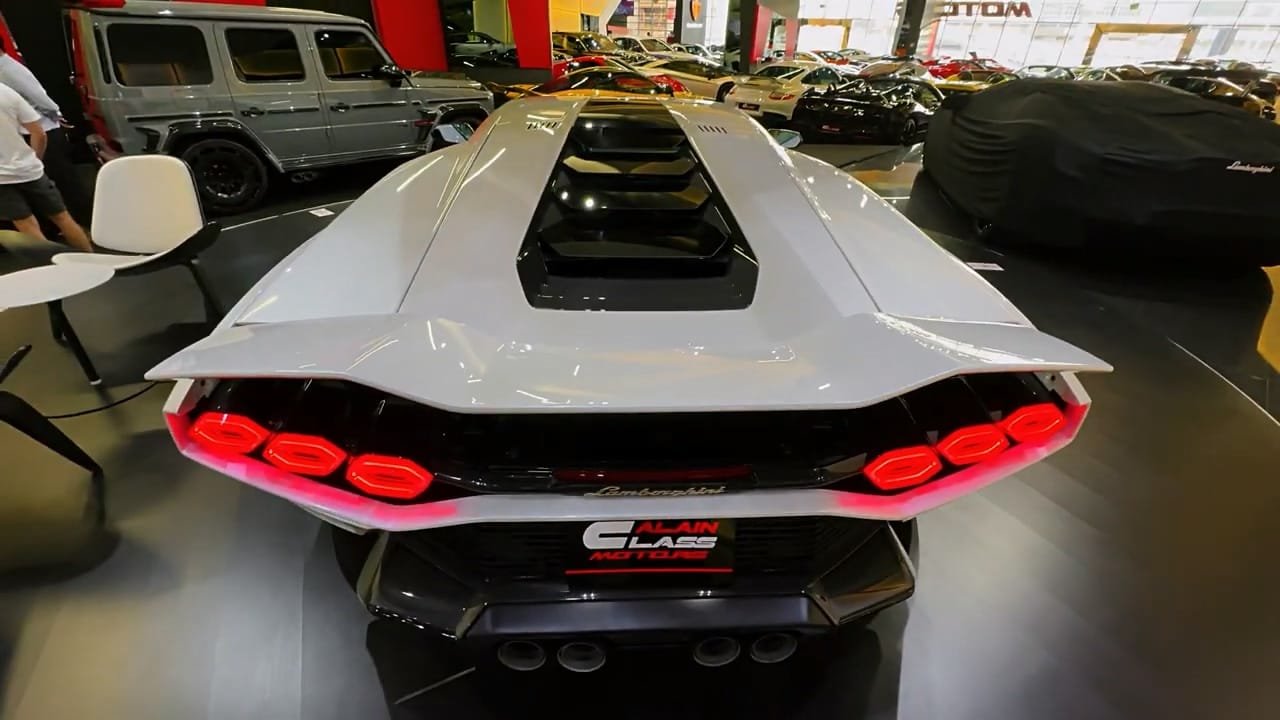
The cabin is pushed so far forward that the rear of the car seems to stretch endlessly, emphasizing the massive longitudinal V12 sitting behind the driver. This mid-engine layout defined the blueprint for future supercars.
Performance Dimension: A Naturally-Aspirated V12 That Defined an Era
The Countach went through multiple engine configurations during its long life, from the early 3929 cc V12 to the final 5167 cc 25th Anniversary model. Regardless of displacement, the Countach always relied on the same formula: big displacement, natural aspiration, and intake noise that feels almost architectural in how it echoes off walls.
Key performance traits across the range:
- Output: From ~375 hp (LP400) to ~455 hp (LP5000 QV)
- Top Speed: Typically between 290–315 km/h (180–195 mph)
- 0–100 km/h: Often in the low 5-second range
- Transmission: 5-speed manual with a dog-leg pattern
On paper the numbers may seem modest compared to modern supercars, but numbers don’t define the Countach. The sensation does.
The throttle response is immediate; the engine note climbs from metallic rasp to an operatic scream past 6,000 rpm; the mechanical resistance of the gearshift and clutch gives the driver a physical relationship with the drivetrain. There is no electronic filtration. No drive modes. No power steering. No stability control. It is driving in its purest, most analog form.
Driving impression:
At low speeds, the Countach feels heavy and deliberate. At high speeds, everything aligns—the chassis settles, airflow stabilizes the car, and the V12 becomes a living organism. Few cars feel more rewarding when driven properly.
Usage Dimension: Beautifully Impractical, Yet Surprisingly Purposeful
Living with a Countach is both a challenge and a privilege. It wasn’t built for everyday convenience; it was built to deliver an emotional experience.
Practical realities:
- Rear visibility is almost nonexistent. Owners often reverse with the door open, sitting on the sill.
- The cabin is tight, particularly for taller drivers.
- The air conditioning varies from “barely sufficient” to “symbolic.”
- Low-speed maneuvering requires strength due to heavy steering.
- Entry/exit demands flexibility—scissor doors help, but the sills are wide.
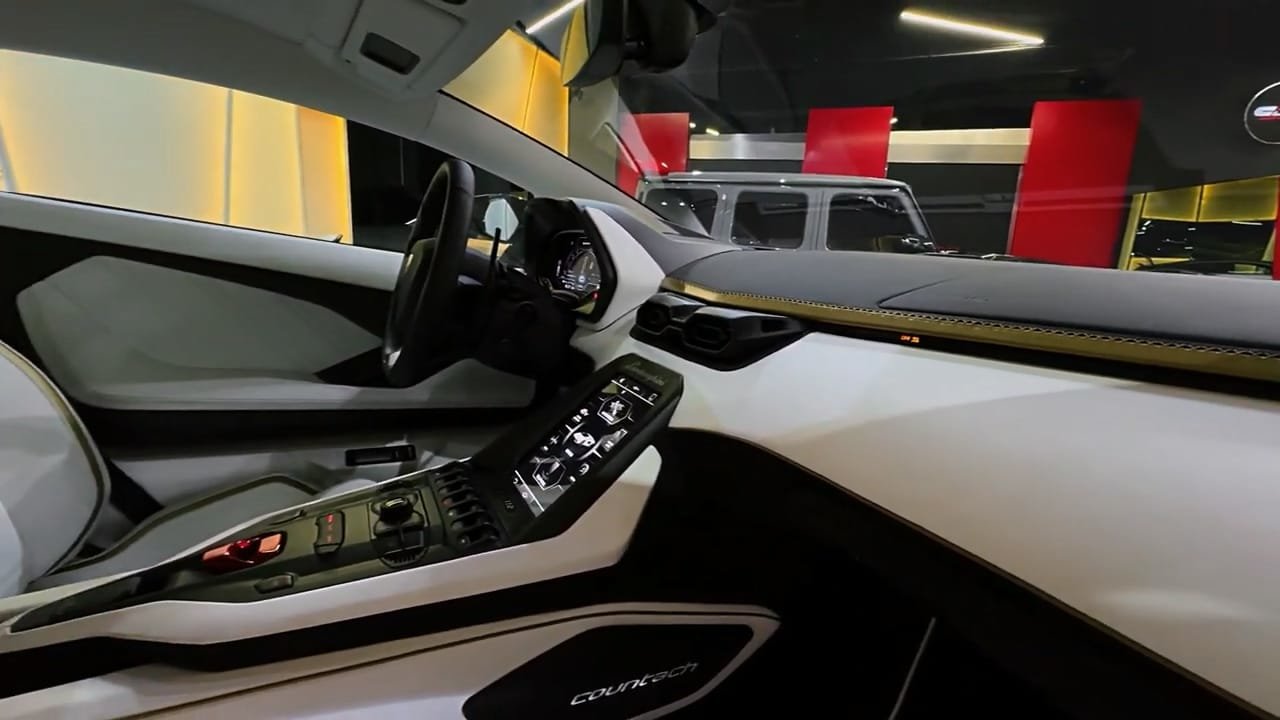
And yet, these drawbacks contribute to the Countach’s mystique. Every drive feels like an event, and every flaw is part of its character. The thin windshield pillars and low dash give the driver a cinematic view of the road ahead. The cabin angles everything toward the driver, connecting them with the car’s mechanical heart.
For the era, it was surprisingly purposeful:
- The mid-engine layout created balanced weight distribution.
- Cooling ducts and NACA intakes were functional.
- The chassis was engineered for high-speed stability on European motorways.
It wasn’t meant to be a commuter. It was meant to be a statement.
Technology Dimension: Analog Engineering at Its Most Ambitious
While the Countach predates the digital revolution, it was technologically ambitious for its time. Lamborghini relied on racing-derived engineering to give the car exceptional structural rigidity and high-speed stability.
Key technical elements:
1. Steel spaceframe chassis
The Countach’s tubular frame was stiff, lightweight, and designed for mid-engine balance. This spaceframe design was more akin to race cars than road cars of its era.
2. Aerodynamic innovation
The wedge shape reduced frontal area dramatically. Gandini experimented with airflow using practical testing rather than modern simulation, resulting in a design that worked in the real world, not just on paper.
3. Naturally aspirated V12 evolution
The Countach’s engine evolved for two decades—carbureted, high-compression, and meticulously hand-built. The later QV and Anniversary models featured upgraded cooling, fuel systems, and performance enhancements.
4. Manual-only engagement
No electronics, no computers. The Countach demanded skill—heel-and-toe technique, precise clutch control, and full driver commitment.
5. Lightweight construction where possible
Though not featherweight, materials were carefully chosen to maintain a balance of rigidity and performance.
It was a mechanical masterpiece rather than a digital one.
Value Dimension: From Poster Icon to Blue-Chip Collector Asset
The Lamborghini Countach began life as a billionaire’s toy; today it is an investment-grade asset. Its value trajectory has been one of the fastest-rising in the collector market.
Why the Countach is now one of the most desirable classics:
1. Cultural immortality
It became the supercar silhouette of the 1980s—video games, posters, films, and magazines immortalized it.
2. Limited production
Across all versions, fewer than 2,000 units were produced. Some variants, like the LP400 “Periscopio,” exist in extremely small numbers.
3. Mechanical purity
Collectors prize analog supercars, and the Countach sits at the top of that food chain.
4. Increasing museum and concours presence
Values rise as institutions recognize the car’s significance.
5. Replacement effect
Modern Lamborghinis are technologically incredible, but none capture the Countach’s raw personality. Nostalgia and scarcity ensure long-term appreciation.
Current market reality
Depending on variant and restoration quality, Countaches can command anywhere from six figures to several million dollars, with early LP400 cars often achieving the highest premiums.
Design Philosophy: Why the Countach Still Feels Futuristic
Even modern designers admit that the Countach remains one of the boldest production designs ever approved. Its visual language—sharp lines, geometric aggression, extreme proportions—continues to influence modern supercars.
The Countach teaches three lessons:
- Innovation requires courage, not consensus.
- A supercar should feel alien, not familiar.
- Emotion is more important than perfect numbers.
BMW, Ferrari, McLaren, and even EV hypercar designers still draw from Gandini’s wedge-era principles: reduce frontal area, emphasize length, and celebrate functional drama.
No car before or after has captured the supercar imagination in quite the same way.

The Countach Remains the Purest Expression of the Supercar Dream
The Lamborghini Countach is more than a machine—it is an artifact of human ambition, a physical record of the moment when engineers and designers agreed to chase extremes rather than compromises.
It is raw, difficult, loud, impractical, and utterly magnificent.
It demands skill. It rewards passion.
And it continues to define what a supercar should feel like.
For collectors, the Countach is a blue-chip investment.
For enthusiasts, it is a symbol of mechanical purity.
For the automotive world, it is an irreplaceable icon.
Regardless of how future supercars evolve—electric, hybrid, autonomous—the Countach will always stand as a reminder that some designs are simply timeless.