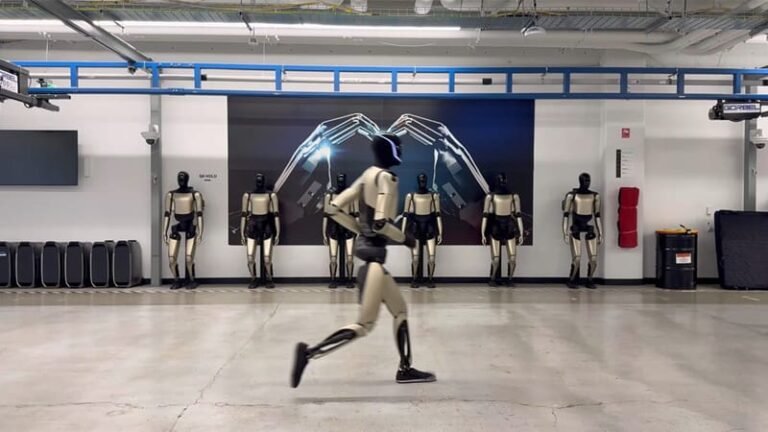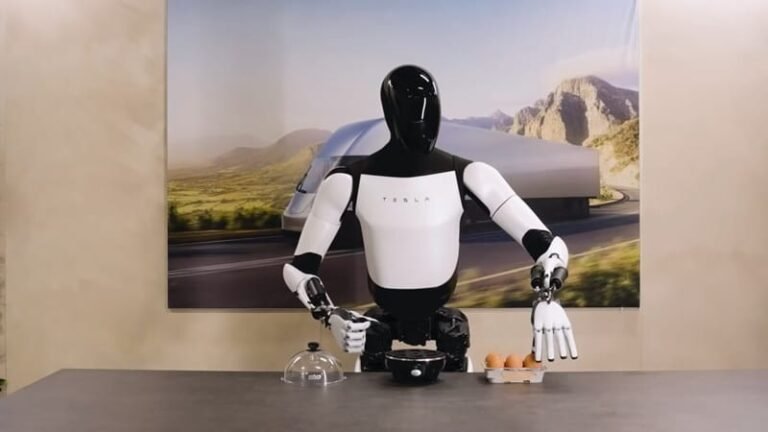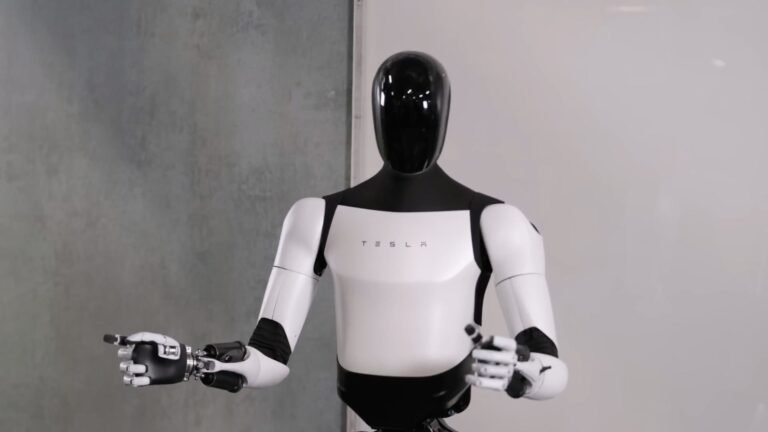
To compare the running of the China robot Zhongqing T800 and Tesla Robot Optimus, here we will conduct a comprehensive comparison from the perspectives of underlying logic, action generation methods, stability, hardware system, AI capabilities, and applicable scenarios.
Robot Zhongqing T800 Running
Tesla Robot Optimus Running
Possible Different 1: Script Running Vs. Autonomous Running
Robot Zhongqing T800
The running sequence shows highly repeatable and symmetric motions:
- Identical arm-swing amplitude on each stride
- Fixed step height and foot trajectory
- No adaptive adjustments from step to step
These are classic signs of pre-scripted or keyframe-based motion, likely executed through trajectory control or PID-based stabilization. This means the robot is performing a programmed routine, not learning or deciding how to run.
Tesla Optimus
Optimus runs motion is generated in real time by AI, not by scripts, as it says.
Optimus relies on:
- FSD-class vision processors
- End-to-end neural networks
- Reinforcement learning locomotion models
- Whole-body dynamic balancing
Every step is slightly different because the robot is thinking, predicting ground contact, and adjusting foot placement continuously — just like a biological organism.
Possible Different 2: Stability and Balance Control
Robot Zhongqing T800
From the Video, it maintains a constant upright posture and symmetrical gait. Its torso barely shifts horizontally, and the trajectory does not reflect real-time balance correction. This implies:
- Limited dynamic balance
- No adaptive torso control
- Mostly open-loop or lightly closed-loop balance
Tesla Optimus
Dynamic equilibrium control + musculoskeletal model simulation + end-to-end neural network, Optimus demonstrates:
- Force-controlled joints
- Real-time center-of-mass optimization
- Active arm compensation
- Micro-adjustments on every step
This makes its running “messier” visually — but far more biologically authentic and dramatically more advanced.
Possible Different 3: Mechanical and Hardware Architecture
Robot Zhongqing T800
From the video:
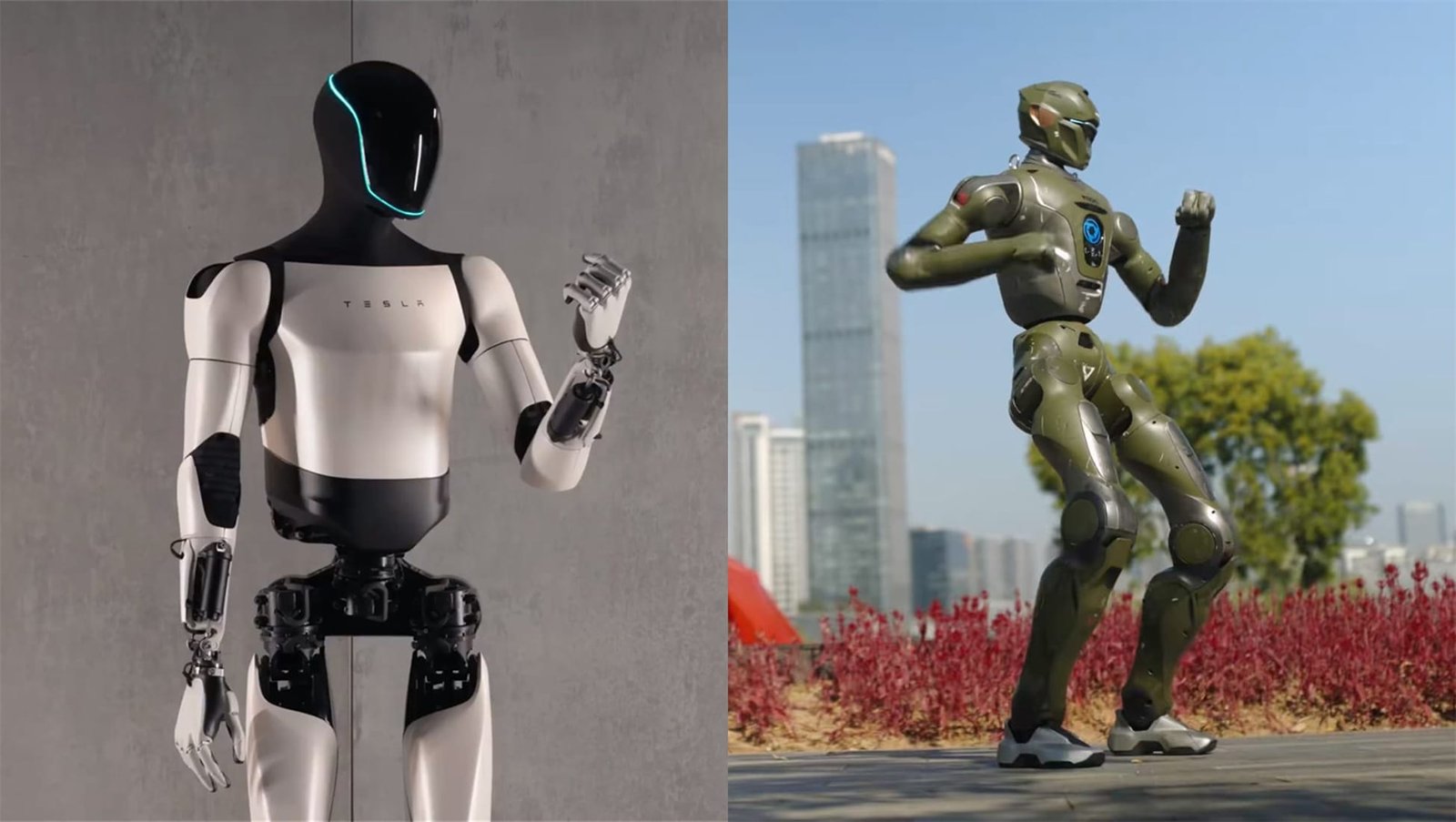
- The robot features a stylized, armor-like shell
- Leg joints move in narrow, predetermined ranges
- The feet appear to use cushioned soles rather than force-sensor arrays
- No visible multi-sensor integration
Its design is closer to a demo robot or performance robot, optimized for appearance and controlled demonstrations.
Tesla Optimus
Tesla builds everything in-house:
- Custom torque-controlled electric actuators
- High-density sensor arrays across the limbs
- Human-inspired kinematics
- A fully integrated electronics and control stack
This hardware is designed not for show, but for work.
In The End
Above compare only from the video, actually, both robots haven’t shown too much, we will see how it goes.