An in-depth industry analysis from a professional automotive perspective
In the auto industry, a badge is only the surface. The true power of a car brand lies behind the emblem—its technology stack, supply chain depth, R&D capability, brand equity, long-term product strategy, and the ability to shape the direction of mobility.
Today’s automotive landscape is more complex than ever, driven by electrification, software-defined vehicles, globalized platforms, and new battery-energy ecosystems.
This ranking goes far beyond sales volume. It evaluates global influence from multiple dimensions:
- Technology leadership
- Supply chain control
- Electrification strategy
- Product ecosystem depth
- Brand strength & profitability
- Global industrial footprint
- Long-term competitiveness
Below is an insider-style breakdown of the Top 10 global automakers—not based on fan sentiment, but on the real industrial forces shaping the future.
10. BYD (China)
The electric era’s strongest disruptor — and arguably its front-runner
BYD is no longer an “EV upstart.” It is a full-stack electric technology company with unmatched vertical integration.
Core Advantages
- In-house EV triad: battery, motor, and electronic control
- Blade Battery: a global safety benchmark
- DM-i hybrid system: efficiency leadership
- e-Platform 3.0 / 4.0: high-integration EV architecture
- Deep supply chain control: from chips to materials
While other brands buy components, BYD manufactures its future.
Its ability to deliver EVs at scale, with strong pricing and reliability, gives it an influence far beyond China.
Why it ranks 10th:
Its technology dominance in EVs is undisputed, but its global brand value and premium recognition are still developing.

9. Tesla (USA)
The ultimate disruptor—changing not just cars, but the industry’s direction
Tesla didn’t join the auto industry; it dragged the industry into a new era—software-first, constantly connected, and efficiency-obsessed.
Core Advantages
- World-leading motor and inverter efficiency
- OTA software ecosystem
- FSD development and AI infrastructure
- Integrated gigacasting manufacturing
Without Tesla, global EV adoption would be at least five years behind.
Why it ranks 9th:
Its innovation is unmatched, but its product lineup diversity, global manufacturing depth, and after-sales ecosystem still have room to mature compared with century-old giants.

8. Renault–Nissan–Mitsubishi Alliance
A multinational alliance built on complementary strengths
A rare global partnership combining:
- Nissan: engineering and EV technology
- Renault: design and European refinement
- Mitsubishi: off-road heritage and rugged reliability
Together, they maintain a balanced portfolio across segments and markets.
Why it ranks 8th:
The alliance structure provides scale benefits but also limits agility. Still, its international reach remains a major force.

7. Honda Motor Company (Japan)
Engineering excellence across cars, motorcycles, and engines
Honda is unique: anything powered by an engine, it builds to a world-class standard.
Core Advantages
- Legendary ICE engineering
- Global best-selling motorcycles
- Strong motorsport heritage
- Consistently reliable sedans and SUVs
Civic, Accord, and CR-V remain global staples, and Honda’s engineering culture is admired across industries.
Why it ranks 7th:
Technological depth is immense, but EV strategy progress has been slower compared with top-ranking giants.
6. Ford Motor Company (USA)
Heritage muscle and truck dominance
Ford’s identity is built around toughness and cultural significance.
Signature Strengths
- F-150: the world’s best-selling pickup
- Mustang: the muscle car icon
- Bronco & Ranger: strong off-road capability
- Ford Pro commercial ecosystem
Ford combines emotional design with real industrial capability.
Why it ranks 6th:
Massive brand power and truck dominance, but global EV competitiveness is still evolving.

5. General Motors (USA)
The industrial giant with deep North American roots
GM is a veteran of large-scale manufacturing and platform engineering.
Key Brands
- Cadillac
- Chevrolet
- GMC
- Buick
Its Ultium EV platform shows ambition, and its portfolio covers everything from budget cars to luxury performance.
Why it ranks 5th:
Its scale and breadth are unmatched, but profitability and EV execution remain inconsistent.

4. Hyundai–Kia Group (Korea)
The industry’s quiet overachiever—now a global benchmark
In the past decade, Hyundai and Kia have transformed from value brands into design and technology leaders.
Core Strengths
- Complete in-house powertrain development
- IONIQ & EV6/EV9 winning global EV awards
- Dramatically improved design & quality
- Strong long-term warranties
Today, Hyundai–Kia sets price-value benchmarks across regions.
Why it ranks 4th:
Rapidly growing brand value and highly competitive EV lineup place it among the world’s top-tier automakers.
3. Stellantis (EU / USA)
A super-conglomerate born from PSA and FCA merger
Stellantis is a unique combination of European creativity and American muscle.
Major Brands
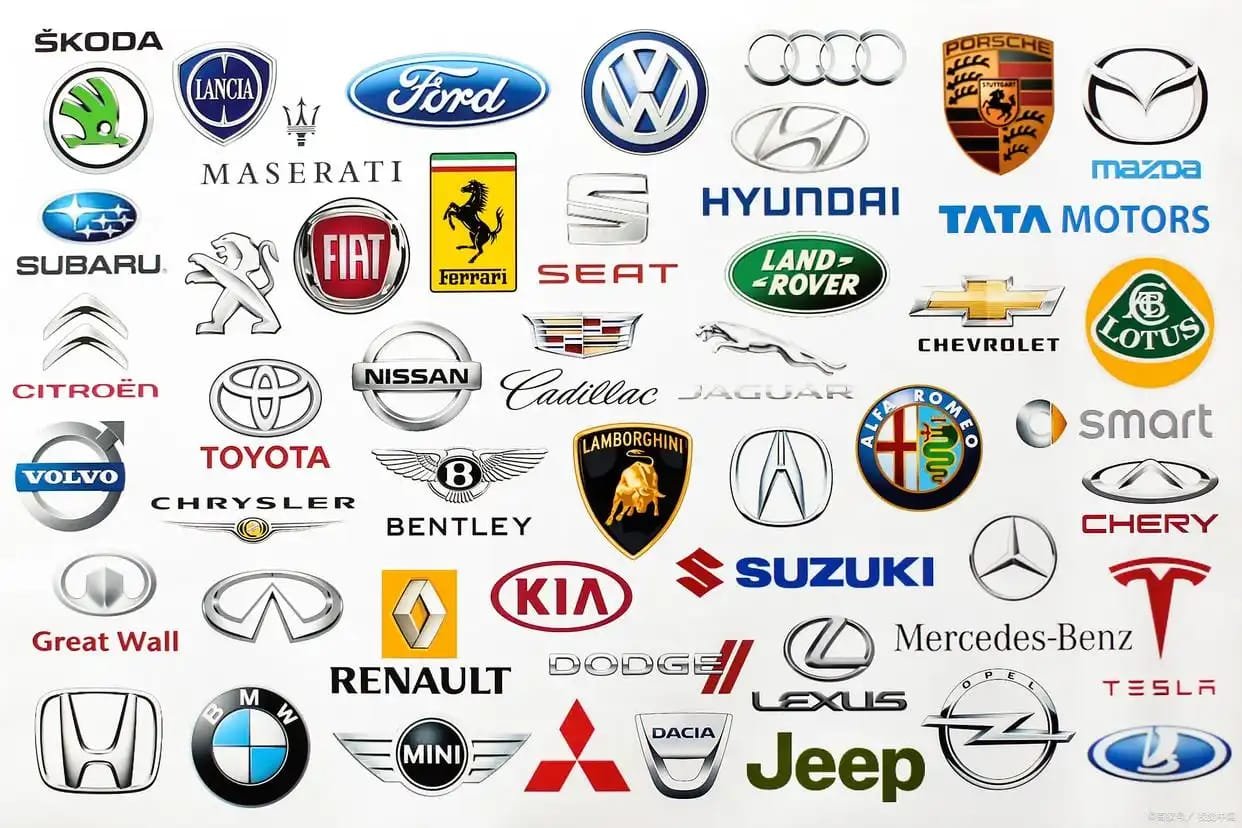
- Peugeot
- Citroën
- Jeep
- Alfa Romeo
- Maserati
- Dodge
- Ram
- Opel/Vauxhall
Its portfolio spans luxury, off-road, performance, and city cars, creating an incredibly diverse global footprint.
Why it ranks 3rd:
The merger created enormous scale, though integrating design philosophies and regional strategies remains a challenge.

2. Volkswagen Group (Germany)
The hidden empire behind mainstream and ultra-luxury automobiles
Volkswagen Group is the world’s most diversified automotive family.
Key Brands
- Volkswagen
- Audi
- Porsche
- Bentley
- Lamborghini
- Bugatti
- Ducati
- Škoda
- SEAT
Its modular platforms (MQB, MLB, MEB, PPE) revolutionized cost structure and scalability.
VW sells everything—from budget hatchbacks to multi-million-dollar hypercars.
Why it ranks 2nd:
Unparalleled brand depth and global manufacturing strength—but EV execution is still adapting.

1. Toyota Motor Corporation (Japan)
The world’s most consistently dominant automaker
Toyota stands in a league of its own.
Three pillars define its supremacy
- Efficiency – legendary fuel economy
- Durability – industry-defining reliability
- Resale Value – global market confidence
And its hybrid technology (THS) remains unmatched, years ahead of rivals.
Prado’s durability, Camry’s reliability, and Lexus’s refinement all reflect Toyota’s philosophy: quality through discipline.
Why it ranks 1st:
Toyota combines scale, profitability, quality, technology, and global trust better than any automaker in history.

Global Top 10 Automakers Summary Table
| Rank | Automaker | Key Strengths | Geographic Power |
|---|---|---|---|
| 1 | Toyota | Reliability, Hybrid leadership | Global |
| 2 | Volkswagen Group | Largest luxury/performance portfolio | Europe, China |
| 3 | Stellantis | Broadest brand diversity | Europe, U.S. |
| 4 | Hyundai–Kia | EV innovation, value leadership | Global |
| 5 | General Motors | Trucks/SUVs, Ultium EV | North America |
| 6 | Ford | Pickup & performance heritage | North America |
| 7 | Honda | Engine mastery, motorcycles | Global |
| 8 | Renault–Nissan–Mitsubishi | Cross-continental footprint | Europe, Asia |
| 9 | Tesla | EV innovation, software ecosystem | Global |
| 10 | BYD | Battery technology, EV scalability | China, Global |
Who Is the Real King?
In the fuel era, the world looked at Toyota and Volkswagen.
In the electric era, attention shifts to BYD and Tesla.
But the real powerhouses—the companies shaping the industry’s future—are the ones mastering core technology, supply chains, software ecosystems, and global platforms.
The badge may attract you, but it’s the empire behind it that truly builds the world’s cars.
Useful Link: