lectric vehicles (EVs) have moved from niche engineering experiments to the center of the global automotive industry. Yet despite their rapid rise, many drivers struggle to understand what’s actually happening beneath the floor of an EV when they press the accelerator. I can say this: once you break EVs into their core components, the technology becomes surprisingly elegant.
This article explains how electric vehicles work, the systems that make them reliable, and the advantages and limitations you should consider before buying one. Everything is written with real-world engineering insight—not marketing gloss.
What Is an Electric Vehicle? A System Built Around One Purpose
At its core, an EV is a vehicle propelled exclusively by electric motors using energy stored in a high-voltage lithium-ion battery pack.
There is no engine, no fuel tank, no exhaust system, and no need for multi-gear transmissions.
The EV powertrain is built around three pillars:
- Electrical Energy Storage – the battery pack
- Power Conversion Systems – inverter, onboard charger, DC/DC converter
- Electric Drive Units – motor, reduction gear, differential
Once you understand these three pillars, the rest of the EV ecosystem falls into place.
How an EV Generates and Delivers Power
1. Battery: The Vehicle’s Energy Reservoir
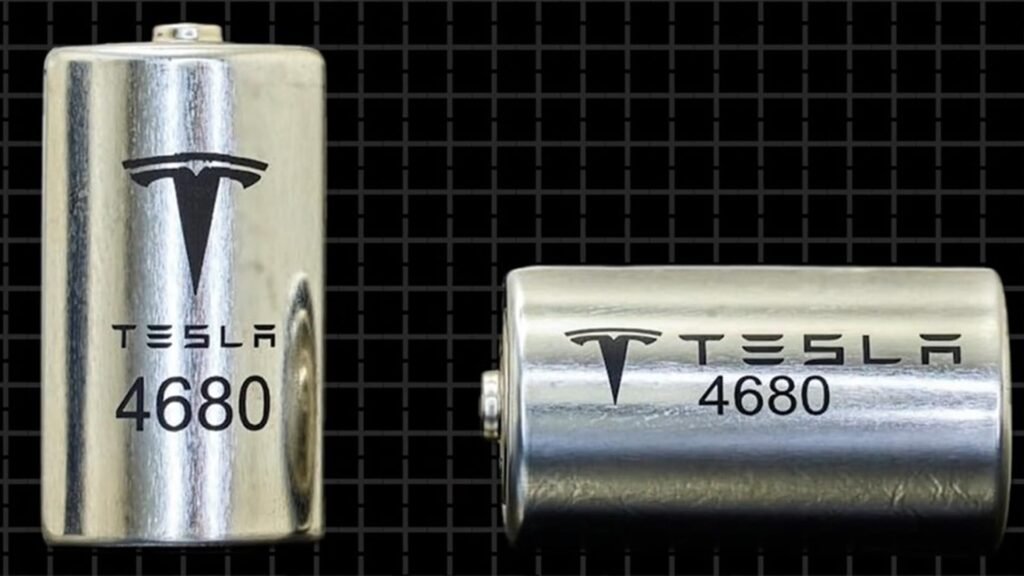
Most modern EVs use lithium-ion NMC or LFP chemistry. Think of the battery as a high-voltage version of a power bank, but engineered with thermal control, crash protection, and consistent discharge capability.
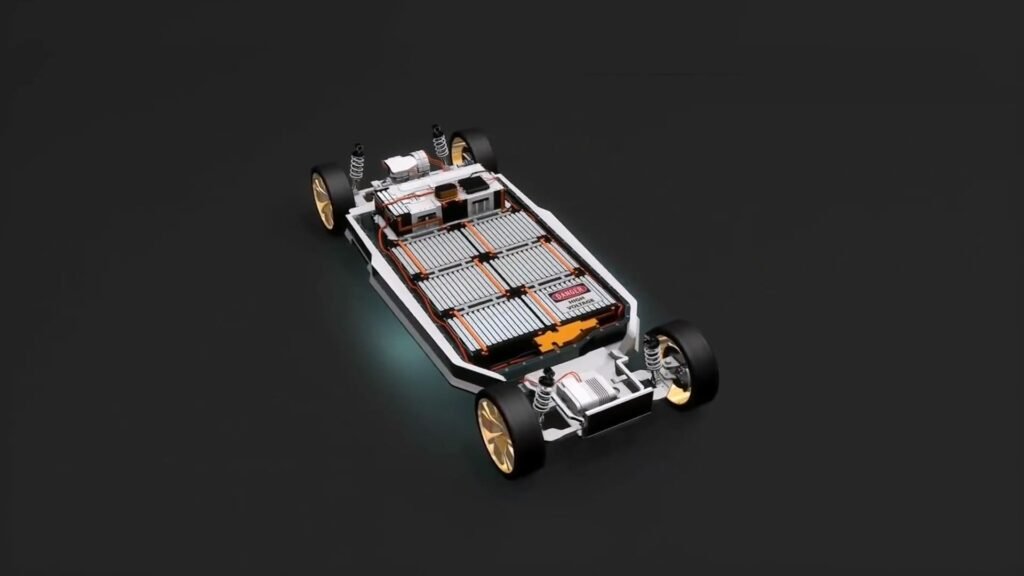
A typical EV battery pack includes:
- Battery modules and cells
- Liquid cooling circuit
- Battery management system (BMS)
- Safety disconnects and contactors
- Reinforced underfloor housing
How the battery works:
The pack releases electrical energy as DC (direct current). But EV motors require AC power.
This is where the inverter comes in.
2. Inverter: Converting DC to AC With Precision
The inverter is the unsung hero of every EV drivetrain.
Its job is to:
- Convert DC power to AC
- Regulate the motor’s torque output
- Enable regenerative braking
- Control switching frequencies in real time
A driver’s throttle input does not control the motor directly. Instead, it controls the inverter’s logic, which determines how much AC power the motor receives.
3. Electric Motor: Instant Torque With No Lag
Electric motors deliver torque from 0 rpm, which is why EVs feel powerful even in city traffic.
The two most common motor types are:
- Permanent Magnet Synchronous Motors (PMSM) – efficient, strong low-end torque
- Induction Motors (IM) – robust, less dependent on rare-earth materials
Motors are connected to:
- A single-speed reduction gear
- A differential (or e-axle configuration)
Unlike gasoline vehicles, EVs don’t require shifting because electric motors maintain a wide power band.
Energy Flow in an Electric Vehicle
Here’s the full sequence from grid to wheels:
- AC wall power → onboard charger → battery pack
- Battery (DC) → inverter → electric motor (AC)
- Motor torque → reduction gear → wheels
During regenerative braking:
- Motor reverses → generates AC → inverter converts to DC → battery stores energy
Every time you lift off the accelerator, you are reclaiming some of the energy you previously used.
Why Electric Vehicles Are So Efficient
A combustion engine wastes more than 70% of its energy as heat and friction.
EVs, in contrast, typically convert 85–90% of energy into actual movement.
Key contributors:
- No idling losses
- No multi-gear friction
- Regenerative braking
- Highly efficient electric motors
If you’ve ever watched an EV coast silently downhill, you’re witnessing an inherently efficient system at work.
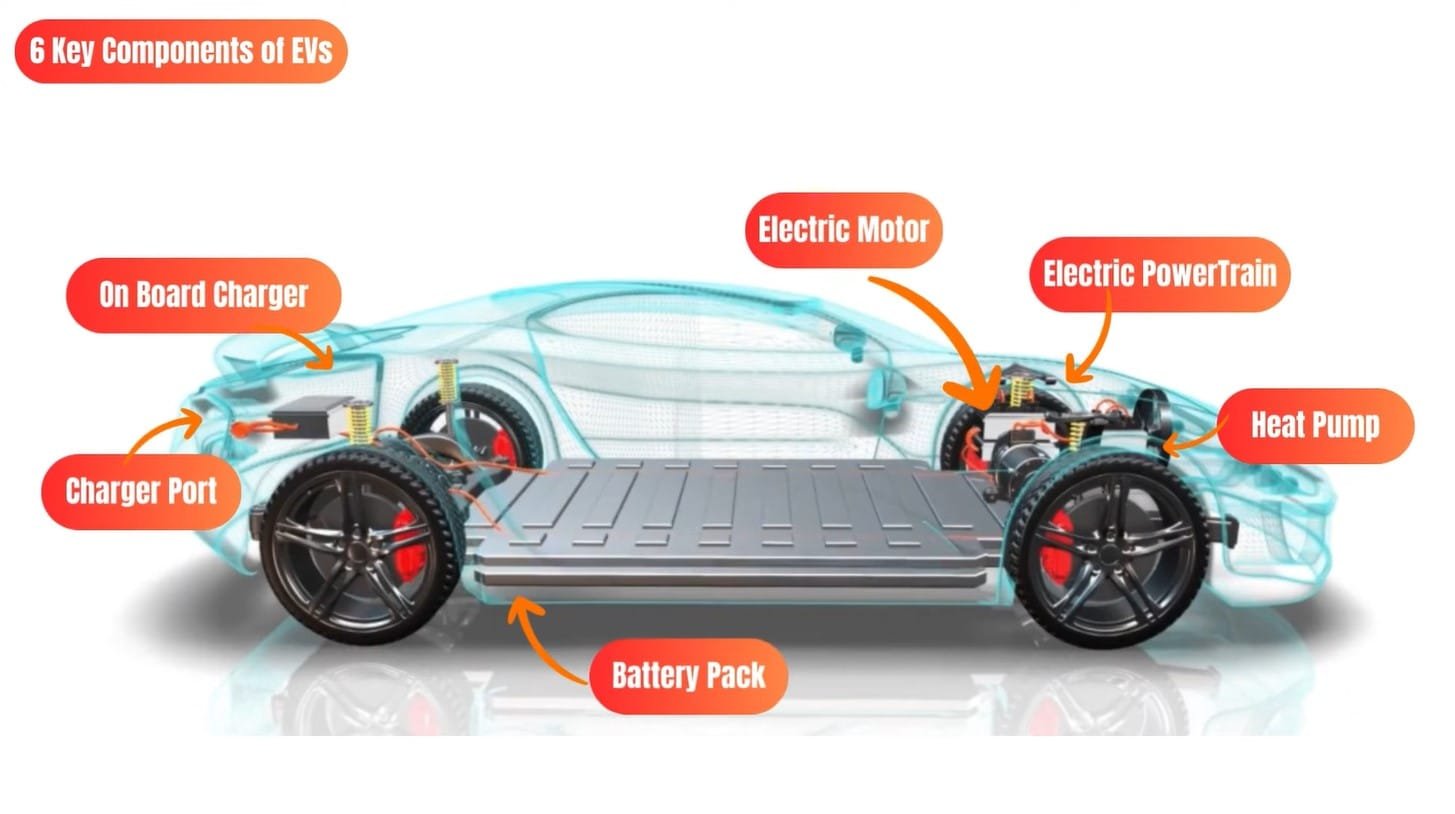
Key EV Components and Their Functions
| Component | Function | Technical Notes |
|---|---|---|
| Battery Pack | Stores high-voltage energy | 350–800V architecture; liquid-cooled |
| Inverter | Converts DC to AC + controls motor | Silicon carbide (SiC) switching becoming standard |
| Electric Motor | Provides propulsion | PMSM and induction types dominate |
| Onboard Charger | Converts AC wall power to DC | Typically 7–22 kW |
| DC Fast-Charging System | Feeds direct DC power into battery | 150–350 kW common |
| Thermal Management System | Regulates motor, battery, cabin temp | Heat pump systems now mainstream |
| Battery Management System (BMS) | Ensures cell balancing + safety | Controls charging limits and longevity |
| Reduction Gear | Replaces transmission | Single speed, 8:1–10:1 ratios |
| Regenerative Braking System | Recovers kinetic energy | Up to 70% urban energy recovery |
Advantages of Electric Vehicles
Professionally speaking, the EV powertrain solves several pain points that ICE vehicles simply cannot match.
1. Instant, Linear Acceleration
Torque delivery is immediate.
There is no turbo lag, no gear hunting, no exhaust backpressure.
2. Lower Operating Costs
EVs cut costs through:
- Fewer moving parts
- No oil changes
- Lower brake wear
- Cheaper “fueling” per mile
3. High Efficiency
Electric drivetrains routinely exceed 85% energy efficiency.
4. Quiet, Refined Driving
Smooth torque makes city driving calm, predictable, and composed.
5. Reduced Emissions
Especially when charged from renewable sources.
Disadvantages of Electric Vehicles
EVs are not perfect, and informed buyers should know the trade-offs.
1. Charging Time
Even with fast charging, a full charge takes longer than a gasoline fill-up.
2. Battery Degradation
Modern packs age slowly, but all lithium-ion batteries experience gradual capacity loss.
3. Cold Weather Limitations
Low temperatures reduce:
- Regeneration performance
- Charging speed
- Driving range
4. Higher Upfront Cost
Batteries remain expensive, though prices are decreasing.
5. Infrastructure Variability
Charging access remains inconsistent in many regions.
Are Electric Vehicles Right for You? Buying Guidance From an Expert
Choose an EV if:
- You have home charging
- You drive mostly urban or suburban routes
- You value quiet, smooth performance
- Low operating costs matter
- You prefer cutting-edge technology
Avoid an EV if:
- You frequently make long rural trips
- You cannot install home charging
- Extreme climates dominate your area
- You often tow heavy loads beyond 4,000–6,000 lbs
Typical EV Specifications (Modern 2026 Models)
| Specification | Typical 2026 EV Value |
|---|---|
| Battery Capacity | 60–120 kWh |
| Range | 220–420 miles |
| Charging Speed (DC) | 150–350 kW |
| Motor Output | 200–600 hp per motor |
| Architecture Voltage | 400V or 800V |
| 0–60 mph Acceleration | 3.0–6.0 seconds |
| Efficiency | 3.2–4.2 mi/kWh |
These values reflect real-world 2025–2026 EV platforms from mainstream and premium OEMs.
The Logic Behind the EV Revolution
What makes EVs compelling is not a single piece of technology—but the way all components work together. Battery engineering, inverter sophistication, thermal management, and motor efficiency form an integrated ecosystem that delivers a fundamentally different driving experience.
Electric vehicles are not simply “cars without engines.”
They are precision-engineered electrical systems on wheels, capable of performance and refinement that combustion platforms cannot replicate.
As infrastructure expands and battery chemistry evolves, the engineering case for EVs will only strengthen.
For many drivers, especially those with daily commutes and access to home charging, an EV is not just a viable option—it is the most logical one.
Related Articles:
Related XCarspace guides
For more powertrain and vehicle-choice context, use How Long EV Batteries Really Last in the Real World? and How Much Does It Really Cost to Charge an EV at Home?.