Maintaining a vehicle’s interior in factory-fresh condition is not just about aesthetics; it directly influences resale value, driver comfort, long-term durability, and even perceived brand quality. As someone who has spent years in automotive engineering and OEM interior material development, I can tell you that modern cabins are highly engineered environments. Leather, polymers, textiles, adhesives, and coatings are all designed to perform within specific temperature, humidity, and chemical-exposure thresholds.
Understanding those thresholds—and maintaining them—is the foundation of keeping your car’s interior looking new for years.
This guide outlines proven, engineering-aligned strategies used by automakers, supplier workshops, and detailing professionals to preserve interior materials at an OEM standard.
The Science Behind Interior Degradation
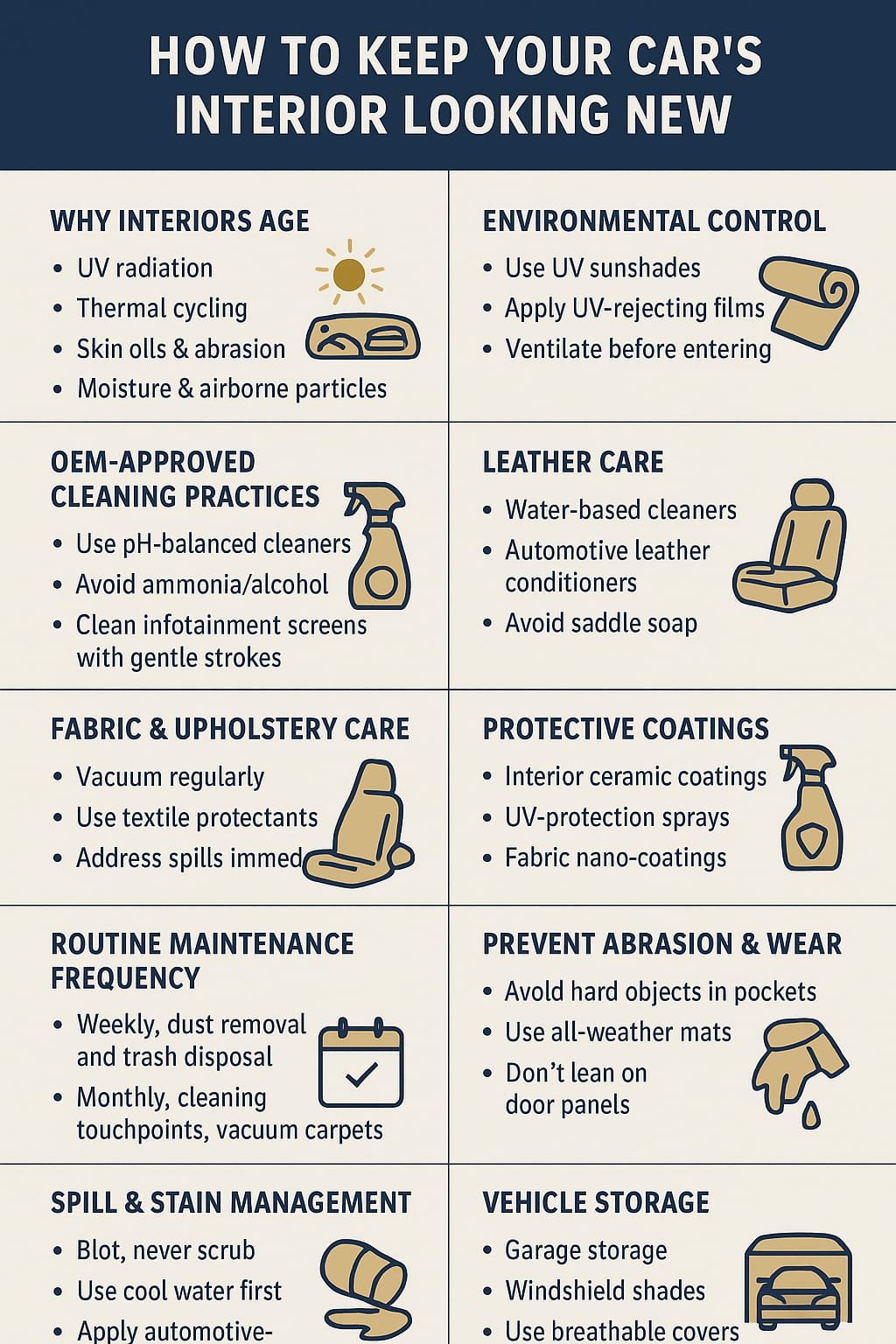
Before discussing maintenance tactics, it is important to understand why interiors age:
UV Radiation
Polymer dashboards, leather, and stitching threads degrade when exposed to ultraviolet light. UV breaks down molecular bonds, causing fading, embrittlement, and surface cracking.
Thermal Cycling
Cabins experience extreme temperature swings—especially in dark-colored vehicles. Repeated expansion and contraction stresses dashboard panels, adhesives, and soft-touch coatings.
Abrasion and Oils from Skin
Human skin oils, sweat, sunscreen, and cosmetics accelerate chemical wear on steering wheels, seats, and touchpoints.
Moisture and Air Quality
Humidity introduces mold risk, while airborne particulates scratch displays and trim pieces.
Once you understand these mechanisms, the maintenance strategies below make practical engineering sense.
Proven Methods to Keep Your Car’s Interior Looking New
1. Maintain a Controlled Cabin Environment
Environmental control is the single most effective interior-preservation strategy.
Use UV Barriers
- Install a high-quality windshield sunshade with multilayer reflective insulation.
- Consider UV-rejecting window film that meets local regulations.
These reduce dashboard surface temperatures by up to 30°C in lab tests and slow material aging dramatically.
Ventilate Before Entry
Heat-soaked cabins accelerate plasticizer evaporation. Opening doors for 20–30 seconds allows temperatures to stabilize and reduces stress on trim plastics.
2. Clean Interior Surfaces with OEM-Approved Methods
Many owners unintentionally damage materials by using aggressive household cleaners.
Dashboard & Soft-Touch Plastics
Use pH-balanced interior cleaners developed for automotive polymers.
Avoid alcohol, ammonia, or strong degreasers; they strip protective coatings and cause surface shine changes.
Leather (Genuine & Synthetic)
Modern automotive leather is coated with protective polyurethane layers.
Use:
- Water-based leather cleaners
- Conditioner formulated specifically for coated automotive leather
Never use saddle soap—its chemistry does not match modern OEM leather systems.
Infotainment & Gauge Displays
Use microfiber with distilled water or a display-specific cleaner.
Avoid circular motions that create micro-marring. Gentle linear strokes are preferred.
3. Protect Surfaces with Professional-Grade Coatings
Protective coatings reduce UV damage, minimize abrasion wear, and extend material elasticity.
Interior Ceramic Coatings
Automotive interior ceramics form a thin hydrophobic layer on plastics, leather, and vinyl.
Benefits include:
- Reduced dye transfer
- Less staining
- Enhanced UV resistance
- Easier cleaning
These coatings are widely adopted in premium OEM programs and high-end detailing facilities.
Fabric Protection
Nano-based fabric protectants create a breathable water-resistant barrier to prevent spills from penetrating fibers.
4. Implement a Preventive Maintenance Routine
Vehicles that look new five years later almost always follow routine interior maintenance.
Weekly
- Dry wipe dust from dashboard and screens.
- Empty trash and remove food sources that promote odors.
Monthly
- Conduct a pH-neutral wipe-down of high-touch areas (steering wheel, shifter, door handles).
- Vacuum carpets and mats thoroughly using crevice attachments.
Quarterly
- Condition leather seats and armrests.
- Clean HVAC vents with compressed air to prevent odor buildup.
- Retrain floor mat position to ensure no interference with pedals.
Annually
- Steam-clean carpets to remove embedded dirt.
- Reapply protective coatings.
- Replace cabin air filter to maintain interior air purity.
5. Prevent Abrasion and Material Fatigue
Small habits significantly influence long-term wear.
Avoid Hard Objects in Pockets
Keys, tools, and belt buckles are leading causes of seat bolster wear.
Use All-Weather Floor Mats in High-Use Environments
Rubberized mats contain spills and reduce moisture penetration into carpeting.
Limit Heavy Pressure on Door Panels
Door panels are designed for lateral support, not load-bearing. Repeated leaning causes deformation over time.
6. Address Spills and Stains Immediately
Time is the enemy when liquids reach leather pores or textile fibers.
- Blot, do not scrub.
- Use cool water first; heat sets stains.
- If using chemicals, choose automotive interior-specific formulas.
In OEM testing labs, response time was the most significant variable in preventing permanent staining.
7. Maintain Odor Control Using Technical Methods
Odors are often caused by volatile organic compounds trapped in upholstery.
Best Practices
- Replace cabin filter twice a year in humid climates.
- Run A/C on “fresh air” mode periodically to reduce moisture accumulation.
- Use an evaporator cleaning foam annually to prevent microbial buildup.
Odor control is not about masking but about eliminating the underlying sources.
8. Store the Vehicle Properly
A car kept in a garage will preserve its interior far better than one exposed to sun and humidity year-round.
If garage storage is not possible:
- Use a reflective windshield shader every time you park.
- Consider a breathable car cover for long-term storage.
Expert Recommendations for Long-Term Preservation
Based on industry-standard material testing and field observations, the following best practices offer the longest interior life:
Maintain UV Defense
UV exposure is the top contributor to fading and cracking.
Clean with Material-Specific Products
Never compromise on chemical compatibility.
Apply Preventive Coatings
A modest investment yields years of protection.
Establish a Maintenance Routine
Consistency outperforms sporadic deep cleaning every time.
Final Thoughts
A well-preserved interior is not the result of one major action—it is the cumulative effect of controlled environment, proper materials care, and disciplined routines. These strategies reflect the same principles applied by automakers when designing durability-test protocols and are grounded in material science rather than generic advice.
Implement these methods consistently, and your cabin will retain its original appearance, tactile quality, and long-term value far beyond typical ownership expectations.
Related XCarspace guides
Build a more complete maintenance plan with How Weather Impacts Car Maintenance Costs: What Drivers Really Pay and How to Save on Car Repairs Without Voiding Your Warranty?.