In the volatile used car market, due diligence is the only true defense against purchasing a money pit. A “bad deal” isn’t always about the price; it’s about the unseen liabilities—hidden damage, deferred maintenance, and financial traps—that cost thousands post-purchase. This guide provides an expert-level, actionable checklist to identify red flags in documentation, mechanical condition, and dealer/seller behavior, ensuring you acquire an asset, not a liability.
| Red Flag Category | What the Seller is Hiding | Your Expert Countermeasure |
| Mechanical/Safety | Unrepaired Collision or Flood Damage | Mandate a Pre-Purchase Inspection (PPI) by an independent mechanic. |
| Documentation | Odometer Fraud or Title Washing | Verify VIN against independent reports (CarFax/AutoCheck) and maintenance records. |
| Financial/Dealer | High-Interest Rate Padding or “As-Is” Finality | Secure financing pre-approval and refuse to sign an “As-Is” agreement without a PPI. |
| Maintenance History | Severe Neglect (Deferred Maintenance) | Check service records for long gaps (20k+ miles) between oil changes and routine items. |

1. The Paper Trail Warning: Decoding the Documentation Red Flags
A vehicle’s history report and title documents are your first and most critical line of defense. Scammers and unethical dealers use loopholes to mask a vehicle’s troubled past.
1.1. The Title Status Game
Always check the vehicle title status against the VIN. Any of these terms should be treated as a massive warning and require extreme caution:
- Salvage Title: Indicates the car was declared a total loss by an insurance company, often due to severe accident, flood, or fire damage. While some are rebuilt, a salvage title permanently reduces the car’s value and can signal deep structural problems.
- Rebuilt/Restored Title: The vehicle was salvaged but supposedly repaired to roadworthy condition. Crucial Step: Demand proof of the repairs with receipts and photos, and insist on a PPI specializing in bodywork.
- Lemon Law Buyback: The manufacturer repurchased the car because it had repeated, unresolved defects. This is a sign of perpetual mechanical or electrical issues. Avoid these unless you are an expert mechanic.
- Title Washing: An illegal practice where a salvage title is registered in a state with lax titling laws to obtain a “clean” title in a subsequent state. Defense: Always compare titles and VINs across multiple history reports (e.g., CarFax and AutoCheck) to look for sudden, inexplicable title changes.
1.2. Discrepancies in Mileage (Odometer Fraud)
While less common on modern, digitally controlled vehicles, odometer tampering still occurs.
- The Sign: The mileage on the dashboard is significantly lower than the mileage recorded on service records, state inspection stickers, or the mileage listed on the title documents. A simple check of oil change stickers often reveals the truth.

2. The Mechanical and Physical Inspection Traps
Never trust the seller’s statement that “it runs great.” A vehicle must be inspected by a neutral third party.
2.1. Non-Uniform Panel Gaps and Paint
These are the most common signs of a prior, unreported collision.
- The Test: Walk around the car and look for inconsistencies in the spacing between body panels (doors, hood, fenders). Uneven gaps indicate the body was bent and pulled back into alignment.
- Color Match: Check the paint color on plastic components (bumpers, side mirrors) against the metal body. A subtle difference in metallic flake or shade often means that section was repainted after an accident.
2.2. Electrical and Hidden Flood Damage
Flood-damaged cars are disastrous long-term purchases because water ruins sensitive electronics, wiring, and safety modules (like airbags) slowly over time.
- The Smell Test: Mildew, heavy air fresheners, or a lingering dampness in the cabin are classic flood signs.
- The Seatbelt Check: Pull the seatbelts all the way out. Mud lines, water spots, or fading at the bottom of the belt are irrefutable evidence that the car was submerged.
2.3. Neglected Maintenance
A vehicle that has been poorly maintained is a ticking time bomb for expensive repairs.
- Under the Hood: Look for evidence of deferred maintenance. Check the oil dipstick—dark, sludgy oil indicates severe neglect. Check the brake fluid reservoir—if the fluid is dark brown or black, the braking system has been ignored.
- The Tire Test: While the tires may have decent tread depth, look for uneven wear patterns (more wear on one edge than the other). This indicates severe suspension or alignment issues that were never addressed, possibly masking crash damage.
3. Dealer/Seller Behavior and Financial Red Flags
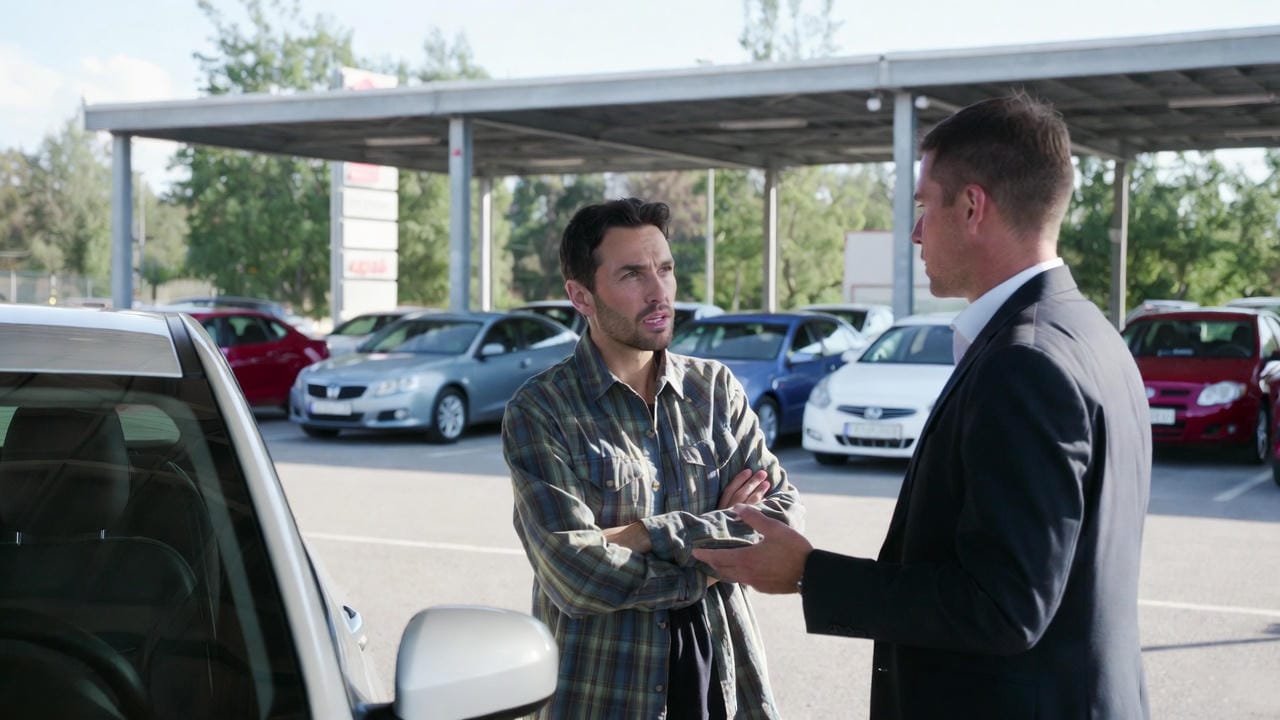
Sometimes, the deal looks too good because the person selling it is engaging in predatory practices.
3.1. The “As-Is” Purchase Pressure
When buying from a private party or many independent used car lots, the car is sold “As-Is” (without warranty). While this is standard, never allow it to substitute for a Pre-Purchase Inspection (PPI).
- Your Power: Always make the sale contingent on a satisfactory PPI conducted by your independent mechanic, at your expense. If the seller refuses to allow the inspection, walk away immediately. A reputable seller has nothing to hide.
3.2. Financing Games (The “Payment Padding”)
If you finance through the dealership, be wary of sudden changes to the agreed-upon interest rate or aggressive selling of overpriced add-ons.
- The Bait-and-Switch: The dealer may quote you an attractive payment, then later claim the original financing fell through (“spot delivery” trap) and require you to sign a new contract with a higher APR.
- The Defense: Get a loan pre-approval from your credit union or bank before you shop. This establishes your lowest possible interest rate and prevents the dealer from padding the rate for extra profit.
Conclusion: Trust the Process, Not the Seller
A “bad deal” on a used car is rarely accidental; it is the result of insufficient scrutiny. The biggest mistake a buyer makes is prioritizing a low price over verified mechanical integrity. By strictly adhering to the PPI mandate and thoroughly verifying the title history, you transform the used car buying process from a risk into a calculated financial transaction.
Useful Links: