As we head into 2026, the question of whether Advanced Driver-Assistance Systems (ADAS) actually save lives or merely provide a false sense of security has moved from academic debate to a critical consumer crossroad. With over 90% of new vehicles sold in 2025 featuring some level of autonomous braking or lane-keeping, the data is finally in.
But the results are more nuanced than the “zero-accident future” marketing brochures promised. While certain features are slashing rear-end collisions by half, others are creating a dangerous phenomenon known as “Driver Automation Complacency.”
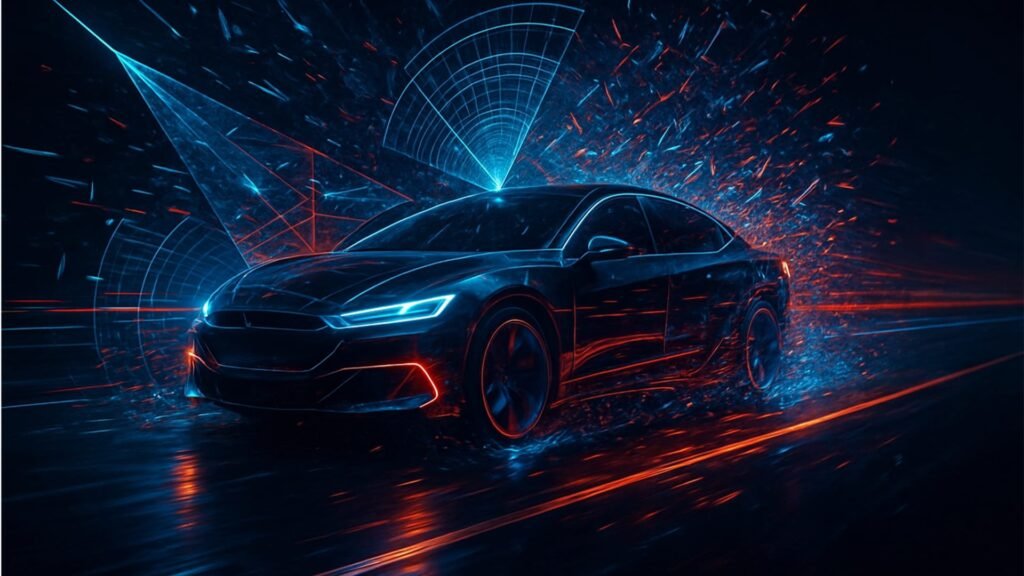
The Hard Data: Where ADAS Wins (and Where It Doesn’t)
The latest 2025 report from the Partnership for Analytics Research in Traffic Safety (PARTS)—the most comprehensive study to date involving 98 million vehicles—paints a clear picture of effectiveness.
1. The Undisputed Champions: AEB and FCW
Automatic Emergency Braking (AEB) and Forward Collision Warning (FCW) remain the gold standards. Real-world data shows that AEB reduces rear-end crashes by approximately 52% for 2021–2023 model years. Interestingly, the technology is 4% more effective for every 1,000 lbs a vehicle loses, making lightweight sedans significantly safer than heavy EVs or SUVs in panic-stop scenarios.
2. The Marginal Gain: Lane Departure Warning (LDW)
While LDW and Lane Keep Assist (LKA) reduce lane-change crashes by roughly 14%, they haven’t moved the needle on insurance claims. Why? Because the high cost of repairing sensors integrated into side mirrors and bumpers often offsets the savings from fewer minor scrapes.
3. The Controversial Middle: Partial Automation
Level 2 systems (like Tesla’s Autopilot or Ford’s BlueCruise) occupy a gray area. A 2024 IIHS (Insurance Institute for Highway Safety) study found that while these systems offer convenience, there is “little evidence” they prevent more crashes than standalone AEB. In fact, many drivers treat these convenience features as fully autonomous, leading to slower reaction times when the system reaches its operational limit.
ADAS Performance Comparison (2025 Data)
The following table summarizes the effectiveness of key ADAS features based on 2025 incident reporting and crash data.
| Feature | Crash Reduction Rate | Primary Benefit | The “Catch” |
| AEB (Front) | 52% | Prevents rear-end collisions | Less effective in heavy SUVs/EVs |
| Pedestrian AEB | 9-32% | Protects vulnerable road users | Effectiveness drops by 70% at night |
| Blind Spot Detect | 14% | Reduces side-swipe incidents | Drivers may stop checking over-shoulder |
| Rear Auto Brake | 17% | Low-speed backing safety | High sensor replacement costs |
| Partial Automation | Minimal | Reduced driver fatigue | High risk of “driver complacency” |
The “Complacency Gap”: The Human Factor
The biggest threat to ADAS safety isn’t the software—it’s the Human-Machine Interface (HMI). In February 2025, an AutoPacific survey revealed that while 90% of users find ADAS useful, nearly half of those using “Hands-Free” highway assists admitted to engaging in secondary tasks (texting or eating) more frequently.
“Everything we’re seeing tells us that partial automation is a convenience feature like power windows or heated seats rather than a safety technology.”
— David Harkey, IIHS President
This creates a “Safety Paradox”: The more reliable a system seems, the less the human driver monitors it. When the system encounters a “corner case”—such as faded lane markings in a construction zone or a stalled vehicle in a lane—the driver is often too disengaged to take over in the required 1.5-second window.
Insights: How to Choose a Safe ADAS in 2026
If you are shopping for a vehicle and safety is your primary driver, look for these three markers of a “High-Utility” ADAS:
- Robust Driver Monitoring Systems (DMS): The best systems (like those from Subaru and BMW) use infrared cameras to ensure your eyes stay on the road. If the car doesn’t nag you when you look away, the system is less safe.
- Night-Vision Integration: Standard Pedestrian AEB is notoriously poor in the dark. Opt for brands that have moved toward thermal imaging or high-res LiDAR for better nocturnal performance.
- Haptic vs. Auditory Alerts: Research shows that steering wheel vibrations (haptics) elicit faster human responses than “beeping” noises, which drivers often tune out as “nuisance alerts.”
The Verdict: Are They Actually Safer?
Yes, but with a major asterisk. Individual safety components like Automatic Emergency Braking are unequivocally safer and are now a mandatory standard for a reason. However, the move toward Full Self-Driving (Supervised) or Level 2+ systems introduces a new type of risk: the “attentional lapse.”
For the safest driving experience in 2025, treat ADAS as a safety net, not a pilot. The safest car on the road isn’t the one with the most sensors; it’s the one with a focused driver supported by a system that knows when to intervene—and when to warn the driver to wake up.
Useful Links: