When you’re shopping for a vehicle in 2026, a “5-star rating” is no longer the finish line—it’s the bare minimum. The goalposts for automotive safety have shifted dramatically over the last 24 months. The Insurance Institute for Highway Safety (IIHS) has toughened its “Moderate Overlap” front test to prioritize rear-seat passengers, and the NHTSA has integrated more rigorous pedestrian detection standards.
In this climate, being “safe” means a car must do more than just survive a crash; it must prevent it entirely while protecting every occupant, regardless of where they are sitting.
Based on the latest December 2025 crash-test data and real-world performance metrics, here is the definitive guide to the safest vehicles on American roads today.
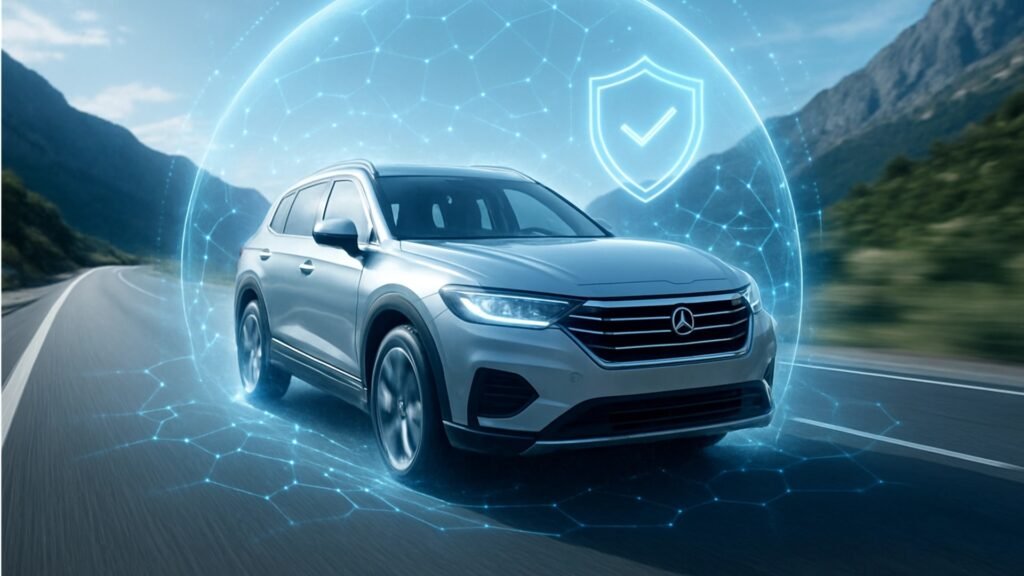
The “Gold Standard” Winners: 2025 Top Safety Pick+
To earn the TSP+ designation this year, a vehicle must achieve “Good” ratings in the updated side-impact test (which uses a heavier, faster-moving barrier) and provide standard, high-quality headlights that don’t blind oncoming traffic.
1. The Luxury Benchmarks: Audi and Genesis
Audi has emerged as the dominant force in late 2025. The all-new Audi A6 Sportback e-tron and the Audi Q5 (models built after July 2025) achieved perfect marks across the board. What sets them apart is their “predictive” active safety—systems that can tension seatbelts and close windows if they detect an unavoidable rear-end collision.
Similarly, the 2026 Genesis G80 continues the brand’s streak of safety dominance. Genesis’s Highway Driving Assist II isn’t just a convenience feature; it is one of the most sophisticated collision-avoidance systems currently available to consumers.
2. The Family Protectors: Honda, Subaru, and Toyota
For the average American family, the 2025-26 Honda Civic (Hatchback) and Honda Accord remain unbeatable values in safety. Honda’s ACE (Advanced Compatibility Engineering) body structure is specifically designed to protect occupants in crashes with larger SUVs—a critical factor on U.S. roads dominated by heavy trucks.
Subaru remains a safety cult favorite for a reason. The 2026 Subaru Forester earned the TSP+ by perfecting its EyeSight camera-based system, which now handles inclement weather (heavy rain and fog) significantly better than previous versions.
Comparison: Top-Rated Safety Performers (2025-2026 Models)
| Vehicle Model | Category | Key Safety Highlight | Award Status |
| Audi A6 Sportback e-tron | Large Luxury | Superior Rear-Passenger Protection | IIHS TSP+ |
| Tesla Cybertruck (Post-April ’25) | Large Pickup | High Kinetic Energy Absorption | IIHS TSP+ |
| Subaru Forester | Small SUV | Standard AWD & Enhanced EyeSight | IIHS TSP+ |
| Honda Accord | Midsize Sedan | ACE Body Structure Excellence | IIHS TSP+ |
| Volvo EX90 | Large SUV | Lidar-Integrated Collision Avoidance | IIHS TSP+ |
| Toyota Camry | Midsize Sedan | Robust Pedestrian Detection | IIHS TSP+ |
The EV Safety Revolution: Lidar and Structural Integrity
Electric vehicles are no longer the “new kids” on the block; they are often the safest. Because EVs lack a heavy engine block in the front, they have massive crumple zones that absorb energy more efficiently than internal combustion cars.
- Volvo EX90: This is arguably the most technologically advanced safe car on the road. It is the first mass-production vehicle to feature a roof-mounted Lidar sensor as standard, allowing the car to “see” pedestrians up to 250 meters away, even in total darkness.
- Tesla Cybertruck: Despite early online skepticism regarding its “exoskeleton,” models built after April 2025 have officially secured the Top Safety Pick+ award. Its sheer mass and structural rigidity performed exceptionally well in side-impact and rollover tests.
Why Some “Premium” Cars Failed to Make the List
Safety is a moving target. In the most recent round of testing, the Mercedes-Benz E-Class and the Ram 1500 failed to secure top honors.
The reason? Rear-seat protection. The IIHS updated its moderate overlap test to include a dummy in the back seat. In many luxury sedans, the rear seatbelts allowed too much “submarining” (the occupant sliding under the belt) or recorded high pressure on the chest. If you are buying a car to chauffeuring children or elderly parents, these updated metrics are more important than the brand name on the hood.

Buying Guide: What to Look for in 2026
If you are at a dealership today, look for these three “Must-Haves” beyond the basic stickers:
- Rear Seatbelt Pretensioners: Ensure the vehicle has advanced restraints in the back, not just the front.
- Pedestrian AEB with Night Vision: Many systems work great at noon but fail at 9 PM. Ask if the Automatic Emergency Braking (AEB) is rated for low-light conditions.
- Cross-Traffic Braking: Not just a “beep,” but a system that will actually slam the brakes if you’re reversing into the path of an oncoming car.
The Bottom Line
If safety is your absolute priority, the Audi Q5, Subaru Forester, and Volvo EX90 represent the pinnacle of 2026 engineering. They don’t just meet the standards; they define them.
Useful Links:
Related XCarspace guides
Continue the safety and long-term reliability research with Car Safety Ratings Explained – What Actually Matters When Choosing a Safe Car and Can Car Tech Really Prevent Accidents in 2026?.