If you were expecting the “Jetson-esque” future of swivel seats and board games in the back of a moving car by 2026, the reality is a bit more grounded—but no less revolutionary. We’ve moved past the era of flashy, over-promised prototypes and into the era of infrastructure-integrated autonomy.
As of late 2025, the conversation in America has shifted from “can a car drive itself?” to “how will we regulate a car with no steering wheel?” With the Department of Transportation (DOT) and NHTSA moving to modernize safety standards, 2026 is officially the year the “Human Driver” requirement starts to dissolve.
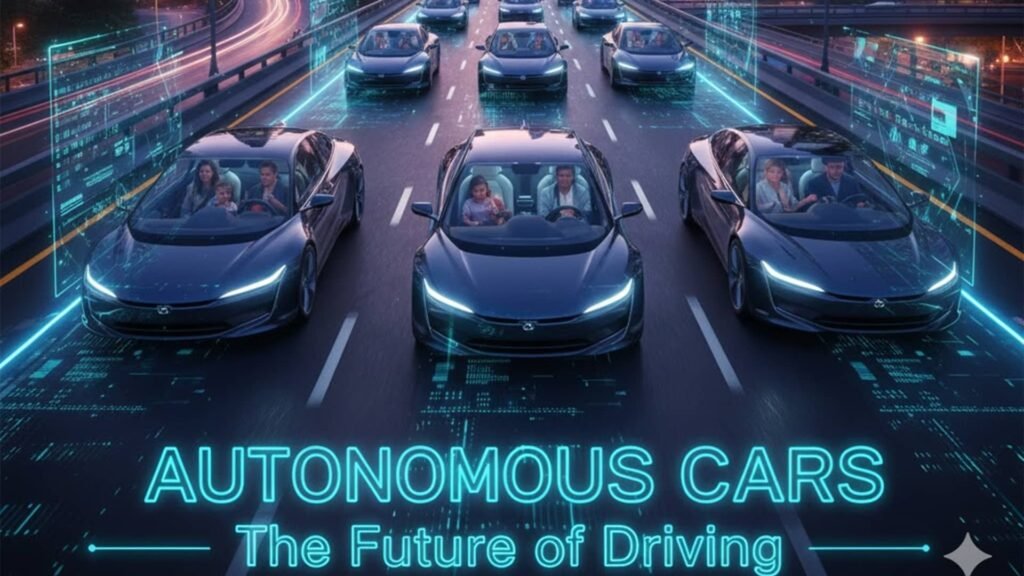
The Two-Track Future: Supervised vs. Unsupervised
In 2026, the American autonomous landscape is split into two distinct tracks: the car you own and the car you hail.
1. The Robotaxi Dominance (Level 4)
Alphabet’s Waymo has effectively won the early-round urban battle. As of late 2025, Waymo One is no longer a “Phoenix novelty”—it is a staple of transit in Los Angeles, San Francisco, Austin, and Atlanta, with a massive push into New York City slated for early 2026.
The strategy here is “Reliable over Rapid.” By using a sensor-fusion approach (Lidar, Radar, and Cameras), these fleets have achieved a safety record that statistically outperforms the average American driver in urban environments.
2. The Consumer Fleet (Level 2+ and Level 3)
For the car in your driveway, “Self-Driving” still comes with an asterisk.
- Tesla’s End-to-End Neural Network: Tesla continues to scale its “Vision-Only” FSD (Supervised). In 2026, the focus has shifted toward FSD v15, which handles complex “edge cases” like heavy snow or erratic human-driven delivery bikes with unprecedented smoothness. However, it remains a “Hands-On, Eyes-On” system for personal owners.
- Mercedes-Benz & BMW: These manufacturers have taken the lead in “Hands-Off” legal autonomy. Mercedes’ Drive Pilot is now operational at speeds up to 60 MPH on pre-mapped U.S. highways, allowing you to legally scroll through emails while the car handles the I-95 commute.
Comparison: The State of Autonomy in 2026
| Provider | Autonomy Level | Primary Tech Stack | 2026 Availability |
| Waymo | Level 4 | Lidar + Radar + Cameras | 10+ Major U.S. Cities (Robotaxi) |
| Tesla | Level 2/3 (Supervised) | Pure Vision (Cameras) | Nationwide (Personal Ownership) |
| Mercedes-Benz | Level 3 | Lidar + HD Mapping | Select States (CA, NV, etc.) |
| Zoox (Amazon) | Level 4 | Lidar + Bi-Directional Drive | Launching in Las Vegas/SF 2026 |
| Ford BlueCruise | Level 2+ | Radar + Driver Monitoring | Nationwide (Highway Only) |
The “Duffy Framework”: Federal Deregulation in 2026
The biggest story of 2026 isn’t a new car; it’s a new law. In late 2025, the DOT introduced a new Automated Vehicle (AV) Framework designed to remove “unnecessary regulatory barriers.”
For decades, the Federal Motor Vehicle Safety Standards (FMVSS) required vehicles to have physical steering wheels, pedals, and windshield wipers. By Spring 2026, new rules are expected to bypass these requirements for purpose-built autonomous vehicles. This paves the way for the Tesla Cybercab and Zoox to deploy “cabin-style” interiors where the driver’s seat simply doesn’t exist.
The “Lidar vs. Vision” Civil War
The industry remains deeply divided on how a car should see.
- The Lidar Camp (Waymo, Volvo, Zoox): Argues that laser-based depth perception is non-negotiable for safety. 70% of American consumers surveyed in late 2025 agree, stating they prefer vehicles equipped with Lidar over camera-only systems.
- The Vision Camp (Tesla): Argues that humans drive with vision, so AI should too. By removing expensive sensors, Tesla has kept its tech accessible to the mass market, creating a massive data-collection loop that Lidar-based companies can’t match.
What to Expect if You’re Buying in 2026
If you are looking to “future-proof” your next vehicle purchase, keep these three factors in mind:
- Subscription vs. Ownership: “Self-driving” is increasingly a monthly bill. Expect to pay $99–$200/month for high-level autonomy features.
- Geofencing Limits: A car might be “autonomous” in California but a standard car in Vermont. Always check the Operational Design Domain (ODD) of the vehicle’s software.
- Resale Value: Cars with the hardware suite for Level 3 (like the 2026 Audi or Volvo models) are holding their value significantly better than “Analog” luxury cars.
The Bottom Line
The “Future of Self-Driving” in America is no longer a monolith. It is a patchwork of highly capable urban robotaxis and increasingly smart highway cruisers for personal use. We aren’t yet at the point where you can sleep across state lines, but the 2026 Regulatory Shift means the steering wheel is officially on its way out.
Useful Links: