When shopping for a new car, safety ratings often appear as reassuring stars, badges, and acronyms. Five stars sounds great. “Top Safety Pick+” sounds even better. But what do these ratings really measure—and how much weight should you give them when deciding what to buy?
This guide breaks down car safety ratings in plain, professional terms, explains how they are tested, highlights their limitations, and—most importantly—shows how to use them to make a smarter, safer buying decision.
If you want more than marketing slogans and need a clear, evidence-based understanding of vehicle safety, this article is for you.
What Are Car Safety Ratings?
Car safety ratings are standardized evaluations conducted by independent organizations to measure how well a vehicle protects occupants—and, increasingly, pedestrians—in various crash scenarios.
Unlike manufacturer claims, these ratings are based on controlled crash tests, sensor data, and repeatable methodologies. Their primary goal is not to rank luxury or performance, but to assess injury risk and accident avoidance capability.
In the United States and most global markets, safety ratings influence:
- Consumer purchasing decisions
- Insurance premiums
- Fleet and government procurement
- Manufacturer engineering priorities
The Major Car Safety Rating Organizations (Explained)
Different regions rely on different testing authorities. Each uses its own scoring system and test philosophy.
Key Safety Rating Bodies
| Organization | Region | Focus Area | Rating Format |
|---|---|---|---|
| NHTSA (NCAP) | United States | Crash protection | 1–5 stars |
| IIHS | United States | Crash + crash avoidance | Pass/Fail + awards |
| Euro NCAP | Europe | Occupant & pedestrian safety | 0–5 stars |
| ANCAP | Australia/NZ | Comprehensive safety | 0–5 stars |
| Global NCAP | Emerging markets | Baseline safety | 0–5 stars |
Each authority uses different impact speeds, barrier types, and injury metrics—so a “5-star car” in one system is not always directly comparable to another.
Understanding NHTSA Star Ratings (U.S.)
The National Highway Traffic Safety Administration (NHTSA) conducts the U.S. New Car Assessment Program (NCAP).
What NHTSA Tests
| Test Type | What It Measures |
|---|---|
| Frontal Crash | Head-on collisions at highway speed |
| Side Crash | Vehicle-to-vehicle and pole impacts |
| Rollover Resistance | Likelihood of tipping or rolling |
How the Star System Works
- ★★★★★: Lowest estimated injury risk
- ★★★☆☆: Average protection
- ★☆☆☆☆: High injury risk
Important nuance:
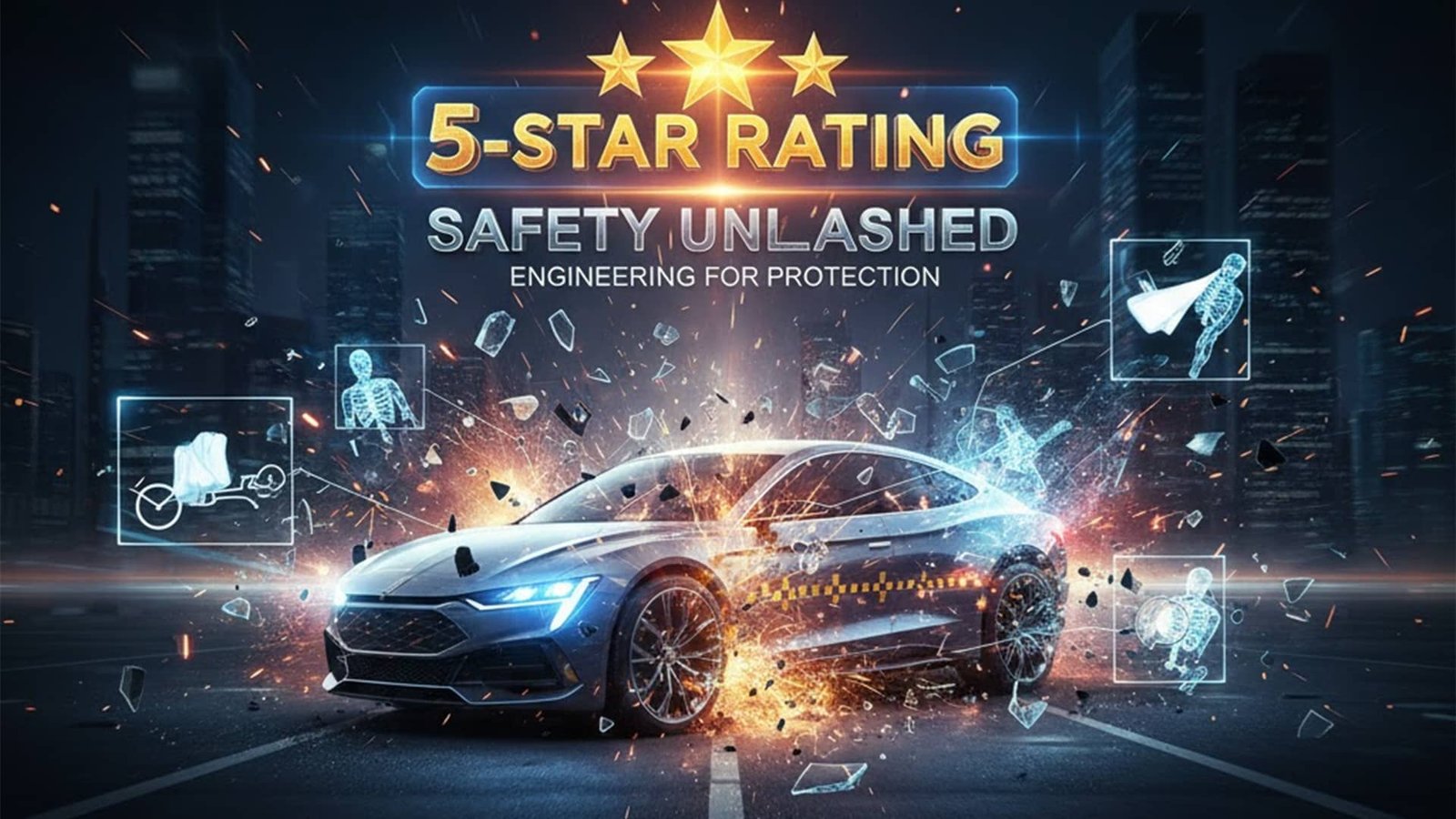
A 5-star rating does not mean a vehicle is “crash-proof.” It means lower relative injury risk compared to others tested under the same protocol.
IIHS Ratings: Why They Matter More Than Stars
The Insurance Institute for Highway Safety (IIHS) is funded by insurers, not automakers or regulators. As a result, its standards tend to evolve faster and more aggressively.
IIHS Crash Tests Explained
| Test | Why It Matters |
|---|---|
| Small Overlap Front | Simulates real-world partial frontal crashes |
| Moderate Overlap Front | Traditional frontal impact |
| Side Impact (Updated) | Reflects modern SUV-to-car crashes |
| Roof Strength | Rollover survival |
| Head Restraints | Whiplash prevention |
IIHS Safety Awards
| Award | Meaning |
|---|---|
| Top Safety Pick | Strong crash protection |
| Top Safety Pick+ | Best-in-class protection + advanced headlights |
Many vehicles earn 5 stars from NHTSA but fail to qualify for IIHS awards, which is why serious safety buyers often prioritize IIHS results.
Euro NCAP: The Global Benchmark for Modern Safety
Euro NCAP is widely regarded as the most demanding safety rating system in the world.
Euro NCAP Scoring Categories
| Category | Weight |
|---|---|
| Adult Occupant Protection | ~40% |
| Child Occupant Protection | ~20% |
| Vulnerable Road Users | ~20% |
| Safety Assist Systems | ~20% |
This means a car cannot achieve 5 stars without:
- Advanced driver assistance systems (ADAS)
- Pedestrian and cyclist protection
- Effective autonomous emergency braking
Euro NCAP ratings often age quickly, because standards are updated almost every year.
Crashworthiness vs Crash Avoidance: A Critical Difference
Many buyers focus only on what happens during a crash. Modern safety, however, is equally about preventing crashes altogether.
Two Pillars of Vehicle Safety
| Safety Type | Examples |
|---|---|
| Passive Safety | Airbags, crumple zones, seatbelts |
| Active Safety | AEB, lane keeping, blind-spot monitoring |
A vehicle with excellent passive safety but poor active systems may score well in traditional crash tests—but still be involved in more real-world accidents.
The Role of ADAS in Modern Safety Ratings
Advanced Driver Assistance Systems now play a decisive role in top safety scores.
Key Systems That Impact Ratings
- Automatic Emergency Braking (AEB)
- Forward Collision Warning
- Lane Departure Prevention
- Adaptive Cruise Control
- Blind Spot Intervention
Not all systems are equal. Testing evaluates:
- Detection accuracy
- Response timing
- Performance in low light or poor weather
This explains why two cars with similar hardware can receive very different ratings.
Common Misconceptions About Car Safety Ratings
“A 5-Star Car Is Safe in Any Crash”
False. Ratings reflect relative performance under specific test conditions, not immunity from injury.
“Bigger Cars Are Always Safer”
Not necessarily. Modern crash structures allow some midsize vehicles to outperform larger SUVs in occupant protection.
“Older 5-Star Ratings Are Still Relevant”
Often untrue. A 5-star rating from 8–10 years ago may fail today’s tests entirely.

How to Use Safety Ratings When Buying a Car
Instead of relying on a single number, follow this decision framework:
Smart Buyer Checklist
- Check both NHTSA and IIHS results
- Verify test year relevance
- Confirm standard vs optional safety equipment
- Look for IIHS Top Safety Pick+
- Consider real-world crash avoidance features
Safety Ratings vs Real-World Driving: What Ratings Can’t Tell You
No test fully captures:
- Driver behavior
- Road conditions
- Vehicle maintenance
- Regional crash patterns
Safety ratings should be treated as risk reduction tools, not guarantees.
Final Verdict: Do Safety Ratings Really Matter?
Yes—but only if you understand them.
Car safety ratings are among the most data-driven tools available to consumers, but their value lies in context, comparison, and currency. Buyers who look beyond surface-level stars and understand how and why vehicles earn their scores consistently make better decisions.
In modern car shopping, safety is no longer about metal thickness—it’s about engineering, software, and intelligent design working together.
And when interpreted correctly, safety ratings remain one of the most powerful signals of all.
Useful Links:
Related XCarspace guides
Continue the safety and long-term reliability research with The Safest Cars on American Roads for 2026 and Can Car Tech Really Prevent Accidents in 2026?.