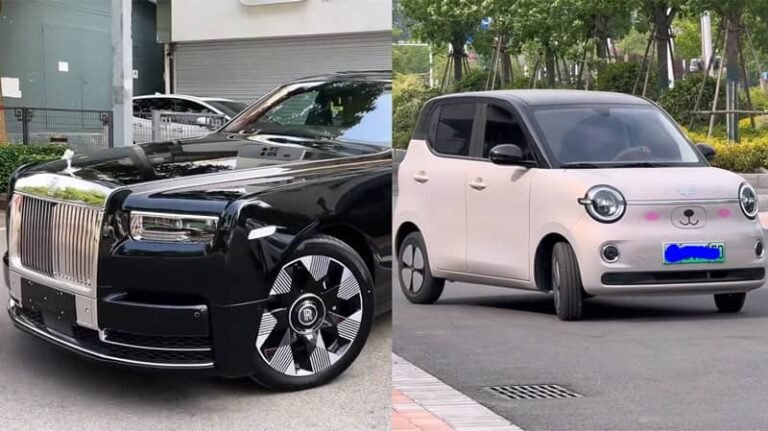
There are luxury brands, and then there is Rolls-Royce.
While most automobiles promise speed, comfort, or technology, Rolls-Royce has always pursued something far rarer: mechanical perfection elevated to cultural symbolism.
To own a Rolls-Royce is not merely to drive—it is to arrive. It signals status without aggression, wealth without explanation, and authority without noise. This philosophy did not emerge from marketing departments or focus groups. It was forged in the early 20th century by two men who believed that engineering excellence should be absolute, not relative.
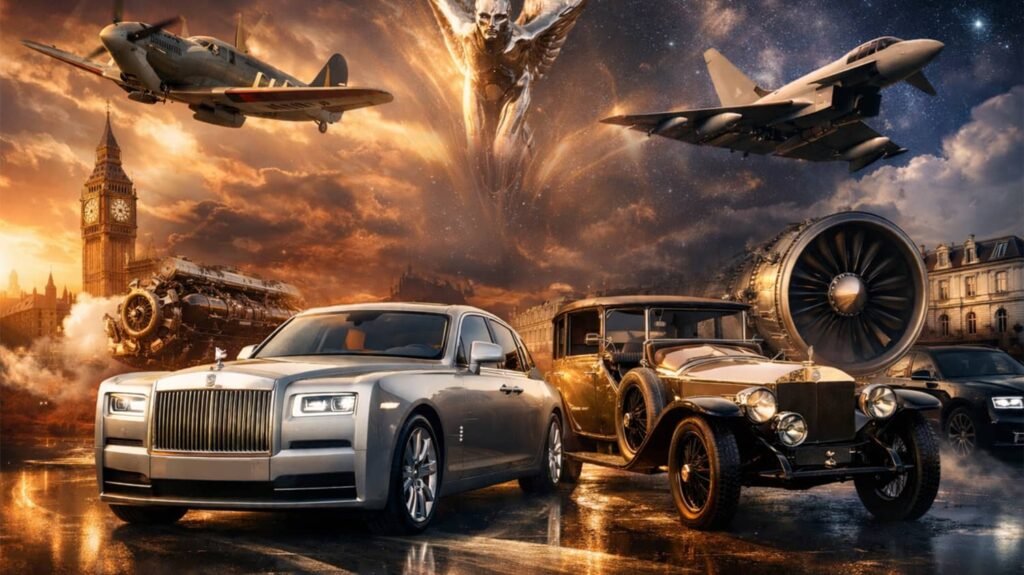
The Meeting That Changed Automotive History (1904)
In 1904, British electrical engineer Henry Royce was deeply dissatisfied with the crude, unreliable automobiles of his era. A perfectionist by temperament, Royce believed that a machine should be silent, smooth, and mechanically honest. If such a car did not exist, he would build it himself.
At the same time in London, Charles Stewart Rolls, a wealthy aristocrat, aviation pioneer, and racing enthusiast, was searching for a British automobile worthy of his standards. Fate intervened at the Midland Hotel in Manchester, where the two men were introduced.
The partnership was instantly clear:
- Royce would design and engineer the finest cars in the world
- Rolls would sell them to the world’s elite
The company name was decided immediately: Rolls-Royce.
The Silver Ghost and the Birth of a Reputation (1906–1914)
In 1906, Rolls-Royce Limited was formally established. That same year, the car that would define the brand—and the industry—was born: the Rolls-Royce Silver Ghost.
The Silver Ghost was revolutionary not because it was fast, but because it was refined.
At a time when automobiles rattled, smoked, and broke down regularly, the Silver Ghost delivered:
- Exceptional mechanical reliability
- Unprecedented smoothness
- Near-silent operation
A now-legendary advertisement claimed that at 60 km/h, the loudest sound in the cabin was the ticking of the clock. The phrase “The Best Car in the World” ceased to be a slogan—it became a widely accepted fact.
The Spirit of Ecstasy: A Symbol of Reverence (1911)
In 1911, Rolls-Royce introduced what would become one of the most recognized symbols in industrial history: the Spirit of Ecstasy hood ornament.
Designed by sculptor Charles Sykes, the figurine was inspired by a personal muse—his secret lover—and embodied grace, restraint, and motion. It was not aggressive or ostentatious. It bowed forward, as if acknowledging that ownership of a Rolls-Royce demanded respect.
From that moment on, Rolls-Royce automobiles were no longer just vehicles. They were mobile works of industrial art, favored by royalty, heads of state, and the world’s wealthiest families.
From Road to Sky: War and the Merlin Engine
World War II reshaped the destiny of Rolls-Royce.
As conflict engulfed Europe, the company diverted its engineering talent almost entirely toward aircraft engines. In 1936, Rolls-Royce unveiled the engine that would alter the course of history: the Merlin V12.
Installed in legendary aircraft such as:
- The Supermarine Spitfire
- The Hawker Hurricane
- The Avro Lancaster bomber
The Merlin engine powered Britain’s air defense during the Battle of Britain and became one of the most important propulsion systems of the war.
From this point forward, Rolls-Royce carried two souls:
| Domain | Identity |
|---|---|
| Automotive | Silent luxury, craftsmanship, prestige |
| Aerospace | Raw power, precision engineering, national defense |
Collapse and Separation: The 1971 Crisis
Perfection, however, came at a cost.
By 1971, escalating investment in advanced jet engine development—particularly the RB211 program—pushed Rolls-Royce into financial collapse. The British government intervened, nationalizing the aerospace business.
The automotive division was separated, becoming a standalone entity. For the first time, the Rolls-Royce name, the cars, and the engines existed under different ownership structures—setting the stage for future conflict.
The Battle for Rolls-Royce: BMW vs Volkswagen (1998)
In 1998, British defense group Vickers put Rolls-Royce Motors up for sale. What followed was one of the most unusual acquisition battles in automotive history.
- Volkswagen Group won the auction, acquiring:
- The factory
- The production equipment
- The Spirit of Ecstasy trademark
- BMW, however, held a critical asset:
- Legal ownership of the Rolls-Royce name, licensed from Rolls-Royce Aerospace
The result was chaos:
Volkswagen had the factory but not the name. BMW had the name but not the factory.
A compromise was reached:
- Volkswagen would produce Rolls-Royce cars temporarily
- From January 1, 2003, BMW would assume full ownership of Rolls-Royce Motor Cars
The BMW Era Begins: Reinventing Perfection (2003)
On January 1, 2003, a new chapter opened.
The seventh-generation Rolls-Royce Phantom, fully developed under BMW stewardship, rolled out of the new Goodwood, England facility. It stunned the automotive world.
Key achievements included:
- A more imposing Pantheon grille
- Traditional coach doors
- A hand-built interior of rare woods and full-grain leather
- Advanced BMW engineering—completely invisible to the customer
BMW’s strategic brilliance lay in restraint. It did not attempt to turn Rolls-Royce into a BMW. Instead, it provided:
- Modern quality control
- Global distribution
- Financial stability
- Unlimited investment in craftsmanship
Expanding the Empire: A New Rolls-Royce Generation
Under BMW, Rolls-Royce evolved from a single flagship into a diversified luxury portfolio:
| Model | Year Introduced | Strategic Significance |
|---|---|---|
| Ghost | 2009 | Younger, owner-driven clientele |
| Wraith | 2013 | Performance-oriented grand touring |
| Dawn | 2015 | Open-air luxury and lifestyle appeal |
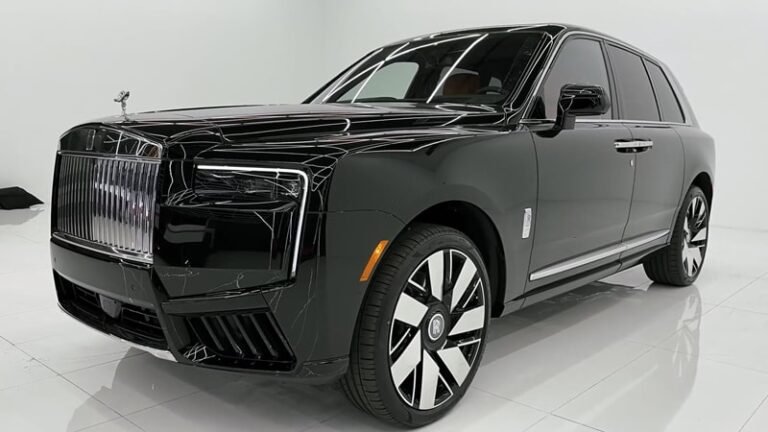
| Cullinan | 2018 | Redefined the ultra-luxury SUV |
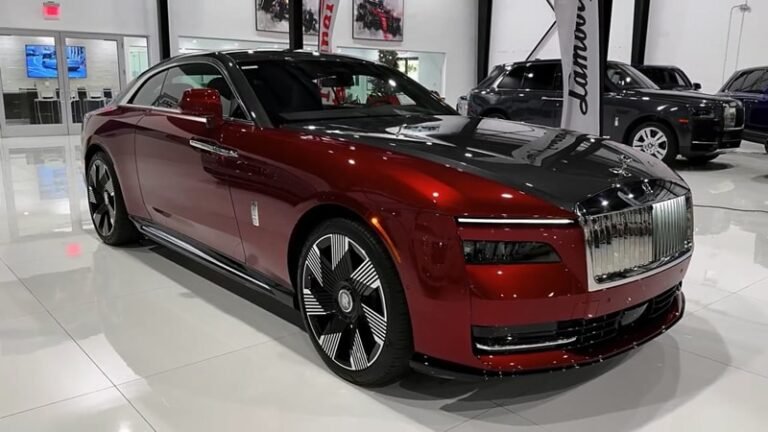
| Spectre | 2023 | First all-electric Rolls-Royce |
The Cullinan in particular shattered industry assumptions, proving that an SUV could be both imposing and exquisitely refined.
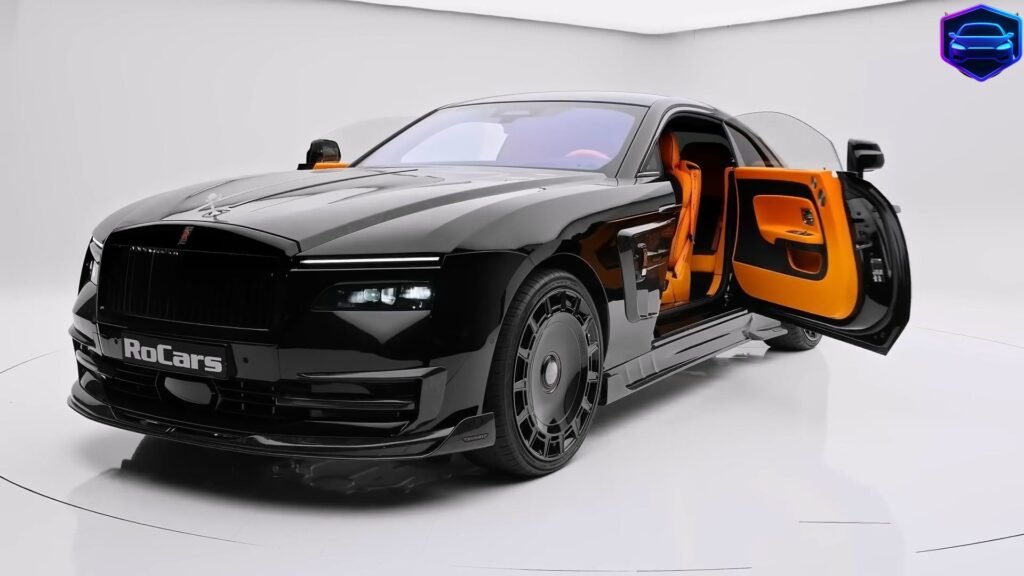
Entering the Electric Age: Spectre and the Future
With Spectre, Rolls-Royce entered the electric era—not as a follower, but as a natural evolution.
Electric propulsion aligns perfectly with the brand’s DNA:
- Near-silent operation
- Instant torque
- Seamless power delivery
Rolls-Royce has publicly committed to becoming a fully electric brand by 2030, signaling the end of internal combustion across its lineup.
Why Rolls-Royce Remains Unmatched
Rolls-Royce does not compete on horsepower, lap times, or infotainment screens. It competes on an entirely different axis:
- Absolute refinement
- Bespoke craftsmanship
- Cultural symbolism
- Mechanical dignity
From a handshake in a Manchester hotel to the quiet hum of an electric future, Rolls-Royce has proven that true luxury is not about excess—it is about control.
The world has built many luxury cars.
Only one brand has consistently built the best car in the world.