Engine Failures, Massive Recalls, and the Depreciation Collapse No One Saw Coming
Luxury SUVs are supposed to represent the safest place to park six figures. Instead, several high-profile models have turned into case studies in mechanical failure and accelerated depreciation.
In 2025, General Motors recalled nearly 600,000 vehicles equipped with its 6.2-liter L87 V8 after reports of connecting rod and crankshaft defects that could lead to complete engine failure. That recall didn’t just dent confidence — it rippled through resale markets across multiple brands.
And GM isn’t alone.
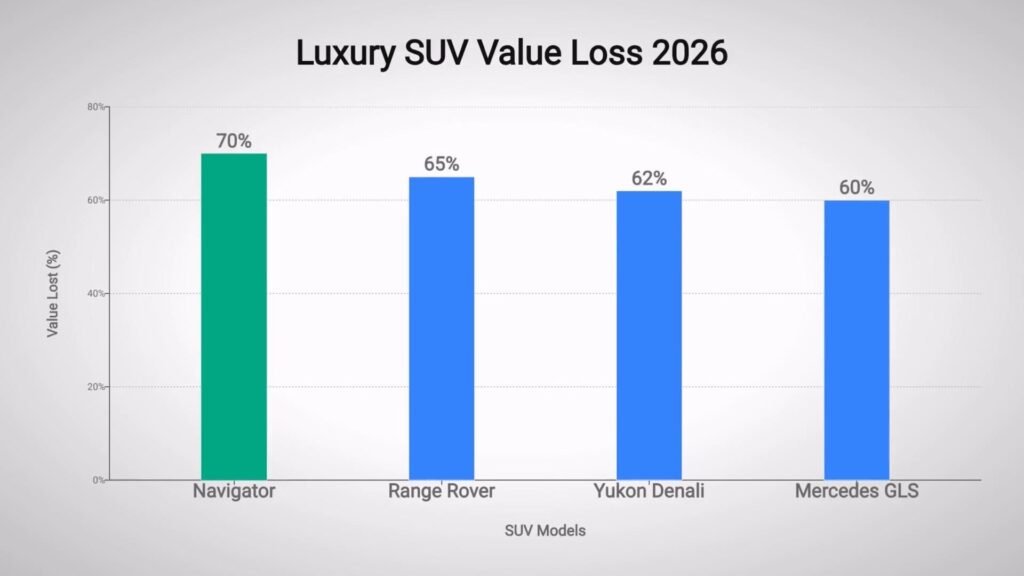
Across the luxury SUV segment, several once-prestigious models have lost 50%–70% of their value in just a few years — not because of cosmetic aging, but because of engine defects, reliability scores, or catastrophic powertrain failures.
Below is a data-backed breakdown of seven luxury SUVs that became financial liabilities in 2026, with verified recall history, reliability data trends, and depreciation performance.
1. Cadillac Escalade (2021–2024, 6.2L L87 V8)
The Engine Issue That Triggered a Market Shock
In April 2025, General Motors issued a recall covering approximately 597,000 vehicles powered by the L87 6.2L V8 — including Escalade, Tahoe, Suburban, and Yukon models.
Documented issue:
- Connecting rod and crankshaft bearing defects
- Engine seizure at highway speeds
- Propulsion loss
- Knocking prior to failure
NHTSA filings referenced tens of thousands of field reports involving engine damage and loss of power.
Financial Impact
| Metric | Data |
|---|---|
| Original MSRP (typical) | $85,000–$110,000 |
| 1-Year Depreciation (post-recall news) | Up to 30–35% |
| 5-Year Projected Depreciation | 55%+ |
| Replacement Engine Labor | ~20 hours |
| Risk Factor | Remanufactured replacement units possible |
Why resale collapsed:
Once the engine is publicly known as a risk, the used market prices it in immediately.
2. Maserati Levante
Ferrari-Derived Engines, Real-World Catastrophe
The Levante’s twin-turbo V6 and V8 engines were marketed as exotic. In practice, multiple owner reports describe oil pump failures leading to seized engines under 15,000 miles.
Quoted engine replacement costs reportedly ranged from $24,000–$25,000.
Depreciation Data
| Metric | Data |
|---|---|
| Original MSRP Range | $92,000–$130,000 |
| 3-Year Depreciation | ~60–70% |
| Current Used Value (2023 MY) | ~30–40% of MSRP |
| Avg Annual Insurance | ~$6,000 |
| Oil Change Cost | ~$500 |
The 2024 model year marked the end of the Levante lineup, further weakening long-term residual value.
Dead models typically suffer accelerated depreciation due to parts and support uncertainty.
3. Land Rover Range Rover
Luxury Benchmark, Reliability Nightmare
Few SUVs depreciate like a Range Rover.
Kelley Blue Book estimates roughly 60–65% value loss over five years for many trims.
Known Mechanical Issues
- Timing chain tensioner failures
- Cooling system defects
- Oil leaks
- Transmission replacements at low mileage (reported cases)
Ownership Cost Snapshot
| Category | 5-Year Estimate |
|---|---|
| Depreciation | ~$70,000+ |
| Insurance | ~$22,000 |
| Maintenance | ~$1,800 per year avg |
| Major Repair Risk | High |
A $150,000 Autobiography model can trade below $30,000 after a decade.
This isn’t normal depreciation — it reflects risk pricing.
4. Jeep Grand Wagoneer
Stellantis Reliability Fallout
Built to compete with Escalade and Navigator, the Grand Wagoneer launched at over $100,000.
But consumer trust in parent company Stellantis declined sharply amid recall activity and reliability concerns.
Key Issues Reported
- Electrical shutdowns
- 6.4L V8 fuel consumption (~14 mpg combined)
- Transmission hesitation
- Dealer discounting up to $20,000 on new units
Financial Snapshot
| Metric | Data |
|---|---|
| Original MSRP | $103,000+ |
| 2-Year Depreciation | ~45–50% |
| Fuel Cost (15k miles/year) | ~$3,500+ |
| Reliability Score (related Grand Cherokee) | Low (CR data trends) |
Heavy new-car discounting suppresses used values immediately.
5. Infiniti QX80 (Pre-2025 Redesign)
Platform Obsolescence
The 2024 QX80 was built on an architecture dating back to 2011.
Powered by a 5.6L V8, owners reported:
- Excessive oil consumption
- Ignition coil failures
- Rough shifting 7-speed automatic
- Stalling complaints
Depreciation Data
| Metric | Data |
|---|---|
| Starting MSRP | ~$75,000 |
| 2-Year Depreciation | ~46–50% |
| Fuel Economy | ~16 mpg combined |
| Market Risk | Brand contraction concerns |
The full redesign for 2025 made previous models feel outdated overnight.
6. BMW X5
Depreciation from Lease Saturation
The X5 isn’t suffering catastrophic engine recalls — but it faces heavy depreciation due to:
- Lease market oversupply
- Expensive out-of-warranty repairs
- Turbo complexity
Cost Reality
| Category | Estimate |
|---|---|
| 5-Year Depreciation | ~55–56% |
| 10-Year Maintenance | ~$19,000+ |
| Avg Annual Maintenance | ~$1,100+ |
| Major Repair Risk (Turbo/Water Pump) | Moderate |
German luxury repair rates suppress resale once warranties expire.
7. Mazda CX-90
The Shock Entry
Mazda’s premium three-row flagship posted unusually low predicted reliability scores for early model years, particularly for the plug-in hybrid variant.
Reported issues included:
- Electrical system faults
- Hybrid restart failures
- Fuel gauge malfunction recalls
- Transmission neutral-shift recall
Reliability Snapshot
| Category | Data |
|---|---|
| Starting MSRP | ~$50,000 |
| Recall Count (early production) | Double digits |
| Engine/Transmission Ratings (CR trends) | Low early scores |
| Risk Level | Elevated (early production models) |
While not a six-figure SUV, its reliability performance damaged consumer confidence in Mazda’s premium push.
Why These SUVs Became Financial Traps
Across all seven models, four patterns emerge:
1. Powertrain Defects Drive Depreciation
Once an engine is publicly known to fail, resale adjusts instantly.
2. High MSRP Multiplies Risk
A 50% loss on $100,000 hurts far more than 50% on $40,000.
3. Lease Dumping Suppresses Used Prices
BMW and Stellantis models illustrate this clearly.
4. Brand Perception Matters
When trust declines, residuals collapse.
How to Avoid Buying a Depreciation Disaster
Before purchasing any luxury SUV:
- Verify recall history via NHTSA database
- Check engine-specific service bulletins
- Avoid first-year redesigns
- Research powertrain-specific reliability forums
- Factor warranty coverage into ownership strategy
Luxury pricing does not equal mechanical durability.
Final Takeaway
From the L87 recall affecting the Escalade to engine seizure reports in the Levante, these SUVs demonstrate a harsh reality:
In 2026, engine integrity determines resale value more than badge prestige.
The luxury SUV market is bifurcating. Vehicles with reliable powertrains retain value. Those with high-profile engine failures become discounted liabilities.
Before buying prestige, verify engineering.
Because nothing depreciates faster than a luxury SUV with a reputation problem.