When Sony and Honda announced their joint venture in 2022, industry analysts shrugged. PlayStation meets Civic? Really?
Fast forward to January 2026 at CES Las Vegas, and that skepticism evaporated. The Afeela 1 rolled onto the stage not as a concept, but as a production-ready vehicle with delivery dates confirmed for late 2026. This isn’t a tech demo. This is a declaration of war against Tesla, Lucid, and every traditional luxury brand playing catch-up on software.
Sony Honda Mobility (SHM) didn’t build a car with entertainment features. They built an entertainment platform that happens to drive.
Pricing Reality Check
| Trim Level | Price (USD) | Availability |
|---|---|---|
| Origin | $89,900 | Late 2026 |
| Signature | $102,900 | Late 2026 |
Here’s what matters: the Origin trim won’t be available at launch. Early adopters must choose Signature. This scarcity strategy isn’t accidental—SHM is positioning Afeela as exclusive technology, not mass-market transportation.
For context, the Tesla Model S starts at $74,990. The Lucid Air begins at $87,400. The Mercedes EQS commands $104,000. Afeela slots directly into premium territory while promising capabilities competitors haven’t delivered.
Forty Sensors: Surveillance or Safety?
The number keeps appearing in every specification sheet: 40 cameras and sensors. This exceeds Tesla’s camera-only approach and rivals Mercedes’ DRIVE PILOT system.
| Sensor Type | Quantity | Purpose |
|---|---|---|
| External Cameras | 12+ | 360° visibility |
| LiDAR | 1+ | 3D mapping |
| Radar | 5+ | Object detection |
| Ultrasonic | 12+ | Close-range parking |
| Internal Cameras | 4+ | Driver monitoring |
| Additional Sensors | 6+ | Environmental data |
This isn’t marketing exaggeration. SHM confirmed Level 3 autonomous capability for highway driving. Translation: hands off the wheel, eyes off the road, legally permitted to text or watch videos while the car handles navigation.
Tesla’s Full Self-Driving remains Level 2 despite years of promises. Mercedes offers Level 3 in limited conditions. Afeela arrives with receipts.
The PlayStation Dashboard Strategy
Walk inside an Afeela 1, and the automotive conventions disappear. The entire dashboard—from door to door—is a single continuous digital display. No bezels. No seams. Just pixels.
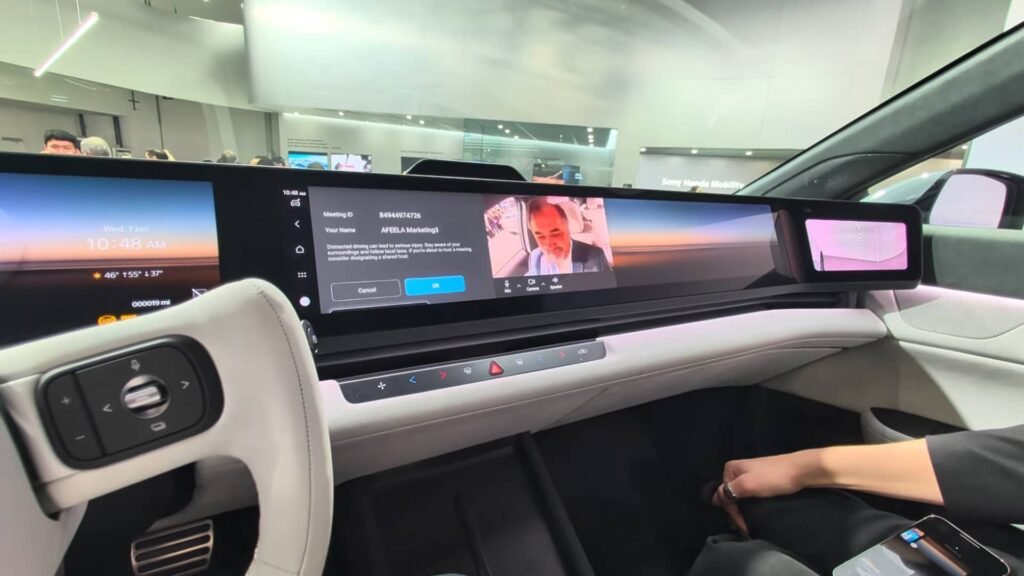
This design choice reveals SHM’s actual product: ecosystem lock-in.
Sony understands platform economics better than any automaker. Once your PlayStation Network account connects to your vehicle, your games, music, movies, and preferences travel with you. Switching to a competitor means abandoning that digital identity.
Apple attempted this with CarPlay. Google pushes Android Automotive. Sony executes it with hardware designed from the ground up for entertainment integration.
Rear passengers receive dedicated screens supporting Fortnite, Netflix, and PlayStation Remote Play. Dolby Atmos spatial audio creates theater-quality sound. This isn’t infotainment—it’s a mobile entertainment venue.
Performance Specifications
| Metric | Afeela 1 Origin | Afeela 1 Signature |
|---|---|---|
| Horsepower | 482 hp (dual motor) | 482 hp (dual motor) |
| Drivetrain | AWD standard | AWD standard |
| Battery | 91 kWh | 91 kWh |
| Range (EPA est.) | ~300 miles | ~280 miles |
| 0-60 mph | ~4.8 seconds | ~4.8 seconds |
| Wheels | 19-inch | 21-inch |
| Suspension | Air suspension | Air suspension + adaptive damping |
The performance numbers won’t embarrass anyone, but they’re not chasing Lucid Air’s 1,000+ horsepower insanity. SHM prioritized refinement over brute force. Air suspension comes standard. Wider rear tires improve grip. The Signature trim’s 21-inch wheels sacrifice some range for presence.
The NACS Charging Advantage
This detail deserves emphasis: Afeela supports NACS charging.
For non-automotive readers, this means Afeela owners can plug into Tesla Supercharger stations. SHM negotiated access to Tesla’s charging network—the most reliable, extensive fast-charging infrastructure in North America.
Consider the implications:
- Tesla owners: Exclusive network access (diminishing)
- Afeela owners: Full Supercharger access + other networks
- Other EV owners: Limited to CCS networks (less reliable)
This arrangement resembles Pepsi bottling at Coca-Cola facilities. It’s unprecedented. Tesla fans experiencing this reality shift range from frustrated to furious.
Design Philosophy: Apple Store on Wheels
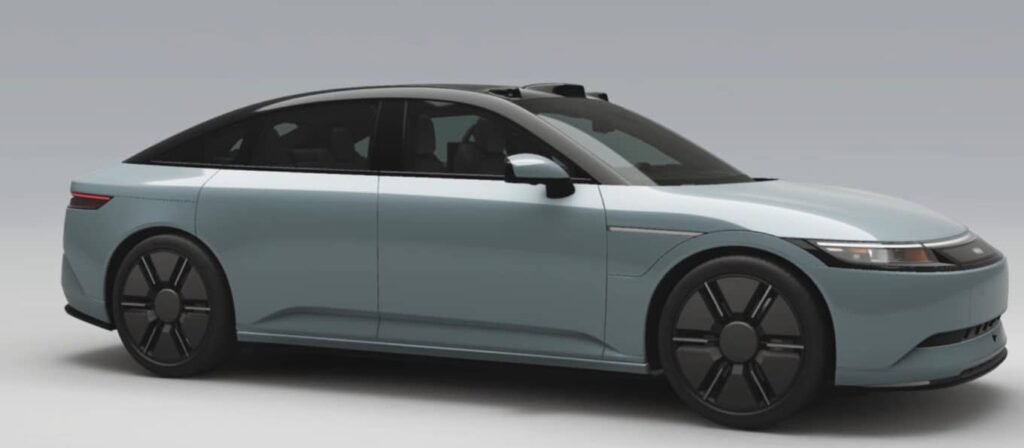
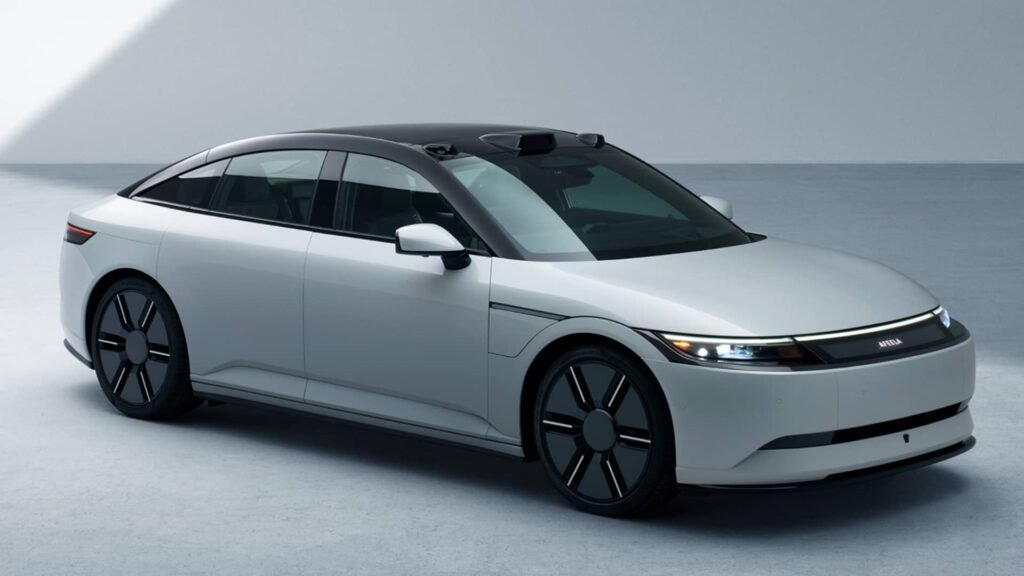
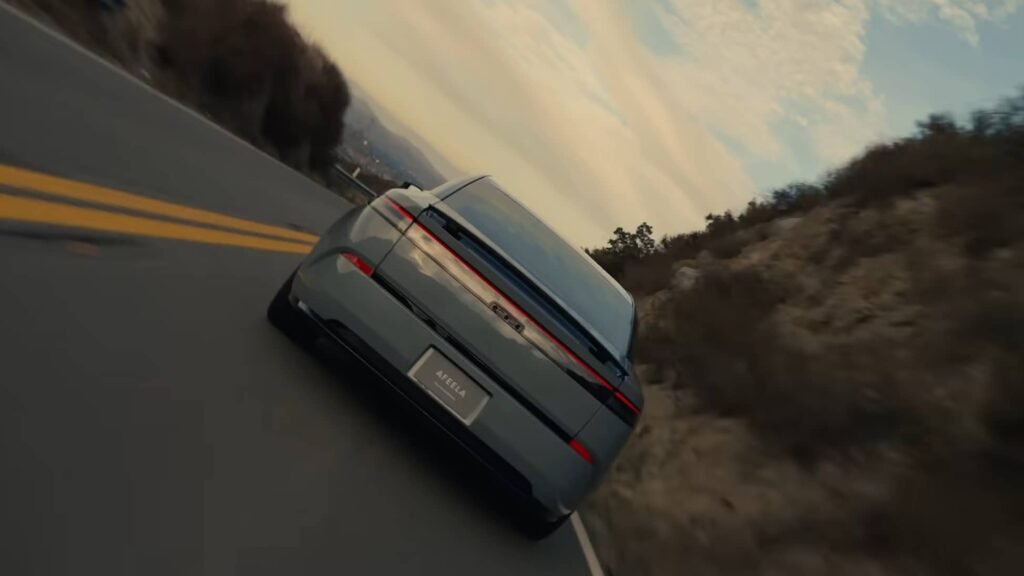
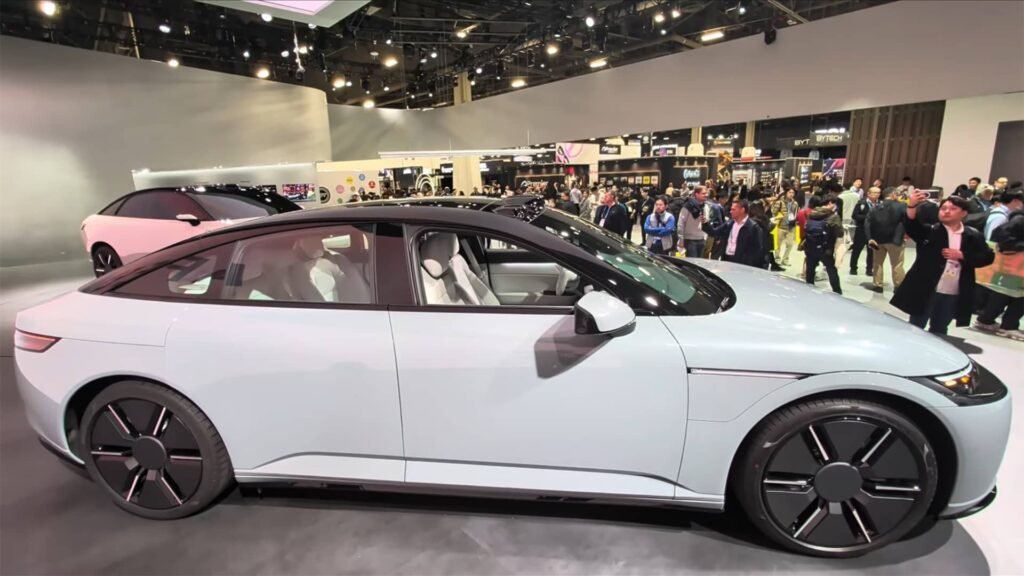
The exterior rejects automotive tradition. No grille. No fake exhaust tips. No aggressive styling cues screaming “performance.”
Afeela looks like technology first, vehicle second. Smooth surfaces. Minimal gaps. Lighting elements integrated rather than appended. The design language resembles an Apple Store more than a BMW showroom.
Inside, the minimalism continues. A U-shaped yoke steering wheel. Ambient lighting spanning the cabin. A rotary controller reminiscent of Audi prototypes. Materials prioritize tactile quality over traditional luxury signifiers—no glossy wood, no gold trim.
This targets a specific buyer: technology executives who value software excellence over leather stitching.
Competitive Landscape Analysis
| Vehicle | Starting Price | Range | Autonomous Level | Charging Network |
|---|---|---|---|---|
| Afeela 1 Origin | $89,900 | ~300 mi | Level 3 | NACS + CCS |
| Tesla Model S | $74,990 | 405 mi | Level 2 | NACS (proprietary) |
| Lucid Air Pure | $87,400 | 420 mi | Level 2 | CCS + adapters |
| Mercedes EQS 450+ | $104,000 | 350 mi | Level 3 (limited) | CCS |
| BMW i7 xDrive60 | $119,000 | 320 mi | Level 2 | CCS |
The comparison reveals Afeela’s positioning:
- Price: Mid-premium, below German competitors
- Range: Adequate, not class-leading
- Autonomy: Matches or exceeds competitors
- Charging: Best-in-class network access
SHM didn’t attempt to win every specification battle. They identified decisive advantages and concentrated resources there.
The Software Update Model
Traditional automakers charge subscription fees for features. Mercedes famously requested $1,200 annually for heated seat activation. BMW sells subscription access to Apple CarPlay.
SHM announced three years of complimentary software updates, including:
- Afeela Pilot autonomous driving features
- Voice assistant improvements
- Entertainment content subscriptions
- Over-the-air capability enhancements
This approach mirrors smartphone economics. Buy the hardware, receive ongoing improvements without nickel-and-diming. Whether this continues beyond year three remains unclear, but the initial commitment signals confidence in software monetization through ecosystem services rather than feature gating.
Production and Delivery Timeline
| Milestone | Date |
|---|---|
| CES 2026 Unveiling | January 5, 2026 |
| California Pre-orders Open | January 6, 2026 |
| Pre-order Deposit | $200 (refundable) |
| First Deliveries | Late 2026 |
| Nationwide Availability | 2027 |
| SUV Model Launch | 2028 |
SHM confirmed three Afeela models by 2030: sedan (current), SUV, and potentially a compact hatchback for European and Asian markets. The sedan serves as proof of concept. The SUV targets higher-volume luxury buyers.
Who Should Consider Afeela 1
Buy if:
- You prioritize software and entertainment over raw performance
- Tesla Supercharger access matters for your driving patterns
- You’re invested in PlayStation Network or Sony entertainment ecosystem
- Level 3 autonomy appeals for highway commuting
- Traditional luxury branding feels outdated
Skip if:
- Maximum range is your primary concern (Lucid Air leads here)
- You want established service networks (Tesla, Mercedes have advantages)
- Performance numbers define luxury for you (Porsche Taycan, Model S Plaid)
- Resale value certainty matters (Afeela has no track record)
The Ecosystem War Nobody’s Discussing
Afeela represents something larger than automotive competition. This is a battle for digital sovereignty.
Elon Musk built Tesla as a technology company that manufactures cars. Apple CarPlay attempts to insert iOS into existing vehicles. Google Android Automotive pursues similar objectives.
Sony and Honda executed the inverse strategy: design hardware specifically for their software ecosystem from the ground up. No compromises. No legacy systems. No dealer network resistance.
The question isn’t whether Afeela succeeds as a vehicle. The question is whether entertainment ecosystems become the primary purchasing criterion for luxury vehicles.
Bottom Line
The Afeela 1 arrives at a inflection point. EV adoption has crossed early adopter thresholds. Charging infrastructure has matured. Software capabilities now differentiate vehicles more than horsepower or leather quality.
SHM’s $89,900 entry price positions Afeela competitively. The 40-sensor suite and Level 3 autonomy exceed most rivals. NACS charging access eliminates range anxiety concerns. The PlayStation integration creates sticky ecosystem value competitors can’t replicate.
Weaknesses exist. Range trails class leaders. Service networks remain unproven. Brand recognition lags established luxury manufacturers. Resale values are unpredictable.
But here’s what matters: Afeela proves technology companies can manufacture vehicles without automotive legacy constraints. If SHM executes delivery and quality promises, traditional manufacturers face existential questions about their software capabilities.
The Afeela 1 isn’t just another luxury EV. It’s a warning shot across the bow of an industry that confused leather stitching with innovation.
Specifications based on Sony Honda Mobility official announcements at CES 2026. Pricing subject to change. Delivery timelines may vary by region. NACS charging access requires compatible adapter and network availability.