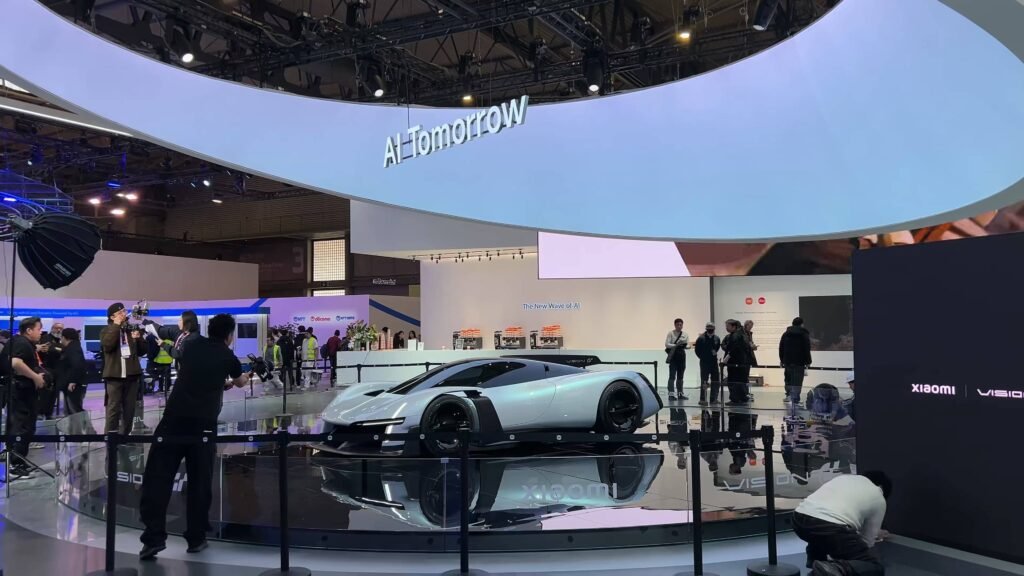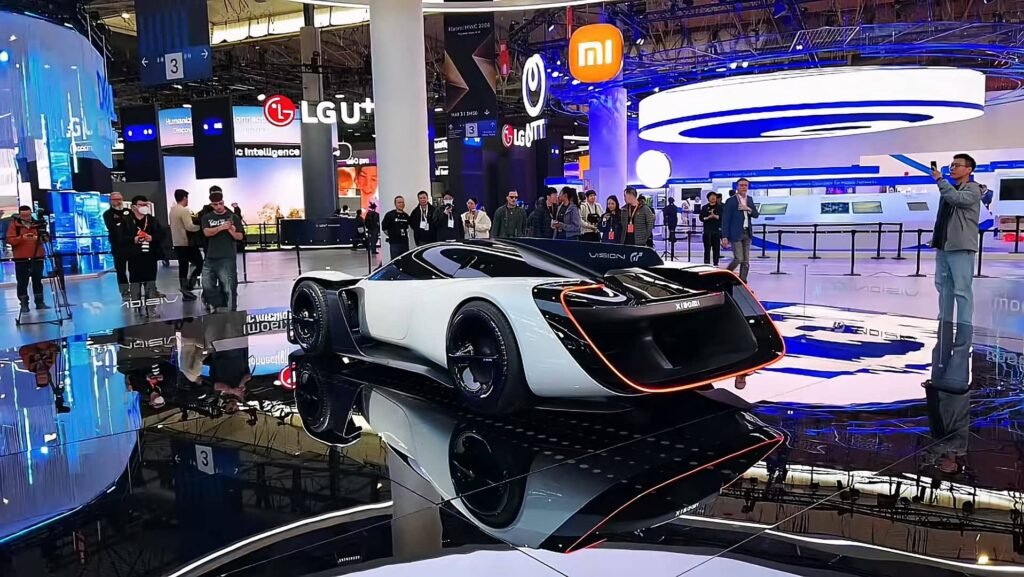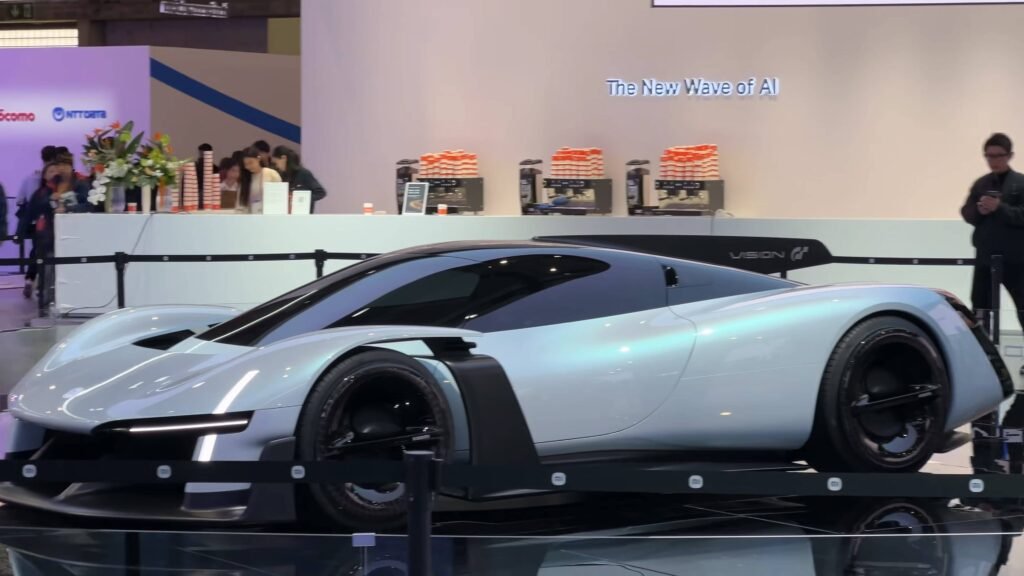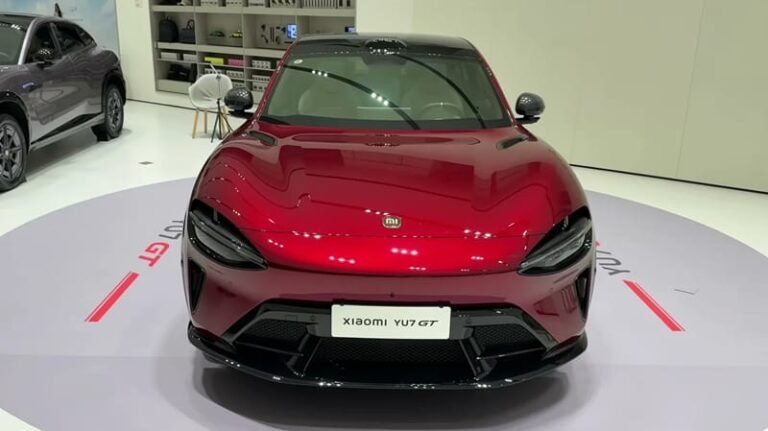
While the automotive world was busy dissecting horsepower figures and lap times, Xiaomi pulled off a strategic maneuver in Barcelona that most legacy automakers wouldn’t dare attempt. On February 28, 2026, amidst the glow of the Mobile World Congress (MWC), Xiaomi unveiled the Xiaomi Vision GT, a stunning concept supercar. But here is the twist that defines their genius: it will never be built.
Simultaneously, the company is already delivering the SU7 Ultra, a production sedan that objectively outperforms many dedicated hypercars on the spec sheet. To the untrained eye, releasing a “fake” car while selling a real one seems contradictory. To an industry veteran, it is a calculated, dual-track strategy designed to secure Xiaomi’s place in the global automotive pantheon before they even sell their first unit overseas.
This isn’t just about showing off; it’s about defining the narrative. Let’s dissect exactly what happened in Barcelona, why the Vision GT remains a virtual dream, and how the SU7 Ultra is the brutal reality backing it up.
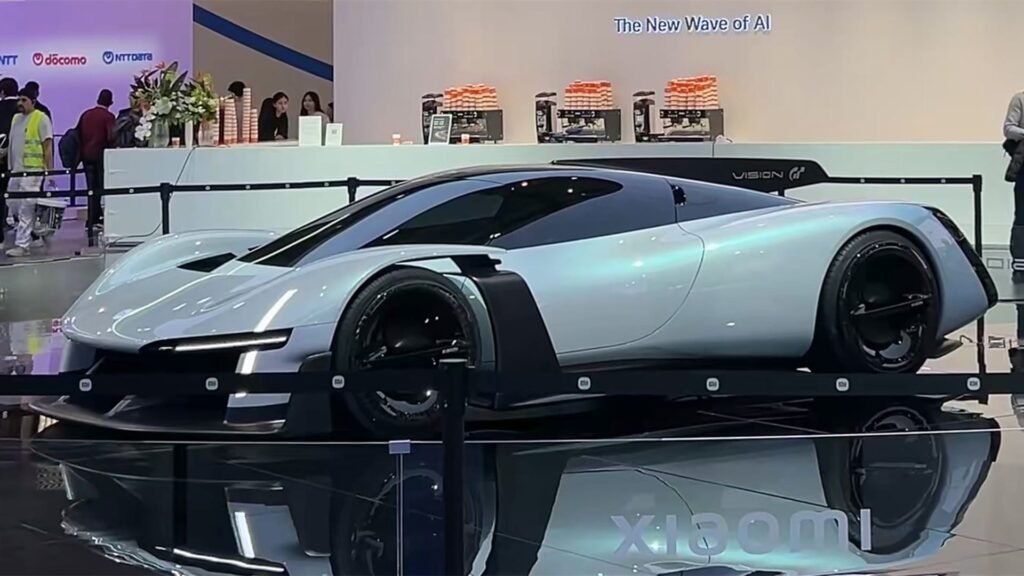
The Vision GT: A Digital Flagship with Physical Presence
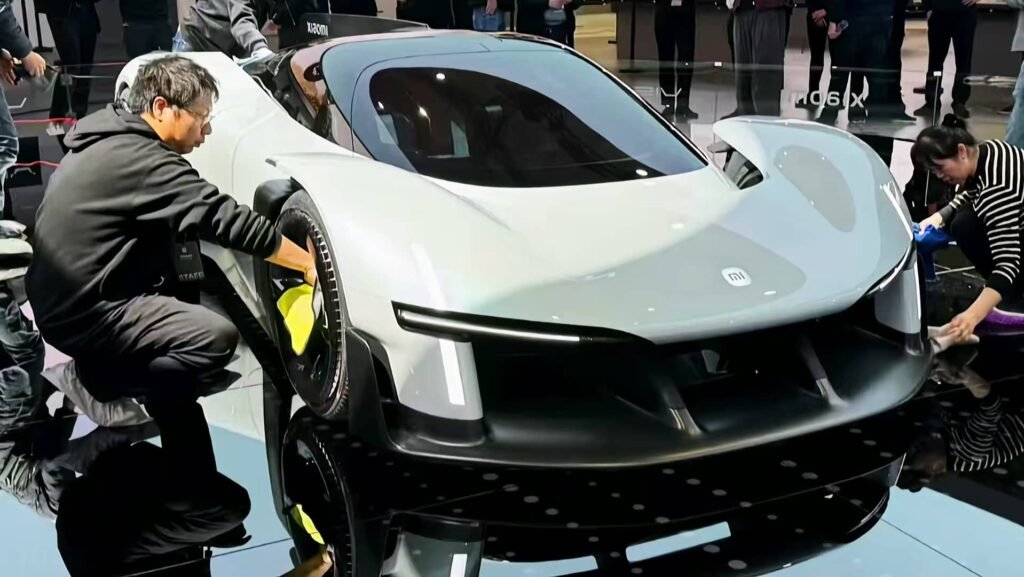
The headlines screamed “Xiaomi Supercar,” but the fine print told a different story. The Xiaomi Vision Gran Turismo (Vision GT) is the result of a collaboration with Polyphony Digital, the creators of the legendary Gran Turismo racing simulation franchise. Xiaomi is the first Chinese brand and technology company ever invited to participate in this prestigious project, which has historically featured concepts from Mercedes-Benz, Bugatti, and McLaren.
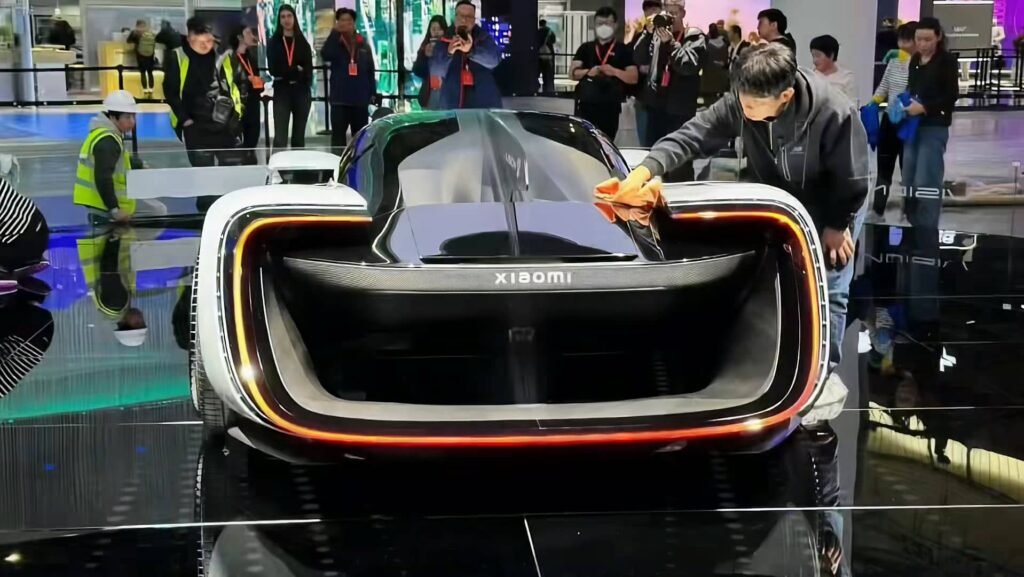
The “No Production” Reality Check
Let’s be unequivocally clear, as Xiaomi’s official communications have been: The Vision GT is not going into mass production. It is a “pure virtual concept” brought to life as a static display for MWC 2026 (March 2–5). Its primary home will be inside the Gran Turismo 7 video game, allowing millions of gamers to experience Xiaomi’s engineering philosophy digitally.
Why would a company spend resources building a full-scale physical model of a car they won’t sell?
- Unshackled Design: Free from crash regulations, cost constraints, and manufacturing limitations, the design team executed the “Shaped by Wind” philosophy to its absolute extreme.
- Brand Positioning: Placing the Xiaomi badge alongside Ferrari and Porsche in the VGT project instantly elevates the brand’s perceived value in the eyes of enthusiasts.
- The MWC Stage: Debuting at a mobile tech conference rather than an auto show signals that this is a tech company first, redefining the car as a smart terminal on wheels.
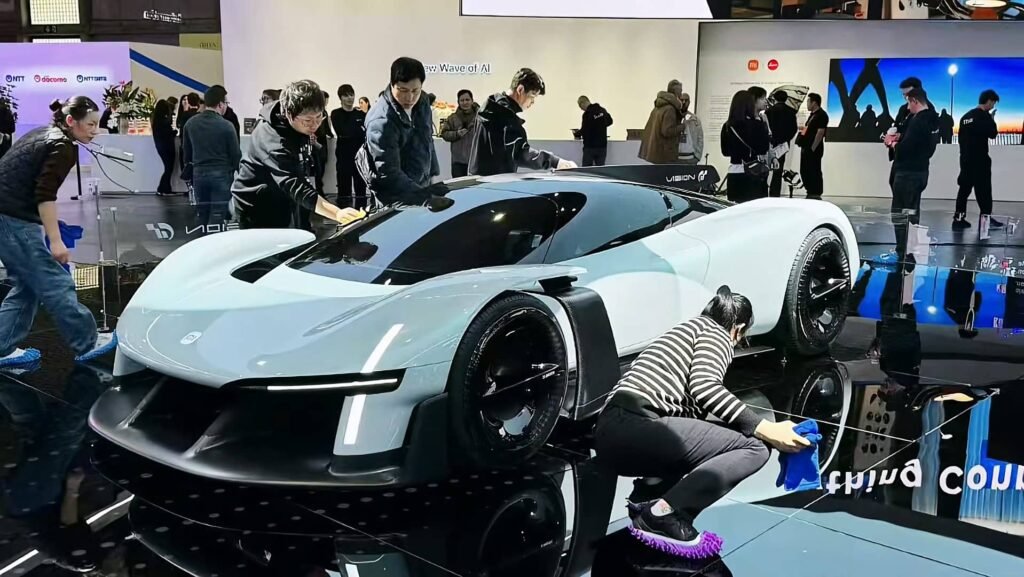
Design Language: “Racing on the Sofa”
The physical prototype displayed in Barcelona showcases a radical departure from traditional sedan designs. The exterior is a study in fluid dynamics, with every curve optimized for airflow. However, the interior concept, dubbed “Racing on the Sofa,” offers a glimpse into Xiaomi’s future human-machine interface (HMI). It blends the aggression of a race cockpit with the comfort of a living room, featuring integrated displays that likely leverage Xiaomi’s HyperOS ecosystem.
| Feature | Xiaomi Vision GT (Concept) | Strategic Intent |
|---|---|---|
| Production Status | None (Virtual/Display Only) | Brand elevation & design exploration |
| Platform | Gran Turismo Vision Project | Global gaming & youth engagement |
| Design Philosophy | “Shaped by Wind” | Pushing aerodynamic boundaries without regulation |
| Interior Concept | “Racing on the Sofa” | Testing future HMI and autonomous driving layouts |
| Debut Location | MWC 2026 (Barcelona) | Highlighting the “Human x Car x Home” ecosystem |
The SU7 Ultra: The Brutal Production Reality
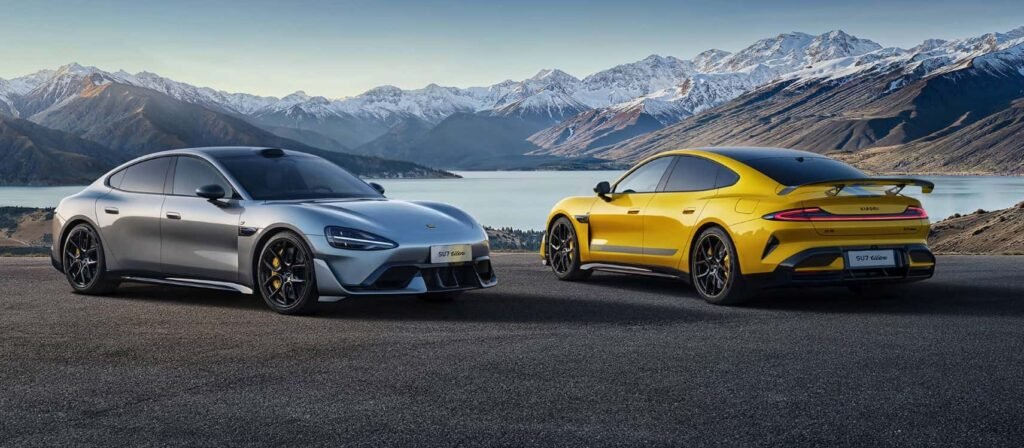
If the Vision GT is the dream, the SU7 Ultra is the waking reality—and it is terrifyingly fast. While the concept car grabs the headlines in Spain, the Ultra is already changing the performance landscape globally. Launched in late 2024 and now fully delivered, this isn’t a watered-down version of a concept; it is a track weapon homologated for the street.
Engineering That Defies Physics
The specifications of the SU7 Ultra read like a typo. With a tri-motor setup producing 1,548 horsepower, it achieves a 0–100 km/h (0–62 mph) sprint in just 1.98 seconds. For context, this rivals the Rimac Nevera and obliterates the Tesla Model S Plaid.
But raw power is easy; handling is hard. Xiaomi didn’t just bolt motors to a chassis. They engineered a carbon-fiber-intensive body that sheds weight while generating a staggering 285 kg of downforce. The inclusion of carbon-ceramic brakes and a suspension tuned specifically at the Nürburgring (where the prototype set a class-record lap time of 6:46.874) proves this is not a showroom queen.
The Charging Advantage
In the EV supercar segment, thermal management and charging speed are the true bottlenecks. The SU7 Ultra utilizes a proprietary 5.2C super-charging architecture. In practical terms, this means replenishing the battery from 10% to 80% in approximately 12 minutes. This solves the “range anxiety” that plagues high-performance EVs, making the car usable for extended track days.
| Performance Metric | Xiaomi SU7 Ultra | Competitor Benchmark (e.g., Taycan Turbo GT) |
|---|---|---|
| Total Power | 1,548 HP (Tri-Motor) | ~1,090 HP |
| 0–100 km/h | 1.98 seconds | ~2.2 seconds |
| Top Speed | 350 km/h (217 mph) | ~305 km/h |
| Downforce | 285 kg (Max) | ~220 kg |
| Charging Speed | 5.2C (10-80% in ~12 mins) | ~4C (Variable) |
| Braking System | Carbon-Ceramic (Standard) | Optional/Extra Cost |
The Strategic Synthesis: Why Both Cars Matter
Critics might ask: Why show a fake car when you have a real one that breaks records? The answer lies in the timeline and the target audience.
1. The “Halo Effect” for Global Expansion
Xiaomi has confirmed plans to expand internationally by 2027. Entering markets like Europe and Southeast Asia requires more than just a good product; it requires brand prestige. The Vision GT acts as a “halo” product. It tells the world that Xiaomi isn’t just making affordable sedans; they are capable of envisioning and designing the ultimate driving machine. It builds emotional equity with car culture enthusiasts who may not yet consider Xiaomi a serious automotive player.
2. Technology Trickle-Down
Concept cars are rarely useless exercises. The aerodynamic solutions tested on the Vision GT, the “Racing on the Sofa” interface, and the advanced materials research will inevitably filter down to future量产 (mass-production) models. The Vision GT is essentially an R&D lab on wheels, allowing engineers to test ideas that will appear in the 2028 or 2029 model lines.
3. Dominating the Narrative
By launching both simultaneously, Xiaomi controls the entire conversation. The media covers the fantasy of the Vision GT, while the reviewers and owners discuss the reality of the SU7 Ultra. This dual-presence ensures that Xiaomi remains the top topic in both the tech and automotive sectors for weeks, a marketing feat that usually costs hundreds of millions in advertising.
Expert Verdict: A New Playbook for Tech Automakers
The approach taken by Xiaomi in Barcelona sets a new precedent. Traditional automakers usually follow a linear path: Concept → Prototype → Production. Xiaomi has collapsed this timeline. They have a production super-sedan (SU7 Ultra) already proving its worth on the Nürburgring, while simultaneously debuting a futuristic concept (Vision GT) to capture the imagination of the next generation.
For the consumer, the message is clear: The future is not coming; it is already here. The SU7 Ultra proves that a tech company can build a better driver’s car than century-old incumbents. The Vision GT proves they have the vision to lead where others only follow.
As we leave MWC 2026, the question is no longer “Can Xiaomi build a car?” The question is, “Who can stop them?”