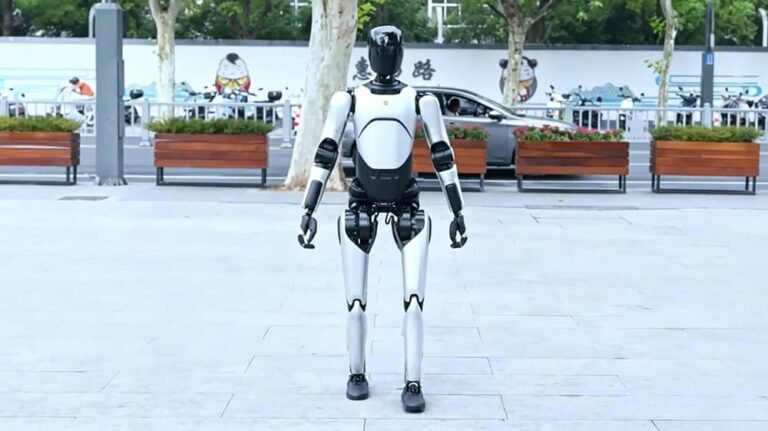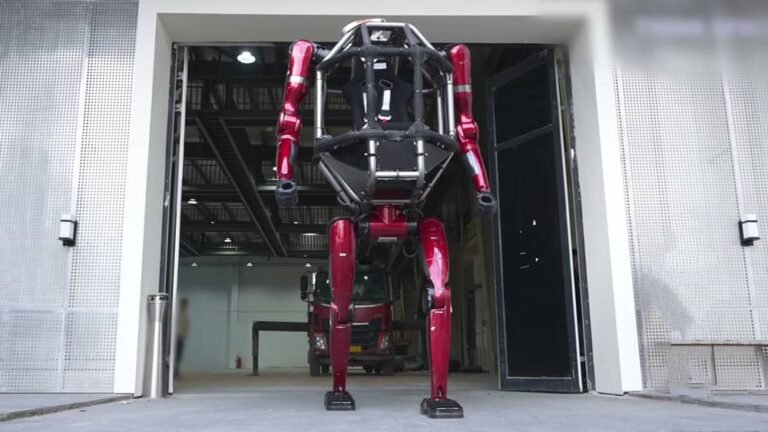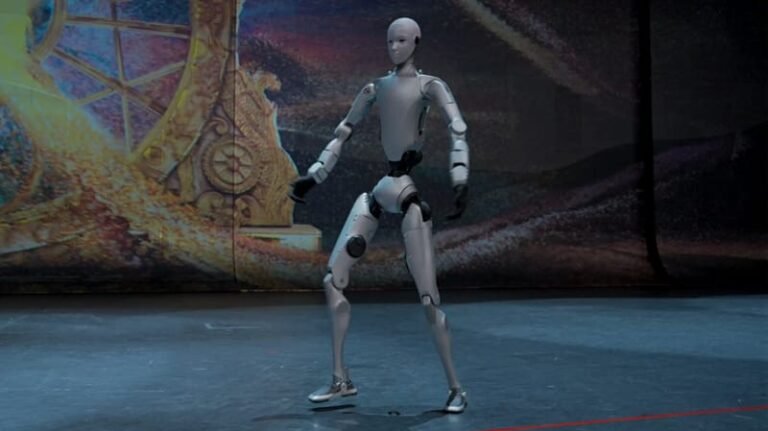
The Atlas humanoid robot developed by Boston Dynamics is one of the most advanced dynamic humanoid robots ever built. Originally created as a research platform for disaster response and advanced robotics, Atlas has evolved into a highly capable humanoid machine designed to demonstrate the future of autonomous mobile manipulation.
Atlas combines high-performance electromechanical actuators, whole-body dynamic control, advanced perception systems, and AI-based motion planning. The robot is capable of walking, running, jumping, lifting objects, and performing complex coordinated movements while maintaining balance in dynamic environments.
Unlike traditional industrial robots that operate in fixed work cells, Atlas is designed to function in unstructured environments built for humans, including factories, industrial sites, and potentially hazardous locations.
Over more than a decade of development, Atlas has become a global benchmark for humanoid robotics research and engineering.
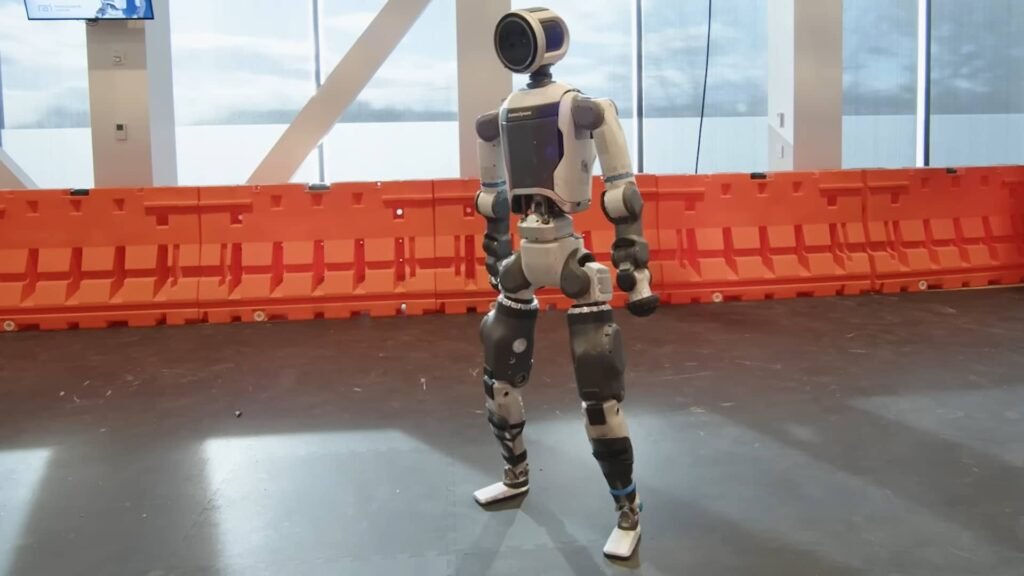
Atlas Basic Specifications
| Specification | Details |
|---|---|
| Robot Name | Atlas |
| Developer | Boston Dynamics |
| Country | United States |
| Robot Type | Humanoid Robot |
| First Introduced | 2013 |
| Height | ~150 cm |
| Weight | ~89 kg |
| Degrees of Freedom | ~28 DOF |
| Locomotion | Bipedal |
| Power System | Hydraulic (earlier) / Fully Electric (new generation) |
| Sensors | Vision, IMU, force sensors |
| Mobility Capability | Dynamic walking, running, jumping |
| Control System | Whole-body dynamic control |
| Intended Use | Robotics research, industrial robotics development |
Project Background
The Atlas project was originally funded as part of the DARPA Robotics Challenge, which aimed to develop robots capable of assisting humans during disasters and emergency situations.
The challenge required robots to perform tasks such as:
- opening doors
- climbing stairs
- navigating debris fields
- operating industrial tools
To achieve this, Atlas needed to combine mobility, perception, and manipulation, making it one of the most complex humanoid robotics projects ever attempted.
Over time, the robot evolved from a tethered hydraulic system into a fully autonomous mobile humanoid robot capable of highly dynamic motion.
Atlas is now widely used as a platform for developing advanced robotics technologies such as:
- dynamic locomotion
- AI-assisted motion planning
- robotic manipulation
- human-robot collaboration
Physical Design
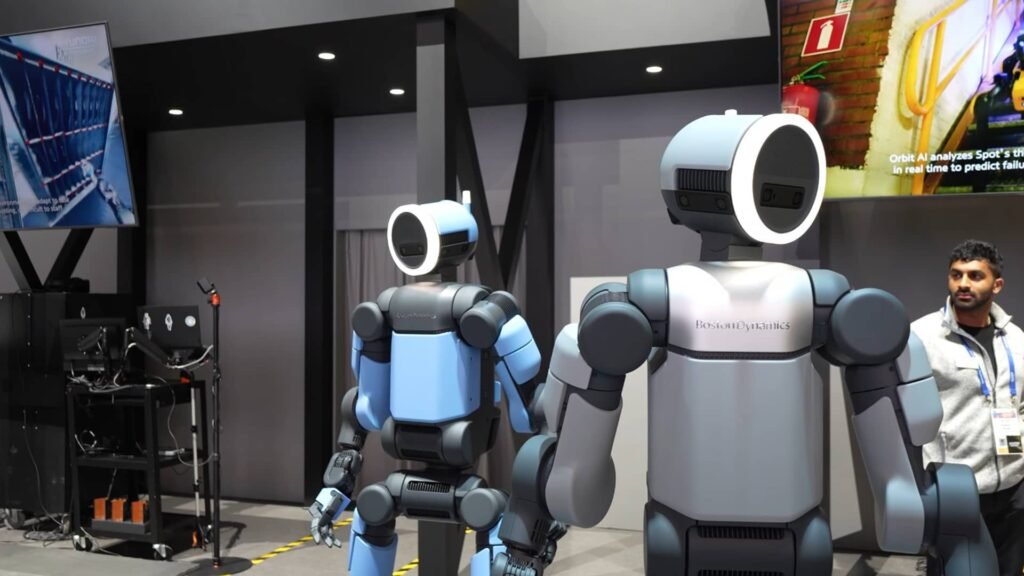
Atlas uses a compact humanoid structure optimized for balance and mobility rather than strict human proportions.
| Specification | Value |
|---|---|
| Height | 150 cm |
| Weight | ~89 kg |
| Body Material | Aluminum and titanium |
| Structure | Humanoid bipedal |
| Actuation | Hydraulic / Electric |
| End Effectors | Two articulated arms |
Engineering Architecture
Atlas’s design emphasizes human-scale mobility and structural stability for unstructured environments.
Key Principles:
- Compact humanoid form for human-centric spaces
- Centralized mass distribution for balance during dynamic motion
- Rugged structural frame capable of withstanding high-impact jumps
- Modular actuator layout for arms, legs, and torso
| Module | Description |
|---|---|
| Torso | Houses central computer, hydraulic pumps / battery modules |
| Arms | 7+ DOF each, multi-joint articulation, capable of manipulation |
| Legs | 6+ DOF each, compliant joints for running/jumping |
| Head | Vision sensors, lidar, IMU, perception module |
| Hands | Parallel or dexterous grippers depending on iteration |
The design philosophy balances mobility, strength, and precision, enabling dynamic locomotion and object interaction simultaneously.
Mobility and Locomotion
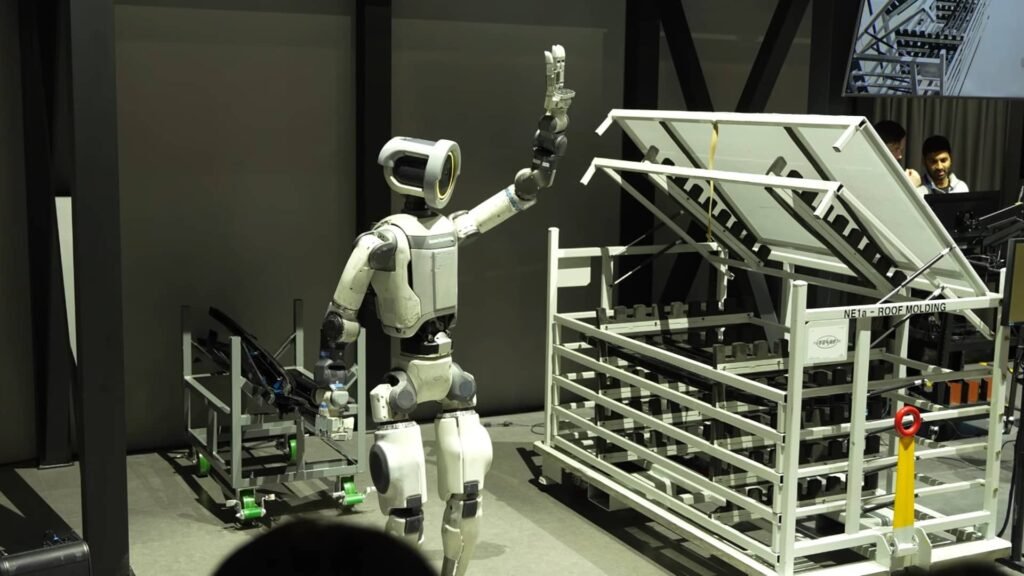
Atlas is widely known for its dynamic mobility capabilities, which exceed those of most humanoid robots.
Movement Capabilities
| Feature | Specification |
|---|---|
| Locomotion Type | Bipedal walking |
| Max Running Speed | ~9 km/h |
| Balance System | Dynamic balance control |
| Terrain Capability | Uneven terrain |
| Motion Capability | Jumping, climbing |
Atlas can perform complex movements including:
- running and turning
- jumping between platforms
- backflips and parkour maneuvers
- recovering balance after external disturbances
These movements are possible because the robot uses whole-body dynamic control algorithms that continuously calculate joint torques and center-of-mass positioning.
The robot’s mobility system allows it to navigate environments that would be difficult for wheeled or tracked robots.
Manipulation System
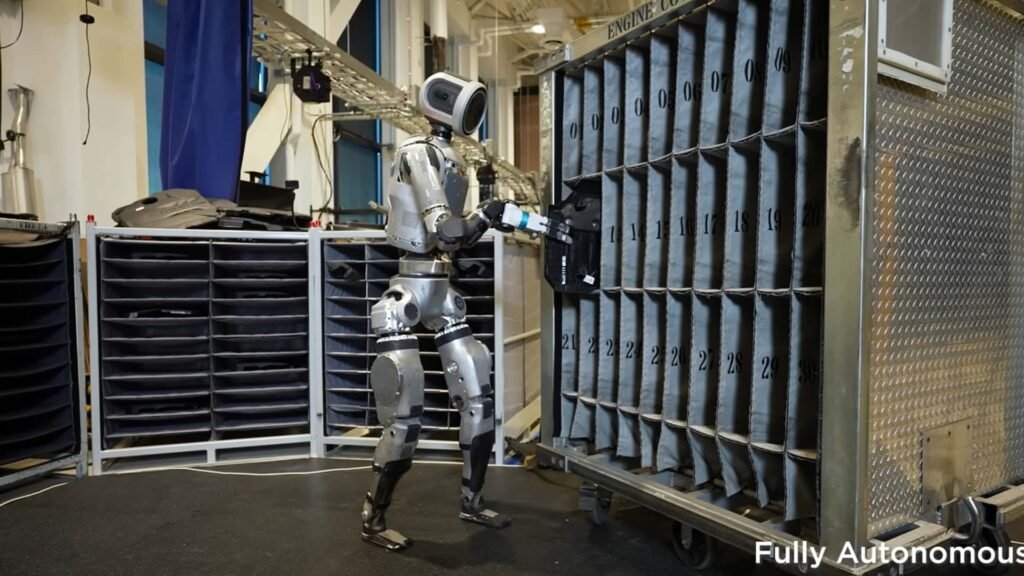
Atlas includes two multi-joint robotic arms capable of manipulating objects in front of the body.
| Feature | Specification |
|---|---|
| Arm Type | Articulated robotic arms |
| Arm DOF | Multi-joint |
| Grip Type | Parallel gripper |
| Manipulation Capability | Tool handling |
The arms allow Atlas to perform tasks such as:
- lifting objects
- moving containers
- using industrial tools
- interacting with equipment
While Atlas is primarily known for mobility, mobile manipulation is an increasingly important part of the robot’s development.
Combining locomotion with manipulation allows Atlas to operate in real-world industrial environments.
Actuation System
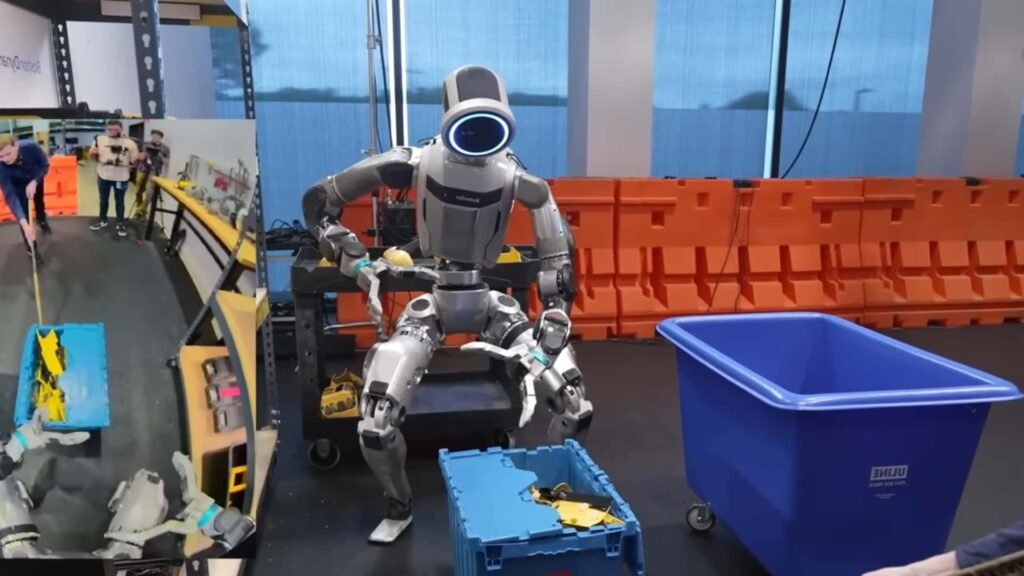
Atlas originally used hydraulic actuators, which provided extremely high power-to-weight ratios needed for dynamic movement.
| Component | Description |
|---|---|
| Actuator Type | Hydraulic / Electric |
| Power Transmission | High-pressure hydraulic system |
| Joint Control | Torque control |
| Motion Control | Real-time servo control |
| Energy Efficiency | Improved in electric version |
Hydraulic systems allowed Atlas to produce:
- very high joint torque
- rapid dynamic movements
- powerful jumping capability
However, newer Atlas generations have transitioned to fully electric actuators, improving efficiency and simplifying maintenance.
Electric actuation also allows:
- quieter operation
- smoother control
- improved energy efficiency
Sensors and Perception
Atlas uses a combination of sensors to understand its environment and maintain balance.
| Sensor Type | Function |
|---|---|
| Stereo cameras | Visual perception |
| Lidar / depth sensors | Environment mapping |
| IMU sensors | Orientation and balance |
| Force sensors | Ground reaction detection |
| Joint sensors | Motion feedback |
These sensors allow Atlas to:
- perceive obstacles
- map terrain
- maintain dynamic balance
- coordinate full-body motion
Real-time sensor feedback is essential for stable locomotion.
Control and AI System
Atlas uses advanced robotics control algorithms developed by Boston Dynamics.
Whole-Body Control
The robot calculates joint motion for the entire body simultaneously, ensuring:
- balance maintenance
- smooth movement
- energy-efficient motion
Motion Planning
The control system continuously plans trajectories for:
- walking
- running
- object manipulation
Learning and Simulation
Many Atlas behaviors are trained and refined using robot simulation environments, where millions of movement scenarios can be tested.
This allows engineers to develop complex behaviors such as:
- parkour navigation
- object handling
- coordinated body motion
Economic & Industry Impact
Atlas demonstrates the technical potential of humanoid robots in real-world environments.
Potential impacts include:
- Increased productivity via automated high-risk tasks
- Enhanced safety in dangerous or repetitive work
- New AI and robotics R&D opportunities
- Benchmarking future industrial humanoid designs
Challenges remain in cost, scalability, and energy efficiency, making Atlas primarily a reference platform for now.
Atlas Development Timeline
| Year | Version | Key Improvements |
|---|---|---|
| 2013 | Atlas Gen 1 | DARPA Robotics Challenge robot |
| 2016 | Atlas Outdoor | Improved mobility and balance |
| 2017 | Atlas Dynamic | Jumping and advanced locomotion |
| 2021 | Atlas Parkour | Complex obstacle navigation |
| 2024 | Electric Atlas | Fully electric redesign |
Each generation improved:
- mobility
- control algorithms
- hardware efficiency
- autonomy capabilities
Real-World Applications
Although Atlas is primarily a research robot, its technology is highly relevant to future industrial robots.
Disaster Response
Atlas could operate in environments that are dangerous for humans.
Examples include:
- earthquake zones
- nuclear facilities
- collapsed buildings
Industrial Robotics
Future humanoid robots based on Atlas technologies may work in:
- manufacturing plants
- logistics centers
- construction environments
Robotics Research
Atlas is also used to study:
- advanced locomotion
- humanoid manipulation
- human-robot interaction
Comparison With Other Humanoid Robots
| Robot | Developer | Country | Height | Weight | Speed | DOF | Power | Status |
|---|---|---|---|---|---|---|---|---|
| Atlas | Boston Dynamics | USA | 150 cm | 89 kg | ~9 km/h | ~28 | Electric / Hydraulic | Research |
| Optimus | Tesla | USA | 173 cm | ~62 kg | ~8 km/h | 28+ | Electric | Prototype |
| Figure 01 | Figure AI | USA | 168 cm | ~60 kg | ~5 km/h | 25+ | Electric | Pilot |
| Digit | Agility Robotics | USA | 175 cm | 65 kg | ~5 km/h | 20+ | Electric | Commercial |
Different humanoid robots prioritize different capabilities:
- Atlas focuses on dynamic mobility and robotics research
- Optimus focuses on scalable manufacturing
- Digit focuses on logistics automation
Advantages and Limitations
Advantages
- industry-leading dynamic mobility
- advanced whole-body control
- powerful actuators for dynamic motion
- benchmark platform for robotics research
Limitations
- complex mechanical design
- high cost compared with industrial robots
- still primarily a research platform
Future Development Outlook
Boston Dynamics continues to improve the Atlas platform with new hardware and software.
Future developments may include:
- improved electric actuation
- enhanced manipulation capabilities
- greater autonomy
- industrial deployment scenarios
Technologies developed for Atlas may influence the next generation of humanoid robots designed for real-world work environments.
Atlas Videos
Comment
Atlas represents one of the most important engineering achievements in humanoid robotics. Through its advanced mobility, sophisticated control systems, and powerful actuation technologies, the robot demonstrates what is possible when robotics engineering and AI-driven motion control are combined.
Although originally created for research, Atlas has helped shape the direction of the entire humanoid robotics industry and continues to serve as a reference platform for future robotic systems capable of operating in complex human environments.
Atlas Robot FAQ
1. What is the Atlas Robot?
Atlas is a highly advanced humanoid robot developed by Boston Dynamics, designed for dynamic mobility, agility, and complex task performance in human environments.
2. When was Atlas first introduced?
Atlas was first unveiled in 2013, and has since undergone multiple generations of development to improve balance, speed, and dexterity.
3. What is the height and weight of Atlas?
Atlas stands approximately 1.5 meters (5 feet) tall and weighs around 80 kg, optimized for both mobility and stability.
4. What powers the Atlas Robot?
Atlas is hydraulically actuated and battery-powered, enabling high strength, precision movements, and autonomous operation for limited durations.
5. What are the primary capabilities of Atlas?
- Walking, running, and jumping over uneven terrain
- Performing backflips and acrobatics
- Manipulating objects with dexterity
- Autonomous navigation and path planning
6. Can Atlas operate autonomously?
Yes. Atlas uses onboard sensors, LiDAR, and vision systems combined with advanced AI to perceive its environment and navigate dynamically.
7. What is the payload capacity of Atlas?
Atlas can carry light to moderate loads (approximately 10–20 kg) while maintaining balance and performing agile maneuvers.
8. Can Atlas learn new skills?
Atlas can be programmed with new tasks and routines, and Boston Dynamics’ control software allows simulation-based learning for new motions.
9. What are Atlas’ typical applications?
- Research and development in robotics
- Disaster response and hazardous environments
- Advanced mobility testing
- Human-assistive and industrial research projects
10. When will Atlas be commercially available?
Atlas is primarily a research platform and is not yet widely commercially available. Boston Dynamics continues to refine its capabilities for specialized applications.