If you are shopping for a new vehicle in late 2025 or early 2026, the safety landscape has shifted. A “5-star rating” from five years ago is essentially the baseline today. With the Insurance Institute for Highway Safety (IIHS) and the National Highway Traffic Safety Administration (NHTSA) introducing more rigorous side-impact and rear-passenger protection tests, several previous champions have fallen off the podium.
Choosing a car with the “Best Crash Test Ratings” now requires looking beyond the sticker and into the specific “Updated Moderate Overlap” and “Side Impact 2.0” scores.
The 2025 “Gold Standard”: IIHS Top Safety Pick+ Winners
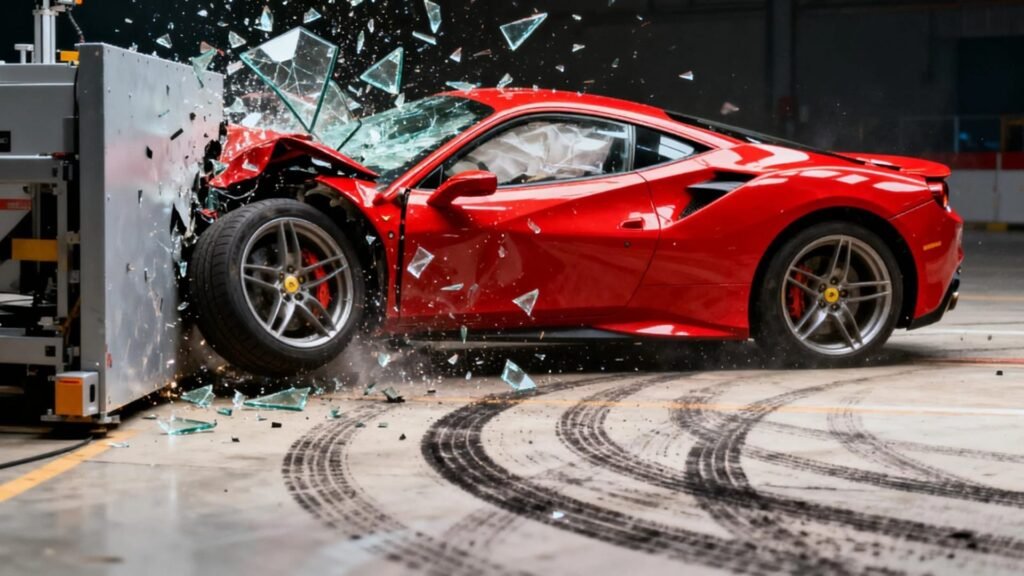
The Top Safety Pick+ (TSP+) is the most difficult accolade to earn in the automotive world. For 2025, the IIHS raised the bar, requiring a “Good” rating in the updated side-impact test (which uses a heavier striking barrier) and a “Good” or “Acceptable” rating in the updated moderate overlap front test, which now monitors the safety of passengers in the back seat.
The Overachievers: Mazda and Genesis
In a surprising sweep, Mazda has emerged as the industry leader for 2025, securing more TSP+ awards than any other brand. Their entire lineup—from the Mazda3 to the CX-90—features reinforced rear seatbelt pretensioners and load limiters that aced the new rear-occupant safety criteria.
Genesis continues to dominate the luxury sector, with the G80 and GV80 consistently outperforming German rivals in structural integrity during high-speed oblique crashes.
The Electric Edge: Tesla and Rivian
EVs often perform better in crash tests due to their heavy battery packs creating a low center of gravity (reducing rollover risk) and the absence of a front engine, which allows for a massive “crumple zone.” The Tesla Model S and Rivian R1S maintain perfect 5-star NHTSA scores and TSP+ status, specifically excelling in roof strength tests.
2025 Top-Rated Vehicles by Category
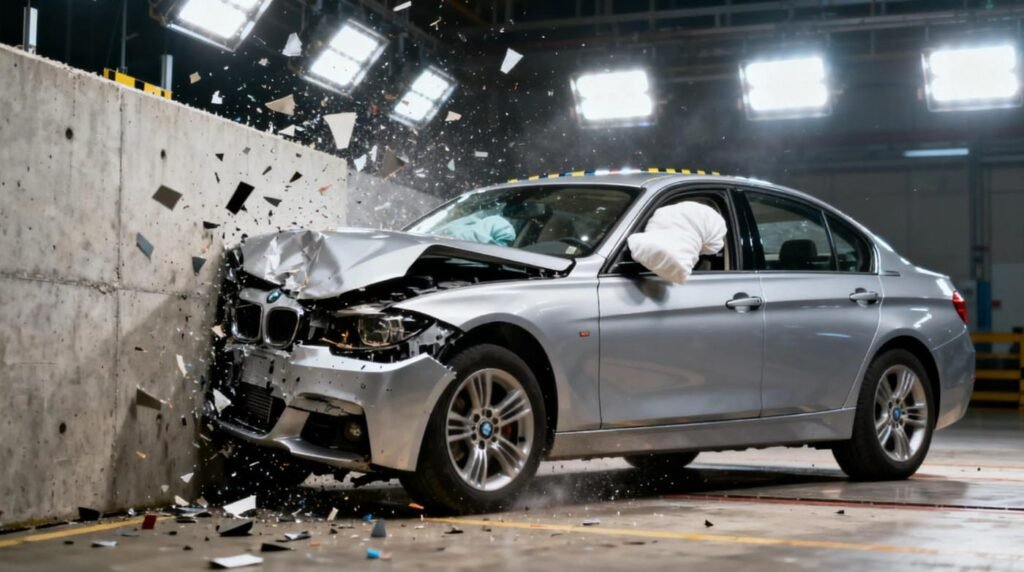
The following table highlights the elite performers that earned both a NHTSA 5-Star Overall Rating and the IIHS Top Safety Pick+ for the 2025-2026 model years.
| Category | Model | Key Safety Highlight | Standout Feature |
| Small Car | 2025 Honda Civic | Aced updated side-impact | Next-gen “donut” airbags |
| Midsize Sedan | 2025 Toyota Camry | Perfect rear-occupant scores | Standard Toyota Safety Sense 3.0 |
| Compact SUV | 2026 Subaru Forester | Highest-rated AWD stability | EyeSight® 4.0 Camera System |
| Luxury Sedan | 2026 Genesis G80 | Best-in-class structural rigidity | Center-side airbag protection |
| 3-Row SUV | 2025-26 Volvo EX90 | Revolutionary LiDAR integration | Reinforced “Safety Cage” chassis |
| Electric Truck | 2025 Tesla Cybertruck | Unmatched rollover resistance | Cold-rolled stainless steel skin |
Why the “5-Star” Rating Can Be Misleading
Many consumers see a 5-star NHTSA rating and assume the car is invincible. However, it’s vital to understand the “Safety Divergence” occurring in 2025:
- Rear Seat Safety Gap: Many SUVs that protect the driver perfectly are now receiving “Poor” or “Marginal” ratings for rear passengers because their rear seatbelts lack the advanced “tension limiters” found in the front.
- Weight Matters: A 5-star subcompact car is technically “safe,” but in a head-on collision with a 5-star heavy SUV, physics favors the heavier vehicle.
- Nighttime Pedestrian AEB: Most cars fail the IIHS’s new nighttime pedestrian detection test. If you do a lot of evening driving, check for models with Thermal or LiDAR-based braking systems.
Under the Radar: The New “Side Impact 2.0”
In 2024 and 2025, the IIHS increased the weight of the barrier used in side-impact tests from 3,300 lbs to 4,200 lbs to better simulate modern, heavy EVs and full-size SUVs.
Cars like the 2025 Kia Sorento and Volkswagen Atlas were specifically re-engineered mid-cycle to handle this increased energy. When researching, always verify that the safety rating applies to the “built after [Date]” version of the vehicle, as manufacturers often make structural “running changes” during the model year to pass these tougher tests.
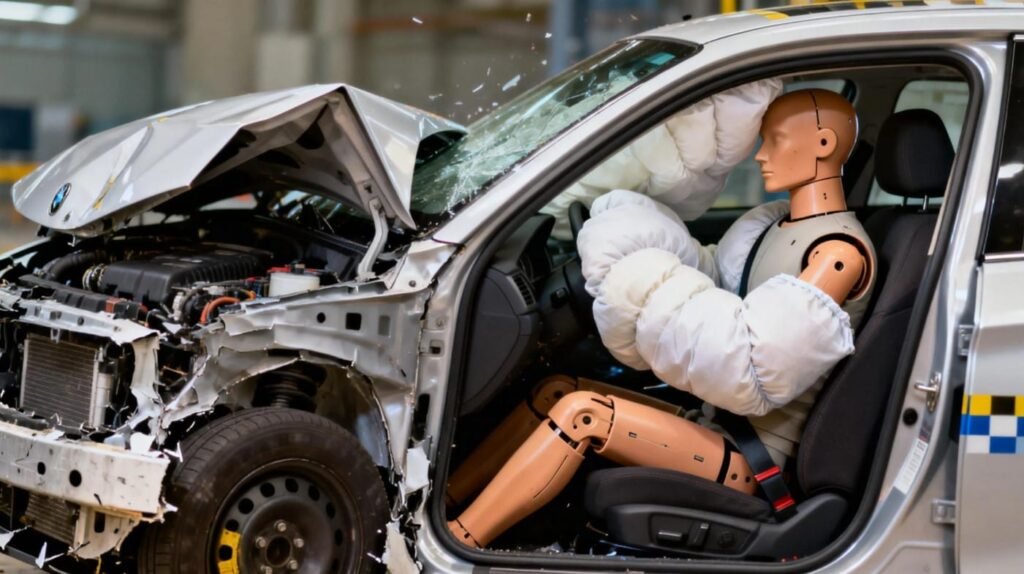
Final Buyer’s Checklist for 2026
Before you sign the papers, perform these three safety checks:
- Check the “Build Date”: Ensure the car was manufactured after the manufacturer’s most recent safety update (usually found on a sticker inside the driver’s door jamb).
- Verify Headlight Ratings: A vehicle can have great crash scores but “Poor” headlights that make avoiding the crash harder. Look for “Good” rated LED projectors.
- Look for Rear-Seat Features: If you have children, ensure the vehicle has rear-side airbags and belt pretensioners, which are surprisingly not standard on all 5-star vehicles.
Useful Links: