
BYD
- Company: BYD (Build Your Dream)
- Founded: 1995
- Headquarters: Shenzhen, China
- Founder: Wang Chuanfu
- Industry: New Energy Vehicles (NEV), Battery Manufacturing, Energy Storage
1. BYD Vehicle Portfolio Structure
BYD operates a multi-brand structure:
| Brand | Positioning | Market Segment | Technology Focus |
|---|---|---|---|
| BYD (core) | Mass market NEV | Sedan, SUV | DM-i Hybrid + e-Platform 3.0 |
| Denza | Premium | Luxury EV/Hybrid | Intelligent cockpit + AWD EV |
| Fangchengbao | Off-road | Performance SUV | DMO hybrid off-road platform |
| Yangwang | Ultra-luxury | High-end EV | Quad-motor independent control |
1. BYD Auto (Mainstream Brand)
Dynasty Series
| Model | Powertrain | Segment | Notes |
|---|---|---|---|
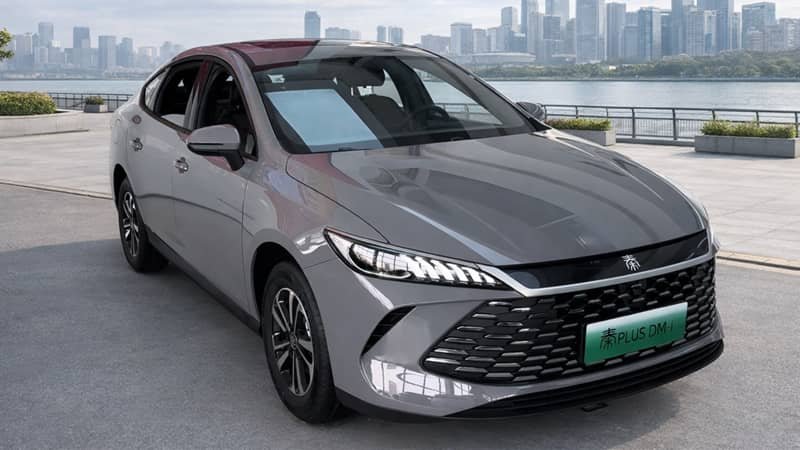
| BYD Qin PLUS DM-i / EV | PHEV / BEV | Compact Sedan | High-volume global export model |
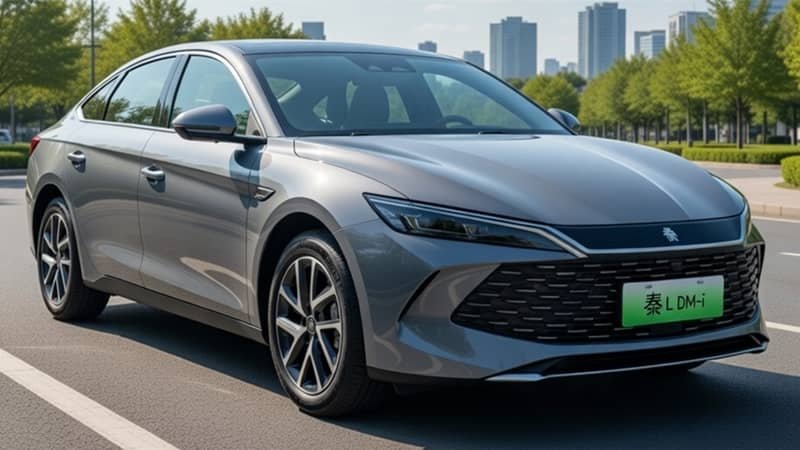
| BYD Qin L DM-i | PHEV | Midsize Sedan | Latest-gen DM-i 5.0 system |
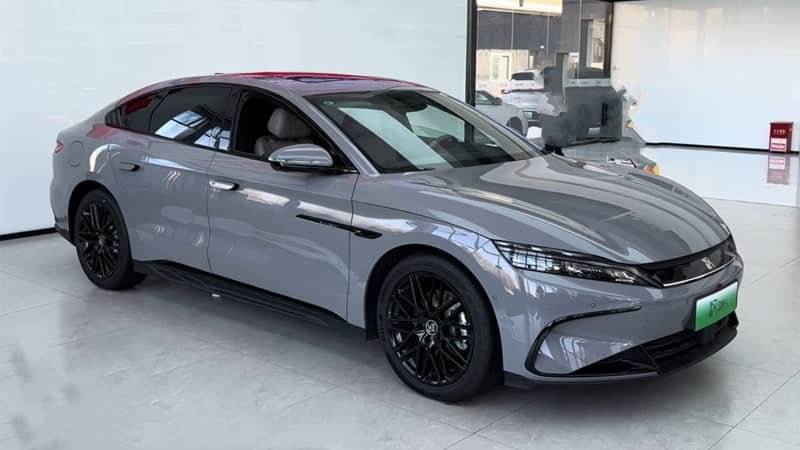
| BYD Han EV / DM-i | BEV / PHEV | Executive Sedan | Flagship sedan |
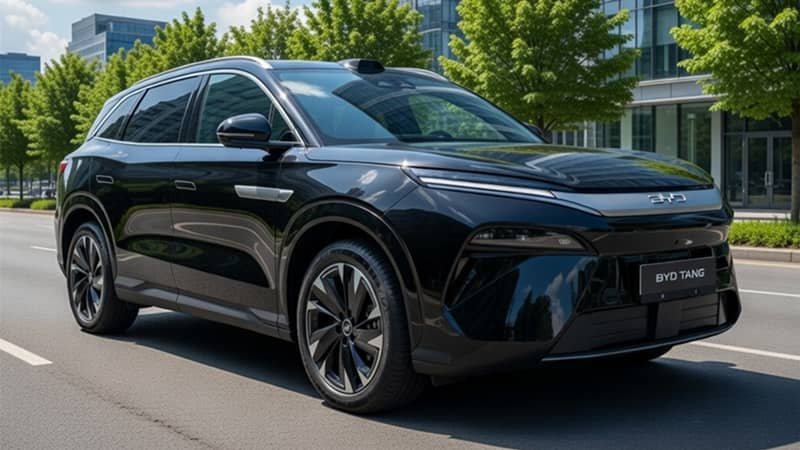
| BYD Tang EV / DM-i | BEV / PHEV | 3-Row SUV | Large family SUV |
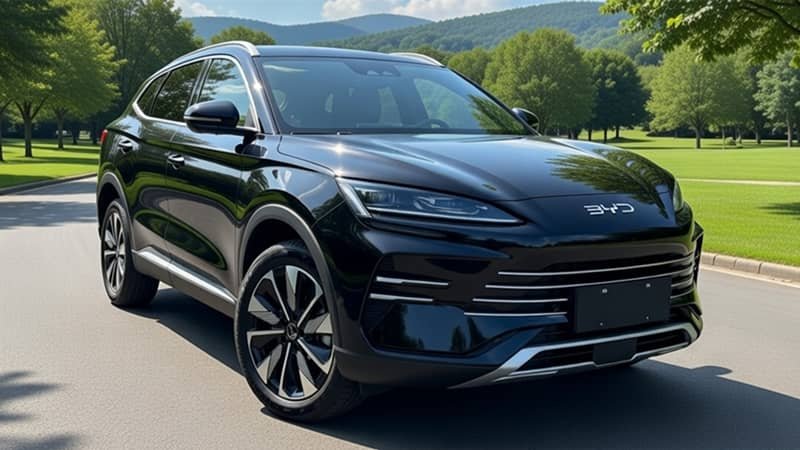
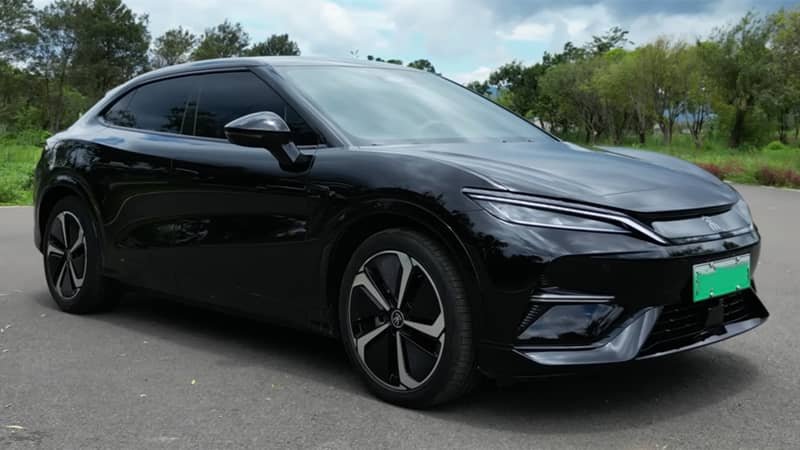
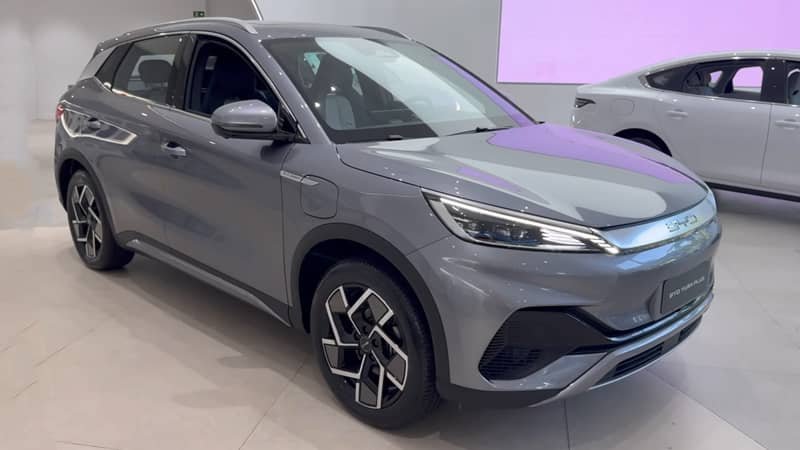
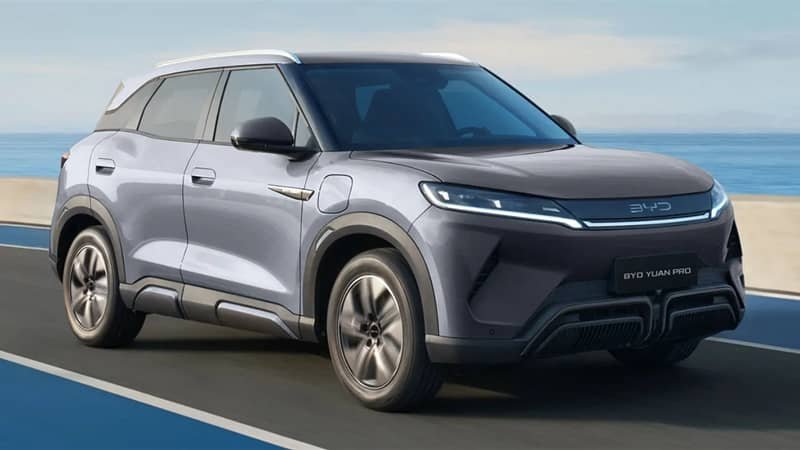
| BYD Song PLUS EV / DM-i | BEV / PHEV | Compact SUV | Core global product |
| BYD Song L EV / DM-i | BEV / PHEV | Coupe SUV | Performance-oriented design |
| BYD Yuan PLUS (Atto 3) | BEV | Compact SUV | Major export model |
| BYD Yuan Pro | BEV | Small SUV | Entry-level EV |
Ocean Series
| Model | Powertrain | Segment | Notes |
|---|---|---|---|
| BYD Seagull | BEV | A-Segment Hatch | Ultra low-cost EV |
| BYD Dolphin | BEV | Subcompact Hatch | e-Platform 3.0 |
| BYD Seal | BEV | Midsize Sedan | Performance EV architecture |
| BYD Seal 06 DM-i | PHEV | Midsize Sedan | Efficiency-focused |
| BYD Sealion 06 | BEV / PHEV | SUV | New Ocean SUV line |
| BYD Sealion 07 | BEV | Coupe SUV | Premium EV positioning |
| BYD Shark 6 | PHEV | Pickup | Global hybrid pickup entry |
2. Denza (Premium Brand)
| Model | Powertrain | Segment | Notes |
|---|---|---|---|
| BYD D9 | PHEV / BEV | Luxury MPV | Competes with Alphard/V-Class |
| BYD N7 | BEV | Mid-Size SUV | Premium intelligent EV |
| BYD N8 | PHEV | 3-Row SUV | Tech-luxury focus |
| BYD Z9 / Z9 GT | BEV / PHEV | Performance Sedan / Wagon | High-performance positioning |
3. Yangwang (Ultra-Luxury / Technology Showcase)
| Model | Powertrain | Segment | Key Technology |
|---|---|---|---|
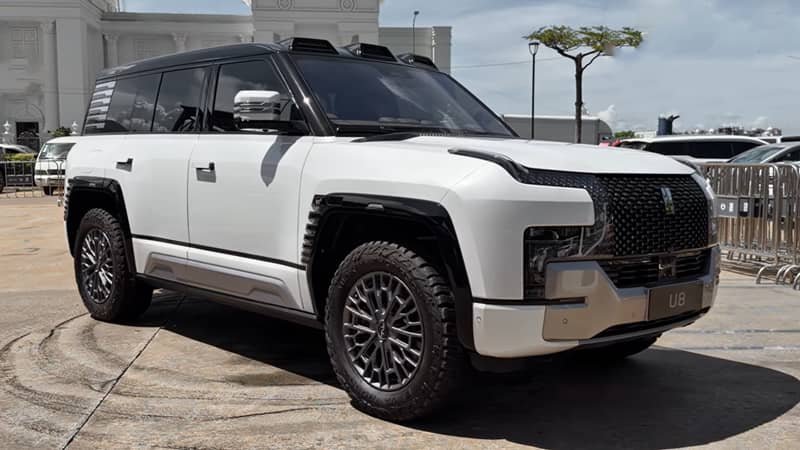
| BYD Yangwang U8 | EREV (Range-Extended EV) | Full-Size Luxury SUV | Tank turn, emergency flotation capability |
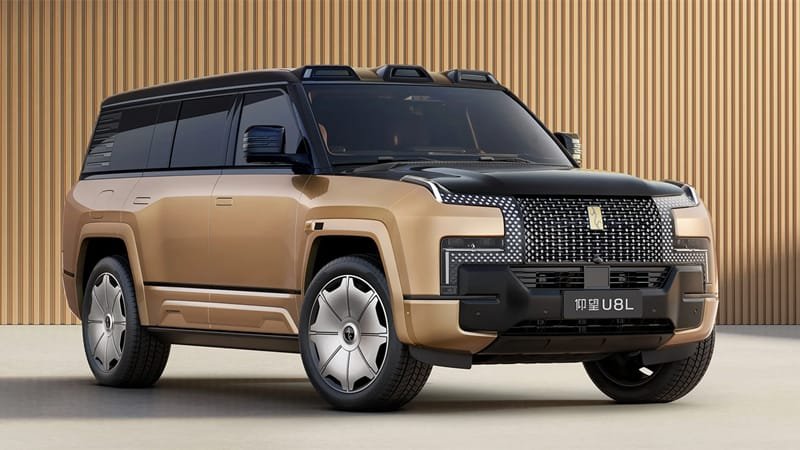
| BYD Yangwang U8L | EREV (Range-Extended EV) | Full-Size Luxury SUV (Long Wheelbase) | e⁴ platform, tank turn, emergency flotation capability |
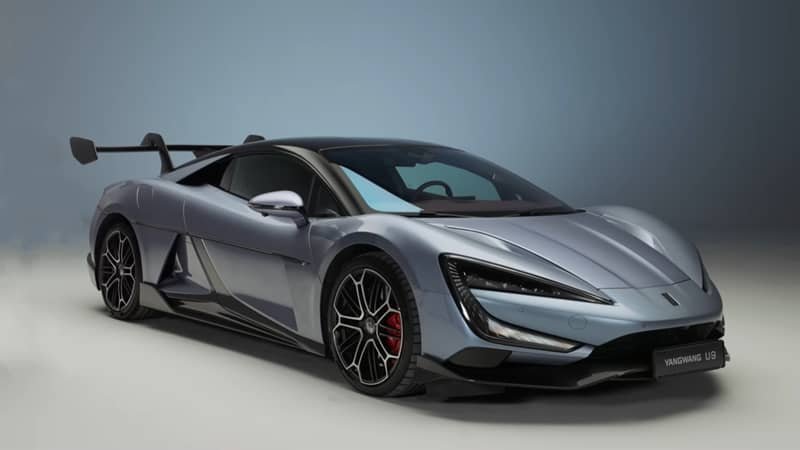
| BYD Yangwang U9 | BEV | Electric Supercar | Quad-motor torque vectoring |
4. Fangchengbao (Off-Road / Adventure Brand)
| Model | Powertrain | Segment | Notes |
|---|---|---|---|
| BYD Bao 5 | PHEV (DMO platform) | Off-Road SUV | Body-on-frame hybrid |
| BYD Bao 8 | PHEV | Large SUV | Higher luxury positioning |
| BYD Super 3 (concept-to-production pipeline) | BEV | Compact Off-Road SUV | Youth-oriented |
2. Corporate Identity & Strategic Positioning
BYD is not merely an automaker. It is structured as:
- A battery technology manufacturer
- A vertically integrated EV producer
- A semiconductor developer
- A commercial vehicle electrification supplier
- A global energy storage participant
Unlike many EV startups, BYD originated as a battery company. This origin defines its structural advantage: internal battery production reduces supply dependency and protects margin during raw material volatility.
3. Historical Development & Structural Inflection Points
| Period | Strategic Shift | Structural Impact |
|---|---|---|
| 1995–2002 | Rechargeable battery manufacturing | Built lithium expertise |
| 2003 | Entry into automotive sector | Vertical integration model begins |
| 2008 | Investment by Warren Buffett via Berkshire Hathaway | Global credibility |
| 2020 | Blade Battery launch | Safety & cost differentiation |
| 2022 | Full exit from ICE-only vehicles | Pure NEV positioning |
| 2023–2026 | Global expansion acceleration | Export-driven growth |
BYD stopped producing pure internal combustion vehicles in 2022, becoming a fully electrified manufacturer.
4. Battery & Core Technology Architecture
Blade Battery (LFP-Based)
The Blade Battery is BYD’s defining technological asset.
| Attribute | Engineering Approach | Strategic Advantage |
|---|---|---|
| Chemistry | LFP (Lithium Iron Phosphate) | Thermal stability |
| Cell Format | Long prismatic “blade” design | Space efficiency |
| Safety | Nail penetration resistance | Fire risk reduction |
| Integration | Cell-to-pack structure | Cost efficiency |
Unlike nickel-based chemistries, LFP reduces reliance on cobalt.
DM-i Hybrid System
BYD’s Dual Mode (DM-i) plug-in hybrid system emphasizes:
- Electric-first driving
- Extended fuel efficiency
- Lower cost vs full BEV
This hybrid flexibility supports regions lacking charging infrastructure.
Semiconductor & Electronics
BYD designs in-house:
- Power electronics
- IGBT modules
- EV control systems
This reduces third-party exposure.
5. Manufacturing & Global Footprint
| Region | Facility Focus | Strategic Objective |
|---|---|---|
| China | Core production | Scale efficiency |
| Thailand | ASEAN expansion | Regional localization |
| Brazil | Latin America | Market entry |
| Hungary | European manufacturing base | Tariff mitigation |
Localization reduces trade barriers and logistics risk.
6. Market Position & Sales Scale
BYD has ranked among the world’s highest-volume NEV producers.
| Metric | Structural Implication |
|---|---|
| High domestic market share (China) | Scale leverage |
| Strong PHEV sales | Broader transition flexibility |
| Rapid export growth | Global ambition |
Major competitors include:
- Tesla, Inc.
- Volkswagen Group
- Toyota Motor Corporation
7. Competitive Strategy Analysis
Structural Advantages
- Full battery vertical integration
- LFP chemistry cost leadership
- Hybrid + BEV dual pathway
- Aggressive pricing flexibility
- Domestic supply chain depth
Structural Risks
- Margin pressure in price competition
- Trade restrictions in Western markets
- Brand recognition gap outside China
- Regulatory scrutiny in EU/U.S.
8. Financial Structure Overview
| Category | BYD Profile |
|---|---|
| Revenue Mix | Vehicles + Batteries + Components |
| Cost Control | Internal battery production |
| Capital Allocation | Factory expansion |
| Sensitivity | Lithium price volatility |
BYD benefits from economies of scale due to domestic demand.
9. Ownership Economics
| Factor | Implication |
|---|---|
| LFP battery | Lower cost |
| Hybrid option | Reduced range anxiety |
| Maintenance | Simplified electric drivetrain |
| Resale | Developing outside China |
10. ESG & Energy Storage
Beyond vehicles, BYD participates in:
- Grid-scale storage
- Solar energy integration
- Battery supply to third parties
Energy diversification reduces pure automotive dependency.
11. Expert-Level Conclusion
From an engineering standpoint, BYD’s core strength lies in battery architecture and cost optimization.
From a strategic standpoint, its hybrid + BEV dual pathway hedges infrastructure uncertainty.
From an investment standpoint, BYD represents a vertically integrated electrification platform rather than a conventional automaker.
Its long-term competitiveness depends on:
- Sustaining battery cost advantage
- Navigating global trade policy
- Building international brand equity
FAQ (Search Optimized)
Is BYD bigger than Tesla?
In total NEV volume, BYD has ranked among global leaders; pure BEV comparison varies by year.
What makes BYD batteries different?
Blade Battery design prioritizes safety and LFP cost efficiency.
Is BYD expanding globally?
Yes, with manufacturing investments outside China.