By EV Market Analyst | Updated February 2026
There’s a quiet revolution happening in China’s electric vehicle market, and most Western consumers have no idea it exists. While Americans debate whether they can afford a $48,000 Tesla Model Y, Chinese buyers are snapping up fully electric city cars for less than the cost of a used Honda Civic.
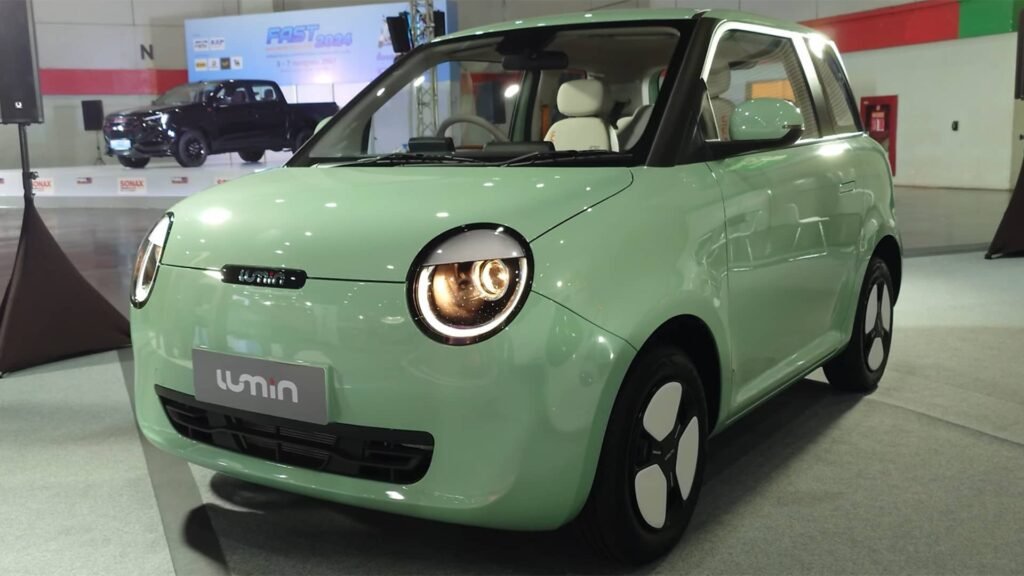
The Changan Lumin EV sits at the center of this disruption. It’s small, it’s adorable, and it costs roughly $7,500 in its home market. But here’s the question that keeps automotive executives awake at night: if this car can be built and sold profitably at that price, why does every EV in the US start at three times that amount?
This isn’t just about cheap labor or government subsidies. The Lumin represents a fundamental rethinking of what an electric car needs to be for urban mobility. And whether it ever reaches American shores, its existence forces a conversation about value, necessity, and the future of personal transportation.
The Numbers That Don’t Add Up (Until They Do)
Let’s start with pricing, because that’s where the Lumin creates genuine cognitive dissonance for Western observers.
| Vehicle | Market | Starting Price (USD) | Range | Battery |
|---|---|---|---|---|
| Changan Lumin 205km | China | $7,200 | 127 miles | 17.6 kWh |
| Changan Lumin 301km | China | $8,400 | 187 miles | 28.1 kWh |
| Chevrolet Spark EV (discontinued) | US | $27,000 | 140 miles | 19 kWh |
| Mini Cooper SE | US | $30,900 | 114 miles | 32.6 kWh |
| Tesla Model 3 RWD | US | $38,990 | 272 miles | 60 kWh |
Exchange rate: 1 USD ≈ 7.2 CNY, February 2026
The Lumin 301km variant delivers more range than a Mini Cooper SE at less than one-third the price. That’s not a marginal difference. That’s a paradigm shift.
Of course, direct comparisons require context. American safety regulations, import tariffs, and distribution networks would significantly increase the Lumin’s US price. But even accounting for those factors, the gap remains difficult to justify purely on manufacturing costs.
Design Philosophy: When Small Becomes Strategic
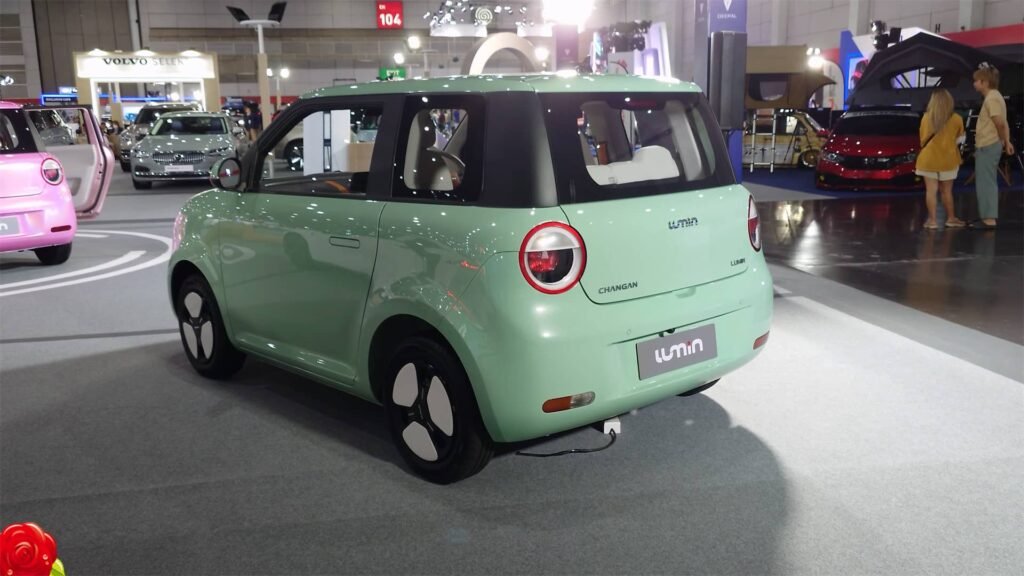
The Lumin’s exterior design has been described as “a Mini Cooper, a Nintendo Switch, and a panda emoji had a baby.” That’s not just marketing copy—it captures something genuine about how this car positions itself emotionally.
Exterior Dimensions and Urban Practicality
| Dimension | Changan Lumin | Mini Cooper SE | Fiat 500e | Smart EQ Fortwo |
|---|---|---|---|---|
| Length | 3,270-3,293 mm | 3,845 mm | 3,632 mm | 2,695 mm |
| Width | 1,700 mm | 1,727 mm | 1,683 mm | 1,663 mm |
| Height | 1,545 mm | 1,432 mm | 1,551 mm | 1,559 mm |
| Wheelbase | 1,980 mm | 2,495 mm | 2,322 mm | 1,873 mm |
| Curb Weight | ~960 kg | 1,365 kg | 1,355 kg | 1,090 kg |
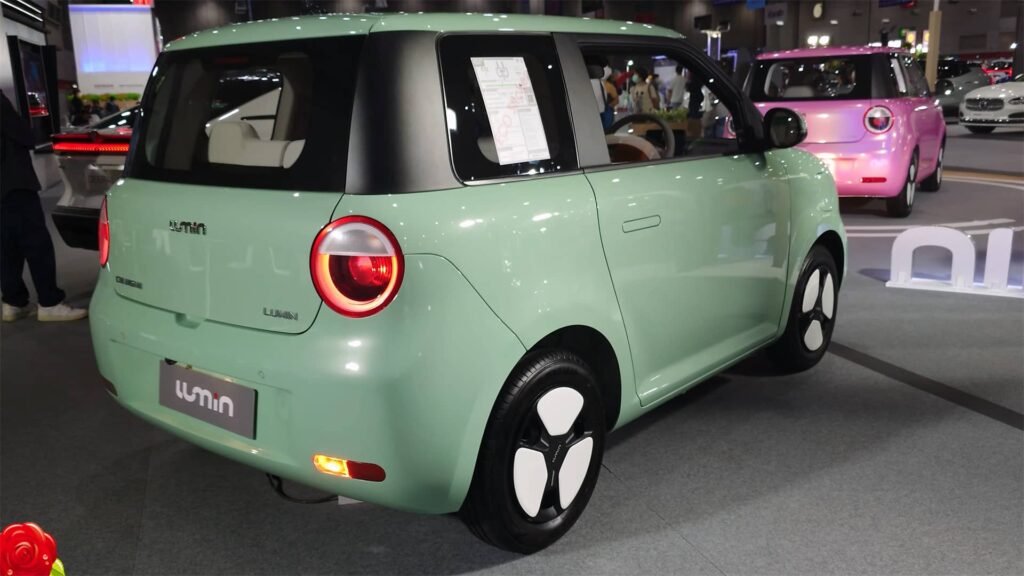
The Lumin’s width of 1,700mm actually exceeds some competitors, providing better shoulder room for front passengers. The short wheelbase and minimal overhangs create a turning radius that makes U-turns feel trivial and parallel parking almost embarrassing for larger vehicles.
Visual Identity That Works
The signature round LED headlights aren’t just cute—they’re functional. LED technology provides better visibility while consuming less power than traditional halogen units. The two-tone paint options (sakura pink, moss green, wheat yellow, mint green) serve a practical purpose beyond aesthetics: they make the car instantly recognizable in crowded parking areas.
Flush or pop-out door handles on higher trims reduce drag coefficient marginally but signal premium positioning within the micro-EV segment. The rear treatment avoids the fake light bar trend dominating Western EVs, opting instead for separated round taillights that reinforce the friendly character.
Interior: Budget Constraints Meet Smart Prioritization
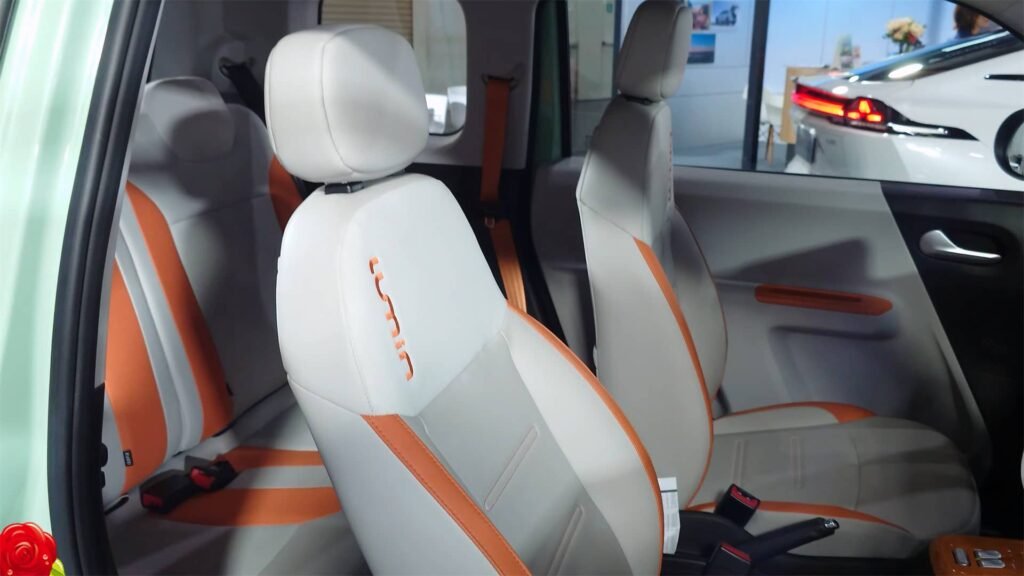
Open the door, and expectations reset. This isn’t a luxury cabin, but it’s also not the bare-bones interior that price point might suggest.
Feature Comparison Across Price Points
| Interior Feature | Lumin 205km | Lumin 301km | Mini Cooper SE | Chevrolet Bolt EV |
|---|---|---|---|---|
| Infotainment Screen | 10.25″ touchscreen | 10.25″ touchscreen | 8.8″ touchscreen | 10.2″ touchscreen |
| Digital Instrument Cluster | 7″ LCD | 7″ LCD | 5″ LCD | 8″ driver display |
| Wireless Phone Charging | Available | Available | Available | Available |
| Climate Control | Physical buttons | Physical buttons | Physical + screen | Touchscreen |
| Seat Material | Fabric/leatherette | Fabric/leatherette | SensaTec leather | Cloth/leatherette |
| Ambient Lighting | Available | Available | Standard | Not available |
| Rear USB Ports | 1 USB-C | 1 USB-C | None | 2 USB ports |
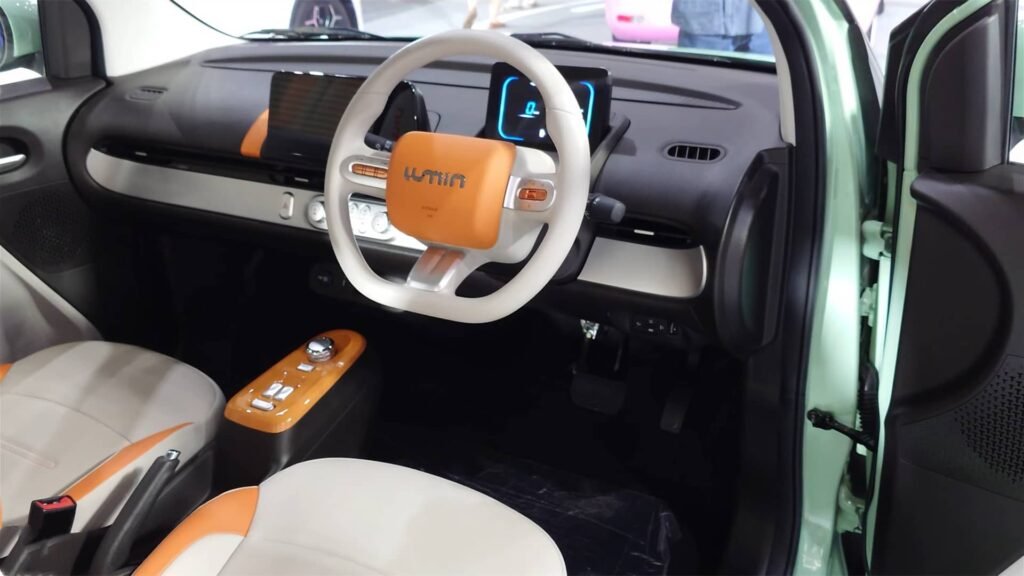
The decision to retain physical climate controls deserves specific praise. While competitors chase minimalist touchscreen-only interfaces, Changan recognized that adjusting temperature while driving shouldn’t require menu navigation. This isn’t nostalgia—it’s ergonomic intelligence.
The 10.25-inch floating touchscreen supports voice control, phone connectivity, and mobile mirroring. Graphics are crisp, icons are appropriately sized, and the system responds without the lag common in budget vehicles. Behind the steering wheel, a 7-inch digital-analog hybrid display shows speed, range, and battery information without overwhelming the driver.
Space Utilization
Headroom measures adequate despite the compact exterior, thanks to the 1,545mm height and relatively flat floor (no transmission tunnel). The 4-seat configuration works for two adults front, two adults rear on short trips, or two adults plus children for regular use. Five passengers would be uncomfortable—that’s not a compromise, that’s honest positioning.
Cargo capacity starts at 104 liters with rear seats upright. Fold the seats, and capacity expands significantly, though specific cubic footage varies by market specification. For grocery runs, school pickups, and urban errands, it’s sufficient. For IKEA furniture runs, you’ll need a different vehicle.
Powertrain and Performance: Honest About Limitations
The Lumin doesn’t pretend to be something it’s not. It’s a city car, and its performance characteristics reflect that purpose.
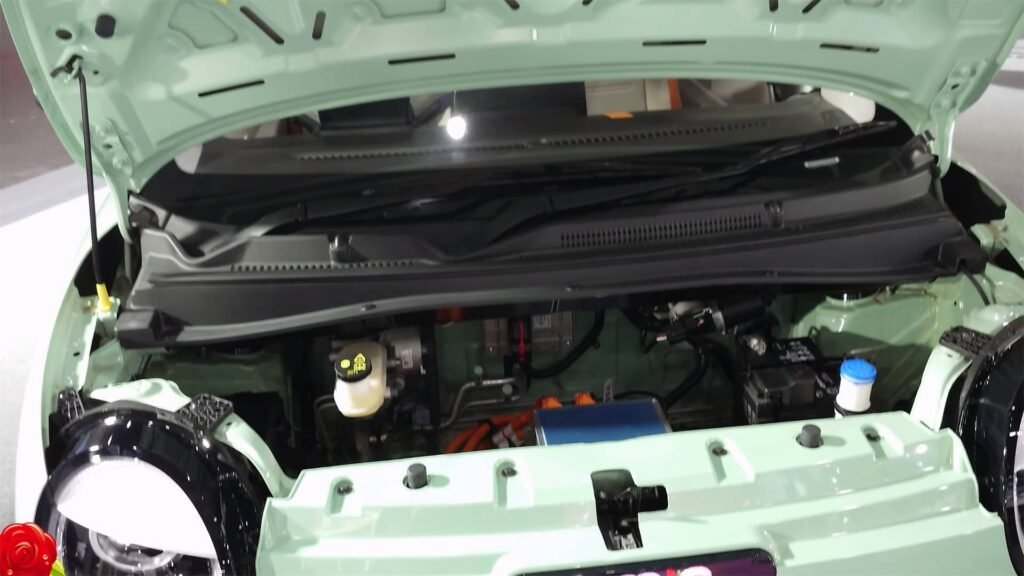
Motor and Battery Specifications
| Variant | Motor Power | Torque | Battery Capacity | CLTC Range | Top Speed |
|---|---|---|---|---|---|
| 130km Base | 30 kW (40 hp) | 79 Nm | 12.9 kWh | 130 km | 101 km/h |
| 205km Mid | 35 kW (47 hp) | 87 Nm | 17.6 kWh | 205 km | 101 km/h |
| 301km Top | 35 kW (47 hp) | 87 Nm | 28.1 kWh | 301 km | 101 km/h |
CLTC = China Light-Duty Vehicle Test Cycle (typically 15-20% more optimistic than EPA)
Forty-seven horsepower won’t win drag races. But in urban environments where speed limits rarely exceed 50 km/h and traffic moves at walking pace during rush hour, adequate acceleration matters more than peak power. The 0-50 km/h time of approximately 6.2 seconds feels brisk in city traffic.
The top speed of 101 km/h (63 mph) creates genuine limitations for highway use. This isn’t a vehicle for regular interstate commuting. It’s designed for urban mobility, and that constraint should inform purchase decisions.
Charging Capabilities
| Charging Method | Time (30-80%) | Time (0-100%) | Connector Type |
|---|---|---|---|
| DC Fast Charging | ~35 minutes | N/A | GB/T (China standard) |
| AC Level 2 (6.6 kW) | N/A | ~6.5 hours | GB/T AC |
| AC Level 1 (household) | N/A | ~10 hours | Standard outlet |
Fast charging capability on higher trims addresses range anxiety for urban users who might need mid-day top-ups. The 35-minute 30-80% charge time compares favorably to competitors in this segment. However, the GB/T charging standard used in China differs from CCS or NACS standards in North America and Europe, creating infrastructure compatibility questions for potential export markets.
Safety: The Question Every Buyer Should Ask
This is where honest assessment becomes critical. The Lumin meets Chinese safety regulations, but those standards differ from US NCAP or Euro NCAP requirements.
Safety Equipment by Market
| Safety Feature | Chinese Market Lumin | US Market Equivalent | Euro Market Equivalent |
|---|---|---|---|
| Airbags | 2 front (standard) | 6+ airbags (standard) | 6+ airbags (standard) |
| ABS + EBD | Standard | Standard | Standard |
| Electronic Stability Control | Available (higher trims) | Standard (all vehicles) | Standard (all vehicles) |
| Lane Keep Assist | Not available | Common in segment | Common in segment |
| Automatic Emergency Braking | Limited availability | Increasingly standard | Increasingly standard |
| Blind Spot Monitoring | Not available | Available in segment | Available in segment |
| Crash Test Rating | C-NCAP 4-star (estimated) | Not tested | Not tested |
The high-strength steel body structure provides reasonable crash protection for urban speeds. Front MacPherson suspension with rear integral axle delivers predictable handling. Front disc brakes with rear drum brakes (on certain trims) provide adequate stopping power for the vehicle’s weight and performance envelope.
But here’s the honest truth: this car isn’t designed for 70 mph highway collisions. It’s designed for 30 mph urban environments where most accidents result in property damage rather than serious injury. For buyers whose driving consists primarily of city streets, school zones, and neighborhood errands, the safety profile matches the use case.
For buyers who regularly travel on highways, carry children frequently, or prioritize maximum crash protection, the limitations matter significantly.
The US Market Question: Why Isn’t This Car Here?
If the Lumin offers such compelling value, why can’t Americans buy one? The answer involves multiple factors beyond simple protectionism.
Barriers to US Market Entry
| Barrier | Impact | Estimated Cost Increase |
|---|---|---|
| Import Tariff (25% on Chinese vehicles) | Direct price increase | +$2,000-2,500 |
| Safety Regulation Compliance | Redesign requirements | +$1,500-2,000 |
| Emissions/Certification Testing | Testing and documentation | +$500-800 |
| Dealer Network Establishment | Distribution infrastructure | +$1,000-1,500 |
| Charging Standard Adaptation | CCS/NACS compatibility | +$300-500 |
| Warranty/Service Infrastructure | Support network | +$500-800 |
| Total Estimated US Price | $13,000-16,000 |
Even with these adjustments, a $15,000 EV would disrupt the American market significantly. But additional challenges exist: brand recognition (Changan has minimal US presence), consumer perception of Chinese manufacturing quality, and political scrutiny of Chinese technology in connected vehicles.
The Biden administration’s 100% tariff on Chinese EVs announced in 2024 effectively blocks near-term US market entry. This protects American manufacturers but also eliminates competitive pressure that might drive prices down domestically.
Who Should Consider a Vehicle Like the Lumin?
Not every buyer needs every car. Understanding fit prevents disappointment.
Ideal Use Cases
| Buyer Profile | Fit Rating | Reasoning |
|---|---|---|
| Urban apartment dweller | Excellent | Parking, charging, size all align |
| Second car for errands | Excellent | Perfect for grocery runs, school pickups |
| Single professional, city commute | Very Good | Daily range well within capability |
| Young couple, no children | Good | Adequate space for two adults |
| Family with 2+ children | Fair | Tight for car seats, limited cargo |
| Highway commuter (20+ miles daily) | Poor | Range and speed limitations |
| Rural resident | Poor | Charging infrastructure, distance |
| Ride-share driver (urban) | Good | Low operating costs, easy parking |
Competitor Comparison in Global Markets
| Vehicle | Market | Price (USD) | Range | Key Advantage |
|---|---|---|---|---|
| Changan Lumin | China | $7,200-8,400 | 127-187 miles | Price, design |
| Wuling Hongguang MINI EV | China | $4,500-7,000 | 75-170 miles | Lowest price |
| Geely Panda Mini | China | $5,500-7,500 | 125-200 miles | Fast charging |
| Citroën Ami | Europe | $8,500 | 46 miles | Quadricycle classification |
| Fiat Topolino | Europe | $10,500 | 80 miles | Style, brand |
| Smart EQ Fortwo | Global | $25,000+ | 80 miles | Premium positioning |
Total Cost of Ownership: Where the Math Gets Interesting
Purchase price tells only part of the story. Operating costs reveal the Lumin’s genuine value proposition.
Five-Year Ownership Cost Projection (China Market)
| Cost Category | Changan Lumin | Gasoline Equivalent | Tesla Model 3 |
|---|---|---|---|
| Purchase Price | $8,400 | $15,000 | $38,990 |
| Electricity/Fuel (5 years) | $1,800 | $8,500 | $3,200 |
| Maintenance (5 years) | $800 | $3,500 | $1,500 |
| Insurance (5 years) | $2,000 | $4,000 | $6,000 |
| Depreciation (estimated) | $3,500 | $7,000 | $18,000 |
| Total 5-Year Cost | $16,500 | $38,000 | $67,690 |
Assumptions: 15,000 km/year, China market pricing and rates
The operating cost advantage becomes substantial over time. Electricity costs fractionally compared to gasoline. Electric motors require minimal maintenance—no oil changes, no transmission service, no exhaust system repairs. Insurance rates reflect lower repair costs and reduced injury risk at urban speeds.
Depreciation remains uncertain for new EV models, but Changan’s market position in China suggests reasonable residual values compared to unknown brands.
What the Lumin Teaches Us About EV Value
The Changan Lumin EV isn’t perfect. It has limitations that matter for specific buyers. But it accomplishes something remarkable: it proves that electric mobility doesn’t require financial sacrifice for urban use cases.
Western automakers have conditioned consumers to expect EVs as premium products. Tesla started with luxury roadsters. Legacy manufacturers followed with expensive crossovers. The narrative became: electric means expensive, and expensive means better.
The Lumin challenges that narrative directly. It’s not better than a Tesla Model 3 in performance, technology, or range. But for a buyer whose daily driving consists of 30 kilometers through city streets, picking up children, buying groceries, and commuting to an office park—the Lumin delivers 90% of the relevant functionality at 25% of the cost.
That’s not a compromise. That’s appropriate product-market fit.
Final Recommendation Matrix
| Priority | Recommendation | Reasoning |
|---|---|---|
| Lowest purchase price | Changan Lumin 205km | Best value under $8,000 |
| Maximum range | Changan Lumin 301km | 187 miles covers most urban needs |
| US market availability | Wait for domestic alternatives | Lumin not coming to US soon |
| Highway capability | Look elsewhere | Top speed limitation significant |
| Family primary vehicle | Consider larger EV | Space constraints matter |
| Second city car | Strong candidate | Perfect use case alignment |
Specifications sourced from manufacturer data and Chinese automotive databases, February 2026. US pricing estimates include tariff and compliance adjustments. Actual availability and pricing subject to market conditions.
The micro-EV segment is evolving rapidly. New models from BYD, Geely, and SAIC are entering markets globally. For buyers considering this category, test driving multiple options and honestly assessing daily driving patterns prevents costly mismatches between vehicle capability and actual needs.