
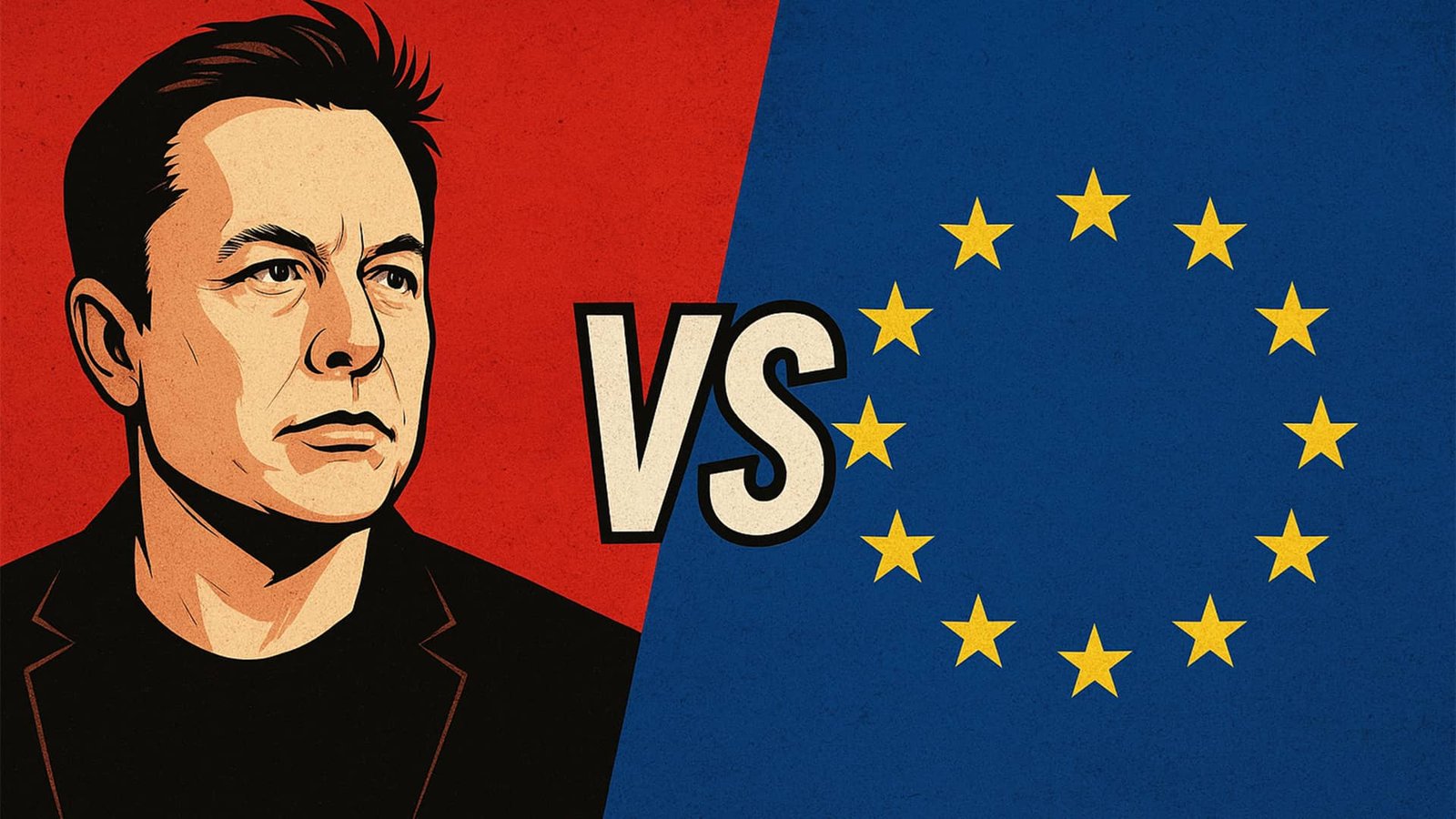
In December 2025, the European Union leveled a €120 million fine against Elon Musk’s social media platform X, marking the first enforcement action under the bloc’s landmark Digital Services Act (DSA). What initially appears as a regulatory enforcement moment has rapidly escalated into a broader confrontation touching on digital governance, platform sovereignty, free speech debates, and geopolitical narratives about tech power and institutional authority.
The unfolding situation raises questions well above the fine itself: Why has this enforcement stirred such vehement reactions? What does it reveal about the intersection of regulation, technology, and influence? And fundamentally, what does it mean when one individual — and his platform — become focal points of systemic tension between superpower blocs?
This analysis addresses these questions with nuance, professional insight, and context grounded in both current events and longstanding debates in digital policy.
The Fine: Enforcement of the Digital Services Act, Not Political Targeting
At its core, the EU’s fine is legally grounded in the Digital Services Act (DSA) — a comprehensive regulatory framework designed to enforce transparency, accountability, and user protection on large online platforms with significant reach. Under this regime, the European Commission found X in breach of several key obligations:
- Misleading verification practices — X’s paid “blue checkmark” system could mislead users about the authenticity of accounts.
- Lack of advertising transparency — the platform failed to provide an accessible, complete advertising repository as required by the DSA.
- Restricted data access for independent researchers — impeding external analysis of systemic risks such as misinformation and coordinated campaigns.
Under the terms of the DSA, authorities may impose penalties up to 6 percent of a platform’s global revenue for serious infringements. Although the €120 million penalty represents only a fraction of this maximum, it symbolizes the EU’s readiness to enforce digital law against powerful global platforms.
Musk’s Reaction: A Calculated Political and Strategic Statement
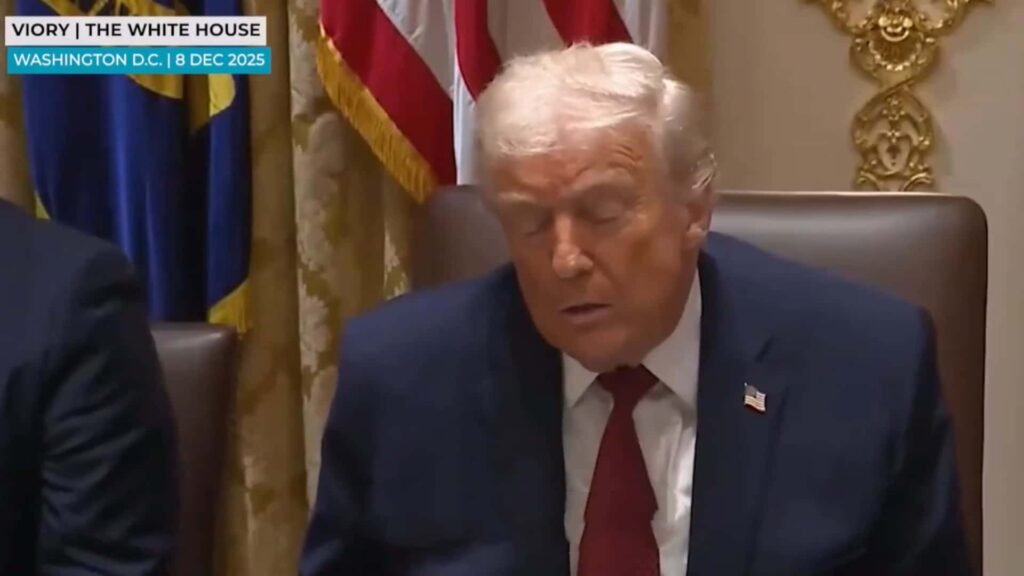
Elon Musk’s response was unusually forceful for a regulatory fine. His public remarks dismissed the ruling as “bullshit” and advocated abolishing the European Union. High‑profile U.S. politicians, including former President Donald Trump and senior administration figures, echoed strong criticism, framing the enforcement as an attack on free speech and U.S. tech leadership.
From a strategic standpoint, Musk’s rhetoric does more than defend a business decision. It reframes regulatory action as an ideological battle over digital governance principles — aligning his platform with broader debates over freedom of expression, national sovereignty, and regulatory overreach. By rejecting compliance and escalating rhetoric, he is signaling that this is not merely a compliance dispute but a fundamental contest over how digital platforms should operate globally.
Is This Really About Regulation — Or a Tech Power Struggle?
At the surface level, the EU enforcement action appears to be an example of democratic governance asserting regulatory authority over a global platform. However, the intensity of the response suggests deeper undercurrents:
- Platforms with global reach wield influence far beyond simple content moderation. X’s algorithm and user access mechanics shape discourse across jurisdictions, elections, and cultural fault lines. Regulators are aware that platform design significantly affects civic processes — from political messaging to misinformation dynamics.
- Competing visions of governance. The European Union’s regulatory model leans toward structured transparency and user protection, while Musk’s public philosophy emphasizes minimal intervention, decentralization, and broad interpretations of free expression. These differing frameworks are inherently in conflict.
- Geopolitical signaling. Musk’s rejection of EU authority and alignment with U.S. political critics positions this confrontation not just as a regulatory disagreement but as a battleground over digital sovereignty — where states and blocs negotiate norms for global digital commons.
In this sense, the fine is not purely punitive. Instead, it highlights a broader geopolitical negotiation between national or supranational regulators and global platforms capable of influencing public life on multiple continents.
Why This Matters: The Future of Digital Governance
If we look beyond the immediate conflict, several broader themes emerge:
A. Platform Power and Public Trust
Regulators worldwide are grappling with the question of how to balance platform autonomy and public accountability. Powerful platforms shape access to information, political debate, and public opinion. The EU’s DSA represents one regulatory imprint of that balancing act; Musk’s response underscores the resistance from leaders who perceive such governance as a threat to digital freedom.
B. Transparency as a Democratic Imperative
The core of the EU’s enforcement lies in transparency obligations — not merely censorship or content policing. These requirements aim to demystify how platforms moderate content, display ads, and signal authenticity. When platforms resist such transparency, they risk being seen as opaque influencers without sufficient accountability.
C. Cross‑Border Regulatory Complexity
X’s global footprint means that no single jurisdiction exercises absolute control. American political pushback against the EU fine reveals how digital regulation has become enmeshed with geopolitical interests, not just legal compliance.
Not Just a Fine — A Symbol of Systemic Conflict
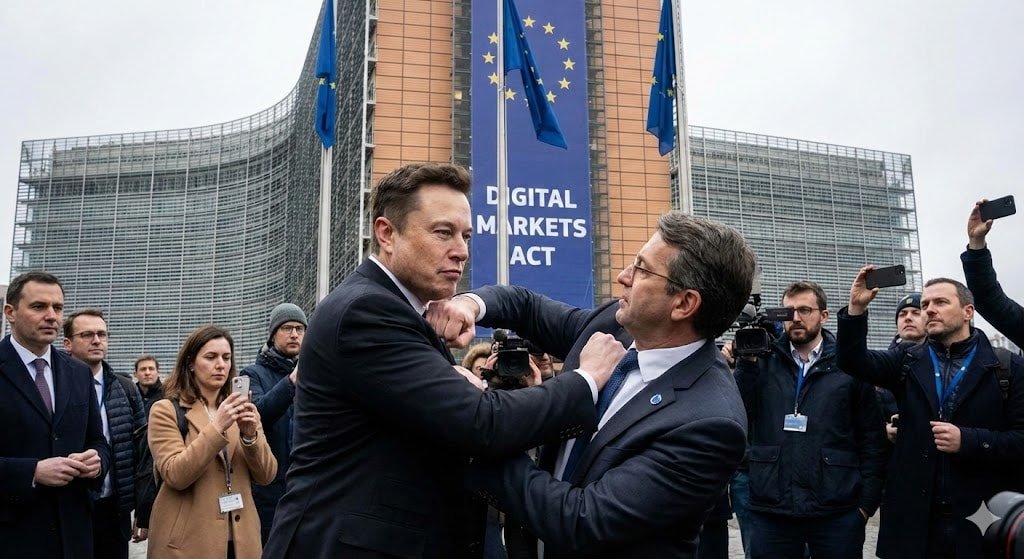
The EU’s €120 million fine is only one chapter in a broader narrative. It reflects a shifting global axis where technology, regulation, and political philosophy intersect. Musk’s rhetoric reframes the episode as a stand for free expression and opposition to centralized regulatory power — appealing to a political audience that views digital regulation skeptically. Meanwhile, the EU frames its enforcement as justified, legally grounded, and essential for protecting users and democratic processes in a digital age.
This clash should not be reduced to hyperbole — but neither should it be interpreted as a simple regulatory skirmish. It is part of an unfolding global dialogue — and sometimes confrontation — over how digital public squares should be governed, who gets to set the rules, and what balance will be struck between free innovation, public accountability, and democratic safeguards.
Summery Table
| Category | Detail | Significance / Impact | Expert Analysis |
|---|---|---|---|
| Event | EU fines Elon Musk’s X platform €120M under the Digital Services Act (DSA) | First major enforcement under DSA; legal precedent for large platforms in EU | Shows EU’s willingness to enforce transparency and user protection obligations |
| Alleged Violations | Misleading verification (paid “blue check” system), restricted data access, insufficient advertising transparency | Potential user misinformation, lack of independent research access, reduced trust | Regulatory focus on platform accountability; transparency as democratic safeguard |
| Musk’s Response | Publicly called fine “bullshit”, suggested abolishing EU, refused cooperation | Politicizes the conflict; positions X as a platform resisting centralized control | Strategic framing: Musk emphasizes free speech and platform autonomy over compliance |
| Political Context | Support from US politicians, including Trump; EU claims it’s regulatory enforcement | Highlights US-EU tech policy divergence | Clash illustrates global digital sovereignty tensions |
| Platform Power | X influences discourse, elections, public opinion across jurisdictions | Demonstrates social media as geopolitical tool | Regulatory and political bodies increasingly treat major platforms as instruments of societal influence |
| Broader Implications | Transparency, accountability, cross-border regulation challenges | Affects global digital governance norms | Future platform regulation will require balancing innovation, public trust, and democratic oversight |
| Strategic Analysis | EU’s fine is symbolic; Musk tests limits of regulatory reach; conflict signals systemic power negotiation | Regulatory action is more than financial penalty; it’s about control, influence, and precedent | Digital governance now intersects with politics, innovation, and societal stability |
| Takeaway | The X-EU conflict is a case study of modern platform power vs. supranational regulation | Signals new era of global platform governance | Stakeholders must consider authority, accountability, and influence when engaging with large-scale digital platforms |
A Regulatory Inflection Point
Elon Musk’s clash with the European Union over X’s compliance with the Digital Services Act has unveiled a tension that extends far beyond a one‑off fine. It encapsulates fundamental questions about digital sovereignty, platform accountability, and the balance between innovation and governance. As this conflict evolves, the outcome will have implications not only for X but for global digital policy and public discourse.
For industry leaders, policymakers, and civic stakeholders, the message is clear: the future of digital platforms will be shaped not just in courtrooms and regulatory offices, but in how platforms negotiate authority, accountability, and public trust on the global stage.
Usefull Links: