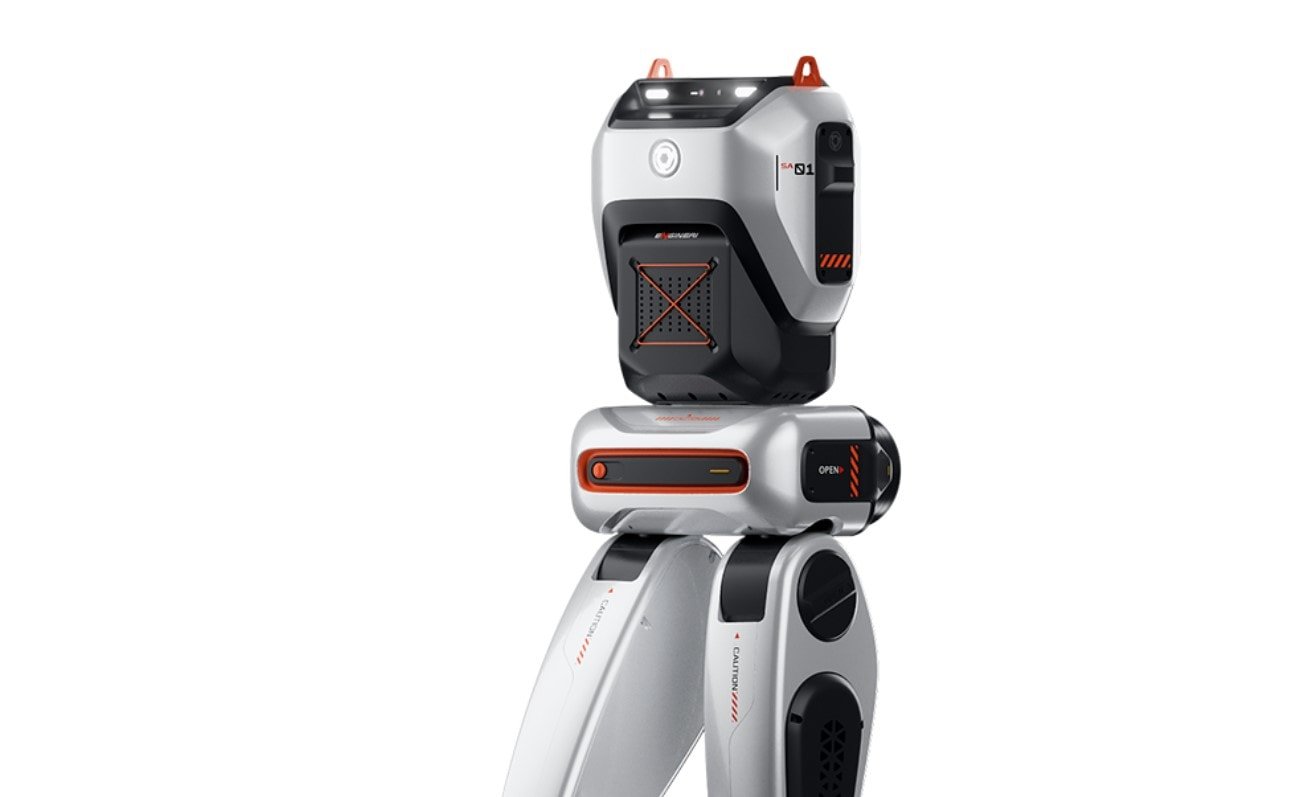
ENGINEAI SA01 Bipedal Robot Platform

The ENGINEAI SA01 Bipedal Robot Platform represents a new generation of open-source biped robotics. Developed for research institutions, robotics developers, and advanced engineering teams, the SA01 integrates a fully open mechanical architecture, transparent motion-control algorithms, high-performance self-developed joints, and a robust aerospace-grade structural design. Its straight-knee gait, high freedom-of-motion legs, and modular expansion capability make it one of the most versatile biped systems available for next-generation humanoid research.

ENGINEAI SA01 Bipedal Robot Platform

1. Core Advantages at a Glance

SA01 Key Advantage Overview
Core AdvantageDescription
Full Open-Source DesignEntire mechanical structure, interfaces, and software stack are openly accessible for secondary development.
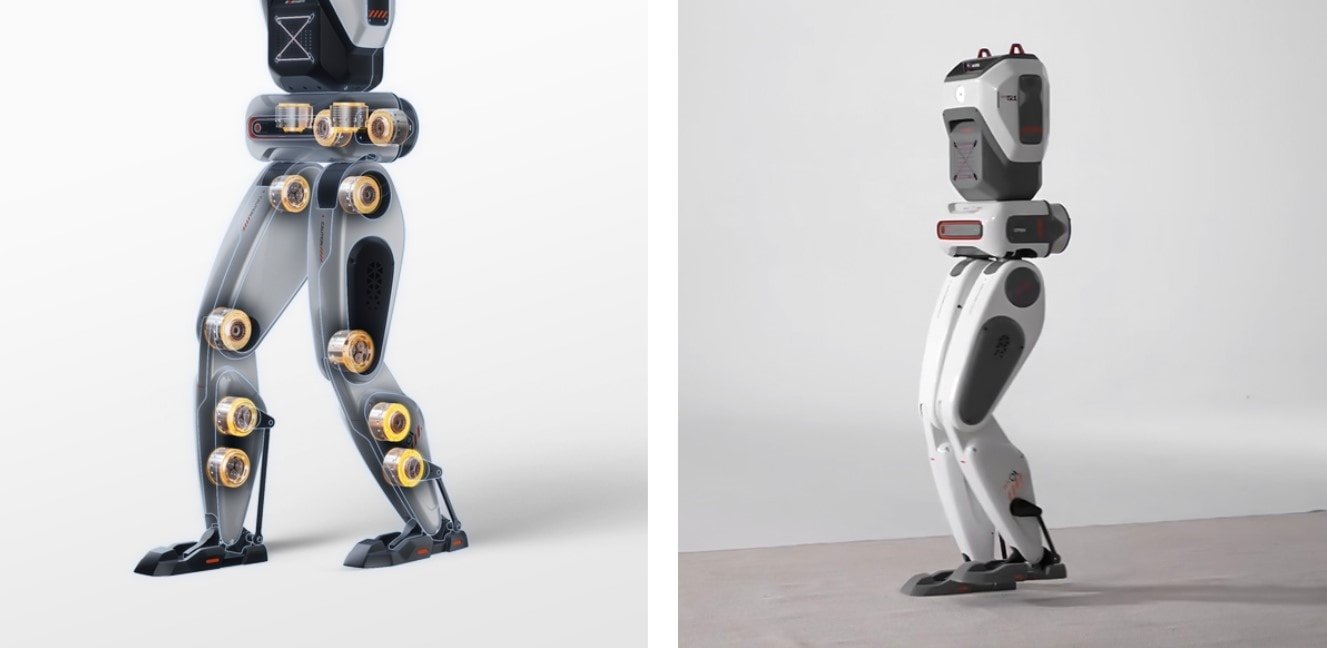
12-DOF High MobilitySix degrees of freedom per leg enable highly dynamic, stable, and human-like motion abilities.
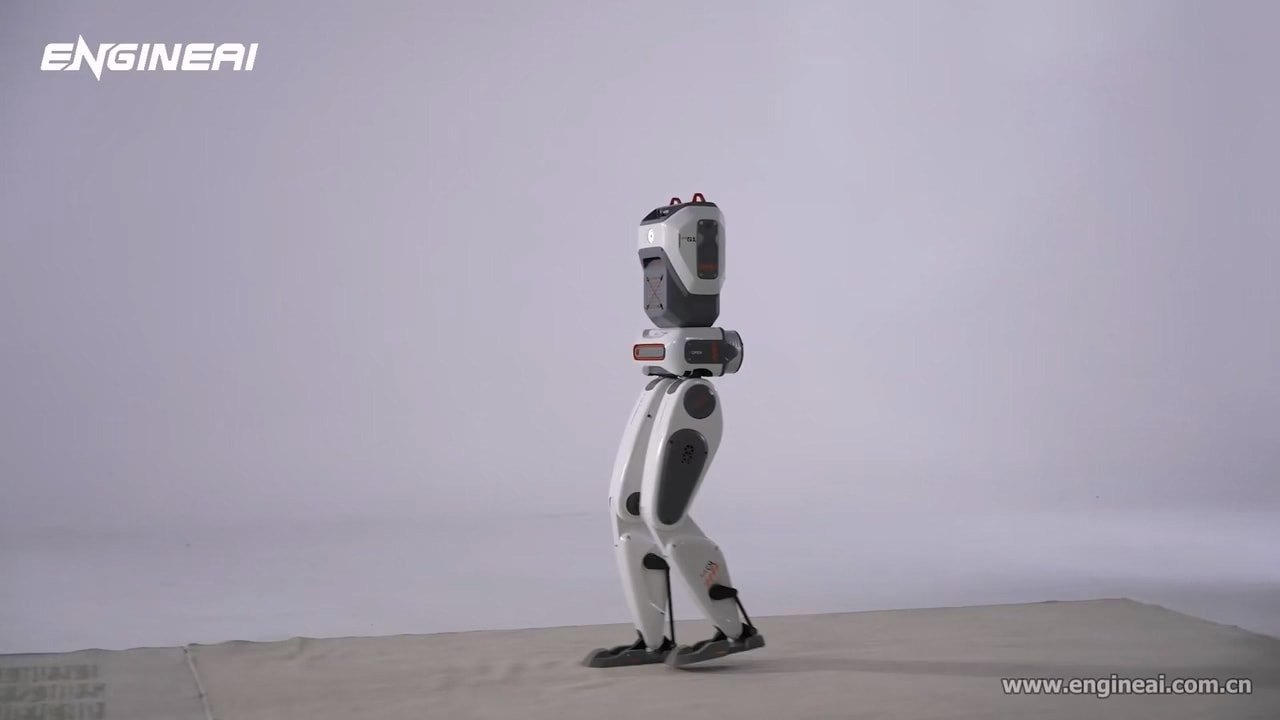
Straight-Knee Gait TechnologyProprietary locomotion mechanics eliminate the traditional crouched gait seen in many humanoid robots.
High-Performance Joint ModulesHip and knee joints deliver peak torque of 160 Nm, powered by fully self-developed actuators.
Aerospace-Grade Aluminum ExoskeletonHigh-strength, lightweight structural frame protects internal electronics and enhances durability.
High-Capacity Quick-Swap Battery15Ah 54.6V power system with rapid replacement for long experiment cycles.

2. Open-Source Architecture

2.1 Open Mechanical Platform
FeatureDetails
Mechanical OpennessFull hardware structure and interface documentation available
Supported CustomizationMechanical arms, additional sensors, custom modules
Structural ModificationUsers can redesign or expand chassis components
Target UsersUniversities, robotics labs, startups, hardware researchers
BenefitEnables deep research into robot mechanics and rapid prototyping
Closeup ENGINEAI SA01 Bipedal Robot Platform
Closeup

2.2 Open Motion-Control Algorithms

Open-Source LayerCapabilities
Low-Level Motor ControlFull access to torque control, motion loops, joint drivers
Motion FrameworkReplaceable control modules (IK, gait planner, balance algorithms)
Real-Time Control AccessDevelopers can deploy custom algorithms directly on the robot
Research ValueIdeal for reinforcement learning, locomotion experiments, HRI studies

3. Motion Performance

3.1 Straight-Knee Gait System
Performance IndicatorDescription
Gait TypeProprietary straight-knee locomotion
Degrees of Freedom6 DOF per leg
Balance ControlReal-time reactive balancing with disturbance rejection
Motion CharacteristicsNatural stride formation, stable acceleration/deceleration
Scenario SuitabilityResearch, mobility algorithms, uneven-surface walking

3.2 High-Performance Joint System
Joint FeatureSpecification
Peak Torque160 Nm at hip and knee
Encoder SystemDual absolute magnetic encoders
Failure RecoveryMaintains joint position memory after power loss
Internal ProtectionBuilt-in safety and thermal protection
IntegrationFull hardware–software fused design

4. Structural Engineering

4.1 Aerospace-Grade Aluminum Alloy
Structural ComponentMaterialBenefits
Main ExoskeletonAviation-grade aluminum alloyHigh stiffness, reduced mass, improved energy efficiency
Protective ShellReinforced aluminum housingStrong impact resistance
Internal FramePrecision-machined alloyBetter stability during dynamic movements

5. Power System

5.1 Quick-Swap Lithium Battery
Battery ParameterValue
Capacity15Ah
Voltage54.6V
Energy Content0.819 kWh
Operation Time~2 hours
Swap MechanismFast-release, tool-free battery change
Application ValueEnables long-duration experiments and field tests

6. Technical Specifications

6.1 Physical Dimensions & Weight
CategorySpecification
Size (Standing)1350 mm × 250 mm × 350 mm
Thigh Length400 mm
Shank Length400 mm
Total Weight~40 kg
Joint SA01 Bipedal Robot Platform
Joint

6.2 Mobility & Degrees of Freedom

Mobility ParameterValue
Total DOF12
DOF per Leg6
Walking Speed~1 m/s
Max Joint Torque160 Nm

6.3 Electrical Characteristics

Electrical SpecValue
Power Supply15Ah, up to 54.6V
Energy Capacity0.819 kWh
Operating Temperature-20°C to 55°C
Battery LifeApprox. 2 hours

6.4 Perception & Load Capacity

Sensor TypeSpecification
IMUHigh-precision inertial sensing for balance and orientation
Load Capacity10–15 kg

7. System Architecture Overview

Full Architecture Summary Table
System LayerComponentsKey Functions
Hardware LayerSelf-developed joints, aluminum chassis, modular interfacesStructural durability, payload support
Motion-Control LayerGait engine, balance control, real-time adjustmentStraight-knee locomotion, stability
Perception LayerIMU, sensor integration portsState estimation, orientation
Power Layer15Ah 54.6V battery systemContinuous operation and fast swap
Expansion LayerRobotic arm ports, sensor add-ons, custom hardwareBionic research, AI modules, HRI experiments
Software LayerOpen-source control frameworkAlgorithm research, custom control strategies

8. Application Domains

SA01 Usage Scenarios
FieldApplication
Research UniversitiesBiped locomotion, dynamics, control theory experiments
Robotics LabsAlgorithm testing, reinforcement learning, SLAM integration
StartupsHumanoid concept development, rapid prototyping
Industrial R&DBiped testing for logistics, inspection, bionic engineering
EducationRobotics teaching, competitions, hardware programming

For Robot Development

The ENGINEAI SA01 Bipedal Robot Platform delivers a rare combination of complete openness, high mechanical performance, and real-world expandability. With a 12-DOF biped structure, straight-knee gait technology, aerospace-grade chassis, and fully transparent control stack, it is built for researchers and innovators who require a platform that does not limit exploration.

Useful Links:

  1. Top 10 Humanoid Robots 2025 Worldwide
  2. IRON: XPENG’s Cutting-Edge Humanoid Robot
  3. Zhongqing(EngineAi) Official Website

Share your love

Leave a Reply

Your email address will not be published. Required fields are marked *