The electric vehicle (EV) narrative has officially shifted. If 2023 was the year of “peak hype” and 2024–2025 were the years of “reality checks,” then 2026 is emerging as the Year of Recalibration. We are no longer looking at a market driven by tech-hungry early adopters. Instead, 2026 represents a pragmatic, economics-driven phase where the industry must prove it can be profitable, sustainable, and accessible to the average commuter. For those looking to buy or invest, understanding the structural shifts happening right now is critical.
1. Market Dynamics: Volume Over Hype
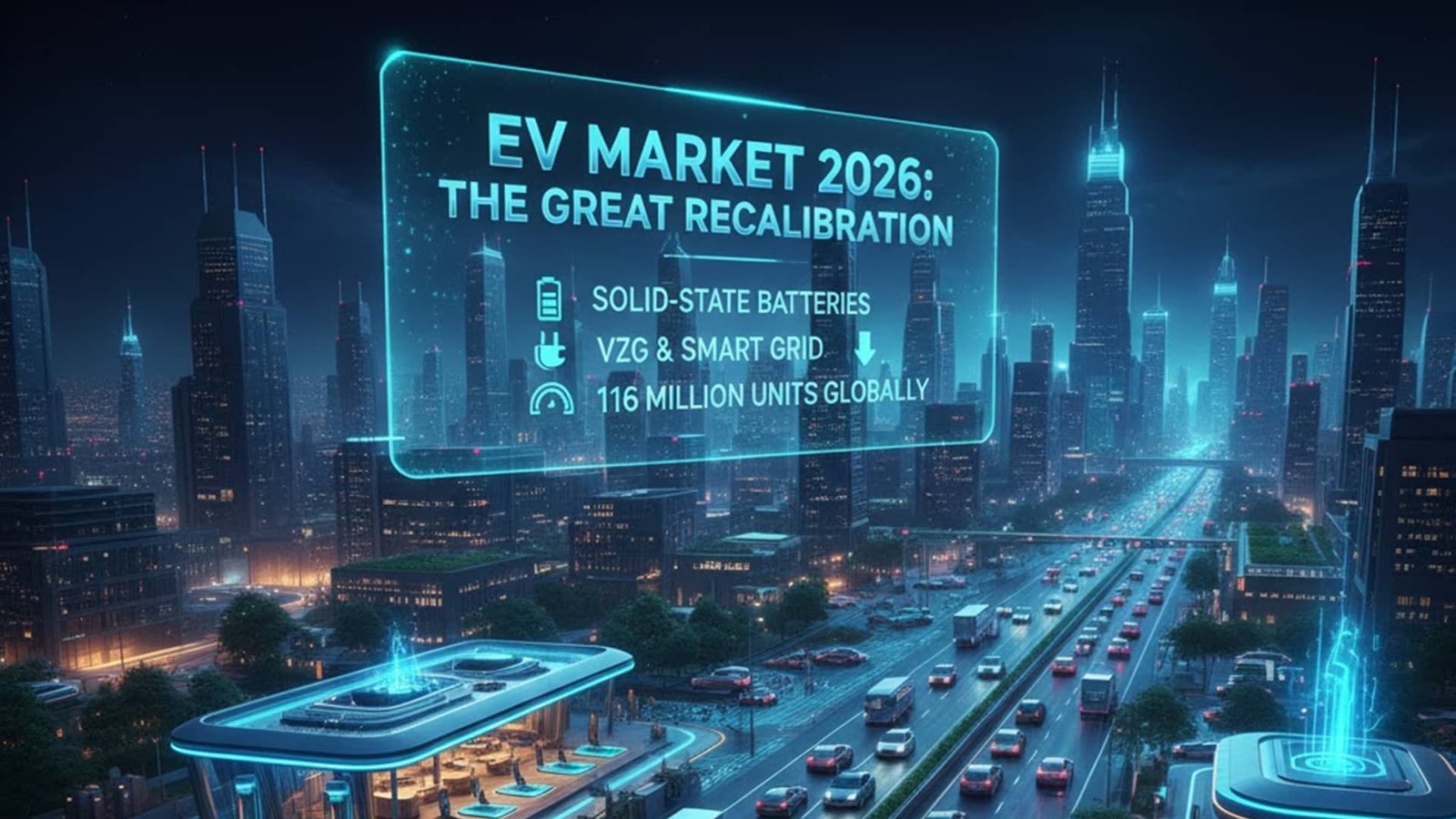
By the end of 2026, the global EV landscape will look vastly different. According to recent Gartner and BloombergNEF data, the “installed base” of EVs on the road is expected to cross 116 million units—a 30% jump in a single year.
However, the “gold rush” growth rates of 100% year-over-year are gone. We are entering a “disciplined growth” phase. In the U.S., the market is navigating a post-subsidy reality after the expiration of key federal tax credits in late 2025. Conversely, China continues to dominate, projected to account for over 60% of the global EV installed base by the end of 2026.
Global EV Market Outlook (2025 vs. 2026 Forecast)
| Metric | 2025 Estimate | 2026 Forecast | Key Driver |
| Global Sales (Units) | ~20 Million | ~21.3 Million | Affordable B-segment models |
| Market Share (Global) | 24% | 25% | 1 in 4 cars sold will be electric |
| New Models Available | ~850 | 1,000+ | Mainstream SUVs & Trucks |
| Used EV Sales Growth | Moderate | +47% | Massive influx of off-lease units |

2. The Rise of the “Second-Hand” Surge
Perhaps the most overlooked trend for 2026 is the Used EV explosion. For the first time, a massive wave of high-quality, low-mileage EVs (mostly 2022–2023 models) is hitting the wholesale market as three-year leases expire.
In 2026, the number of off-lease EVs is expected to jump by over 200%, reaching roughly 330,000 units in the U.S. alone. This is a game-changer for mass adoption:
- Price Parity: Used 3-year-old EVs are expected to hit price parity with ICE (internal combustion engine) equivalents.
- Battery Confidence: Most of these units still carry 5+ years of original battery warranty, alleviating “degradation anxiety” for second owners.
3. Technology 2.0: Beyond Lithium-Ion
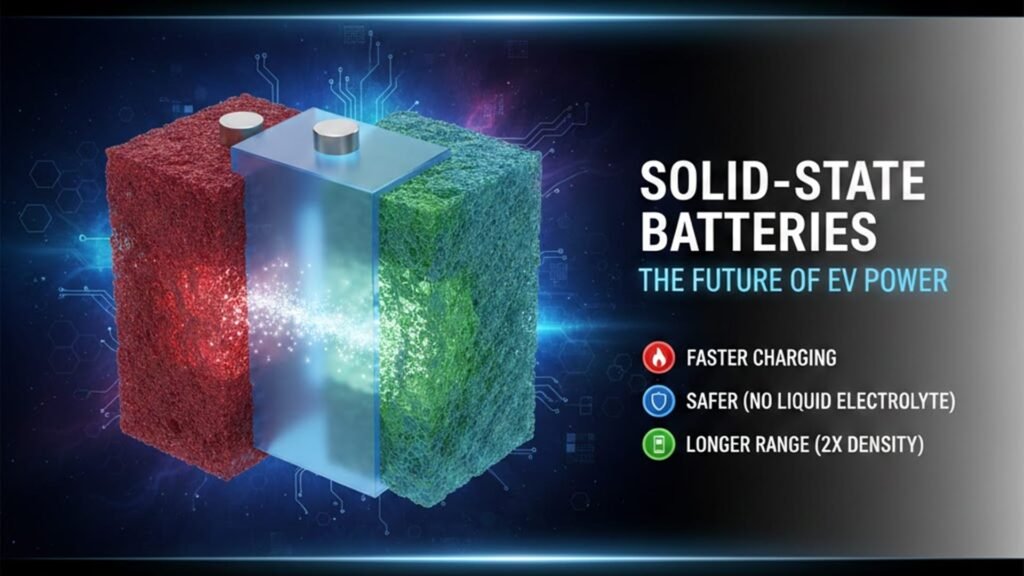
The year 2026 marks the official transition from laboratory “breakthroughs” to genuine commercial road-testing for Solid-State Batteries (SSBs).
While mass-market cars won’t be 100% solid-state by December 2026, the first commercial production lines are coming online. Chinese giants like SAIC Motor and Dongfeng have targeted late 2026 for their first solid-state-equipped models.
Simultaneously, we are seeing the “Software-Defined Vehicle” (SDV) mature. In 2026, features like Vehicle-to-Grid (V2G) and AI-driven energy management will move from luxury gimmicks to standard features, allowing owners to sell power back to the grid during peak hours—effectively turning the car into a revenue-generating asset.
4. Infrastructure: The “Amenity Hub” Era
Charging anxiety is being tackled not just with more chargers, but with better ones. By 2026, the focus has shifted from “range” to “uptime.”
- Wireless Charging: After years of pilot programs, premium brands (led by Porsche and Tesla) are expected to roll out inductive charging plates for home and luxury parking spaces.
- The “Oasis” Concept: Charging stations are evolving into rest hubs with cafes, high-speed WiFi, and actual amenities. CPOs (Charge Point Operators) have realized that if you have to wait 20 minutes, you’ll want a high-quality environment.
- Reliability Mandates: Government pressure in the EU and North America is forcing networks to guarantee 97%+ uptime, significantly reducing the “broken charger” lottery.
5. Strategic Advice: Should You Buy in 2026?
If you are evaluating an EV purchase in 2026, the decision-making framework has changed:
- Look for NACS Native: Ensure the vehicle uses the North American Charging Standard (NACS) natively to avoid the “dongle life.”
- Evaluate Used Options: Before buying new, check the off-lease inventory. You might find a 2023 luxury EV for the price of a 2026 economy ICE.
- Residual Value Matters: In 2026, “battery health certificates” will be the new Carfax. Don’t buy a used EV without a transparent, data-backed battery report.
Summary
The 2026 EV market isn’t a bubble—it’s a bedrock. The “recalibration” may feel slower than the frantic growth of the early 2020s, but it is far healthier. With 1,000+ models on the market and a booming secondary sector, the “electric future” is finally becoming a “practical present.”
Useful Links: