High-speed rail has revolutionized global transportation, blending cutting-edge engineering with the demands of modern mobility. In China, the Harmony (Hexie) series exemplifies this evolution, with six distinct models varying in design, tech platforms, and operational speeds—from the foundational CRH1 to the advanced CRH380. This diversity stems from China’s strategic approach in the early 2000s: absorbing foreign technologies through joint ventures to bootstrap its own industry amid rapid infrastructure growth.
Building a high-speed trainset is no small feat; it involves mastering aerodynamics, propulsion systems, safety protocols, and materials science, often costing billions in R&D and testing to ensure reliability at speeds over 300 km/h. As we survey the landscape in 2025, eight companies stand out as the titans driving this sector forward. Their innovations span continents, from record-breaking velocities to sustainable designs.
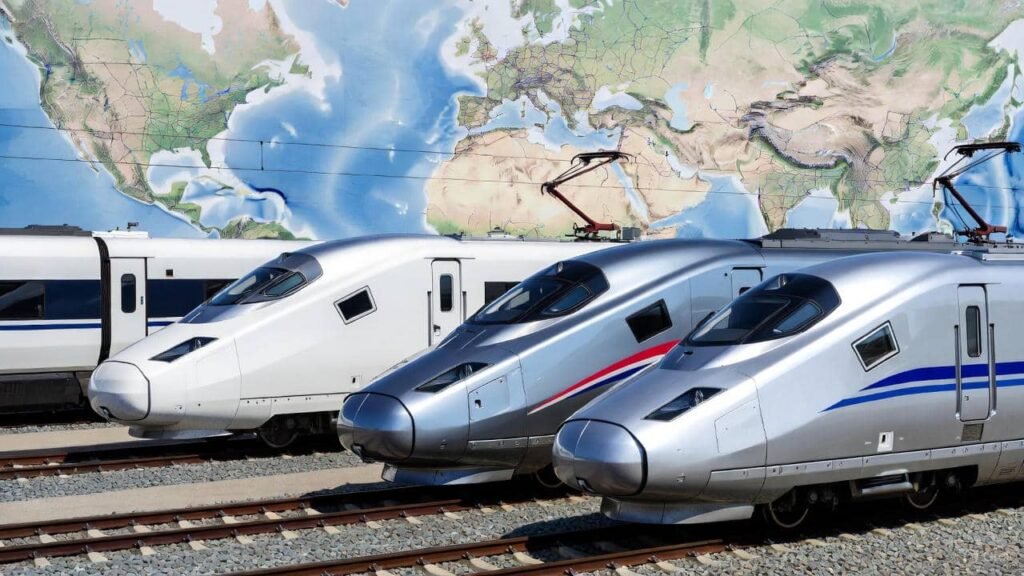
Drawing on decades of expertise, here’s a closer look at Top 10 High-Speed Rail Giant Companies, ranked by their influence, market reach, and technological prowess.
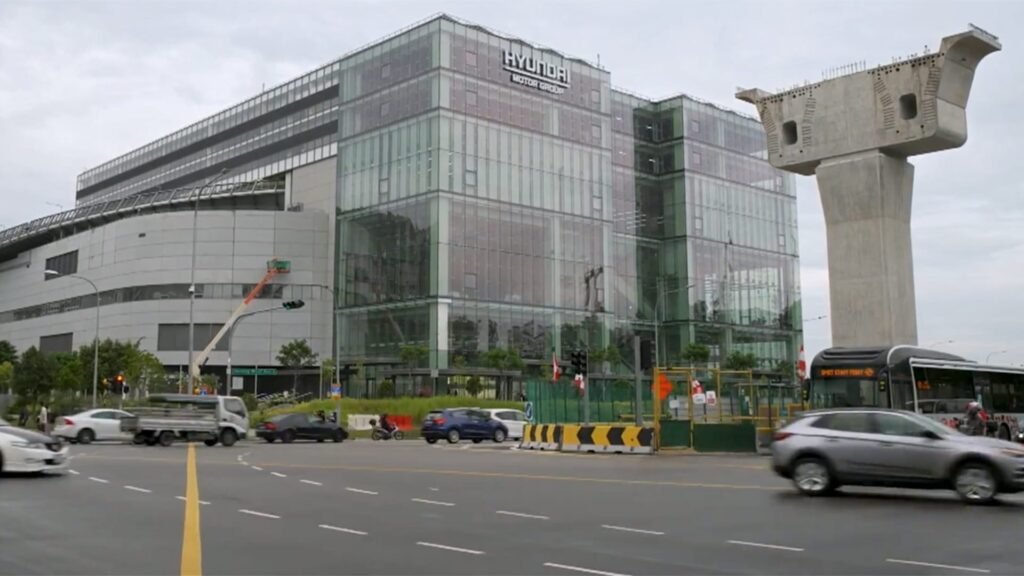
8. Hyundai Rotem (South Korea)
In a nation squeezed by geography, South Korea’s Hyundai Rotem has carved out a niche in high-speed rail since the KTX network launched in 2004, initially leveraging French TGV technology. By 2010, they rolled out the homegrown KTX-SanCheon, clocking 305 km/h and marking a shift toward independence.
Born from a 1999 merger of rail arms from Hanjin Heavy Industries, Daewoo Heavy, and Hyundai Precision, Rotem became a Hyundai Motor Group subsidiary after Daewoo’s dissolution—explaining how the world’s third-largest auto conglomerate extends into trains.
Today, Rotem’s focus on export and localization shines through; in 2025, they’re targeting 2 trillion won in railway sales for 2026, with deals like technology transfers to Vietnam’s THACO for metro and high-speed stock, and a contract with Morocco’s ONCF for network expansion. Their blend of automotive precision and rail innovation keeps them competitive, even if they’re not the fastest on the block.
7. Hitachi Rail Italy (Formerly AnsaldoBreda, Italy)
For Italy, AnsaldoBreda was akin to Siemens in Germany or Mitsubishi in Japan—a national powerhouse in rail. The 2001 merger of Ansaldo and Breda birthed the ETR 500, the famed Frecciarossa (Red Arrow) that zipped across the peninsula.
Teaming with Bombardier in 2013, they unleashed the ETR 1000, breaching 400 km/h in tests. By 2015, Japan’s Hitachi acquired the firm, turning it into their European base. Fast-forward to 2025, and Hitachi Rail Italy is thriving with the next-gen ETR 1000, certified for 360 km/h but running at 300 km/h commercially, debuting on routes like Milan to Rome. This evolution highlights how acquisitions fuel global synergy, with Italian design flair meeting Japanese reliability in projects from Honolulu’s Skyline to UK intercity upgrades.
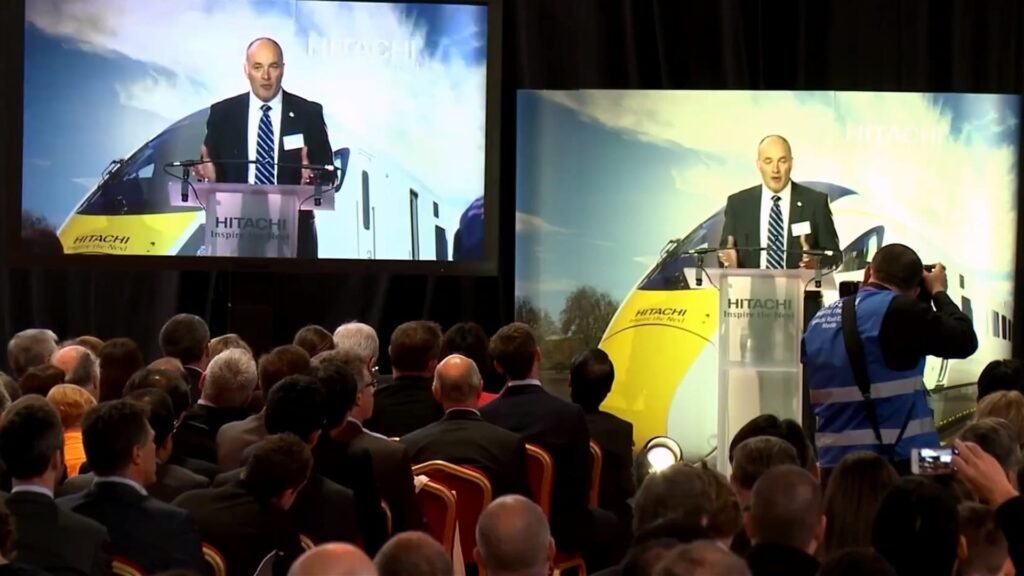
6. Siemens Mobility (Germany)
Siemens isn’t just a player; it’s the architect of electrified rail dominance. Their ICE 3 series has been a cornerstone, influencing designs in the UK, Spain, Turkey, and China’s CRH3, where test runs hit 394 km/h on the Beijing-Tianjin line. With roots in 19th-century innovation, Siemens excels in holistic systems—from trains to signaling.
In 2025, they’re making waves with the Velaro platform unveiled in Egypt at TransMEA, part of a 2,000 km network featuring 41 high-speed units at 250 km/h. UK contracts for HS2 infrastructure and awards like the Schaeffler Supplier honor for Velaro Novo bearings (testing at 405 km/h) underscore their edge. It’s this end-to-end expertise that cements Siemens as a go-to for complex, high-stakes projects.
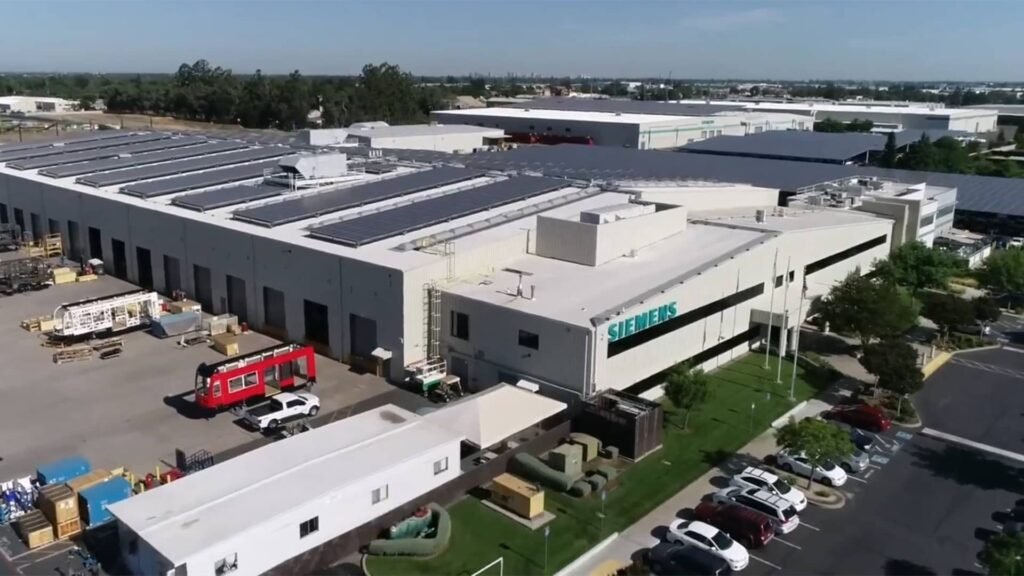
5. Kawasaki Heavy Industries (Japan)
Japan’s Shinkansen, the world’s first commercial high-speed system in 1964, owes much to Kawasaki. Founded in 1896, they dove into rail after building submarines in 1906, co-contracting the original 0 Series at 210 km/h on the 515 km Tokaido line.
Their 2004 tech transfer to China—yielding below-250 km/h know-how amid Siemens negotiations—sparked global ripple effects. In 2025, Kawasaki’s rail arm focuses on urban and export wins, like NYC Transit’s order for 378 new subway cars assembled in Yonkers, emphasizing safety and efficiency. While not solely HSR, their joint work on Shinkansen’s E7/W7 series with Hitachi keeps them vital, blending seismic resilience with speed in earthquake-prone terrain.
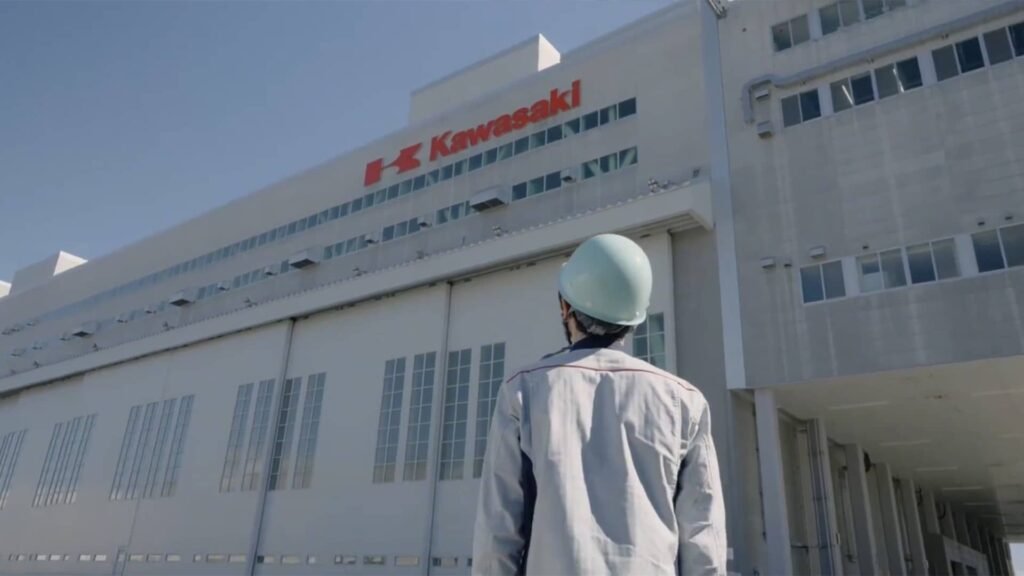
4. Hitachi Rail (Japan)
Slightly outpacing Kawasaki, Hitachi boasts a stronger international footprint. Integral to Shinkansen since the ’60s, they’re behind the L0 maglev’s 603 km/h record in 2015—the fastest ever.
With factories in the UK and now a 2025-opened digital plant in Maryland for North American railcars, Hitachi’s reach is unmatched. Their 2025 Google Cloud partnership accelerates digital signaling, while the ETR 1000 upgrade in Italy pushes boundaries. Acquiring AnsaldoBreda amplified their portfolio, making Hitachi a leader in maglev and conventional HSR, from Taiwan’s metro revamps to Abu Dhabi’s Global Rail showcases.
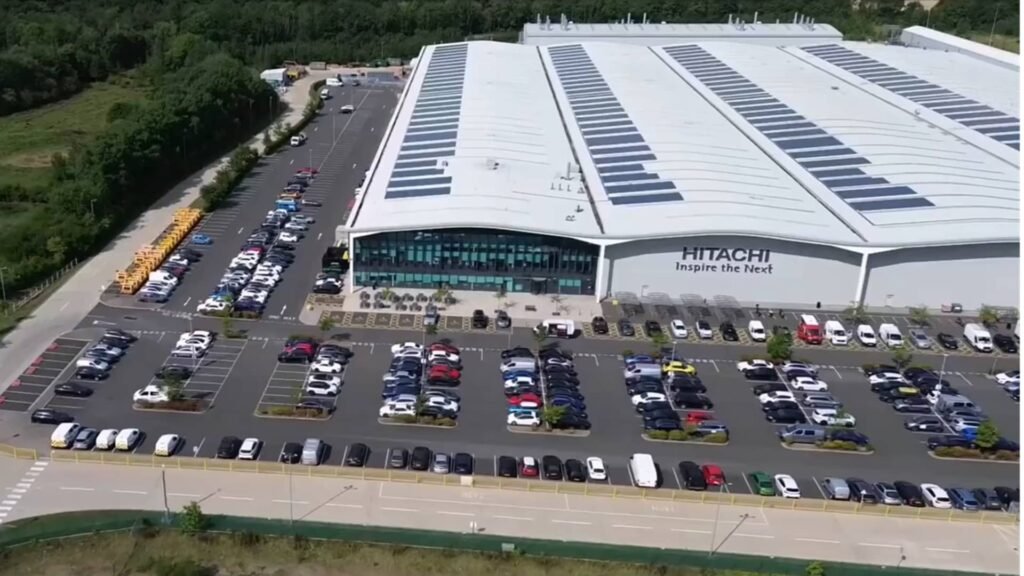
3. Alstom (Formerly Including Bombardier Transportation, Canada)
Canada lacks domestic HSR, yet Bombardier was once a rail juggernaut, mastering everything from monorails to the Zefiro platform—co-developed with AnsaldoBreda for Italy’s ETR 1000 and China’s CRH380D at 350 km/h.
Their tech ecosystem was world-class, but competition from Siemens and Alstom led to a 2020 sale for $8.4 billion. Fully integrated by 2025 under Alstom’s AiM strategy, this merger has bolstered sustainability efforts, earning CDP’s top climate rating and a Red Dot Award for the Avelia Stream Nordic. Now focused on aviation as a top civil aircraft maker, Bombardier’s legacy lives in Alstom’s expanded lineup, including U.S. Avelia Liberty trains.
2. Alstom (France)
Even after GE carved off its power division, Alstom’s rail segment reigns supreme. Their tech birthed locomotives like China’s Harmony 2, Korea’s 8000, and others worldwide.
The TGV series built France’s network, with a modified unit hitting 574 km/h in 2007—the wheel-rail record. Latest is the AGV (Pegasus), at 360 km/h, used by Italy’s NTV. In 2025, Alstom’s momentum includes €3 billion in orders, UIC Congress participation, and UK fleet upgrades worth £100 million. Post-Bombardier integration, they’re pushing green innovations like hydrogen trains, solidifying their No. 2 spot.
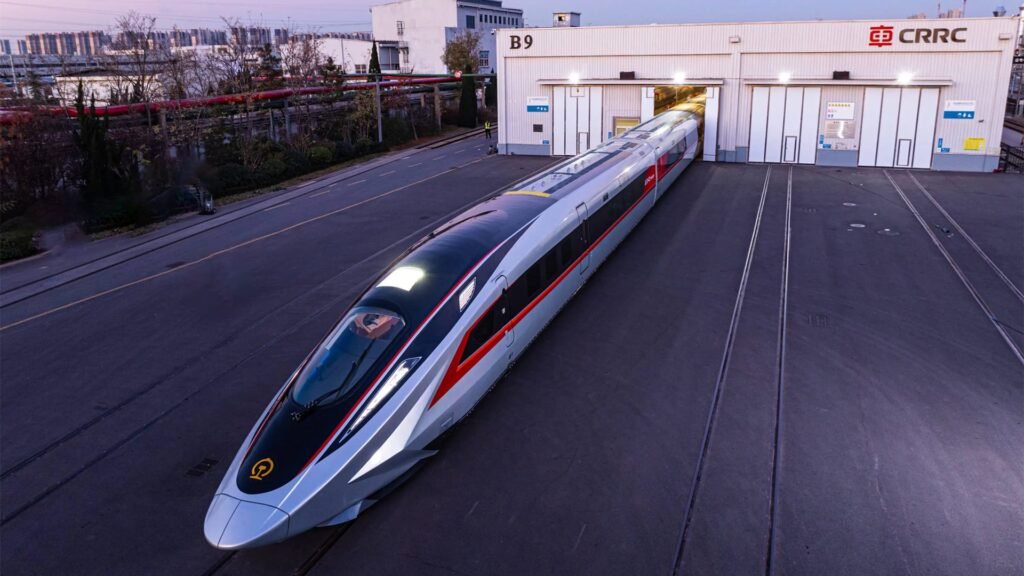
1. CRRC Corporation (China)
CRRC, merged from North and South China Rail in 2015, encompasses legends like Qingdao Sifang and Tangshan Locomotive.
China’s HSR quest started in the ’90s but ignited in 2004 under Liu Zhijun’s market-for-tech push: CRH1 from Bombardier, CRH2 from Kawasaki/Hitachi/Mitsubishi (Shinkansen’s second export), CRH3 from Siemens, CRH5 from Alstom. Localizing these birthed the autonomous Fuxing (CR) series, first for mass 350 km/h ops.
By 2025, CRRC dominates with over 45,000 km of track, unveiling the 400 km/h CR450 at CIIE and showcasing 22 trains at the High-Speed Rail Congress. Exports to Kazakhstan and AI integrations position them as the undisputed king, outscaling rivals.
Rank List
| Rank | Company (English Name) | Country/Region | Flagship High-Speed Trainset / Platform | Highest Test / Operational Speed (km/h) | Key Notes |
|---|---|---|---|---|---|
| 1 | CRRC Corporation Limited | China | Fuxing (CR400AF/BF), CR450 | 450 (test) / 350 (commercial) | World’s largest HSR manufacturer and network operator; fully localized after absorbing tech from four foreign partners |
| 2 | Alstom | France | TGV series, AGV (Pegasus), Avelia Horizon | 574.8 (world wheel-rail record, 2007) / 360 | Acquired Bombardier Transportation in 2020; now the largest rolling-stock maker in Europe |
| 3 | Hitachi Rail | Japan | Shinkansen E7/W7, L0 maglev, ETR 1000 (Italy) | 603 (maglev record, 2015) / 400+ | Acquired AnsaldoBreda in 2015; leads global maglev development and European high-speed projects |
| 4 | Kawasaki Heavy Industries | Japan | Shinkansen N700S, E7 series, CRH2 technology base | 443 (test) / 320–350 (commercial) | First to transfer sub-250 km/h technology to China in 2004, forcing Siemens to lower its price |
| 5 | Siemens Mobility | Germany | Velaro family (ICE 3, CRH3 base), Velaro Novo | 403 (commercial certification) / 394 (China test) | Unmatched expertise in electrification and signaling; technology source for China’s CRH3 |
| 6 | Hyundai Rotem | South Korea | KTX-Sancheon, KTX-Eum, HEMU-430X prototype | 421 (test) / 305 (commercial) | South Korea’s first fully indigenous high-speed train; subsidiary of Hyundai Motor Group |
| 7 | Hitachi Rail Italy (formerly AnsaldoBreda) | Italy (owned by Hitachi, Japan) | ETR 500 Frecciarossa, ETR 1000 (Frecciarossa 1000) | 400+ (test) / 360 (certified) | Acquired by Hitachi in 2015; now Hitachi’s primary high-speed production hub in Europe |
| 8 | Bombardier Transportation (now part of Alstom) | Canada (now under Alstom, France) | Zefiro platform, CRH380D, ETR 1000 (co-developed) | 380+ (test) / 350 (commercial) | Sold to Alstom in 2020 for US$8.4 billion; Zefiro technology now shared between Alstom and Hitachi |
While outliers like Spain’s CAF (250 km/h max), Russia’s Uralvagonzavod (Vostok prototypes due soon), U.S. GE (no HSR due to infrastructure gaps), and Japan’s Mitsubishi (components-focused) merit nods, these eight define the era. CRRC’s ascent proves how strategic absorption and scale can crown a leader in this high-stakes field. As sustainability and digitization accelerate, watch these giants reshape travel.