The marketing pitch for Electric Vehicles (EVs) is simple: “Say goodbye to gas stations.” While that’s technically true, power isn’t free. For many prospective buyers, the complexity of electricity billing—kilowatt-hours, time-of-use rates, and Level 2 installation costs—creates a “black box” of uncertainty.
If you’re trying to calculate your actual monthly overhead before signing a lease, you need to look past the anecdotal “I only pay $30 a month” stories. Real-world home charging costs are a variable equation of your local utility rates, the efficiency of your vehicle’s onboard charger, and the upfront “infrastructure tax” of setting up your garage.
As an analyst focused on automotive energy consumption, I’ve broken down the forensic costs of refueling at home in 2025. Here is the math you need to know.
1. The “Fuel” Math: Understanding the Kilowatt-Hour (kWh)
In the internal combustion world, we track dollars per gallon. In the EV world, we track cents per kilowatt-hour (kWh).
The average U.S. household pays approximately 16 to 18 cents per kWh, but this is highly regional. In Washington state, you might pay 11 cents; in California or Massachusetts, you could be staring at 35 cents or more.
The Calculation:
To find your cost per “tank,” look up your car’s battery capacity (e.g., a Tesla Model Y has a ~75 kWh battery).
75 kWh x $0.16 (avg rate) = $12.00 for a “full” charge.
However, you have to account for charging loss. No charger is 100% efficient; roughly 10% to 15% of the electricity pulled from your wall is lost as heat during the conversion from AC to DC. Therefore, that $12.00 charge actually costs you closer to $13.80.
2. Upfront Infrastructure: The Installation “Tax”
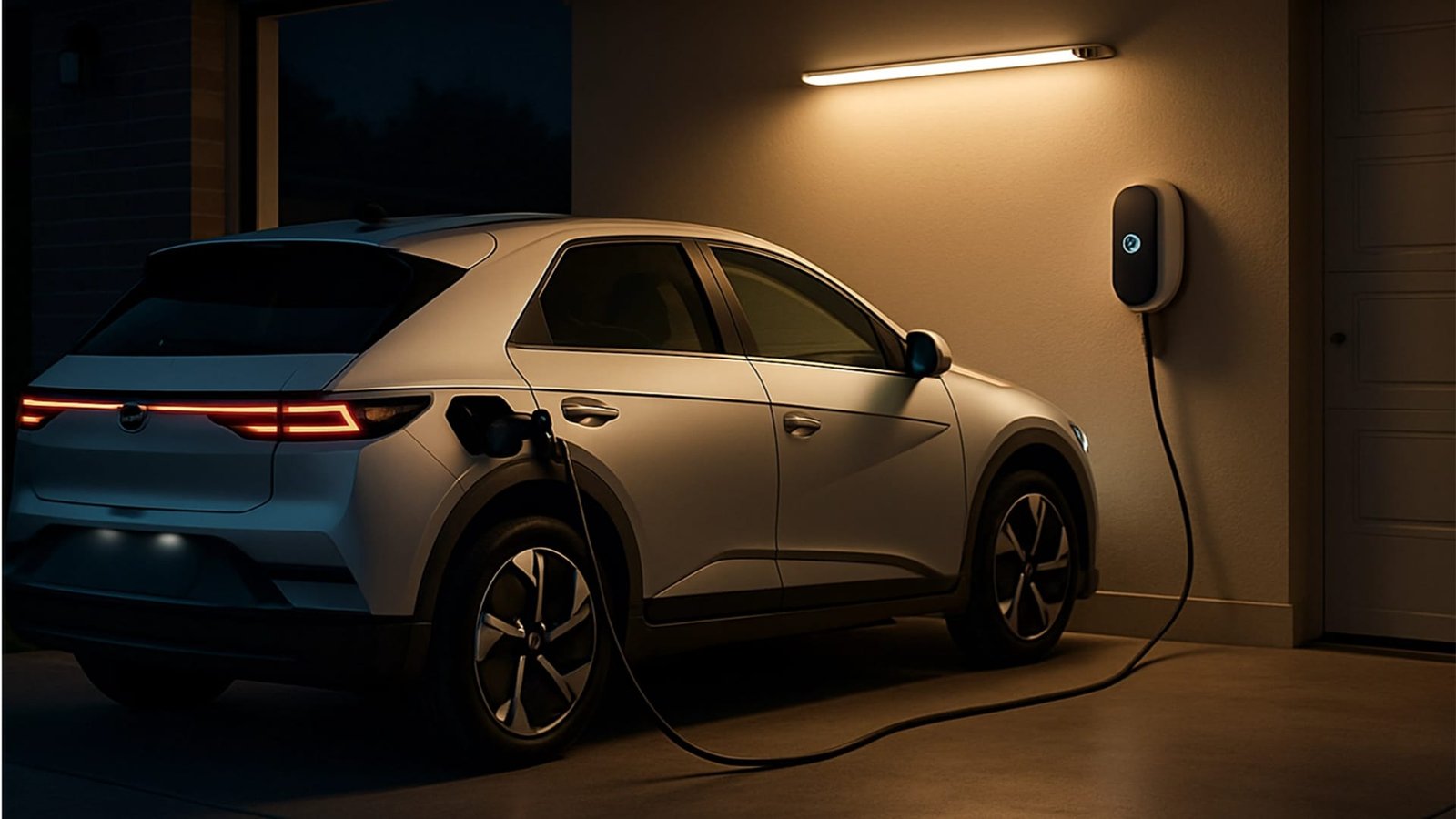
Unless you are content with “Level 1” charging (plugging into a standard 120V outlet, which adds a dismal 3–4 miles of range per hour), you will need a Level 2 (240V) setup.
This is where many buyers face “sticker shock.” The cost isn’t just the charger itself; it’s the electrical work required to support it.
- The Hardware: A high-quality UL-listed home charger (like a Wallbox, Emporia, or Tesla Universal Wall Connector) runs between $450 and $700.
- The Labor: If your electrical panel is in the garage and has room for a 50-amp breaker, an electrician might charge $500 to $800.
- The “Old House” Penalty: If your home needs a panel upgrade (moving from 100-amp to 200-amp service) to handle the EV load, expect to pay $2,500 to $4,500.
3. Regional Cost Comparison: Gas vs. Electricity
To see the “win,” we have to compare the EV home-charging cost to a comparable gas vehicle achieving 30 MPG with gas at $3.50/gallon.
| Region | Avg. Elec Rate (per kWh) | Cost to Drive 1,000 Miles (EV) | Cost to Drive 1,000 Miles (Gas) | Monthly Savings |
| National Average | $0.17 | ~$51.00 | ~$116.00 | $65.00 |
| Low Cost (WA/TN) | $0.11 | ~$33.00 | ~$116.00 | $83.00 |
| High Cost (CA/CT) | $0.34 | ~$102.00 | ~$160.00* | $58.00 |
*Assumes higher gas prices in high-cost electricity regions.
4. Gaming the System: Time-of-Use (TOU) Rates
The “pro move” for EV owners is switching to a Time-of-Use (TOU) plan with their utility provider.
Utilities want you to charge when the grid is dormant (usually 11 PM to 6 AM). Under a TOU plan, your daytime rate might go up slightly, but your “super off-peak” nighttime rate could drop to as low as 4 or 5 cents per kWh.
Under these conditions, charging that 75 kWh Tesla Model Y costs about $3.75. At that point, your “fuel” cost is essentially negligible compared to any other household expense.
5. The Hidden Variable: Temperature and Efficiency
Just like gas cars get worse mileage in the winter, EVs become less efficient in the cold.
- Winter Reality: In sub-freezing temperatures, an EV might use 30% more energy to travel the same distance due to battery heating and cabin climate control.
- The Cost Impact: If you live in a cold climate, your home charging bill will likely rise by 25–30% during the winter months, even if your driving habits remain identical.
Expert Recommendation: Is It Worth It?
If you can charge at home, the answer is almost always a resounding yes. While the upfront $1,000–$2,000 for a Level 2 installation feels steep, the “payback period” is typically 18 to 24 months based on fuel savings alone.
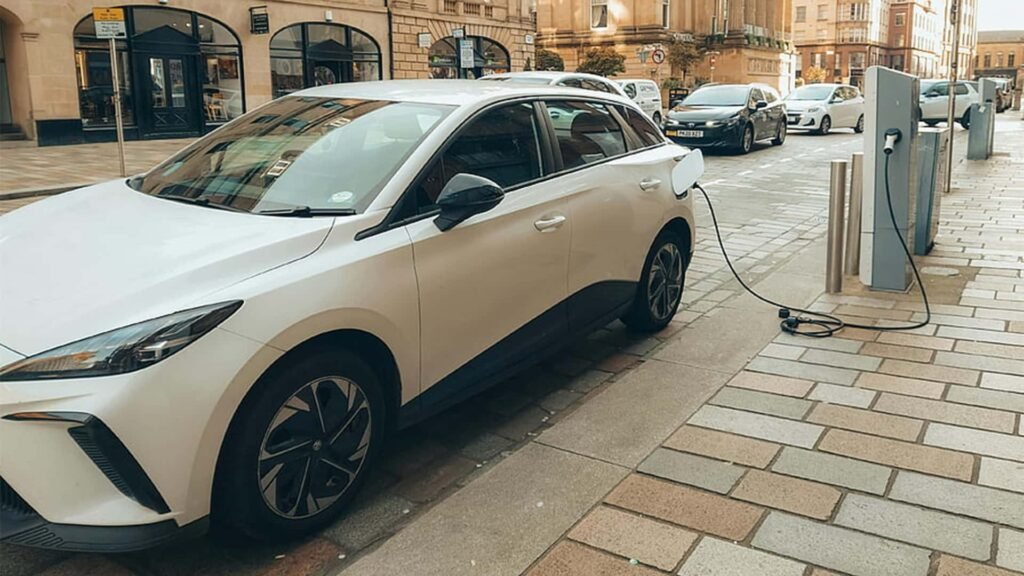
The “Do Not Buy” Warning: If you cannot charge at home and must rely on public DC Fast Chargers (Tesla Superchargers, Electrify America), the economics flip. Public charging often costs 40 to 60 cents per kWh—at which point an EV is actually more expensive to fuel than a high-efficiency hybrid like a Toyota Prius.
Professional Checklist Before You Buy:
- Audit your Panel: Do you have two open slots for a 240V breaker?
- Call your Utility: Ask if they offer an “EV Rebate” for charger installation or a TOU rate plan.
- Check for Credits: The federal government and many states offer a 30% tax credit (up to $1,000) for home charger hardware and installation.
Useful Links: