For decades, the global market has repeated a simple truth: Japanese cars may not always be the flashiest, but they are unbelievably durable. They start every morning, survive abuse, seldom overheat, and often outlive their owners. Yet few consumers ever understand why. The secret is not marketing, nor mystical engineering philosophies—it is Japan’s industrial ecosystem, a network of extraordinarily advanced suppliers whose craftsmanship defines the country’s automotive identity.
Behind Toyota, Honda, and Nissan stands a deep manufacturing bench: precision machinery, specialty metals, optics-grade production tolerances, and century-old expertise in materials science. These firms rarely appear on dealership brochures, but their fingerprints are on every dependable Japanese vehicle. Below is an in-depth look at the Japan Top 10 Hidden Automotive Giants that quietly make Japanese cars the benchmark of durability.
1. Denso – Japan’s Doctor of Reliability
Denso is the world’s second-largest automotive component manufacturer, but within Japan, it is revered as the “Doctor of the East.”
When a car’s starter motor, alternator, radiator, AC compressor, ignition coil, instrument cluster, and countless sensors all carry the same name, consistency and reliability cease to be marketing slogans—they become engineering outcomes.
Denso’s components are engineered for long thermal cycles, high-load environments, and decade-scale durability. Many Toyota engines known for “running forever” owe their resilience to Denso’s electrical and thermal-management systems.

2. JTEKT – The Steering and Machining Powerhouse
Formed from Koyo Seiko and Toyota’s machine-tool division, JTEKT is the world leader in steering systems and a major force in precision bearings.
Audi’s A8 uses JTEKT bearings.
The legendary Torsen differential in the Audi Q5? JTEKT.
Toyota’s engine machining equipment? Also JTEKT.
In 1988, it pioneered electric power steering, now used by Toyota, Nissan, BMW, Mercedes-Benz, and countless others. Beyond steering, JTEKT is also Japan’s sixth-largest machine-tool manufacturer—its equipment literally machines Toyota engines. Reliability, in this sense, is built from the machinery itself.
3. Nippon Steel – The World’s Premier Automotive Steel Supplier
When industry analysts say “Japan leads in metallurgy,” they are largely referring to Nippon Steel, the world’s No.1 steelmaker by technology sophistication.
Its cold-rolled steel sheets deliver world-leading strength, uniformity, and corrosion resistance.
The company supplies the majority of high-strength structural steel used in Japanese cars, from impact beams to transmission housings.
Even more impressive is its role in non-oriented electrical steel, the core material for electric-motor performance. Nippon Steel co-developed several grades with Toyota, directly shaping Japan’s EV competitiveness.
4. KYB – The Global Shock-Absorber Standard
Around 60% of a vehicle’s ride comfort and vibration control depends on its shock absorbers. KYB, Japan’s largest manufacturer, supplies almost every brand visible on the road—including Toyota, Honda, Nissan, Mitsubishi, BMW, Audi, Volkswagen, and Ford.
KYB is known for hydraulic precision, long service life, and minimal fade over years of heat cycling. The company also applies its expertise to seismic dampers used in Japanese architecture—an indicator of just how refined its hydraulic technology is.

5. Amada, Aida & Komatsu – Japan’s Sheet-Metal Triumvirate
Automotive body accuracy begins with the machine tools that stamp, cut, and press steel.
- Amada is Japan’s largest sheet-metal cutting machinery supplier.
- Aida is the heavyweight of metal-forming presses.
- Komatsu is a global industrial giant known for extremely durable stamping systems.
The precision of these machines—down to micron-level tolerances—ensures that Toyota and Honda body panels fit seamlessly and resist long-term deformation. Structural quality, often overlooked by the public, starts with these three names.

6. Aisin – The King of Transmissions
Aisin, a Toyota-controlled company, is the world’s second-largest transmission maker, right behind ZF. Its automatic transmissions are legendary: durable, heat-resistant, and known for buttery smoothness even after hundreds of thousands of kilometers.
The Mazda6’s famously fast-shifting AT?
An Aisin design.
Aisin perfected full-range lock-up torque-converter systems, combining the robustness of AT gearsets with the efficiency of manual transmissions. Today, Aisin remains the primary supplier of Toyota’s hybrid e-CVT systems—arguably the most reliable hybrid transmissions in the world.
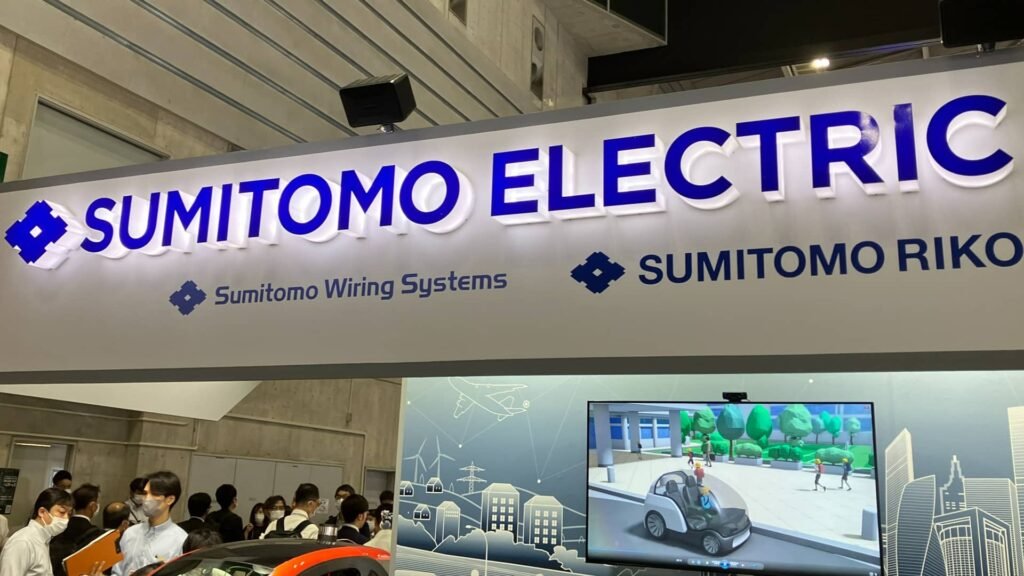
7. Sumitomo Electric – The Gold Standard of Wiring Harnesses
A car contains 20 kilograms or more of wiring. The durability of those cables defines the vehicle’s long-term safety. Electrical fires caused by overheating or short circuits often stem from poor wire quality—but not in Japanese cars.
Sumitomo Electric, part of the historic Sumitomo industrial group, produces some of the world’s most reliable wiring harnesses. Beginning with copper-wire production in the 1800s, expanding to telecom cables in 1909, and pioneering optical-fiber production in 1974, Sumitomo now supplies the automotive industry’s highest-grade conductive materials.
Their harnesses are engineered to resist temperature extremes, oxidation, and mechanical fatigue—key reasons why Japanese cars rarely suffer from wiring failures.
8. YKK – Precision Fasteners Beyond Zippers
YKK is famous worldwide for zippers, producing over 3 million kilometers of them annually. But the company is also one of Japan’s five major automotive fastener suppliers.
Its bolts, nuts, clips, and interior buttons adhere to standards far above typical automotive requirements.
The result: threads that don’t rust, bolts that maintain torque over time, and switches that still feel crisp after a decade of use.
Something as small as a bolt may seem trivial, yet reliability is a chain—one weak link, and the system breaks. YKK ensures there are no weak links.

9. IHI – The Turbocharger Master
Japan famously avoided small turbo engines for many years, yet its turbocharger technology is among the world’s elite.
IHI (Ishikawajima-Harima Heavy Industries) supplies turbochargers to Toyota, Mazda, Volkswagen, and even Bugatti.
Yes—the quad-turbo W16 in the Bugatti Veyron uses IHI turbos.
Producing a turbine that spins at over 150,000 rpm for years without catastrophic failure is a materials-science challenge of the highest order. Japan’s machining precision and heat-resistant alloys make IHI turbos the gold standard of reliability under extreme load.

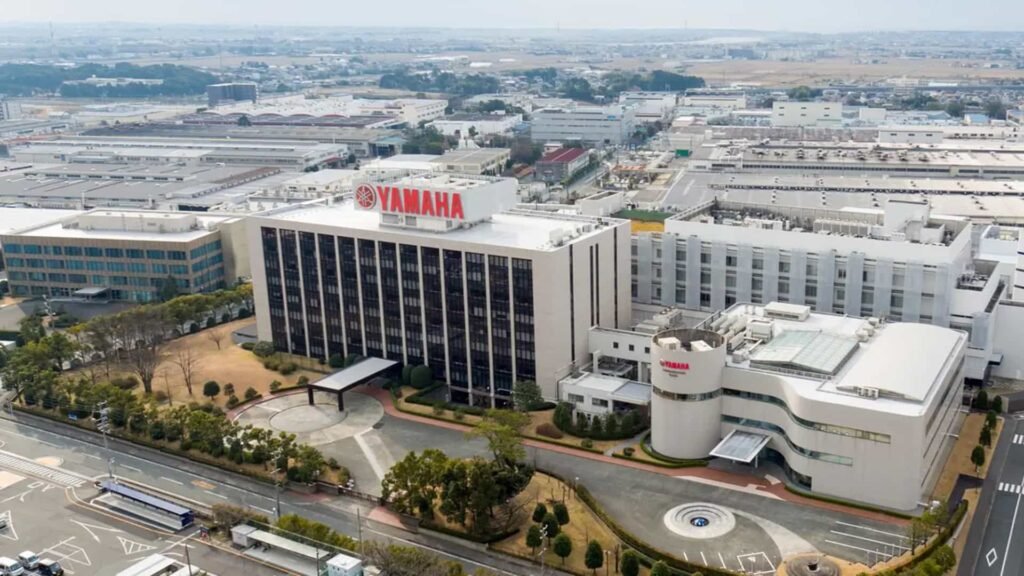
10. Yamaha – The Quiet Engine Whisperer
Yamaha doesn’t make cars, but its fingerprints are on many of Japan’s finest engines. The company is renowned for cylinder-head design, camshaft engineering, and high-performance casting technology.
Toyota has repeatedly partnered with Yamaha to develop performance engines—many used by TRD.
Even entry-level Yamaha scooters use all-aluminum ceramic-coated cylinders and forged pistons, illustrating their engineering depth.
From intake acoustics to combustion dynamics, Yamaha’s engine expertise significantly elevates Japanese performance engineering.
Reliability Is Not Luck—It Is Infrastructure
The world often praises Japanese cars for their durability without understanding the deep industrial framework behind them. Reliability is not a feature; it is an ecosystem. It is centuries of metallurgy, decades of machine-tool refinement, and supplier networks built on precision, discipline, and long-term engineering philosophy.
These Top 10 Hidden Giants form the backbone of Japan’s automotive dominance. They are the reason Toyota engines last half a million kilometers, why Honda transmissions shift smoothly after 10 years, and why Japanese body panels resist aging even in harsh climates.
In the end, the secret behind Japanese automotive reliability isn’t magic.
It is manufacturing excellence—layered, interconnected, and unmatched.