
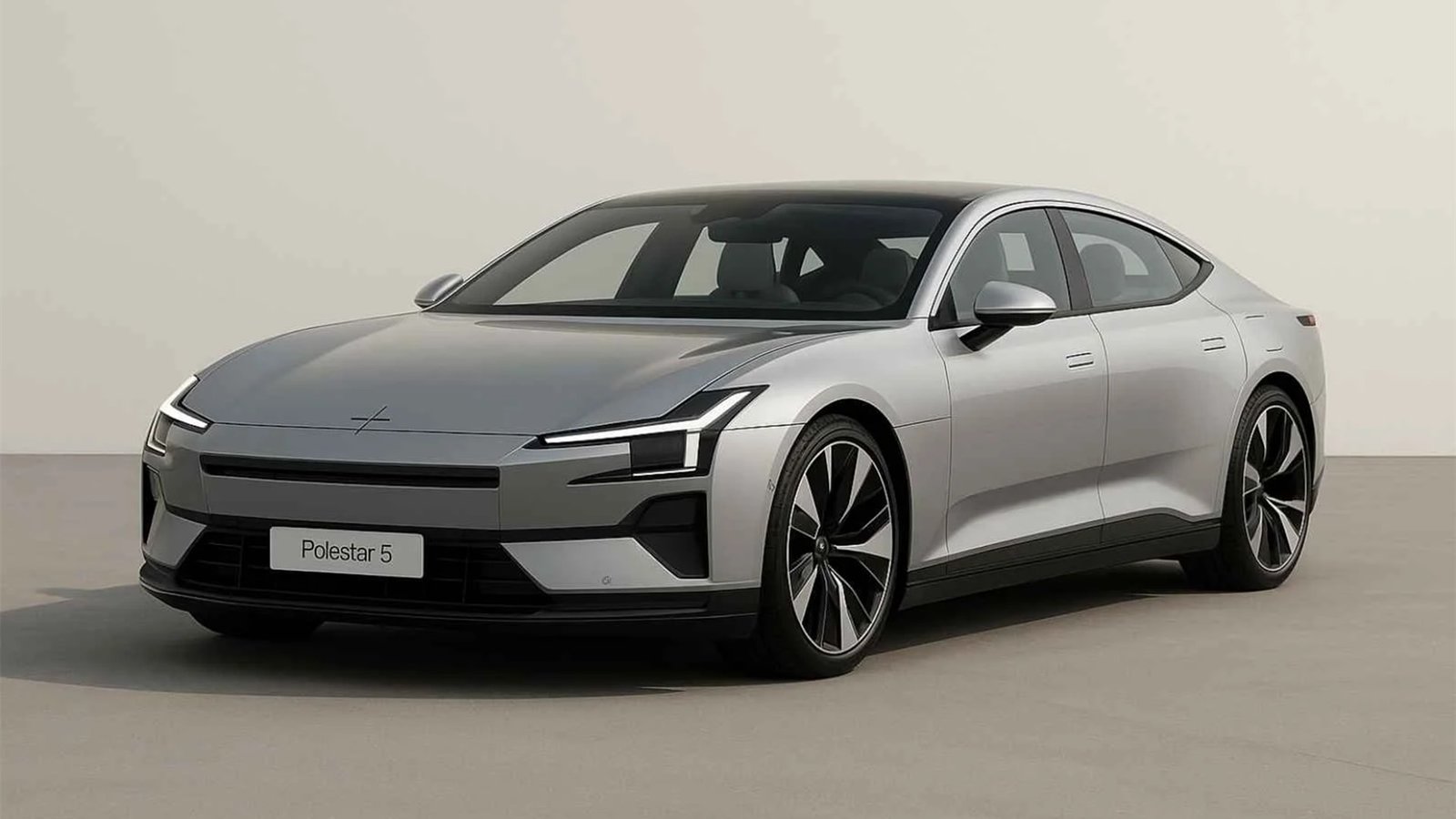
The Polestar 5 is Polestar’s halo grand-tourer: a four-door electric GT engineered around a bonded-aluminium performance architecture and an 800-volt electrical system that delivers supercar-class stiffness, fast charging and class-leading range for a vehicle of its power level. Offered in dual-motor and high-output Performance variants, the 5 is intended to close the gap to rivals such as the Porsche Taycan and Audi e-tron GT while emphasising sustainable materials and lightweight engineering.
Polestar 5 strategy and brand signal
Polestar has positioned the 5 as the company’s technical showcase and credibility builder. Rather than a volume play, it’s a halo car designed to demonstrate Polestar’s in-house motor and chassis engineering, to validate bonded aluminium manufacturing, and to pull brand perception toward high-performance electrified GTs. The vehicle’s materials strategy—high fractions of recycled metals and natural-fiber composites—equally signals Polestar’s sustainability positioning as a premium differentiator.
Key specifications — what to quote in comparisons (manufacturer / press figures)
- Platform: Polestar Performance Architecture (bonded aluminium unibody).
- Battery: 112-kWh nominal pack with ~106 kWh usable (NMC chemistry) and 800-V architecture; supports very high DC-charging rates.
- Power (Launch variants): Dual-Motor Launch Edition ≈ 748 hp (reported), Performance Launch Edition up to ~871–884 hp depending on source.
- Acceleration: 0–100 km/h (0–62 mph) from ~3.2–3.9 s depending on spec.
- Range (WLTP reported): up to ~678 km (WLTP) / press figures giving ~416 mi for certain WLTP numbers; EPA estimates and real-world numbers will vary by wheel choice and spec.
- Charging: 800-V architecture with peak charging rates reported near 350 kW, enabling rapid 10→80% sessions in roughly 20–30 minutes under ideal conditions.
Design & aerodynamics — GT proportions, rear treatment and the no-rear-window solution
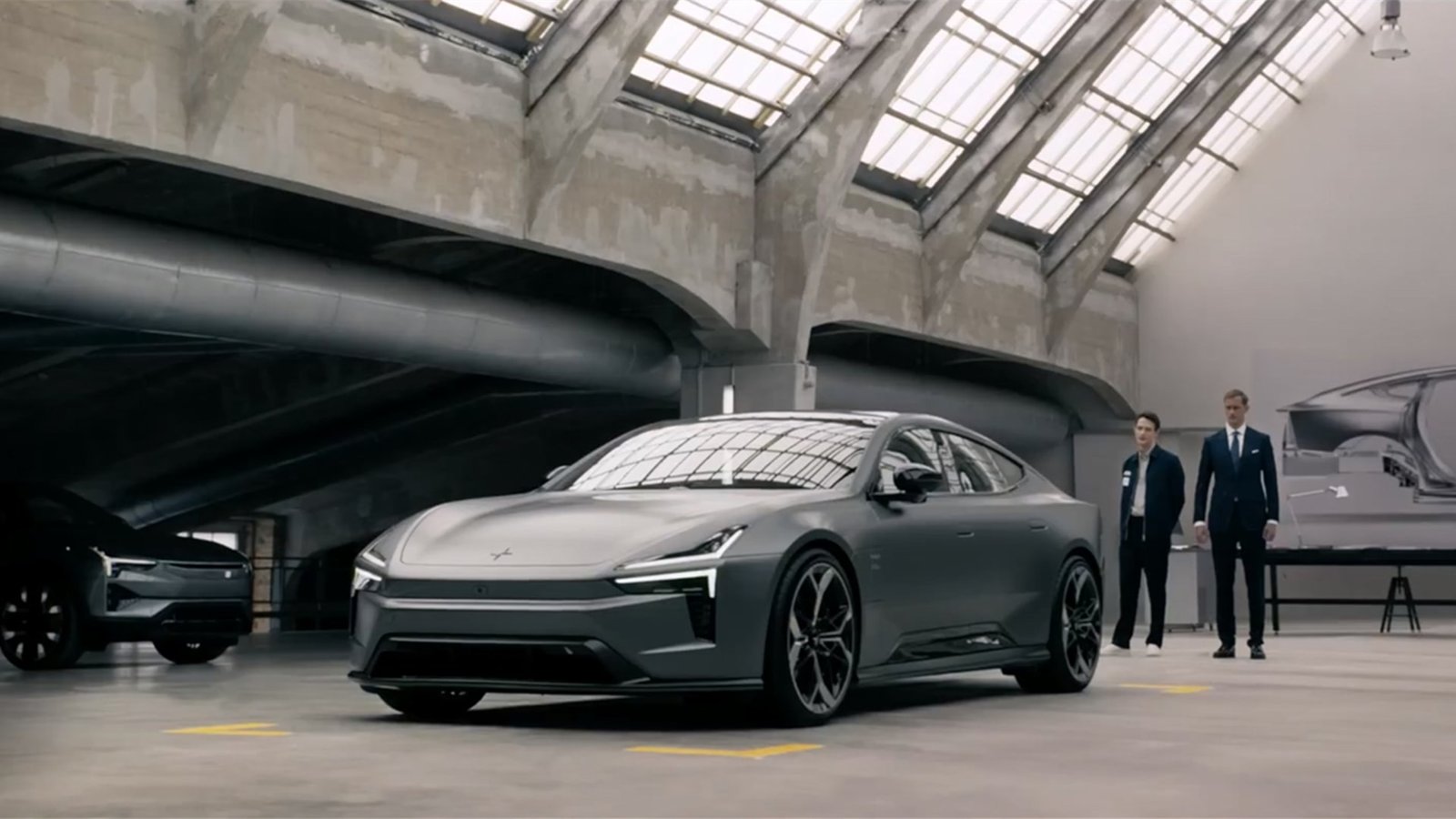
Polestar developed the 5 as a low-slung grand tourer: a long wheelbase, low roof, and wide track yield classic GT proportions tuned for high-speed stability. Notable exterior features include a sharply contoured roofline and a rear treatment that emphasises aerodynamics; Polestar has even adopted a camera-based rear vision solution in some versions in lieu of a traditional rear windscreen, prioritising form and trunk packaging over conventional sightlines. These choices trade some rear-visibility convention for cleaner airflow and a stronger design identity.

Architecture & materials — bonded aluminium and lightweight fidelity
The Polestar Performance Architecture is a bonded and cured aluminium structure developed to deliver high torsional stiffness with lower mass than equivalent steel bodies. That engineering choice enables sharper handling (less flex under load), better NVH isolation for a luxury GT, and compliance with Polestar’s sustainability brief because aluminium can be sourced from renewable-energy smelters and recycled feedstock. The chassis is paired with bespoke motor and inverter hardware developed in-house (PX2 permanent-magnet motors), underscoring Polestar’s move from badge-engineering toward original powertrain systems.
Battery, charging and thermal management — technical implications for range and longevity
- Pack chemistry & usable capacity: The large 112-kWh pack (≈106 kWh usable in some reports) uses NMC chemistry tuned for energy density and fast charging. A larger usable capacity paired with efficient aerodynamics drives the high WLTP range figures Polestar quotes.
- 800-volt architecture: Advantages include higher power charging with lower current (reduced thermal stress on cables and onboard systems), enabling peak rates up to ~350 kW on compatible chargers and shorter long-distance stop times. Proper thermal systems maintain charge acceptance rates during repeated fast-charge cycles.
- Owner takeaway: If you use frequent fast-charging, the Polestar 5’s architecture will perform well; for mostly home-charging drivers, the large battery and efficiency deliver long single-charge trips and lower cycle depth for longevity.
Powertrain & performance — how the numbers translate to the road
Polestar’s dual-motor and Performance variants combine high sustained power with a GT tuning philosophy: robust midrange torque, torque-vectoring capability through motor control, and suspension tuning that favours high-speed composure rather than track-only sharpness. Reported 0–62 mph times in the low 3-second range for the Performance model match the car’s grand-touring brief — explosive straight-line performance coupled with chassis stability for long runs. That makes the 5 an effective competitor to the Taycan and Lucid in acceleration, while the bonded aluminium platform helps maintain handling precision without excessive weight.
Interior, ergonomics & materials — sustainable luxury at scale
Polestar emphasizes tactile and sustainable materials: natural-fiber composite door panels, reduced fossil-plastic usage, and premium seating (Recaro options reported for higher trims). The cabin is driver-focused but designed for comfortable four-occupant travel — seating geometry, sound insulation and climate control are tuned for GT journeys rather than racket-oriented sporty setups. The infotainment architecture runs Android Automotive with a large central screen and integrated driver displays; functionality aligns with modern luxury EV expectations (OTA updates, advanced voice/connected services).
Safety, ADAS & software — the logical extension of Volvo DNA?
Polestar benefits from Volvo’s safety engineering heritage and applies rigorous passive safety structures and ADAS sensor calibration. Expect a full complement of driver-assistance features, OTA software enhancements, and advanced perception stacks that will improve incrementally over time. Regulatory availability and FOTA feature rollouts will vary by market and region.
Pricing, launch markets & availability — realistic buyer expectations
Polestar’s launch pricing and market rollout focus on premium markets first (Europe, selected North American markets and China). Early reports and launch announcements put starting prices for launch editions in the six-figure bracket in euros/dollars for Performance variants, with dual-motor editions starting lower (press releases list EUR price bands for launch editions). Expect US MSRP to be positioned to compete with Porsche, Lucid and Tesla’s higher-end trims — real purchase price will vary with options and regional incentives.
Competitors & market positioning — where the 5 wins and where to be cautious
Strengths
- Exceptional combination of range, high-power performance and rapid charging enabled by 800-V architecture.
- Lightweight bonded aluminium structure that supports handling and efficiency without excessive curb weight.
- Strong sustainability story in materials and manufacturing sourcing.
Weaknesses / watch points
- Premium pricing places it against established players (Porsche Taycan, Audi e-tron GT, Lucid Air) with entrenched service/ownership ecosystems.
- Real-world EPA range (US) will likely fall below WLTP claims; buyers should budget for lower EPA numbers when planning trips.
Ownership & TCO considerations — charging, servicing and resale lens
- Charging: If you rely on public DC fast charging, the 5’s architecture reduces travel downtime. If you mostly charge at home, the large pack improves day-to-day utility but increases initial capital outlay.
- Servicing: Polestar’s service network is expanding but is smaller than legacy OEM networks. In many regions, collaboration with Volvo channels reduces service friction.
- Depreciation & resale: Halo cars often carry brand-building prices at launch; long-term depreciation will depend on brand adoption, software feature parity and battery health projections. Polestar’s sustainability credentials and limited initial volumes may support better early-phase residuals among enthusiasts.
Practical buyer checklist — choosing the right Polestar 5 configuration
- Range vs. performance: choose the Dual-Motor Launch Edition for better range; choose Performance edition if sub-3.3s sprints are a priority.
- Wheels & tyres: select aerodynamic wheels for maximum real-world range; large sporty wheels reduce range considerably.
- Charging ecosystem: confirm local 800-V capable infrastructure if you plan frequent long trips.
- Options vs TCO: high-spec Recaro seating and performance packs add comfort/performance but raise depreciation risk if used primarily as a commuter. Balance needs vs expected resale horizon.
A technically ambitious GT with real market potential
Polestar 5 is a credible, technically ambitious grand tourer that leverages bonded aluminium, a large 800-V battery, in-house motors and a materials sustainability story to carve a place in the premium EV market. It is best suited to buyers who want a performance GT with cutting-edge charging and range, and who accept premium pricing in exchange for brand-led engineering and a strong sustainability narrative. For buyers prioritising dealer density, absolute interior refinement, or the lowest upfront price, rival offerings remain compelling alternatives.