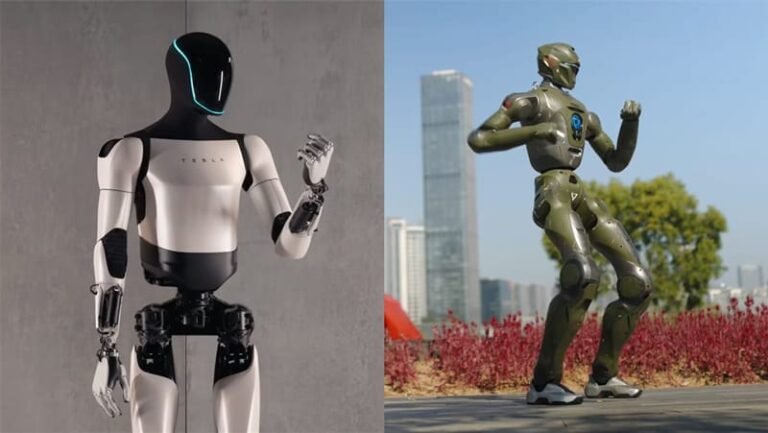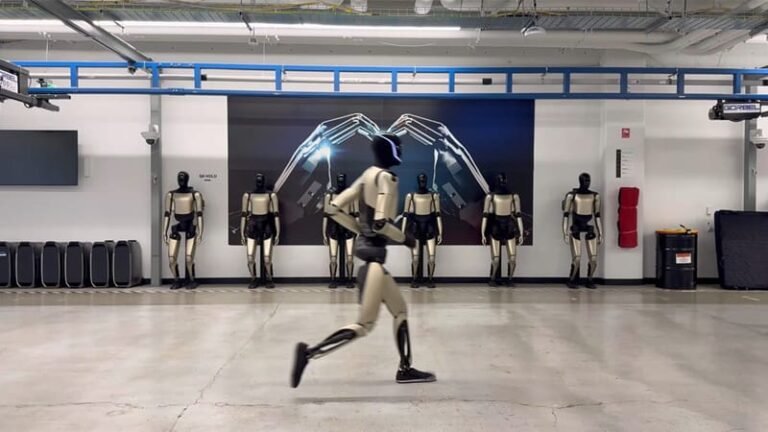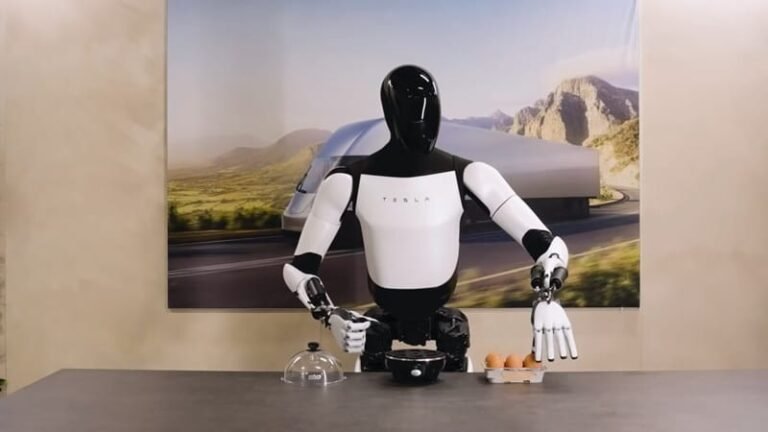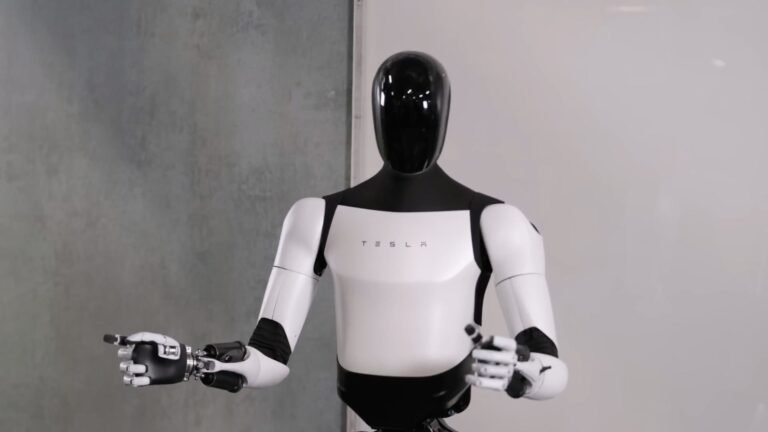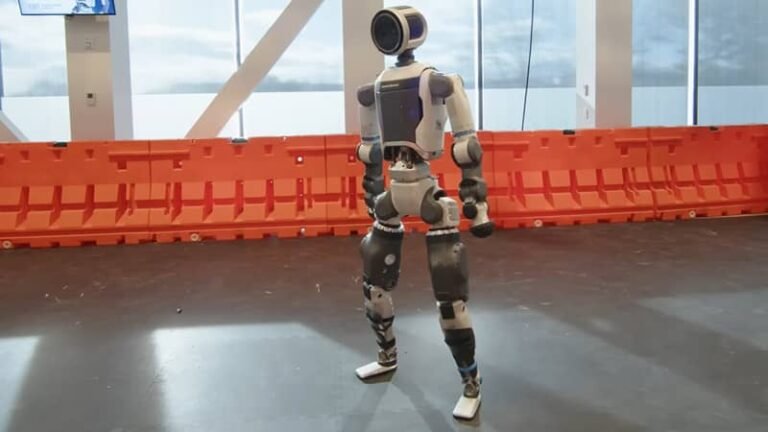
The Tesla Optimus is a general-purpose humanoid robot developed by Tesla. Designed to perform repetitive, dangerous, or labor-intensive tasks, the robot represents one of the most ambitious attempts to bring humanoid robotics into large-scale industrial production.
Unlike research humanoids developed primarily for laboratories, Optimus is engineered with the explicit goal of mass manufacturability and real-world deployment. The robot combines advanced electromechanical design, AI-driven perception, and neural-network-based control systems derived from Tesla’s autonomous driving technology stack.
Tesla envisions the robot initially working in factories, warehouses, and logistics environments, with long-term applications expanding to service industries and eventually household robotics.
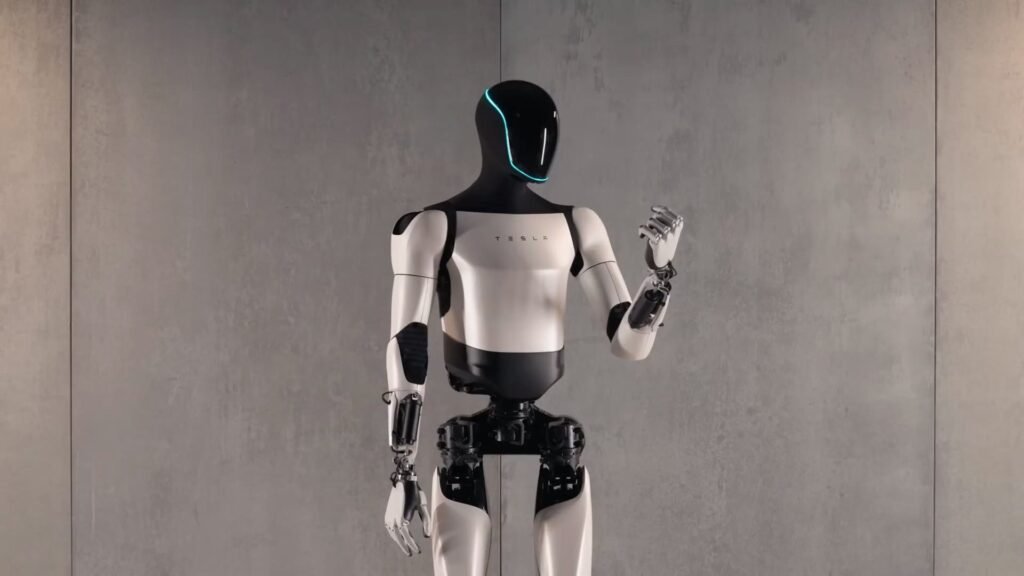
Tesla Optimus Basic Specifications
| Specification | Details |
|---|---|
| Robot Name | Tesla Optimus |
| Developer | Tesla |
| Country | United States |
| Robot Type | Humanoid Robot |
| First Announced | 2021 |
| Prototype Reveal | 2022 |
| Height | ~173 cm (5 ft 8 in) |
| Weight | ~73 kg (161 lbs) |
| Payload Capacity | ~20 kg |
| Arm Carrying Capacity | ~5 kg |
| Power System | Electric |
| Hand Degrees of Freedom | 11 DoF |
| Locomotion | Bipedal Walking |
| Power Source | Battery Pack ~2.3 kWh |
| AI System | Tesla Neural Network / Computer Vision |
| Intended Use | General-purpose automation |
| Estimated Future Price | $20k–$30k target |
Project Background
The Optimus project was introduced as part of Tesla’s broader artificial intelligence strategy. The company has spent years developing machine-learning systems for autonomous driving, which require advanced perception, object detection, and decision-making in real-world environments.
These same AI capabilities can be transferred to robotics. Instead of operating inside a car, the AI system controls a humanoid robot capable of interacting with the physical world using arms, hands, and legs.
The long-term goal of the project is to build robots that can safely operate alongside humans and perform tasks that are repetitive, physically demanding, or dangerous.
Physical Design
Optimus is designed with a humanoid body structure so that it can operate in environments built for humans. Factories, warehouses, tools, and infrastructure are already optimized for human workers, so a humanoid form allows the robot to integrate more easily into existing systems.
| Specification | Value |
|---|---|
| Height | 173 cm |
| Weight | ~57–62 kg |
| Payload (Carry) | 20 kg |
| Deadlift Capacity | 68 kg |
| Body Material | Lightweight aluminum alloys |
| Structure | Humanoid bipedal |
Structural Characteristics
- Human-like proportions
- Two arms with dexterous hands
- Two legs for walking and balance
- Head module containing perception sensors
- Lightweight structural components
The robot’s exterior design uses a minimalistic style similar to Tesla’s vehicle interiors, emphasizing simplicity and functional engineering.
Mobility and Locomotion
Unlike wheeled industrial robots, Optimus moves using bipedal locomotion.
Movement Capabilities
| Feature | Specification |
|---|---|
| Locomotion Type | Bipedal walking |
| Max Walking Speed | ~8 km/h |
| Balance Control | Dynamic balance algorithms |
| Step Control | Adaptive gait planning |
| Terrain Capability | Flat surfaces, industrial floors |
| Center of Mass Stabilization | AI motion control |
- Walking forward and backward
- Maintaining balance while carrying objects
- Navigating structured environments
- Standing and recovering from motion disturbances
Bipedal movement allows the robot to climb stairs, walk through corridors, and navigate spaces originally designed for human workers.
Hands and Manipulation System
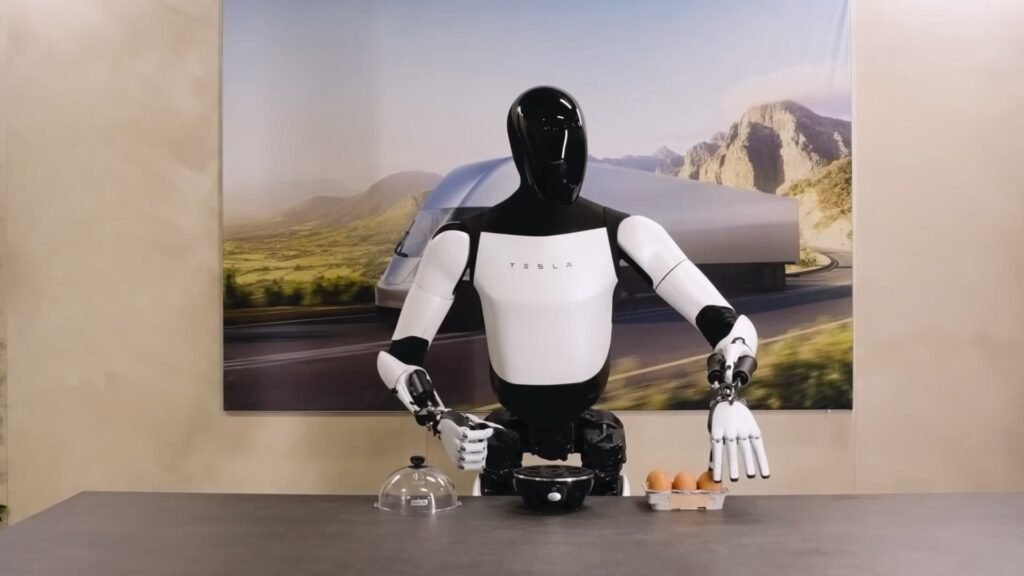
One of the most complex parts of a humanoid robot is the hand system. Optimus is equipped with multi-joint dexterous hands designed to handle a variety of objects. The latest generation of Optimus also incorporates tactile sensing, enabling the robot to safely handle fragile objects such as eggs or small parts.
| Feature | Specification |
|---|---|
| Hand Type | Multi-finger dexterous hand |
| Hand DOF | ~11 DOF per hand |
| Grip Control | Force feedback |
| Object Handling | Small tools, components |
| Precision Tasks | Sorting, assembly |
Hand Design Features
- 11 degrees of freedom
- Human-like finger articulation
- Precision grasping capability
- Ability to manipulate tools and components
This allows the robot to pick up boxes, handle small objects, operate machines, and assist with assembly tasks.
Actuation System
| Component | Description |
|---|---|
| Actuator Type | Electric motors |
| Transmission | Harmonic / precision gear systems |
| Joint Control | Closed-loop torque control |
| Motion Control | Real-time servo control |
| Energy Efficiency | Optimized electric drivetrain |
Unlike hydraulic humanoid robots such as those developed by Boston Dynamics, Optimus uses fully electric actuation, reducing maintenance complexity while improving energy efficiency and scalability.
Sensors and Perception
| Sensor Type | Function |
|---|---|
| Multi-camera vision | Environmental perception |
| Depth estimation | Object detection |
| Force sensors | Balance control |
| Tactile sensors | Object handling |
| Motion sensors | Orientation tracking |
Optimus primarily relies on vision-based perception, using multiple cameras combined with deep neural networks to interpret its surroundings.
AI And Control System
The AI stack powering Tesla Optimus is derived from Tesla’s autonomous driving platform. Key components include:
Neural Network Perception
The robot uses computer vision neural networks to:
- detect objects
- recognize tools
- understand spatial relationships
- navigate complex environments
Motion Planning
AI-based planning systems determine:
- walking trajectories
- obstacle avoidance
- manipulation strategies
Learning Systems
The robot can learn tasks through:
- imitation learning
- reinforcement learning
- human demonstration
This architecture allows the robot to continuously improve through software updates and large-scale data training.
Engineering Design Philosophy
The design philosophy of Optimus focuses on three core principles:
Human-Compatible Design
Factories, tools, and infrastructure worldwide are built for human workers. A humanoid robot can operate within these environments without requiring expensive modifications.
Scalable Manufacturing
Tesla aims to apply high-volume manufacturing techniques similar to those used in electric vehicle production.
This could dramatically reduce the cost of humanoid robots.
AI-First Robotics
Instead of relying solely on traditional robotics programming, Tesla emphasizes AI-driven autonomy, allowing robots to adapt to changing environments.
Tesla Optimus Development Timeline
| Year | Version | Key Improvements |
|---|---|---|
| 2021 | Prototype | First reveal at Tesla AI Day |
| 2022 | Gen 1 | Basic walking and manipulation |
| 2023 | Gen 2 | Faster walking, lighter design |
| 2025 | Gen 2.5 | Improved dexterity |
| 2026 | Gen 3 | 57 kg weight, advanced hands |
The development process involves continuous improvements in AI training, mechanical engineering, and energy efficiency.
Real-World Potential Applications
Humanoid robots like Optimus could be used in a wide range of industries.
Industrial Manufacturing
Robots could perform repetitive assembly tasks, material handling, and equipment operation.
Warehousing and Logistics
Possible roles include:
- Package sorting
- Inventory handling
- Transporting goods
Hazardous Environments
Robots can operate in areas that are dangerous for humans, such as:
- Chemical plants
- disaster zones
- extreme temperature environments
Service Industry
Future use cases may include:
- retail assistance
- hotel service
- facility management
Household Assistance (Long-Term Vision)
Future versions may assist with domestic tasks such as:
- carrying objects
- cleaning
- basic home support tasks
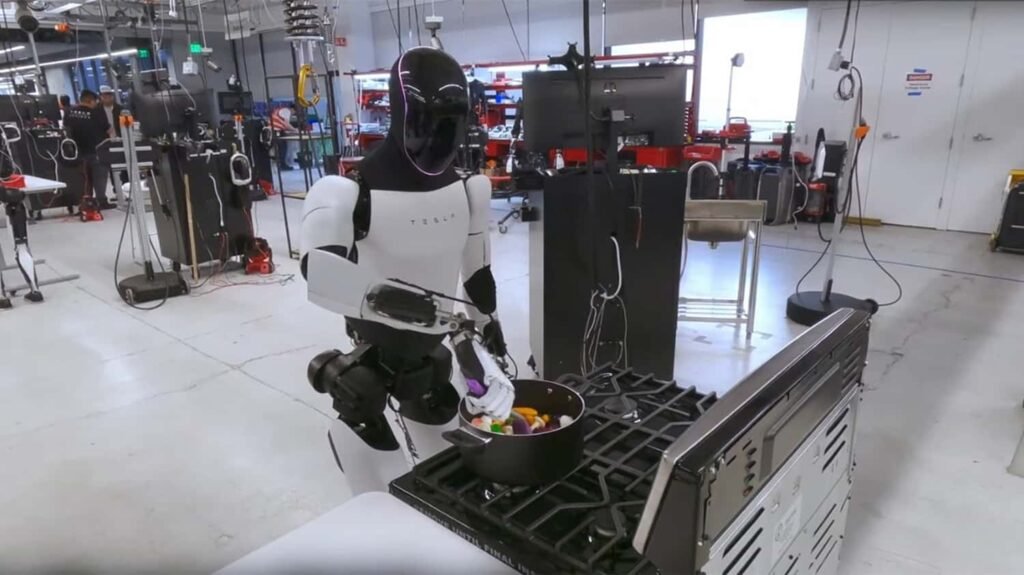
Comparison With Other Humanoid Robots
| Robot | Developer | Country | Height | Weight | Payload | Speed | DOF | Battery | Status |
|---|---|---|---|---|---|---|---|---|---|
| Tesla Optimus | Tesla | USA | 173 cm | ~62 kg | 20 kg carry / 68 kg lift | ~8 km/h | 28 + hand DOF | 2.3 kWh | Prototype |
| Atlas | Boston Dynamics | USA | 150 cm | ~89 kg | N/A | ~9 km/h | ~28 DOF | Electric / Hydraulic | Research |
| Figure 01 | Figure AI | USA | 168 cm | ~60 kg | ~20 kg | ~5 km/h | ~25+ DOF | Electric | Pilot production |
| Digit | Agility Robotics | USA | 175 cm | 65 kg | 16 kg | ~5 km/h | ~20+ DOF | Electric | Commercial |
| Unitree H1 | Unitree Robotics | China | ~180 cm | ~47 kg | ~30 kg | 3.3 m/s | 27 DOF | 0.864 kWh | Developer platform |
Key notes
- Optimus has 28 body degrees of freedom plus 11 DOF per hand.
- Unitree H1 weighs ~47 kg and can run about 3.3 m/s with ~27 DOF.
- Optimus is designed for factory tasks with ~20 kg payload capacity.
Each robot is designed with different priorities. Some focus on agility and research, while others aim for practical deployment in real environments.
Economic and Industry Impact
Humanoid robots have the potential to reshape global labor markets. If scalable and cost-effective, they could perform millions of tasks currently handled by human workers.
Potential benefits include:
- increased productivity
- reduced workplace injuries
- automation of labor shortages
- improved manufacturing efficiency
However, widespread adoption would also raise questions about workforce transition, regulation, and economic restructuring.
Demonstration Videos
Advantages and Limitations
Advantages
- Designed for mass production
- humanoid compatibility with existing infrastructure
- AI-driven perception and control
- strong integration with Tesla’s software ecosystem
Limitations
- still in prototype stage
- limited real-world deployment
- humanoid locomotion remains energy intensive
Future Development Outlook
Tesla aims to scale the Optimus platform using the same manufacturing principles applied to its electric vehicles. Large-scale production could significantly reduce costs and accelerate adoption.
Future improvements may include:
- enhanced dexterity
- faster locomotion
- improved battery efficiency
- more advanced AI autonomy
- broader real-world task capabilities
If development continues successfully, humanoid robots could become one of the most important technological platforms of the coming decades.
Comment
Tesla Optimus represents an ambitious attempt to create a general-purpose humanoid robot capable of performing useful work in human environments. By combining advanced artificial intelligence, vision-based perception, and scalable engineering, the project aims to bridge the gap between robotics research and real-world automation.
Although still in development, the platform demonstrates how AI and robotics may converge to create a new generation of intelligent machines designed to assist human society in both industrial and everyday environments.
Tesla Optimus FAQ
1. What is the Tesla Optimus?
The Tesla Optimus is a general-purpose humanoid robot developed by Tesla, designed to perform repetitive, dangerous, or labor-intensive tasks in industrial and everyday environments.
2. When was Optimus first unveiled?
It was first publicly showcased at Tesla’s AI Day in 2021, presenting the prototype and its basic movement capabilities.
3. What is the height and weight of Optimus?
The standard design is approximately 173 cm (5 ft 8 in) tall and weighs around 57 kg, allowing it to navigate human environments easily.
4. What type of power system does Optimus use?
It is battery-powered, equipped with Tesla-designed motors and sensors, capable of extended operation through recharging.
5. What are the main functions of Optimus?
- Transporting objects
- Performing repetitive factory or warehouse tasks
- Assisting with basic human tasks
- Making simple decisions via AI and path planning
6. Can Optimus navigate autonomously?
Yes. It uses cameras and sensors with Tesla’s AI and neural network technology to navigate and avoid obstacles independently.
7. What is the payload capacity of Optimus?
The initial design allows a payload of about 20 kg, suitable for handling light objects. Future versions may support heavier loads.
8. Can Optimus learn new tasks?
Through Tesla’s AI and neural networks, Optimus can learn specific actions via demonstration or programming, though complex tasks may still require human guidance.
9. What are the primary use cases for Optimus?
- Factory automation
- Warehouse logistics
- Household assistance (light lifting and daily chores)
- Operation in hazardous environments (high heat, chemicals)
10. When will Optimus be mass-produced?
Tesla plans to gradually scale production in the coming years, but no official release date has been announced. Initial deployment will focus on internal and test scenarios.