Tesla’s Juniper-codenamed refresh of the Model Y is more than a cosmetic mid-cycle update: it consolidates lessons from the Model 3 redesign, advances efficiency and real-world range, and repositions the Model Y in the highly competitive compact-SUV EV class. The Juniper Long-Range variant now targets ~320–327 EPA miles on a charge while bringing interior comfort, a larger center screen, and aerodynamic/lighting updates that improve efficiency and perceived quality.
Key specifications at a glance (what to quote in comparisons)
- Official EPA-rated range (Long Range): ~321–327 miles depending on wheel choice and configuration.
- Battery usable capacity (approximate tested / reported): ~75 kWh usable in long-range AWD examples.
- Drive layouts: Dual-motor AWD for Long Range (single-motor RWD variants/Performance expected in some markets).
- Charging: Tesla Supercharging up to high peak rates with 10–80% fast-charge times in the tens of minutes (varies by charger power).
- US starting price (Long Range 2025/2026 examples): in the low-to-mid $50k range before incentives, with regional differences and promotional Launch Editions priced higher. (examples: ~$50,630 quoted, other reporting of ~$48,990).
Note: Tesla’s online configurator remains the single authoritative pricing source for your market; public press numbers reflect launch offerings and review units.
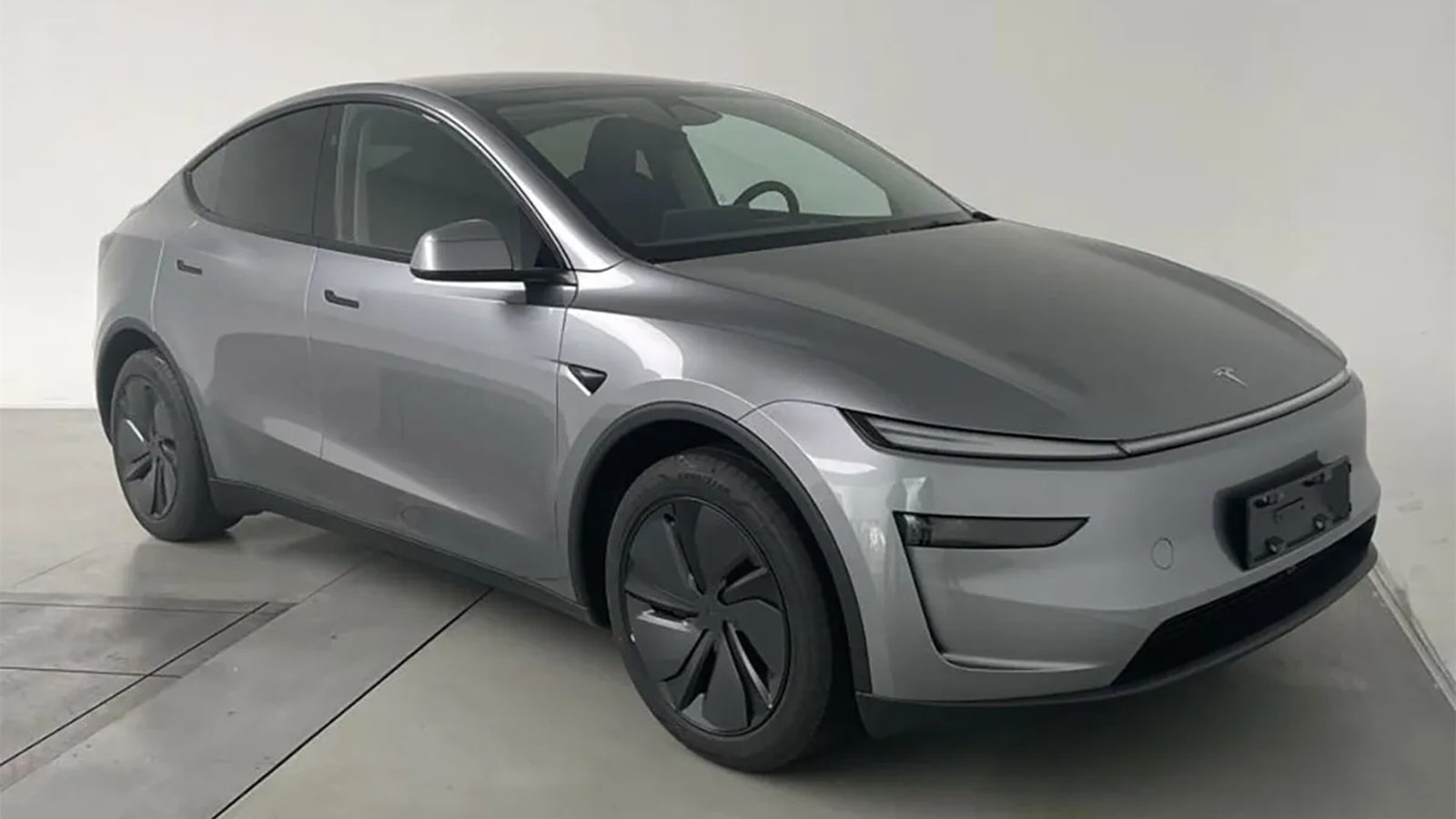
Design & exterior — efficiency translated into surface language
Juniper adopts several visible and functional changes that affect both character and aerodynamic efficiency:
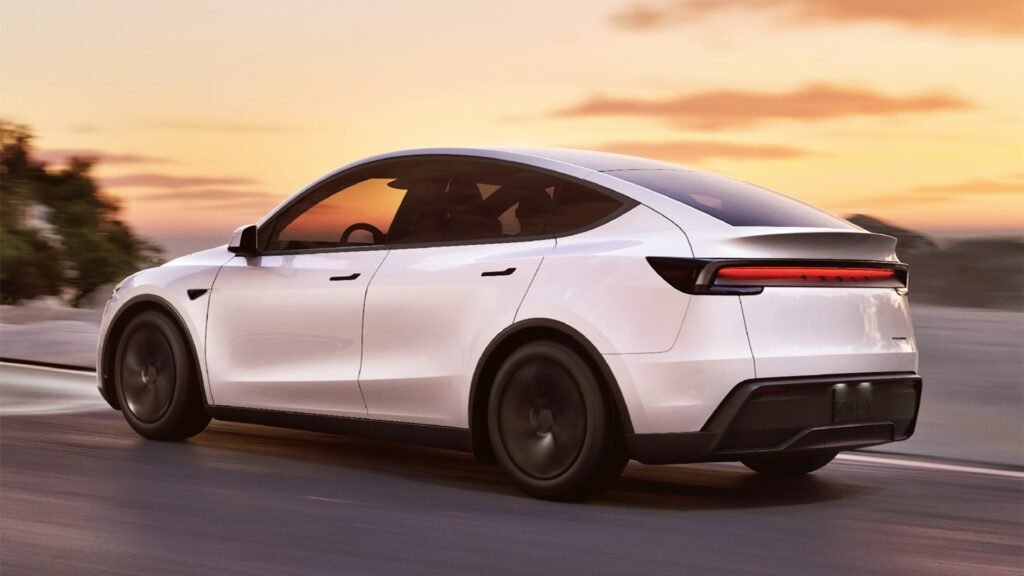
- Full-width rear lighting and refreshed fascia. The rear now features a continuous illuminated element and clearer Tesla wordmark treatment, replacing earlier split taillight motifs — this improves night-time signature and simplifies tooling.
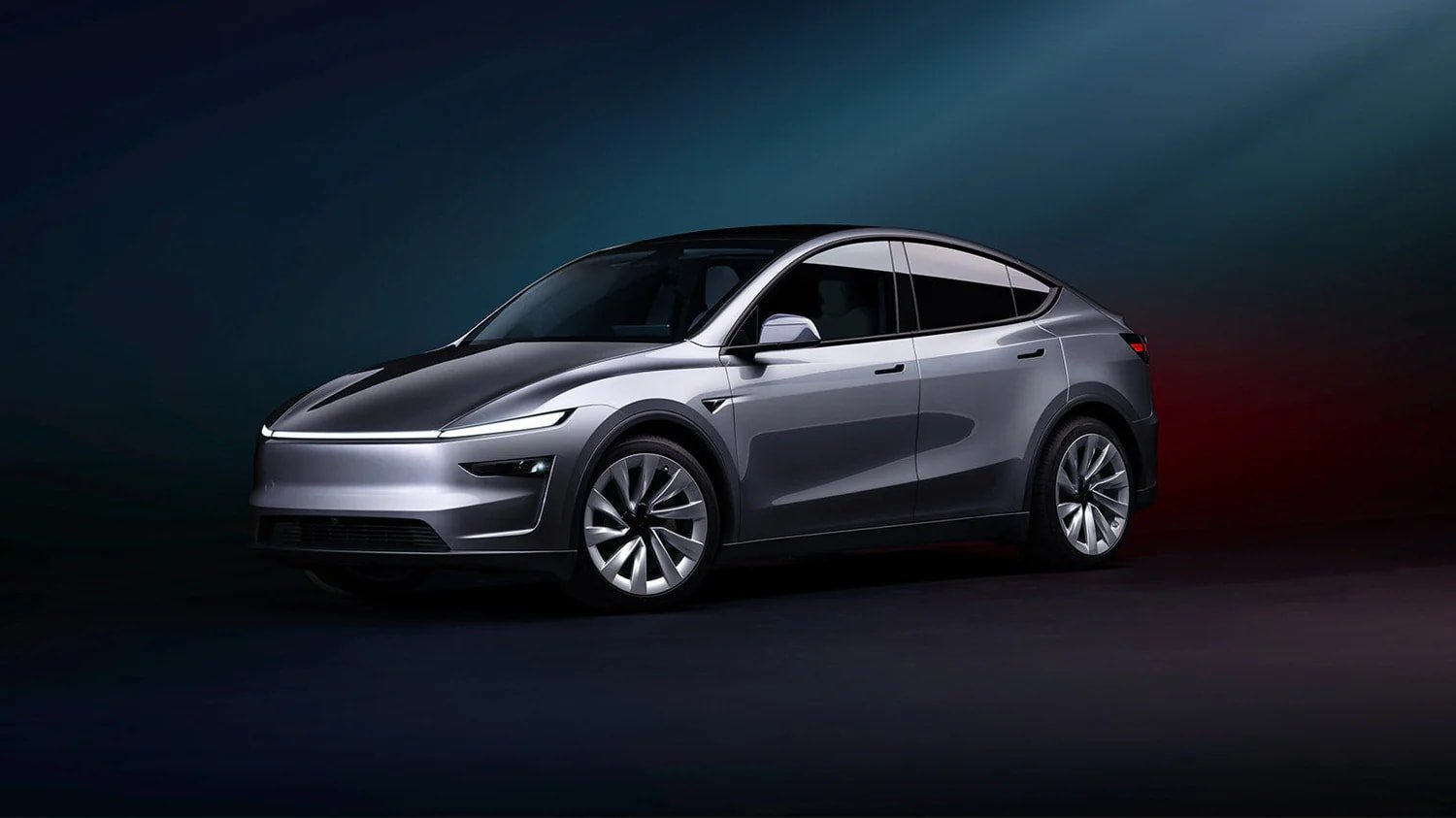
- Refined front and bumper geometry. The front end borrows lessons from the newer Model 3 with more precise lighting and optimized airflow management — small changes that contribute measurable drag reduction versus the pre-refresh Model Y.
- Wheel and tyre choices materially affect range. Tesla’s published figures and independent testers show the difference between aerodynamic wheels and the larger 20-inch options can drop range by double-digit miles. Buyers who prioritize range should select lower-rolling-resistance wheel packages.
Takeaway: Juniper is a clean evolution: it tightens the Model Y’s visual identity while yielding practical benefits (noise, range, and brand coherence with the reworked Model 3 family).
Powertrain, battery architecture and efficiency — what’s new under the skin
Juniper’s improvements are not limited to styling; the update reflects incremental progress in Tesla’s efficiency stack:
- Battery and usable capacity: Measured and reported usable battery capacity for Long Range examples centers around ~75 kWh, which combined with improved vehicle efficiency produces the 320-plus-mile EPA numbers.
- Motor tuning and software efficiency: Torque vectoring and inverter/motor control software revisions, plus a refined thermal system, have raised real-world efficiency and consistency in fast-charging sessions. Independent road tests show comparable or improved charge acceptance and slightly faster DC-charging times to earlier Model Y examples.
- Variants & roadmap: At launch Tesla prioritized Long-Range AWD for the Juniper refresh, with other single-motor or performance variants phased by market and production cadence. This strategy focuses early deliveries on the model that best showcases range and feature upgrades.
Technical implication for buyers: The combination of usable battery size, optimized aerodynamics, and software tuning yields one of the best range-to-price ratios in the segment — provided the buyer chooses efficient wheel/tire packages and moderates high-speed driving that quickly erodes efficiency.
Interior, packaging and everyday ergonomics — the quiet upgrade
Tesla tightened the cabin’s perceived quality with attention to tactile finishes and human-machine interface updates:
- Larger central display and improved UX responsiveness. Juniper carries a bigger, higher-resolution center screen derived from the Model 3 refresh; the interface responsiveness and graphics have been sharpened to reduce latency and simplify frequent tasks.
- Comfort and NVH: Better seat ventilation options, improved sealing, and refinement to suspension tuning reduce cabin noise at highway speeds — a meaningful comfort improvement for long-distance commuting.
- Practical cargo & passenger space: Overall packaging remains a strong selling point for the Model Y — cargo capacity and flexible seating still outclass most compact EV crossovers, though rear headroom and ingress/egress are comparable to segment rivals.
ADAS & autonomous-capability considerations — what to expect now
Tesla continues to deliver advanced driver assistance via its software stack, with Juniper offering the same upgrade path for Full Self-Driving (FSD) Beta/option as other refreshed Tesla products:
- FSD option remains purchasable (where available) and continuously updated via OTA. Buyers should treat FSD as an evolving software suite: capabilities and regulatory availability vary by jurisdiction.
- Safety hardware: Sensor suite and redundancy match Tesla’s current standards; Juniper improves on perception through software gains rather than wholesale hardware proliferation. For buyers, this means consistent OTA-driven improvements in driver assistance features over the vehicle’s lifetime.
Real-world performance & driving character — beyond the numbers
Independent testers report that Juniper’s Long-Range AWD delivers brisk acceleration (0–60 mph competitive with prior Long-Range figures) while preserving attainable efficiency figures in mixed driving. Expect:
- Confident mid-corner grip from AWD torque distribution;
- Linear throttle response with strong regenerative braking that contributes to city efficiency;
- A composed ride that errs toward comfort but remains communicative.
Pricing, incentives and total cost of ownership (TCO) lens
- Launch pricing for Long Range examples landed in the low-to-mid $50k band in many US reports, but local pricing, incentives (notably the US federal EV tax credit where eligible), and state rebates materially alter effective cost. Buyers should check local Tesla configurator and incentive calculators.
- TCO benefits: Reduced fueling and maintenance costs versus ICE rivals, favorable safety ratings, and Tesla’s Supercharger network access often yield a compelling TCO when annual mileage and resale assumptions are favorable. Depreciation, insurance, and local electricity vs gas costs are the main levers affecting ownership economics.
Competitive positioning — where Juniper wins and where it concedes ground
Strengths
- Best-in-class Supercharger network and consistent OTA improvements.
- Class-leading range for the price when configured with efficient wheels.
- Strong cargo packaging and a familiar, simple ownership model.
Weaknesses / watchouts
- Rivals are closing the gap on interior materials and tactile quality; some buyers may prefer premium finish levels and quieter cabins from European competitors.
- FSD regulatory uncertainty and variable feature availability remain an ownership risk for those buying explicitly for autonomous capability.
Purchase checklist — pick a configuration intelligently
- Range priority: choose the aerodynamic wheel option and Long-Range AWD.
- Charging access: confirm local Supercharger access and home-charging setup (240V vs 48A options).
- Feature toggles: decide early on FSD purchase vs later; FSD pricing and availability change and can be purchased after delivery in many regions.
Who should buy the Juniper-era Model Y?
If you value network convenience (Supercharger access), long EPA range per dollar, and a rapidly evolving software feature set, the Model Y Juniper is a highly rational choice in the compact EV segment. If tactile interior luxury, quietness at highway speeds, or deterministic autonomous features are decisive, evaluate high-trim European rivals and wait for ongoing OTA refinements from Tesla.