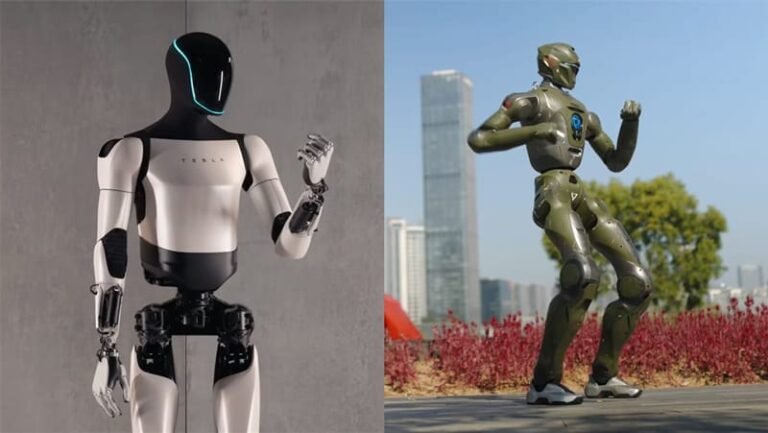
For decades, industrial automation has relied on rigid systems designed for repetitive tasks. Tesla Optimus robot breaks away from that paradigm. It represents the company’s ambitious shift toward general-purpose robotics, integrating Tesla’s strengths in AI, autonomy, and mass manufacturing into a single humanoid platform.
Optimus is designed not merely as a machine, but as an adaptable embodied system capable of performing real-world tasks with human-like precision. From factory operations to domestic assistance, the robot showcases Tesla’s broader vision: creating intelligent, safe, and scalable robotics that augment human productivity.
A Human-Centric Design for Practical Utility
A Structure Built for Real Work
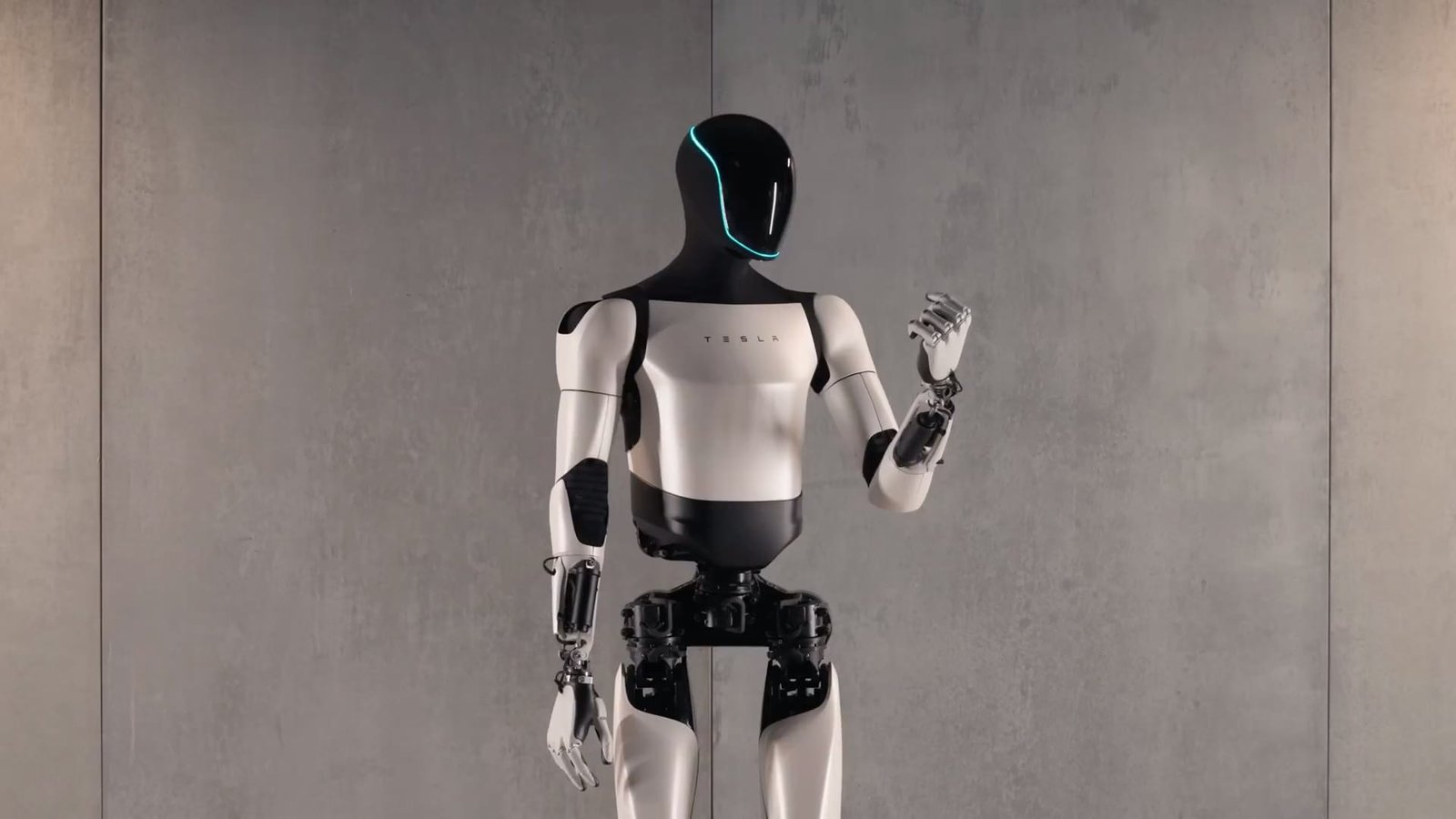
Optimus adopts a bipedal, human-proportioned form, allowing it to operate in environments built for people—walking through doorways, reaching shelves, and interacting with typical tools or objects.
- Height and limb proportions support ergonomic task execution
- Lightweight materials balance durability and energy efficiency
- Modular design simplifies maintenance and system upgrades
This physical architecture ensures that Optimus is compatible with both workplace and household settings, allowing it to integrate naturally into human routines.
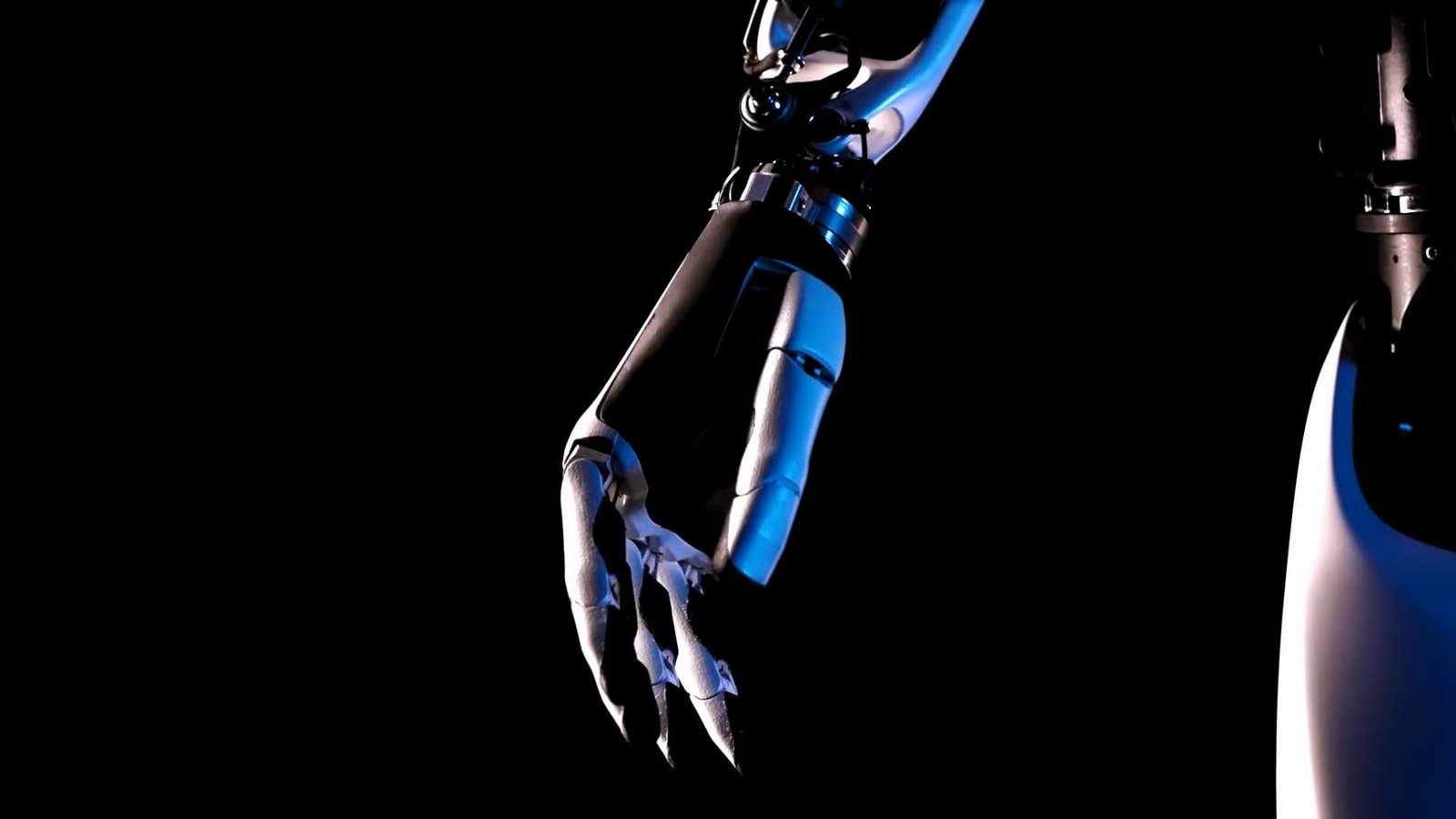
Actuation and Mobility: Precision at Every Joint
Life-like Motion Through Advanced Motor Systems
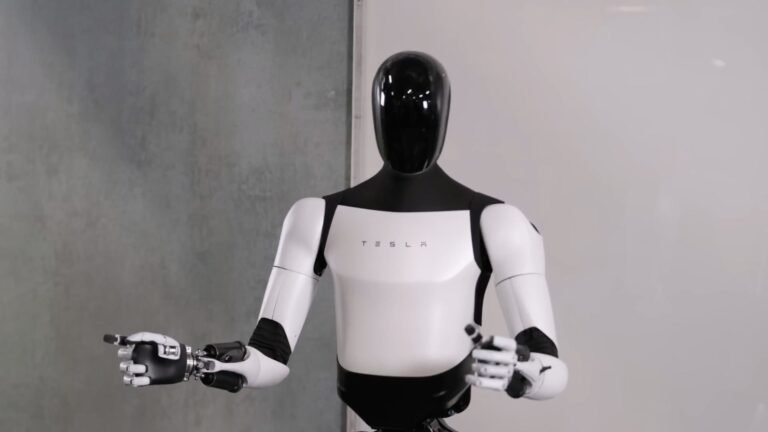
Tesla’s in-house actuators give Optimus fluid, responsive motion. Each motor is designed for high torque, stability, and fine-grained control, enabling tasks that require both strength and dexterity.
These systems coordinate:
- Smooth joint articulation
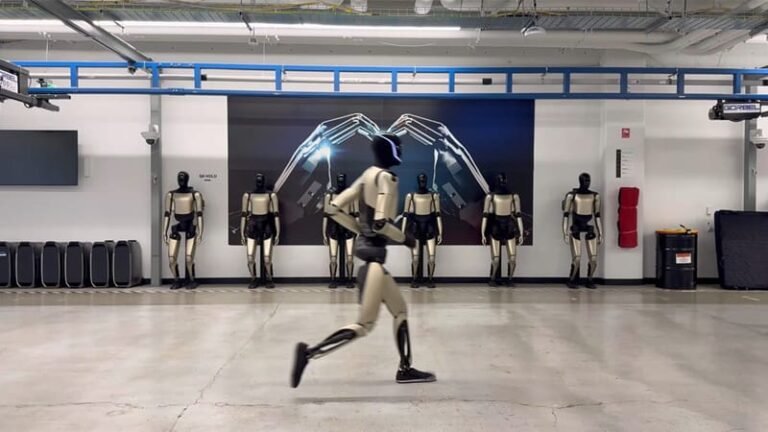
- Balanced locomotion on varied surfaces
- Precision handling of small or fragile objects
Combined with Tesla’s sensor suite, the robot maintains natural posture and movement even during complex operations.
Vision, Perception, and Decision-Making
AI-Driven Understanding of the Physical World
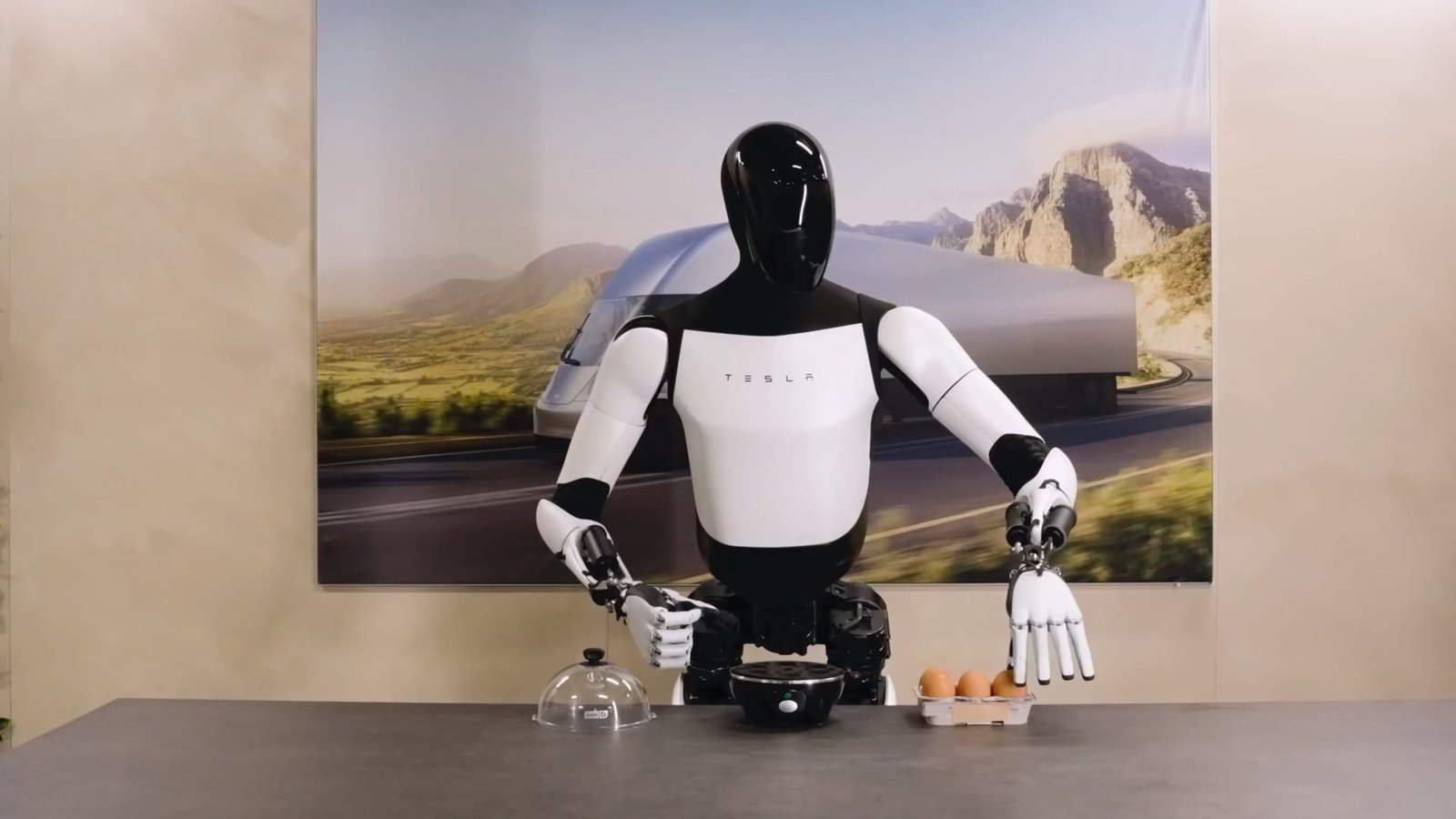
Optimus uses Tesla’s established computer vision technology—originally developed for autonomous vehicles—to interpret its surroundings. The robot processes real-time data from a network of cameras and sensors to:
- Recognize objects in cluttered environments
- Track motion and depth
- Understand spatial relationships
- Navigate safely around people and obstacles
Its decision-making system runs on a neural network foundation trained to handle unpredictable real-world scenarios. The same principles that guide Tesla vehicles—situational awareness, reaction speed, and adaptive learning—are embedded in Optimus.
Autonomous Functionality with Human-Level Coordination
Balancing, Walking, and Manipulation in One System
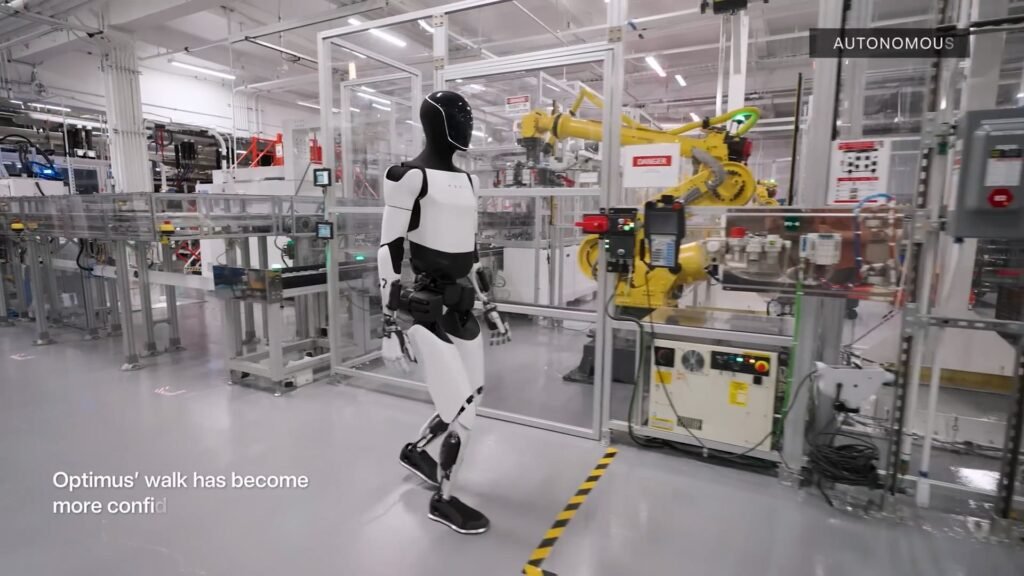
The robot’s core capability lies in its ability to perform dynamic actions that resemble human behavior. Through an advanced control algorithm, Optimus can:
- Maintain balance under external force
- Walk with stable gait across uneven terrain
- Carry objects while adjusting posture
- Cooperate with tools or machines
In internal demonstrations, the robot performs tasks such as sorting items, lifting objects, and assembling components. These foundational abilities signal its potential for manufacturing, service roles, and daily assistance.
Tesla’s Approach to Safety and Reliability
Multiple Layers of Protection
Given that Optimus is intended to operate directly beside humans, Tesla prioritizes safety at both the hardware and software levels:
- Torque-limited actuators prevent harmful impact
- Real-time monitoring reduces chance of mechanical failure
- Predictive AI evaluates risk before actions
- System-wide emergency stop mechanisms ensure immediate shutdown
This layered framework is essential for deploying humanoid robots in non-industrial public environments.
Scalability: The Advantage Only Tesla Can Claim
A Robot Designed for Mass Production
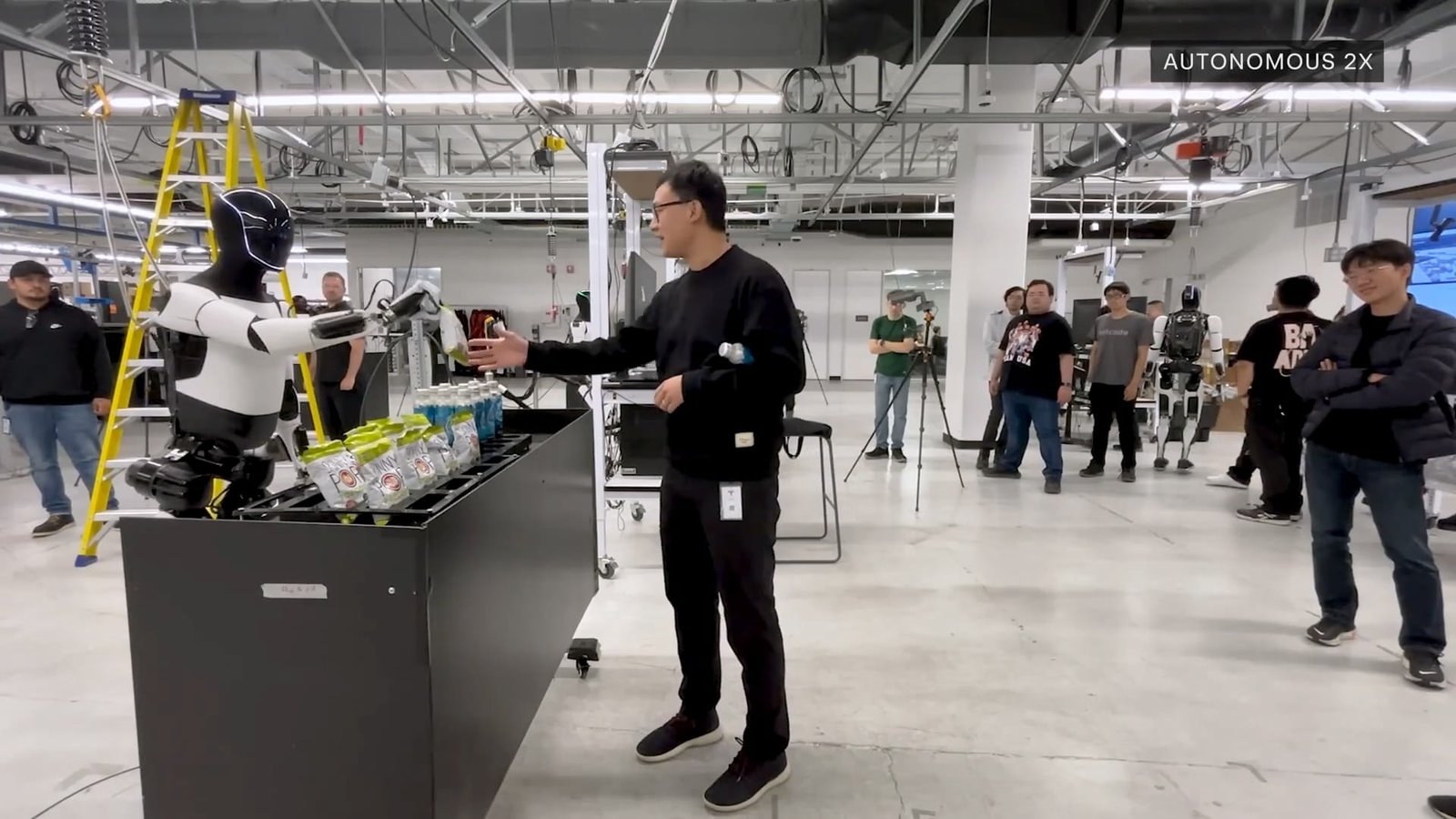
While many robotics companies produce capable prototypes, Tesla aims for volume manufacturing. The company’s vertical integration—motors, chips, batteries, software—gives Optimus a scalability advantage that few competitors can match.
As production expands, Tesla envisions lower costs and broader adoption, enabling use cases such as:
- Warehouse automation
- Medical logistics support
- Household chores
- Retail operations
- Elderly care assistance
- Repetitive manufacturing tasks
This shift positions Optimus not just as a technological achievement but as a future commercial platform.
Specifications
Specifications evolve with each prototype, but Optimus is built around Tesla’s core engineering philosophy:
- High-efficiency electric actuation
- Multi-degree-of-freedom joints
- Vision-based AI perception
- Human-scale form factor
- Wireless connectivity and OTA updates
- Modular hardware for iterative improvement
Tesla’s rapid iteration roadmap suggests regular upgrades in dexterity, balance, and computational capability.
Into the Future of Human–Robot Collaboration
Optimus is more than a robotics project—it is a conceptual shift toward a world where intelligent embodied machines become part of everyday life. Tesla’s long-term vision aligns with universal robotic assistance, enabling people to delegate repetitive, dangerous, or physically demanding tasks.
If successful, Optimus could transform industries, reshape the global labor landscape, and redefine how humans interact with machines. It is not simply a robot, but a platform engineered for a future of intelligent, collaborative automation.