The transition from internal combustion engines (ICE) to Electric Vehicles (EVs) is often framed as a simple financial win: “Say goodbye to $5 gas and $80 oil changes.” However, after the honeymoon phase of silent acceleration and home charging wears off, many new owners encounter a different set of financial realities.
If you are considering an EV, you shouldn’t just look at the MSRP or the federal tax credit. You need to look at the Total Cost of Ownership (TCO) over a 5-to-10-year horizon.
Here is the unvarnished truth about the hidden costs of going electric in 2025.

1. The “Invisible” Depreciation Cliff
While luxury cars have always lost value quickly, EVs face a unique depreciation challenge. Rapid advancements in battery chemistry and software mean that a three-year-old EV can feel like a three-year-old smartphone—outdated.
According to recent market data from iSeeCars, EVs lose value significantly faster than hybrids or gas-powered trucks. The primary culprit? Battery degradation anxiety in the secondary market. Used buyers are terrified of inheriting a $15,000 battery replacement bill, which suppresses the resale value of your “investment.”
2. Specialized Maintenance: It’s Rare, But It’s Rich
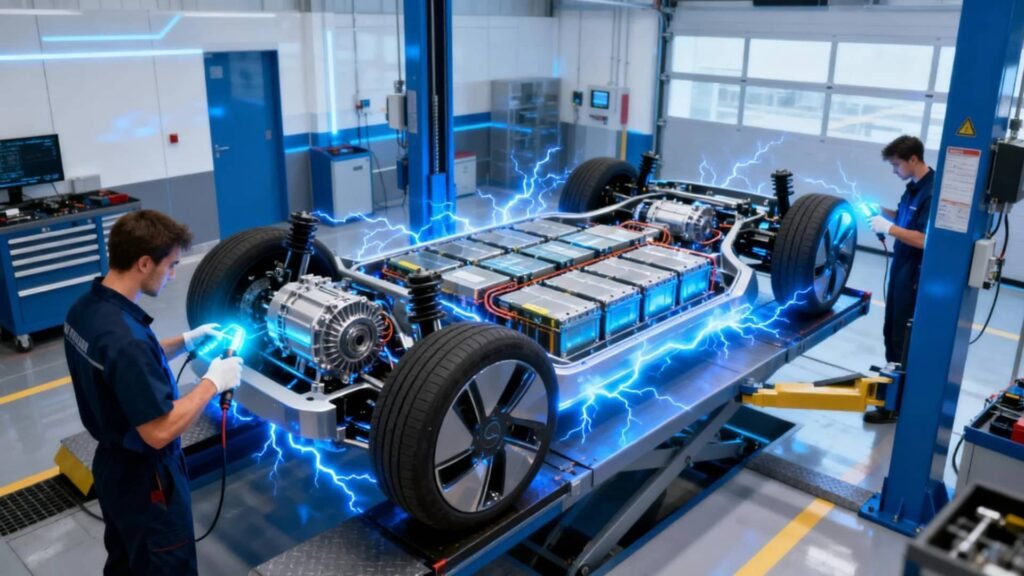
EVs have fewer moving parts, which is a major selling point. No spark plugs, no timing belts, no transmission fluid. However, when things do go wrong, you can’t take your Tesla or Rivian to the local corner mechanic.
- Proprietary Diagnostics: Most EV repairs require specialized software and high-voltage certification. This funnels owners back to the dealership, where labor rates are often 30-50% higher than independent shops.
- Tire Burn Rate: This is the most shocking “hidden” cost for new owners. EVs are significantly heavier than gas cars due to the battery pack, and they produce instant torque. This combination shreds tires. Owners often find themselves replacing high-performance, low-rolling-resistance tires every 20,000 miles.
3. The Home Infrastructure Tax
The dream is charging while you sleep. The reality is often a $2,000 electrical bill before you even plug the car in. Unless you have a modern 200-amp breaker panel and a garage wired for 240V, you will likely need:
- Level 2 Charger Installation: $500–$1,000 for the unit.
- Panel Upgrades: $1,500–$3,500 if your home’s electrical system is dated.
- Permitting Fees: Depending on your municipality, this can add several hundred dollars.

4. The Insurance Premium Surge
It costs more to insure an EV—period. Insurance companies base premiums on repairability. Because EV batteries are integrated into the chassis, even a minor fender bender can lead to a “total loss” if the battery casing is nicked.
Furthermore, the lack of a robust third-party parts market for brands like Lucid or Polestar means longer wait times and higher rental car costs for the insurer, which they pass directly to you.
EV vs. ICE: The Real-World Cost Comparison
Based on 5-year ownership of a mid-size sedan.
| Cost Category | Internal Combustion (ICE) | Electric Vehicle (EV) | Notes |
| Fuel / Energy | High ($1,800/yr) | Low ($500/yr) | Depends on local kWh rates |
| Routine Maintenance | Moderate (Oil, Filters) | Low (Coolant, Wipers) | EV tires cost more |
| Average Insurance | Baseline | +25% to 40% | Higher due to repair complexity |
| Depreciation | Moderate | High | EV tech cycles are faster |
| Registration/Fees | Standard | High (EV Road Tax) | Many states charge “Road Use Fees” |
5. The “Public Charging” Reality Check
If you cannot charge at home, the “cheap” nature of EV ownership vanishes. DC Fast Charging (Tesla Superchargers, Electrify America) is priced at a premium. In many metropolitan areas, charging a vehicle to 80% at a public station can cost nearly as much as a tank of gasoline, without the convenience of a 5-minute fill-up.

The Verdict: Is an EV Right for You?
Owning an EV isn’t about saving every penny; it’s about a shift in lifestyle and values. To maximize your ROI and avoid these hidden costs:
- Lease, don’t buy: Let the manufacturer take the hit on depreciation.
- Check your panel: Get a quote for home charging before you put down a deposit.
- Drive conservatively: Save your tires and your range.
The “hidden” costs don’t make EVs a bad choice—they just make them a complex one. By accounting for insurance, tires, and infrastructure upfront, you can enjoy the silent ride without the financial noise.
Useful Links: