
In the global auto industry—where margins are razor-thin, supply chains span continents, and technology evolves faster than model cycles—profitability is the clearest indicator of true industrial strength. As electrification reshapes competition and legacy brands battle rising EV challengers, the world’s most profitable automakers reveal one thing: scale, engineering depth, and disciplined operations still matter more than ever. Here is a ranking of the Top 10 Most Profitable Automakers, based on the real revenue of each Car company.
Top 10. Ford Motor Company
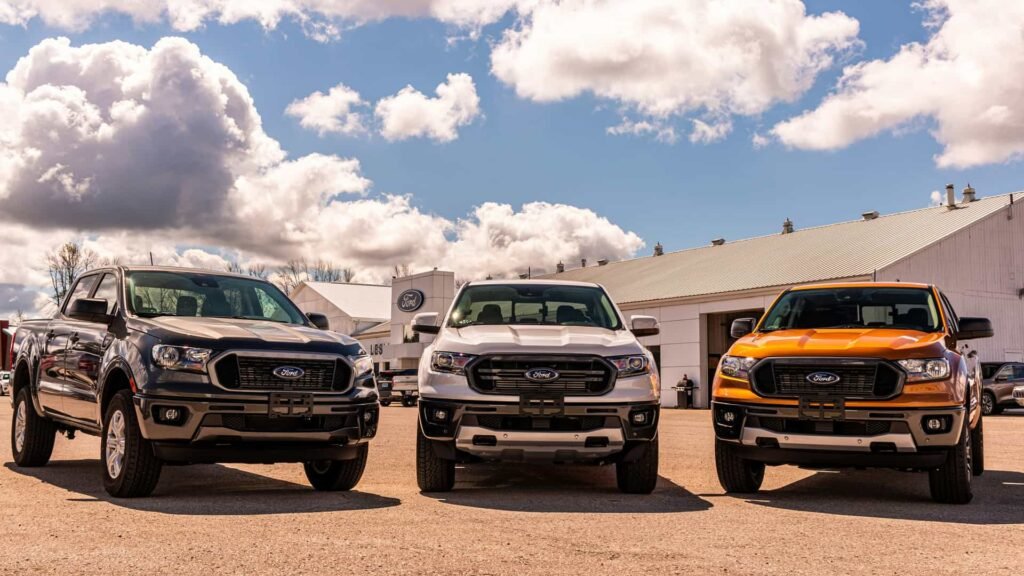
With more than 3.9 million vehicles produced worldwide, Ford remains a powerhouse of traditional automotive engineering. The F-150—still the best-selling truck in the United States—delivered nearly 460,000 units in its home market alone.
Ford’s net profit, equivalent to roughly $6.1 billion USD, is powered by its mature powertrain strategy. The EcoBoost engine family stretches from 1.5-liter turbocharged units to the formidable 3.5-liter V6, capable of pushing the Ford GT from 0–100 km/h in just 3.8 seconds. Meanwhile, the iconic 5.0-liter V8 continues to embody American muscle and remains a key pillar of Ford’s brand identity.
Top 9. General Motors (GM)
GM delivered more than 4.01 million vehicles globally, backed by a net profit of approximately $6.2 billion USD. Its portfolio is one of the broadest in the world: Chevrolet, Buick, Cadillac, and Wuling span markets from North America to Southeast Asia.
What truly distinguishes GM is its vertical integration. From compact 1.3-liter turbocharged engines to the $1.5 million presidential armored limousine, and from individual fasteners to heavy-duty 10-speed transmissions, GM’s in-house engineering capability is unmatched in scale. It remains a Fortune Global 500 mainstay, ranking within the top 40 globally.
Top 8. Stellantis
Stellantis posted profits of roughly $6.6 billion USD, with sales exceeding 6.5 million vehicles across an unusually diverse portfolio. The group combines Peugeot, Citroën, Fiat, Maserati, Jeep, Alfa Romeo, Chrysler, and more—a consortium of legacies that exited certain markets but thrive globally.
Stellantis’ strength lies in its ability to share platforms across brands while maintaining distinctive design languages. Jeep’s global appeal, Peugeot’s rising European presence, and Ram’s American pickup dominance allow Stellantis to balance risk across continents.

Top 7. Tesla
Despite fierce competition from Chinese EV manufacturers, Tesla remains the world’s most profitable pure EV company, generating around $7.4 billion USD in net earnings.
Tesla’s advantage continues to come from its vertically integrated “three-electric” system—battery, electric motor, and electronic control—combined with unmatched manufacturing efficiency. While BYD surpassed Tesla in annual EV deliveries, Tesla’s profitability per vehicle remains significantly higher.

Top 6. Honda Motor Co.
Honda recorded an estimated $8.7 billion USD in profit, supported by 3.8 million passenger car deliveries and an astonishing 19.6 million motorcycles sold—a figure no other manufacturer even approaches.
With a cumulative 500 million motorcycles sold to date, Honda’s global influence is staggering. Its engineering footprint spans F1 powertrains, industry-leading CVT/DCT/AT transmissions, the ASIMO humanoid robot, the HondaJet light aircraft, and even new ventures into reusable mini-rockets. Honda’s innovation roadmap continues to stretch far beyond automobiles.
Top 5. BMW Group
The BMW Group—including BMW, MINI, and Rolls-Royce—reported profits of roughly $9.2 billion USD, with 2.45 million vehicles delivered worldwide.
Though widely known as a luxury automaker, BMW’s engineering roots lie in aviation. Its continued involvement in high-precision aerospace technologies helps explain why supplying a V12 engine for Rolls-Royce remains trivial for the company. BMW also maintains formidable motorcycle operations, selling over 210,000 units last year and reinforcing its two-wheel performance heritage.
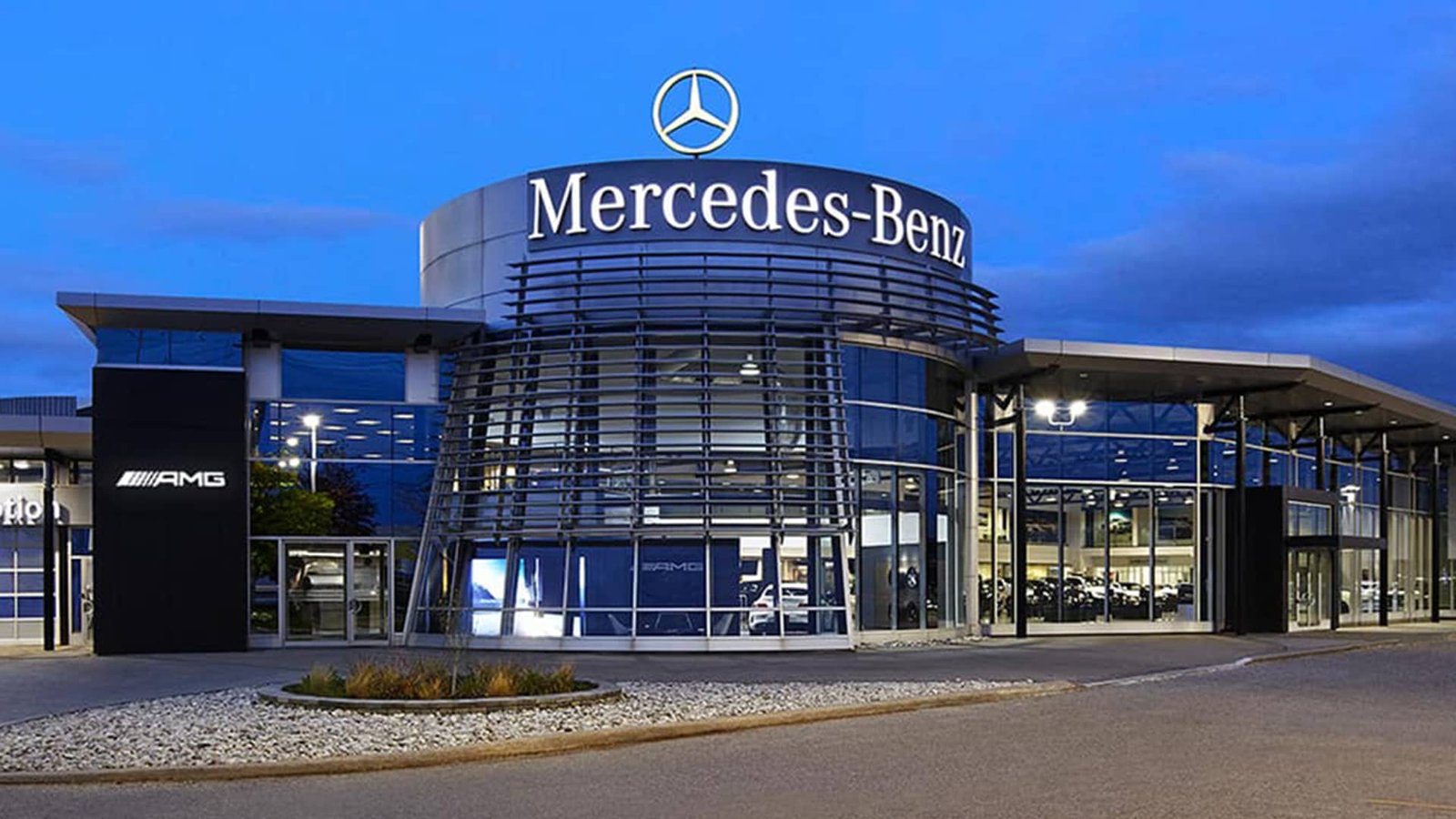
Top 4. Mercedes-Benz Group
With net earnings around $12.4 billion USD, Mercedes-Benz continues to dominate the luxury sector through a combination of scale, brand prestige, and engineering breadth.
From the rugged G-Class variants tuned for extreme off-road conditions to the ultra-luxury Maybach series and the high-performance AMG lineup, Mercedes spans more categories than nearly any premium manufacturer. Its long-term investment in electrification, software architecture, and mobility services positions the brand well as the industry shifts to software-defined vehicles.
Top 3. Hyundai–Kia Group
Often underestimated in China but thriving globally, Hyundai–Kia reported an impressive $16 billion USD in profit. The group sold more than 7.23 million vehicles worldwide, including 1.63 million units in North America alone.
South Korea remains the only country in the last 50 years to transition from developing to fully developed status, and Hyundai–Kia’s disciplined approach to manufacturing, design, and global expansion is a major contributor. Their advancements in EV platforms, hydrogen technology, and safety engineering have placed them firmly among the world’s top three automotive giants.
Top 2. Volkswagen Group
Volkswagen Group generated approximately $26.5 billion USD in net profit, reinforcing its position as one of the global leaders in scale and capability.
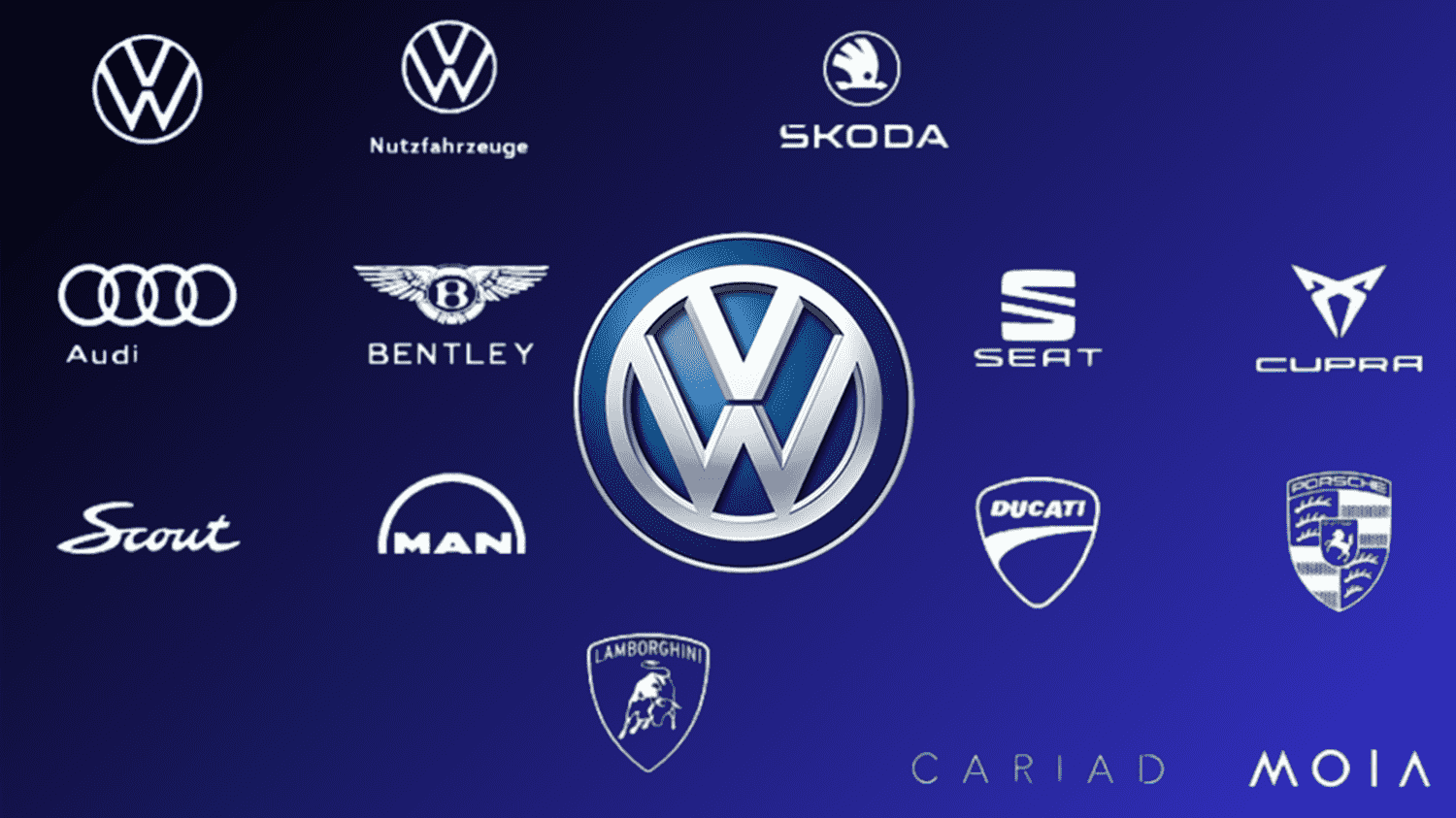
Its empire spans Porsche, Audi, Bentley, Lamborghini, Bugatti, Skoda, MAN, Scania, and Ducati. The group’s engineering range is equally vast—producing everything from compact 1.4-liter four-cylinder engines to 8.0-liter W16 powertrains.
Volkswagen employs more than 650,000 people across 120 production facilities. Its flagship Wolfsburg plant alone hosts 60,000 employees and produces close to 800,000 vehicles annually, making it one of the largest automotive factories in the world.
Top 1. Toyota Motor Corporation(Japan)
Toyota remains the world’s most profitable automaker with net earnings of roughly $37 billion USD, while delivering over 10.8 million vehicles—a figure that surpasses the combined profits of many competing automakers.
Toyota’s profitability is driven by:
- High-margin global models like the RAV4, Highlander, and Hilux
- Premium pricing in overseas markets
- Deep supply chain control, owning major stakes in Aisin, Denso, Hino, Aichi Steel, and others
- Unmatched production discipline, built on the Toyota Production System (TPS)
With high demand, low operating costs, and strong resale values, Toyota has achieved all three cornerstones of industrial profitability: cheap to build, expensive to sell, and easy to scale.

The End
| Rank | Company | Annual Vehicle Sales | Net Profit (USD) | Notes / Highlights |
|---|---|---|---|---|
| 1 | Toyota Motor Corporation | 10.82 million | $37.0B | High-margin global models, strong supply chain control, Toyota Production System |
| 2 | Volkswagen Group | ~10 million | $26.5B | Includes Porsche, Audi, Bentley, Bugatti, Lamborghini, Skoda, MAN, Scania, Ducati |
| 3 | Hyundai–Kia Group | 7.23 million | $16.0B | Strong North America presence, global EV & hydrogen technology |
| 4 | Mercedes-Benz Group | ~2.5 million | $12.4B | Luxury dominance: Maybach, AMG, G-Class, global brand reach |
| 5 | BMW Group | 2.45 million | $9.2B | BMW, MINI, Rolls-Royce; aerospace heritage; motorcycle business |
| 6 | Honda Motor Co. | 3.8 million cars / 19.6 million motorcycles | $8.7B | F1 engines, ASIMO robot, HondaJet, micro-rockets |
| 7 | Tesla | ~1.5 million | $7.4B | Vertically integrated EV tech, high per-unit profit margins |
| 8 | Stellantis | 6.5 million | $6.6B | Portfolio: Peugeot, Citroën, Fiat, Jeep, Maserati, Chrysler |
| 9 | General Motors | 4.01 million | $6.2B | Chevrolet, Buick, Cadillac, Wuling; full in-house engineering |
| 10 | Ford Motor Company | 3.9 million | $6.1B | F-150 best-seller; EcoBoost engines; iconic 5.0L V8 |
These ten companies not only shape the global automotive market—they define the industrial capabilities of entire nations.
Reference: