
The global automotive industry is a complex and fiercely competitive ecosystem, where legacy automakers compete with emerging players in both traditional internal combustion and new energy vehicles. Sales volumes, brand portfolios, and technological influence define the global automotive hierarchy. Based on 2024 production and sales data, here are the top ten automotive companies shaping the industry today.
1. Toyota – 10.16 Million Vehicles
Toyota remains the only automaker to surpass the 10 million vehicle mark last year. Its portfolio includes Toyota and Lexus passenger vehicles, Hino commercial trucks, and Daihatsu small vehicles. Toyota also holds significant stakes in Subaru, Aisin Seiki, and Denso, reinforcing its influence across automotive supply chains. Despite occasional rumors of decline in domestic markets, Toyota continues to demonstrate unparalleled scale, innovation, and financial stability.
2. Volkswagen Group – 9.03 Million Vehicles
Volkswagen’s expansive portfolio spans mass-market and luxury brands, including Volkswagen, Škoda, Audi, Porsche, Lamborghini, Bugatti, Bentley, SEAT, and Ducati. The group also controls commercial vehicle brands Scania and MAN. Volkswagen’s market performance significantly influences the global automotive supply chain, including lubricant and component manufacturers, highlighting its pivotal role in the industry.
3. Hyundai-Kia Group – 7.23 Million Vehicles
The Hyundai-Kia Group showcases the evolution of South Korea from modest beginnings to a global automotive powerhouse. With over 3.4 million units exported outside Korea, the group challenges stereotypes about Korean car quality. Historical context reveals that Korea’s automotive industry began in 1955 using modified U.S. military Jeeps, a year after China produced its first domestically assembled vehicle, the FAW Jiefang CA10. Today, Hyundai and Kia stand among the most competitive global brands.

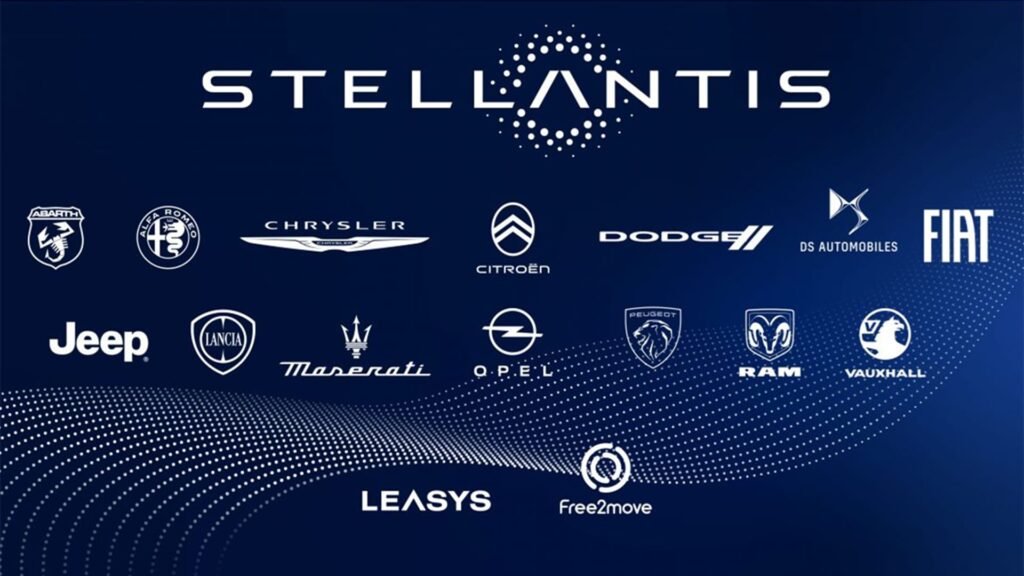
4. Stellantis – 5.42 Million Vehicles
Stellantis, formed in 2021 through the merger of PSA Group (France) and Chrysler (USA), represents a diversified automotive empire. Its brands include Peugeot, Citroën, DS, Chrysler, Dodge, Maserati, Alfa Romeo, Fiat, and Ferrari. Stellantis demonstrates the value of multi-national consolidation, combining French, American, Italian, and British automotive expertise into a single corporate structure.
5. BYD – 4.27 Million Vehicles
BYD’s sales surged 41% year-over-year, reaching 4.27 million vehicles. The company has established itself as a leader in affordable electric vehicles, enabling consumers to access technology comparable to models costing several times more from legacy brands. BYD’s rapid growth also reflects China’s accelerating transition to new energy vehicles and its ability to compete on a global scale.
6. General Motors – 4.01 Million Vehicles
Once the world’s leading automaker for over seven decades, General Motors now ranks sixth globally. Its portfolio includes Chevrolet, Buick, Cadillac, and GMC, with Hummer producing limited volumes of 4,597 units. While GM’s overall volume has declined relative to emerging competitors, its technological expertise in EVs and traditional vehicles remains formidable.

7. Ford Motor Company – 3.90 Million Vehicles
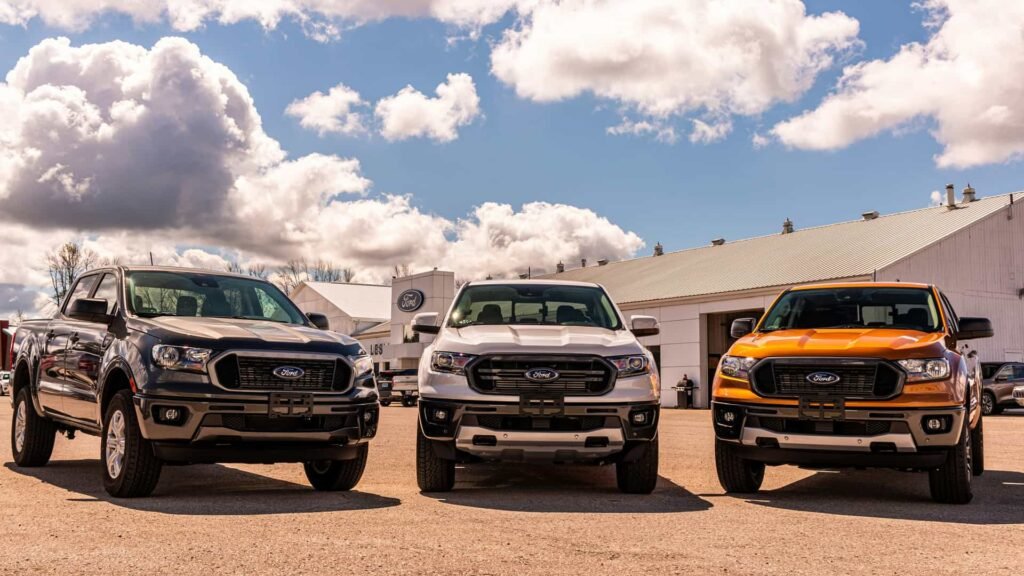
Ford, alongside the Lincoln brand, achieved a record $185 billion in revenue last year. In China, however, sales reached only 624,000 units, highlighting challenges in market penetration despite global strength. Ford continues to leverage its industrial scale and legacy platforms to maintain competitiveness in commercial and passenger vehicle markets.
8. Honda – 3.81 Million Vehicles
Honda’s global sales include 1.42 million units in the U.S. and 852,000 in China. Beyond automobiles, Honda remains the undisputed leader in motorcycle production, selling 19.6 million units globally last year. The company balances automotive and two-wheeler operations with technological expertise across hybrid, fuel-efficient, and performance platforms.
9. Nissan – 3.37 Million Vehicles
Nissan faces financial challenges, posting a $4.5 billion loss in fiscal 2024. Competition in North American hybrid markets and declining domestic sales contributed to this downturn. Nevertheless, Nissan maintains strong technical capabilities, producing both mass-market models like the Sylphy and high-performance icons such as the GT-R. Strategic recalibration may enable recovery and renewed competitiveness.
10. Geely – 3.34 Million Vehicles
Geely represents China’s most stable and globally ambitious automotive group. Its portfolio includes Geely, Lynk & Co, Zeekr, Volvo, and Lotus, alongside a growing stake in Malaysia’s Proton brand. New energy vehicles accounted for 1.48 million units, a 92% increase, highlighting Geely’s aggressive expansion in electrification. With 760,000 Volvo units sold, the group demonstrates both domestic strength and international influence.
Summarize
| Rank | Company | Country | Annual Sales (10,000 units) |
|---|---|---|---|
| 1 | Toyota | Japan | 10.16 |
| 2 | Volkswagen Group | Germany | 9.03 |
| 3 | Hyundai-Kia Group | South Korea | 7.23 |
| 4 | Stellantis | Multi-country (USA/France/Italy/UK) | 5.42 |
| 5 | BYD | China | 4.27 |
| 6 | General Motors | USA | 4.01 |
| 7 | Ford | USA | 3.90 |
| 8 | Honda | Japan | 3.81 |
| 9 | Nissan | Japan | 3.37 |
| 10 | Geely | China | 3.34 |
These ten companies illustrate the diversity and dynamism of the global automotive industry. From legacy giants like Toyota and Volkswagen to the rapidly expanding Chinese and Korean groups, leadership is defined not only by sales volume but also by technological innovation, market adaptation, and global reach. The automotive world continues to evolve at an unprecedented pace, with electrification, digitalization, and autonomous technologies shaping the next decade.