
When people speak about the pillars of global industry, they often mention oil, gold, or technology. Yet none of these single-handedly reshaped a nation the way Toyota reshaped Japan. What the world knows today as a global automotive powerhouse did not begin with cars at all—it began with a loom, a family of engineers obsessed with precision, and a relentless belief that manufacturing excellence is a discipline, not a destination. Toyota’s century-long industrial journey is not just the story of a company; it is the backbone of modern Japanese industry.
In one minute, you can outline Toyota’s history. But to truly understand why Toyota became Japan’s industrial heart, you need to trace how its textile roots transformed into mechanical mastery, how its obsession with precision became the foundation of lean manufacturing, and how that philosophy enabled Toyota to lead major transitions—from mass manufacturing to hybrid powertrains to next-generation electric and hydrogen mobility.
Origins: A Loom That Sparked an Industrial Revolution (1896–1929)
Toyota’s story begins not on wheels, but on threads.
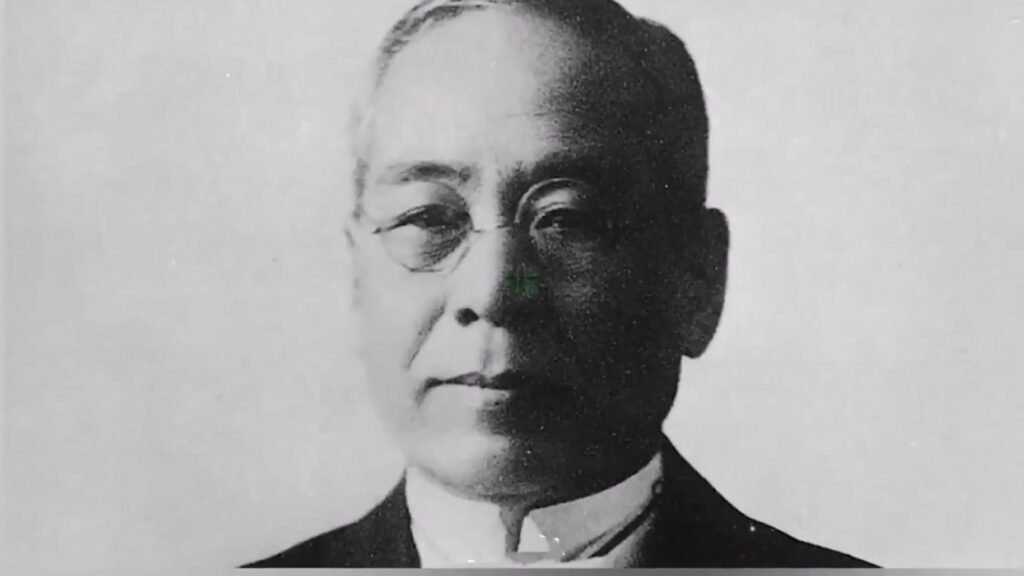
Key Historical Milestones
- 1896: At age 29, Sakichi Toyoda invents the Toyoda Power Loom, Japan’s first loom not dependent on manual labor.
Impact: Productivity increased 20×, a monumental leap in an era still dominated by hand weaving. - 1926: Toyoda Automatic Loom Works is founded, integrating automatic stop-motion technology that detects thread breakage.
Impact: Weaving efficiency improves by 50%—a breakthrough in both quality control and automation. - 1929: The company licenses its loom technology to a British firm for £100,000, marking the first major international recognition of Japanese industrial engineering.
Impact: This capital later funds Toyota’s diversification into automobiles.
These early decades established more than financial momentum—they forged Toyota’s identity: precision engineering, error detection, efficiency, and relentless improvement.
From Looms to Engines: The Birth of Toyota’s Automotive Vision (1933–1937)
Inspired by the industrial advancements of Europe and America, Sakichi Toyoda’s son, Kiichiro Toyoda, saw automobiles—not textiles—as the future.
Engineering Evolution
- 1933: Kiichiro creates the Automotive Division inside the loom company.
He applies 0.05 mm machining precision from looms to gearbox development—a level unprecedented in Japanese automotive manufacturing at the time. - 1936: Toyota’s first passenger car, the A/A1 sedan, is produced.
- Powered by an in-house 3.4-liter inline-six
- Developed using modular, standardized mechanical components—carried directly from loom production principles.
- 1937: Toyota Motor Co., Ltd. is officially established.
A loom manufacturer is now a full-fledged automotive company.

Toyota’s transition was not a business gamble—it was engineered. The exacting tolerances required in textile machinery translated perfectly to reliable and durable automotive components.
Post-War Recovery and the Rise of Reliability: Corolla and the Global Shift (1957–1966)
Japan’s post-war economy needed symbols of recovery—Toyota provided one.
1957: Corolla Prototype and New Engineering Standards
The early Corolla introduced a 1.0-liter OHV engine engineered for durability:
- Designed to run 100,000 km without major service
- Western competitors at the time recorded 3× higher failure rates
This reliability became a defining attribute of Japanese cars and a foundation for Toyota’s global expansion.
1966: Corolla Mass Production
When Corolla officially entered mass production:
- Toyota adopted a modular platform strategy
- Standardized components reduced manufacturing variability
- Production scalability aligned with global expansion ambitions

By 2021:
Corolla achieved 50+ million units sold—the best-selling vehicle nameplate in automotive history.
The Toyota Production System (TPS): Precision as a Philosophy (1966–1990)
Perhaps Toyota’s most influential contribution to global industry is not a car, but a system.
TPS Milestones
- Developed from “jidoka” (automation with a human touch) principles used in looms
- Implemented company-wide in 1966 and refined through the 1980s
- Introduced:
- Just-In-Time (JIT) manufacturing
- Heijunka (production leveling)
- Kaizen (continuous improvement)
- Andon systems for real-time error detection
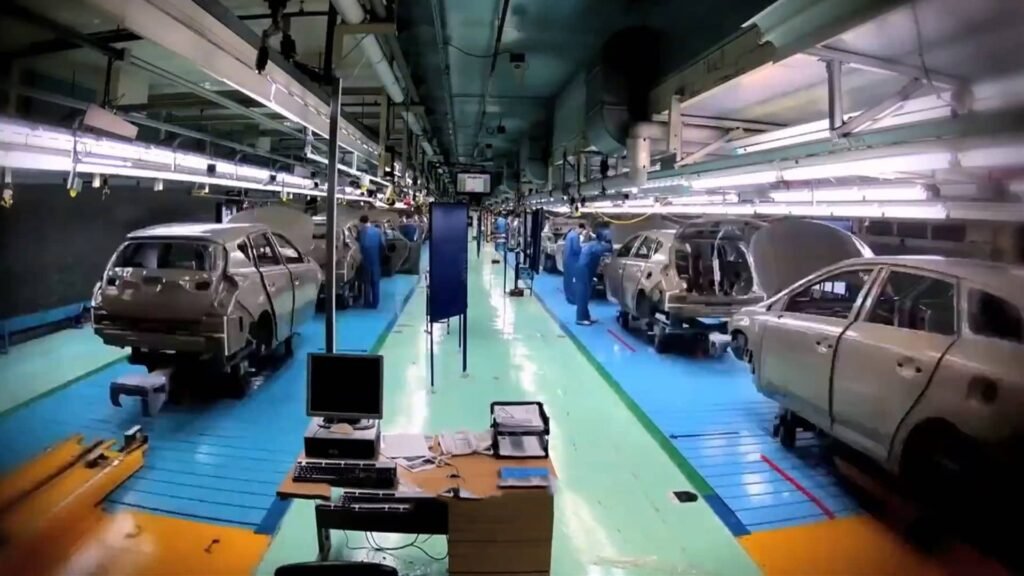
Measured Impact
- Defect rates dropped to 0.01%
- Global manufacturers (automotive, aerospace, electronics) adopted TPS-inspired systems
- Toyota became the textbook example in operations management and industrial engineering
TPS remains the world’s most influential manufacturing model—a direct descendant of the Toyoda loom philosophy.
Hybrid Leadership: The Prius Revolution (1997–2010)
In 1997, Toyota launched the Prius, the world’s first mass-produced hybrid vehicle.
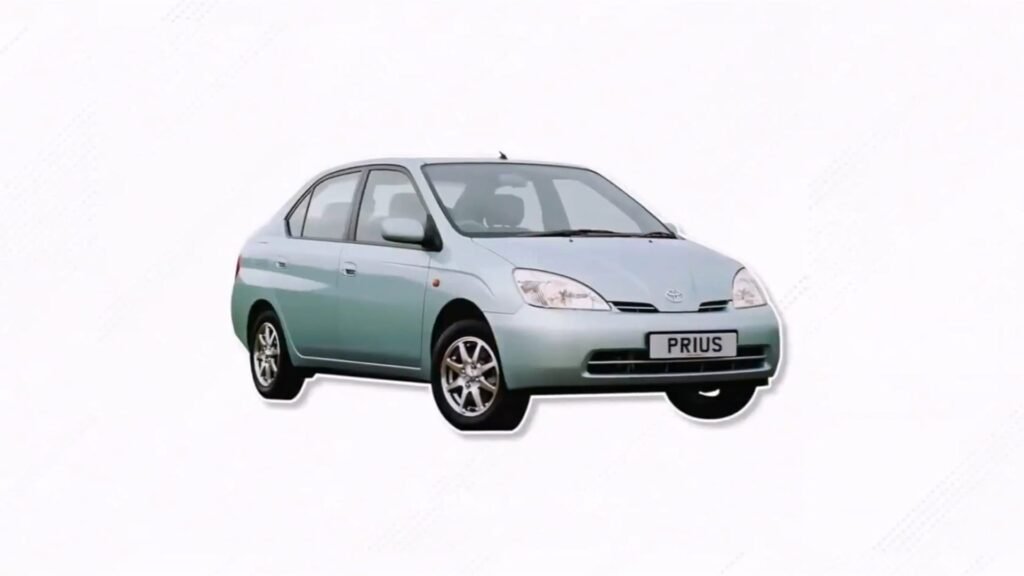
Technical Highlights
- 1.5-liter Atkinson-cycle engine
- Thermal efficiency: 38%, unprecedented for its time
- Power-split device integrating engine and electric motor
- Regenerative braking implementation mainstreamed
Toyota didn’t just build a fuel-efficient car—it created an entirely new category. By the 2010s, hybrid systems became a global standard, from urban compacts to luxury SUVs.
Entering the Electric and Hydrogen Era (2010–Today)
Toyota’s modern strategy blends hybrid dominance with cautious but deliberate electrification.
E-TNGA Electric Platform
- Battery energy density: ~180 Wh/kg
- Scalable architecture shared across sedans, SUVs, and crossovers
- Increased rigidity and modular component layouts
Hydrogen Fuel Cell: The MIRAI
- Overcomes traditional cold-start challenges with reliable ignition at −30°C
- Second-generation stack improves:
- Durability
- Power output
- Fuel cell packaging efficiency
Global Supplier Influence
Toyota subsidiaries such as:
- Aisin (transmissions)
- DENSO (electronics, thermal systems)

Have become essential suppliers to global automakers—even to Toyota’s direct competitors.
Why Toyota Is Still Japan’s Industrial Engine: A Holistic Perspective
Toyota’s contribution extends beyond cars. It reshaped:
- Japan’s manufacturing identity
- Global production methodologies
- The maturity of hybrid systems
- Hydrogen commercialization
- Electric platform engineering
- Supply chain efficiencies adopted across industries
It is not merely a company; it is an industrial school whose teachings spread worldwide.
Key Data Summary
Toyota Historical Milestones
| Year | Event | Impact |
|---|---|---|
| 1896 | Toyoda Power Loom | 20× productivity |
| 1926 | Automatic Loom Company | +50% weaving efficiency |
| 1929 | £100,000 technology license | Funds automotive expansion |
| 1936 | A/A1 sedan | First mass-produced Toyota |
| 1966 | Corolla production | 50+ million units sold |
| 1997 | Prius | Hybrid category revolution |
| 2021 | Toyota global sales lead | Multi-decade brand dominance |
Core Technical Achievements
- 0.05 mm machining precision adapted from loom components
- TPS reducing defects to 0.01%
- Hybrid engine efficiency reaching 38%
- Batteries achieving 180 Wh/kg
- Fuel cell restart capability at −30°C

Toyota’s Enduring Legacy
Today, Toyota represents a century of engineering correction, iteration, and discipline. From looms to engines, from TPS to hybrids, from modular platforms to fuel cell systems—every chapter in Toyota’s story is tied to a core truth: precision, once mastered, becomes a force multiplier.
Japan’s industrial growth did not rely solely on natural resources, capital markets, or foreign investment. It relied on a mindset—one Toyota helped define.
Toyota is more than a car manufacturer.
It is Japan’s industrial heartbeat, a refining furnace of engineering philosophy, and a global symbol of manufacturing excellence.
And it all began with a loom.
Reference: