
Below is a comprehensive 2025 Toyota Sequoia full sheet — specifications, performance, dimensions, capacities and configurations, presented in structured tables so you (or your readers) can quickly see all relevant data at a glance. I gathered publicly available information (manufacturer + independent spec sheets + reviews) and organized it for clarity.
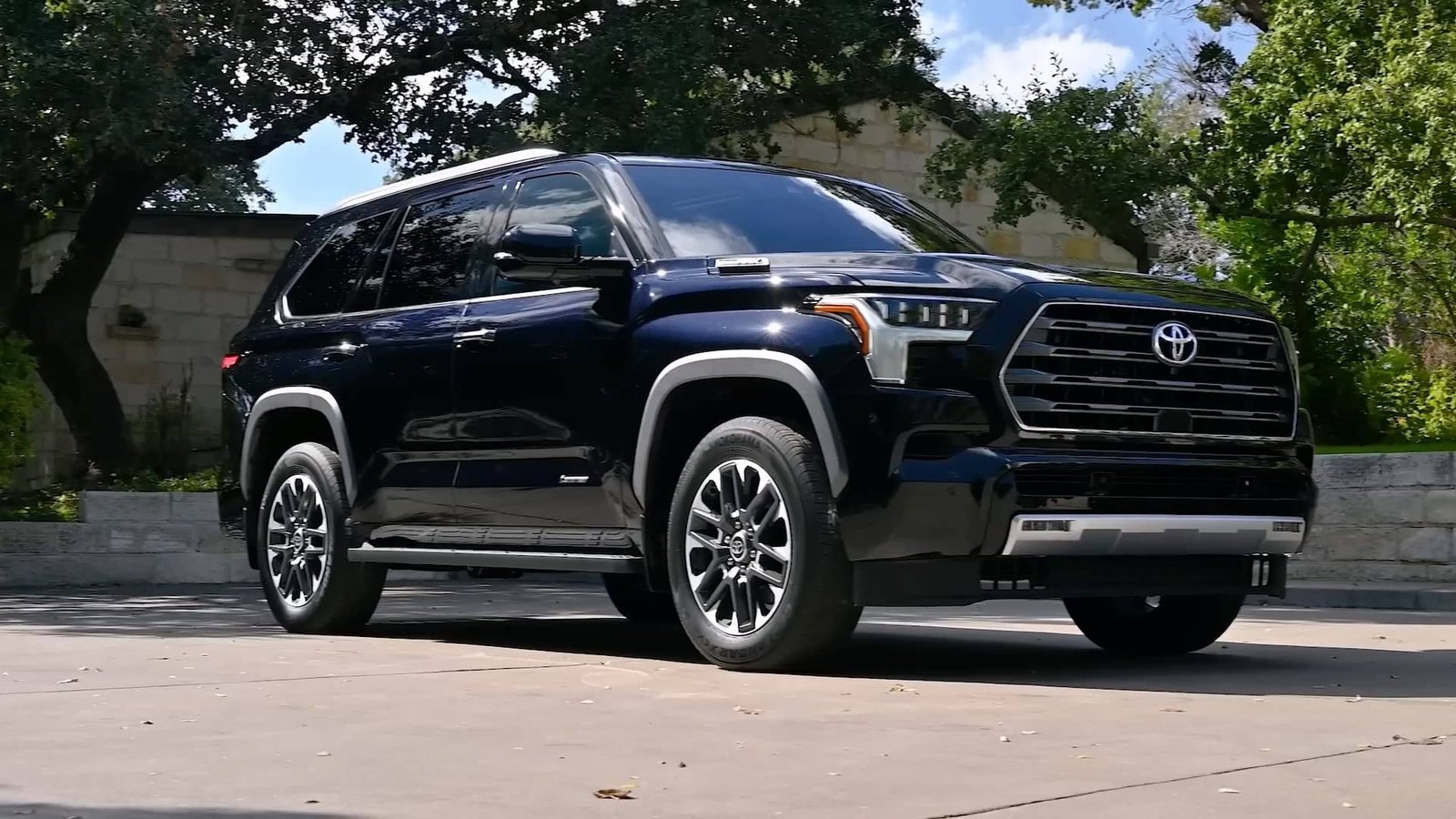
📊 2025 Toyota Sequoia — Core Specifications & Performance Data
| Item | Specification / Data |
|---|---|
| Engine / Powertrain | i-FORCE MAX twin-turbo V6 hybrid (gas + electric assist) |
| Displacement | 3.4 L (≈ 3.445 L) |
| Max Horsepower | 437 hp @ 5,200 rpm |
| Max Torque | 583 lb-ft (≈ 790 N·m) @ ~2,400 rpm |
| Transmission | 10-speed automatic |
| Drivetrain / Drive-type options | Rear-Wheel Drive (RWD) or part-time / selectable 4WD (depending on trim) |
| Maximum Towing Capacity (properly equipped) | up to 9,520 lbs (≈ 4,318 kg) |
| Fuel Tank Capacity | 22.5 gallons (≈ 85 L) |
| EPA / Estimated Fuel Economy (RWD) | 21 mpg city / 24 mpg highway / 22 mpg combined |
| EPA / Estimated Fuel Economy (4WD) | 19 mpg city / 22 mpg highway / 20 mpg combined |
| Seating Capacity | up to 8 passengers (standard second-row bench) or 7 with optional second-row captain’s chairs |
| Cargo Capacity (varies by seat configuration) | – Behind first row: up to 86.9 cu ft (≈ 2,461 L) – Behind second row (third-row folded): ~49.0 cu ft – Behind third row (all seats up): ~22.3 cu ft (≈ 631 L) |
| Ground Clearance (minimum) | 8.6 in (≈ 219–221 mm) |
| Overall Dimensions (L × W × H) | 208.1 in × 79.6 in × ~74.5 in (depending on trim/roof/options) |
| Wheelbase | 122.0 in |
| Curb Weight (varies by trim) | ~5,620 lbs (lightest trims) to ~6,185 lbs (heaviest / fully equipped) |
| Gross Vehicle Weight Rating (GVWR) | up to ~7,350 lbs (varies by trim) |
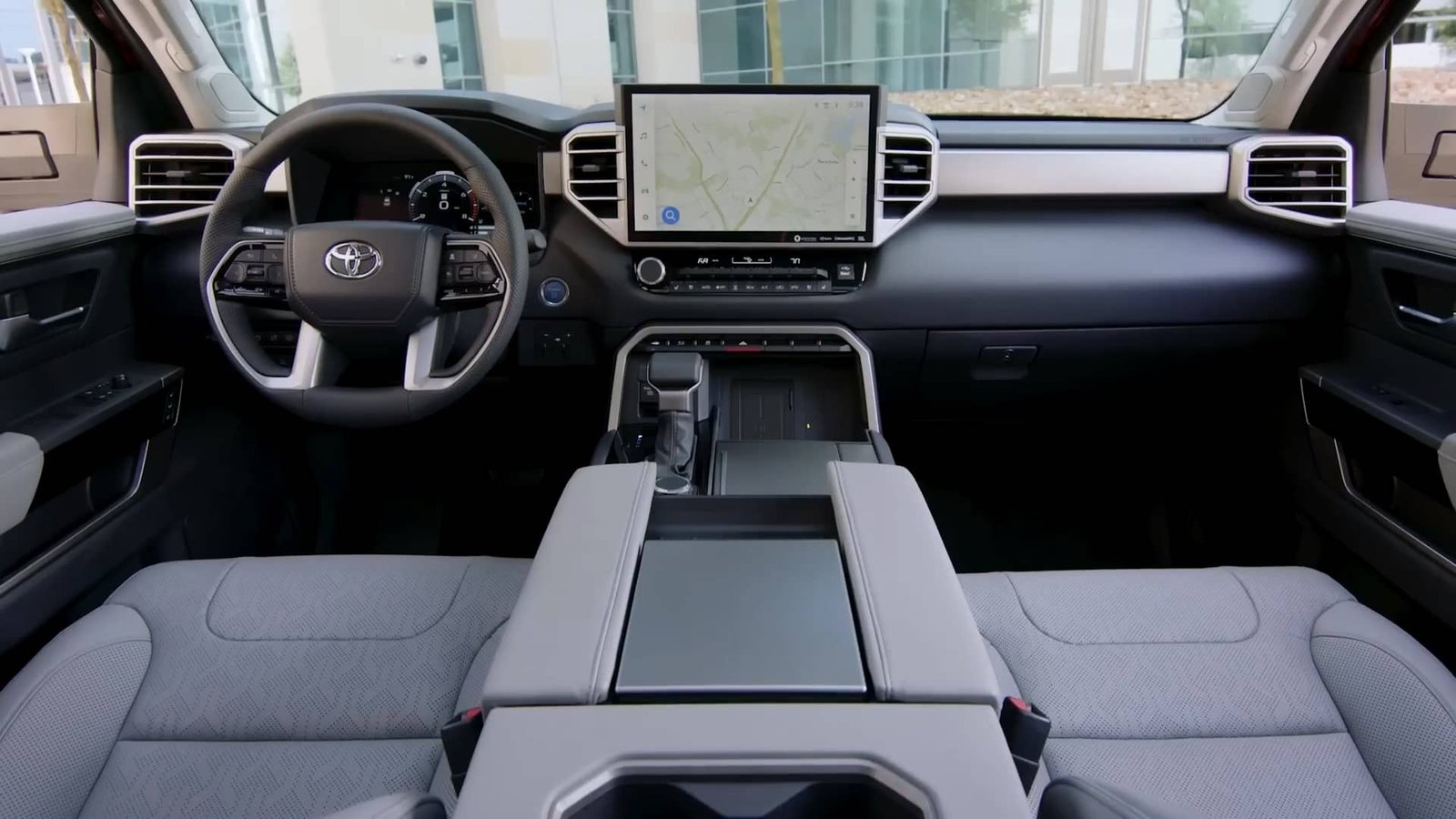
🚗 Trim Levels & Price / Fuel Economy Overview (2025 Lineup)
| Trim / Edition | Typical Starting MSRP (USD) * | Engine / Drivetrain | EPA Fuel Economy (city/hwy/combined) ** | Notes / Variants |
|---|---|---|---|---|
| SR5 (base) | $62,425 | 3.4 L hybrid V6, RWD or 4WD | ~21/24/22 mpg (RWD) | Standard, basic-feature configuration |
| Limited | ~$68,825 (approx) | hybrid V6, 4WD | ~20 mpg combined (typical spec) | Mid-level options, more comfort/features |
| Platinum | ~$79,570 | hybrid V6, 4WD | ~20 mpg combined | Premium trim, more amenities |
| TRD Pro / 1794 Edition | ~$80,385 (1794 Edition, similar for TRD Pro) | hybrid V6, 4WD | ~20 mpg combined or slightly less in 4WD | Off-road / rugged-style trim / specialty trim |
| Capstone (top) | ~$83,915 | hybrid V6, 4WD | ~19/22/20 mpg city/hwy/combined (per Edmunds spec) | Full-option luxury-style trim, 7-seater layout |
* MSRP may vary with destination charge, options, region.
** Fuel economy varies depending on RWD vs 4WD, driving style, load, etc.
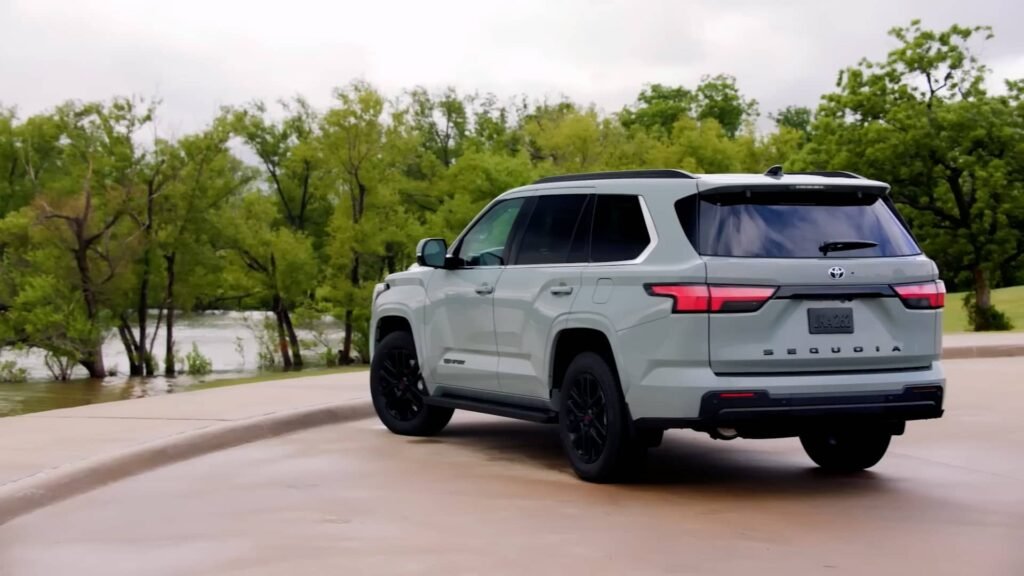
📐 Interior & Packaging — Space, Seating & Cargo Layout
| Item / Dimension / Capacity | Value / Detail |
|---|---|
| Seating Rows | 3 rows (with flexible 2nd-row bench or captain’s-chairs option) |
| Headroom (Front) | 39.2 in |
| Legroom (Front) | 41.2 in |
| Shoulder Room (Front) | 65.0 in |
| Hip Room (Front) | 62.6 in |
| Headroom (2nd Row) | ~37.5–38.4 in depending on trim / roof option |
| Legroom (2nd Row) | ~39.2 in |
| Shoulder Room (2nd Row) | 61.8 in |
| Hip Room (2nd Row) | 60.8 in |
| Headroom (3rd Row) | 35.6 in |
| Legroom (3rd Row) | ~33.7 in |
| Shoulder Room (3rd Row) | 62.6 in |
| Hip Room (3rd Row) | 50.9 in |
| Max Cargo Volume (all rear seats folded / behind 1st row) | 86.9 cu ft (~2,461 L) |
| Cargo Volume (with 3rd row folded, 2nd row up) | ~49.0 cu ft |
| Cargo Volume (with all seats up, 3rd row in use) | ~22.3 cu ft (~631 L) |
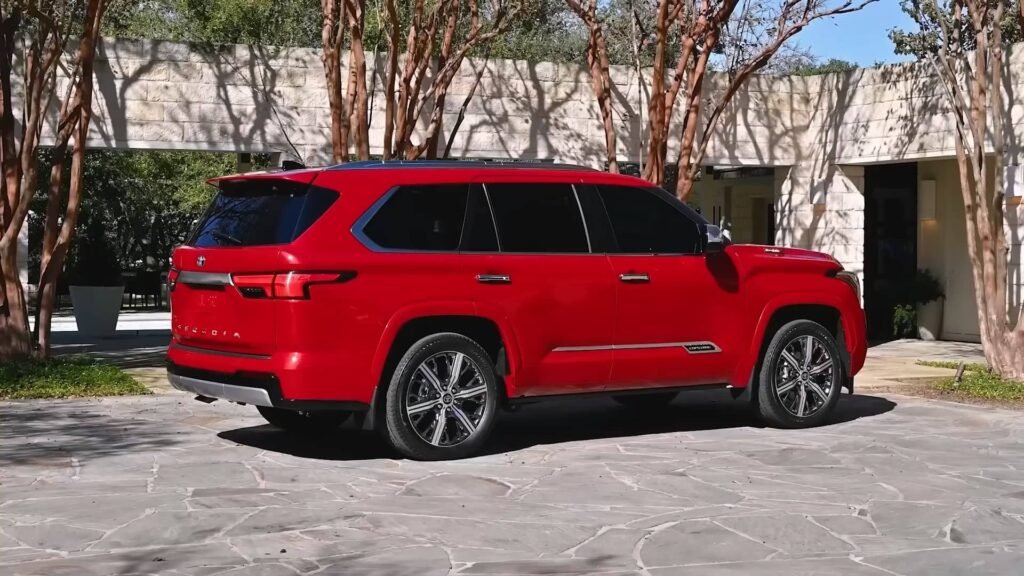
🔧 Chassis, Suspension & Capacity Data
| Item | Specification / Detail |
|---|---|
| Suspension (Front) | Independent double-wishbone with twin-tube gas shocks & coil springs |
| Suspension (Rear) | Solid / live rear axle with multi-link suspension (on standard) + optional load-leveling rear air suspension on higher trims |
| Ground Clearance | 8.6 in (≈ 219 mm) |
| Gross Vehicle Weight Rating (GVWR) | ~7,350 lbs (varies by trim) |
| Payload Capacity (approx.) | ~1,730 lbs (≈ 785 kg) for certain trims, depending on equipment. |
| Fuel Type | Regular gasoline (with hybrid assist) |
| Emissions / Efficiency Features | Direct Injection engine, hybrid electric assist, automatic start/stop, modern fuel & energy management in hybrid system. |

🧩 Trim Configurations — What You Get per Trim (General Overview)
- SR5 (base): entry-level trim, hybrid V6, RWD or optional 4WD. Basic feature set — good for users focused on utility, towing, and price.
- Limited: mid-tier trim, adds comfort and convenience options — better interior finish, more features compared to base.
- Platinum: more premium finish, likely more comfort, advanced options, and on-road refinement.
- TRD Pro / 1794 Edition: off-road or specialty oriented trims (for users needing ruggedness, towing, mixed road conditions, or more rugged aesthetics).
- Capstone (top trim / luxury-oriented): highest MSRP, luxury-oriented feature set, 4WD, and most options — for buyers seeking a mix of utility and higher-end comfort.
🔎 Additional Notes & Observations (from Experts / Reviews)
- The hybrid twin-turbo V6 combined with electric assist gives Sequoia both strong torque and towing capability, while improving efficiency compared with traditional V8-powered full-size SUVs.
- Cargo capacity can be substantial — up to nearly 87 cu ft when seats down — but with all three rows occupied, cargo room shrinks considerably (to around 22 cu ft). That’s a typical trade-off for three-row full-size SUVs.
- Suspension configuration (solid rear axle + multi-link) aims to balance towing/hauling stability with ride comfort; higher trims optionally offer load-leveling rear air suspension for improved towing behavior and ride comfort.
✅ Summary — What the Numbers Tell Us
- The 2025 Toyota Sequoia offers strong power and torque (437 hp / 583 lb-ft) despite being a V6/hybrid — sufficient for serious towing (9,520 lb) without V8-level fuel penalty.
- It remains a true full-size SUV: large exterior, three seating rows, flexible cargo + seating configurations, fairly high payload/GVWR.
- Fuel economy (~20–22 mpg combined, depending on drive type) is competitive for its size and capability — not economy-car numbers, but reasonable for a hybrid full-size SUV.
- There is flexibility across trims — from utilitarian base SR5 to luxury-oriented Capstone or off-road–ready TRD Pro, giving buyers control over configuration depending on their priorities (towing, family transport, comfort, ruggedness).
- Trade-offs remain: with all seats up, cargo volume is limited; third-row space/headroom is modest compared to some competitors; heavy curb weight — standard for full-size body-on-frame SUV.
Reference: