
When you step into a Porsche showroom or configure a top-tier Mercedes-Benz, the sticker shock is immediate. To the uninitiated, a $100,000 price tag feels like a “brand tax”—a premium paid simply for a hood ornament.
However, as automotive enthusiasts and engineers often debate on platforms like Reddit’s r/cars, the price of a luxury vehicle isn’t just about prestige. It is the result of obsessive over-engineering, invisible NVH (Noise, Vibration, and Harshness) dampening, and a supply chain that prioritizes perfection over profit margins.
In this deep dive, we break down the tangible and intangible factors that separate a mass-market commuter from a true luxury machine.

1. The Engineering of Silence: NVH Control
Most drivers judge a car by its 0-60 mph time, but luxury buyers pay for what they don’t hear. Achieving a “vault-like” cabin requires immense investment in NVH engineering.
While a standard Toyota might use basic foam inserts, a Lexus or Audi utilizes:
- Acoustic Laminated Glass: Double-pane windows with a polymer layer to cancel wind hiss.
- Active Noise Cancellation (ANC): Microphones in the headliner that emit inverse frequencies through the speakers to neutralize road roar.
- Massive Sound Deadening: Luxury cars often carry 100+ lbs of specialized butyl rubber and Thinsulate-style materials hidden behind every pillar and door panel.
2. Platform Architecture vs. Shared Parts
A common myth is that “a Lexus is just a fancy Toyota.” While some entry-level models share platforms, flagship luxury cars (like the BMW 7 Series or Mercedes S-Class) utilize bespoke architectures.
Economy cars are designed for ease of assembly. Luxury cars are designed for kinematics. This involves complex multi-link suspension setups, often made of forged aluminum rather than stamped steel, to reduce unsprung weight. This allows the car to glide over potholes while maintaining “planted” high-speed stability that a budget car simply cannot replicate.
3. The “Materiality” Gap
In a $30,000 car, “leather” is often highly processed “protein leather” (vinyl). In a high-end luxury vehicle, you are paying for:
- Nappa and Semi-Aniline Leathers: Sourced from cattle raised in high-altitude regions (to avoid insect bites/scars).
- Open-Pore Woods and Real Metal: If it looks like walnut, it’s a solid slice of wood. If it looks like cold chrome, it’s milled aluminum, not silver-painted plastic.
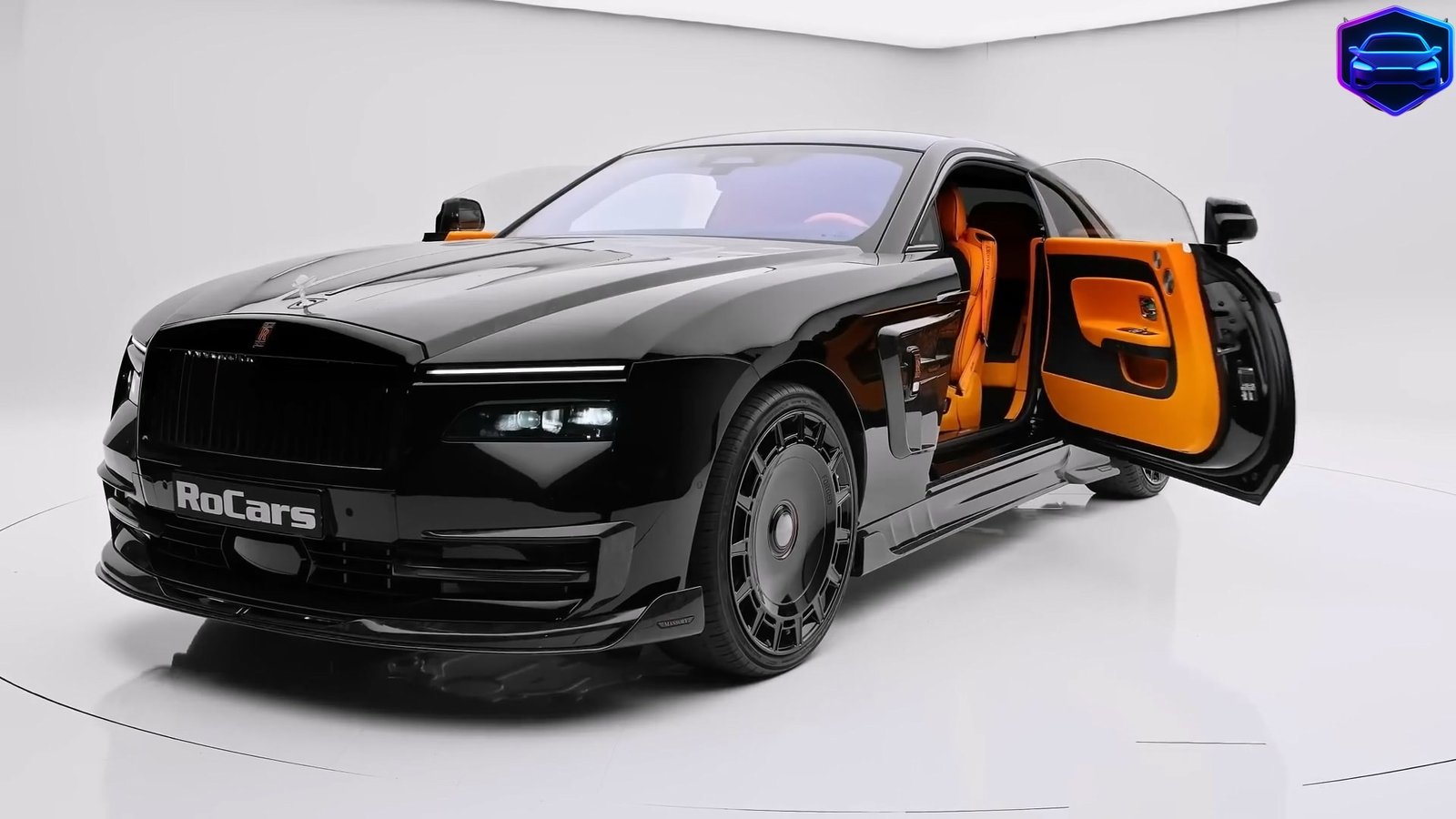
- Manufacturing Man-Hours: A Bentley interior can take over 100 hours to hand-stitch. You aren’t just buying materials; you are buying specialized human labor.
4. The R&D “Trickle-Down” Effect
Luxury brands are the laboratory for the entire industry. Features we take for granted today—ABS, airbags, crumple zones, and adaptive cruise control—all debuted on high-end European sedans decades before hitting the mass market.
When you buy a new Mercedes-Benz, you are subsidizing the billions of dollars spent on R&D for technologies that won’t be “affordable” for another ten years. You are paying to be an early adopter of the future.
Comparison: Luxury vs. Economy – Where the Money Goes
| Feature | Economy Car (e.g., Honda Civic) | Luxury Car (e.g., BMW 5 Series) |
| Drivetrain | Transverse 4-Cylinder (Front Wheel Drive) | Longitudinal Inline-6/V8 (Rear/All Wheel Drive) |
| Suspension | MacPherson Strut (Steel) | Multi-link Air Suspension (Aluminum) |
| Interior | Injection-molded plastics / Synthetic leather | Hand-stitched Nappa / Genuine Carbon Fiber |
| Infotainment | Standard Tablet Integration | Dedicated GPU / Multi-screen OLED / Burmester Audio |
| Insulation | Minimal (Weight saving for MPG) | Heavy (Dual-pane glass / Active noise cancellation) |
5. Depreciation and the “Second Owner” Burden
From a financial perspective, luxury cars are expensive because they are built to a standard of excellence that is difficult to maintain cheaply. A high-performance German engine has tighter tolerances; it requires specialized synthetic oils, high-octane fuel, and complex diagnostic tools. The high MSRP accounts for the “Total Cost of Ownership” and the brand’s commitment to stocking bespoke parts for decades.

Is the Premium Worth It?
The law of diminishing returns definitely applies. A $100,000 car is not four times better than a $25,000 car. However, for the discerning buyer, that extra 15% of refinement—the way the door thuds shut, the absence of vibration at 100 mph, and the tactile click of a knurled metal dial—is where the value lies.
Luxury isn’t about getting from A to B; it’s about the quality of the experience between those two points. When you realize the sheer level of chemistry, physics, and craftsmanship involved, the price tag starts to make a lot more sense.
Useful Links: