
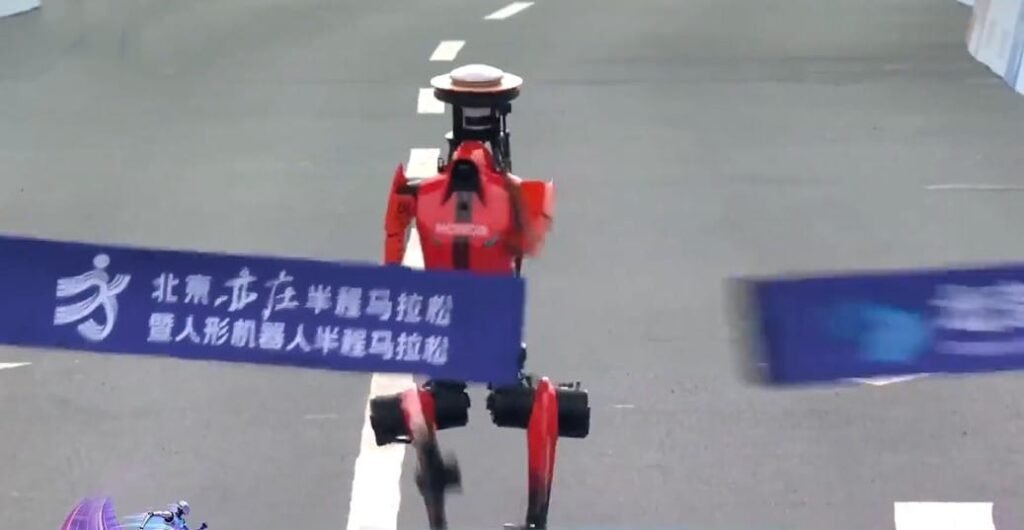
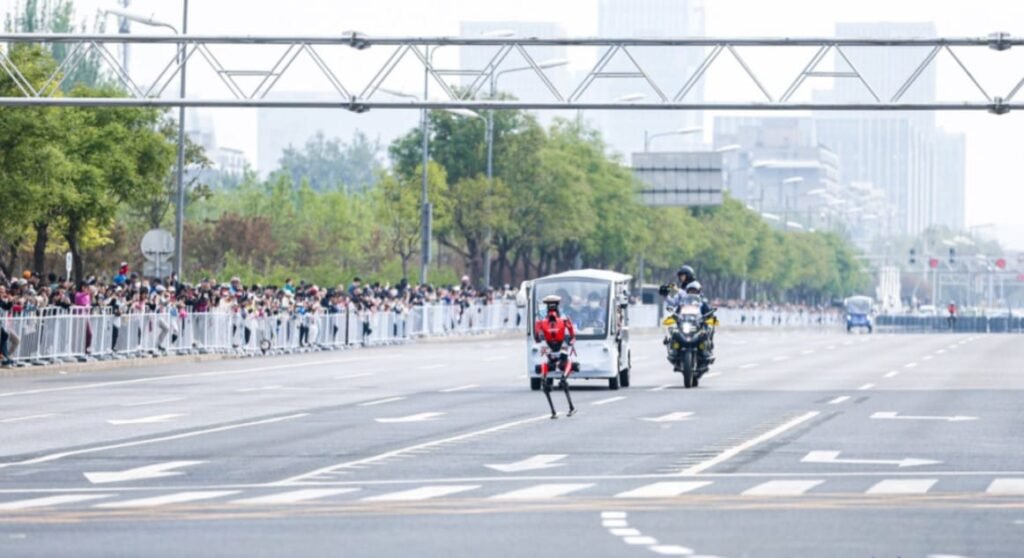
April 19, 2026 | Beijing, China — In a landmark event for robotics and artificial intelligence, the 2026 Beijing E-Town Humanoid Robot Half-Marathon concluded with a historic breakthrough: an autonomous humanoid robot named Flash (from Shenzhen Honor Smart Technology’s Qitian Dasheng Team) completed the 21.0975 km course in 50 minutes 26 seconds, shattering the existing human men’s half-marathon world record of 57:20 set by Jacob Kiplimo in Lisbon just one month prior. This race marks not only a speed milestone but a definitive leap in embodied intelligence, real-time autonomy, and endurance robotics—proving humanoids can outperform elite human athletes in sustained, dynamic outdoor movement.
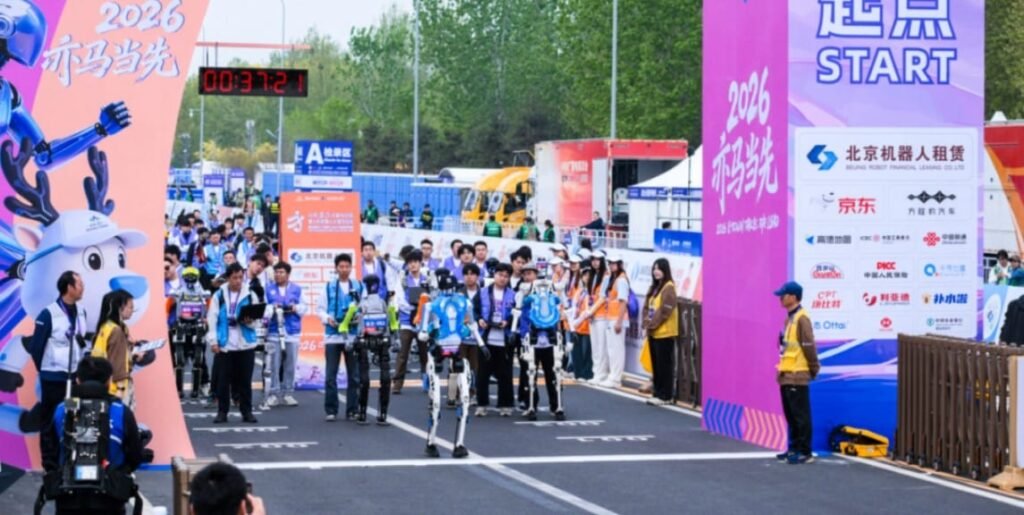
Race Overview: Scale, Format, and Ground Rules
The 2026 event was the second edition of the world’s first full humanoid robot half-marathon, organized by the Beijing Economic-Technological Development Area (E-Town). Held simultaneously with the human half-marathon, it brought together over 100 teams and 300+ robots—five times the 2025 participation—including top Chinese labs (Unitree, AgiBot, Tien Kung) and international squads from Germany, France, Portugal, and Brazil.
Key Race Specifications
| Category | Details |
|---|---|
| Date & Start Time | April 19, 2026, 7:30 AM (Beijing time) |
| Course | 21.0975 km (standard half-marathon) |
| Route | Kechuang 17th Street → downtown avenues → international motorsport track → Nanhaizi Park (mixed urban/ecological terrain) |
| Divisions | 1. Autonomous Navigation (Group A) – fully AI-driven, no remote control; weighted ×1.02. Remote Control (Group B) – human-piloted; weighted ×1.2 (penalty to favor autonomy) |
| Cutoff Time | 3 hours 40 minutes (DNF for non-finishers) |
| Top Prizes | Cash awards + industry innovation grants + global tech showcase slots |
Critical Rules & Safety
- Staggered starts: 30-second gap between robots to avoid collisions
- Penalties: 2–5 minute additions for route deviation, obstacle contact, or manual intervention
- Robot medical support: On-course “ambulance robots” and engineering teams for on-site repairs
- Eligibility: Strict bipedal humanoid form (75–180 cm height), self-propelled, no external tethers
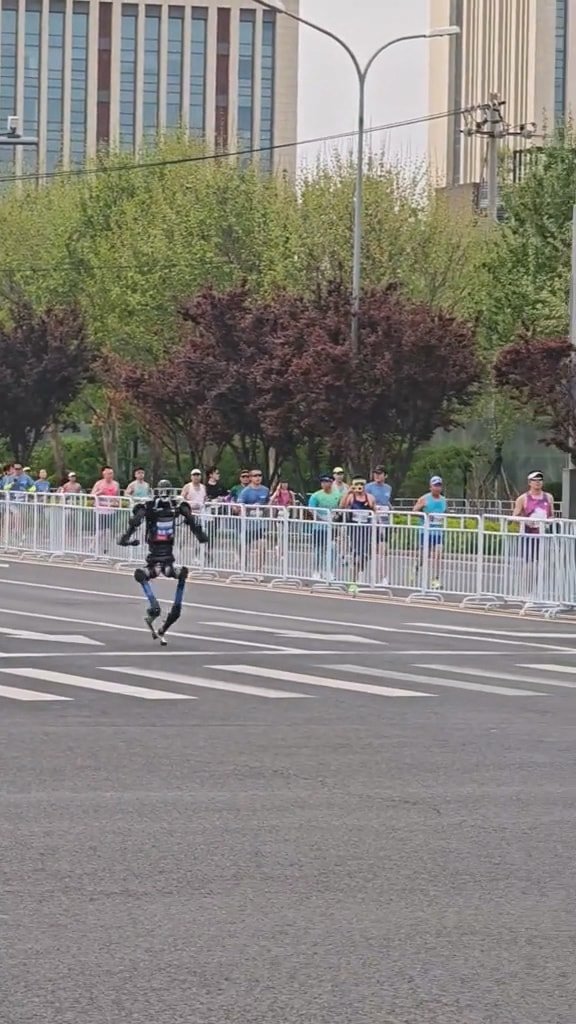
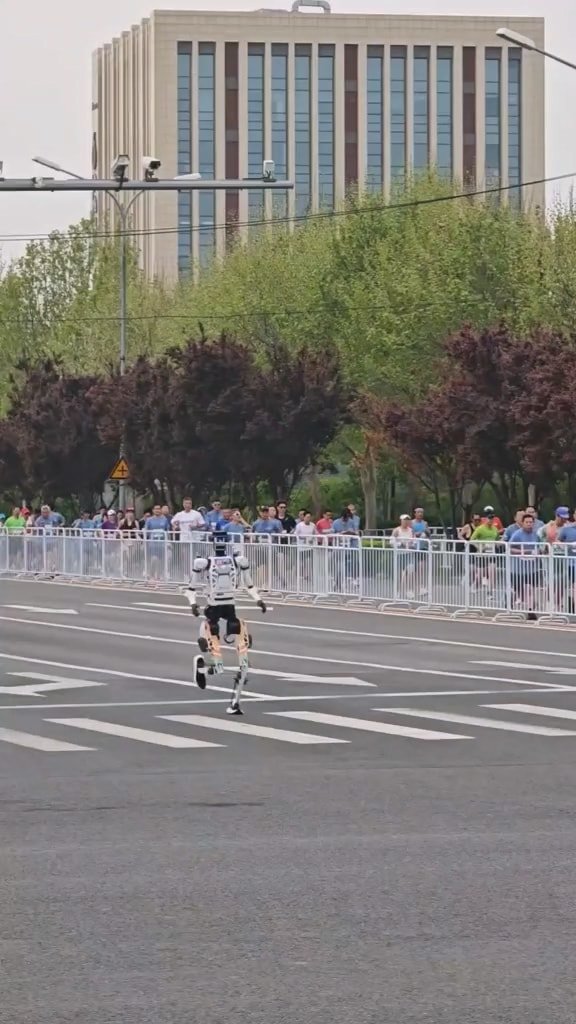
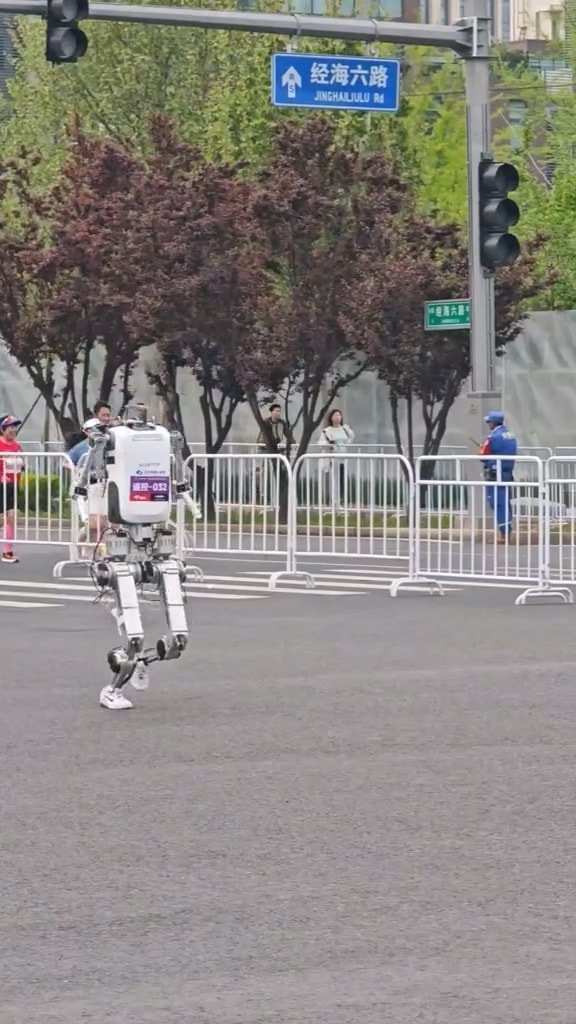
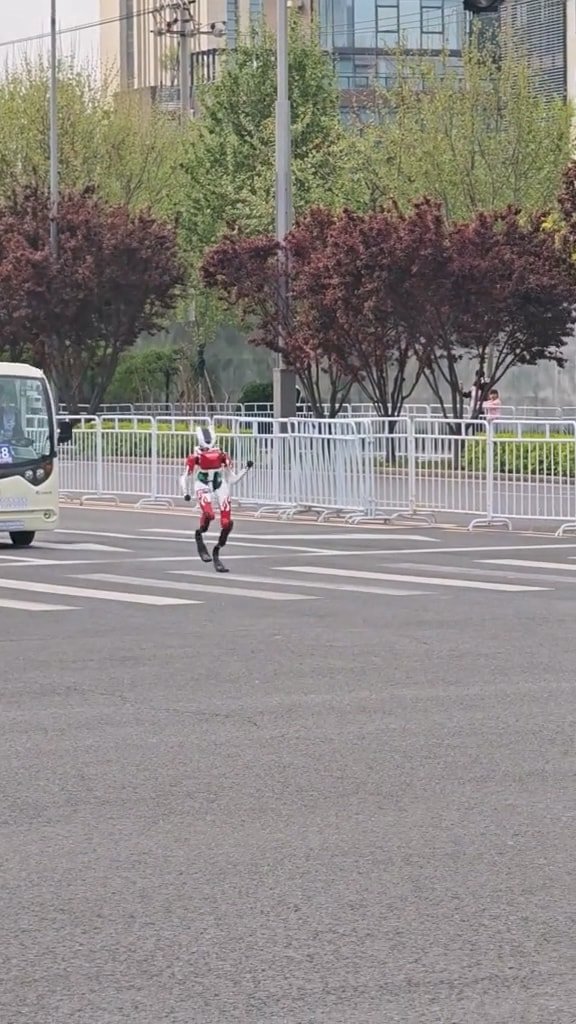
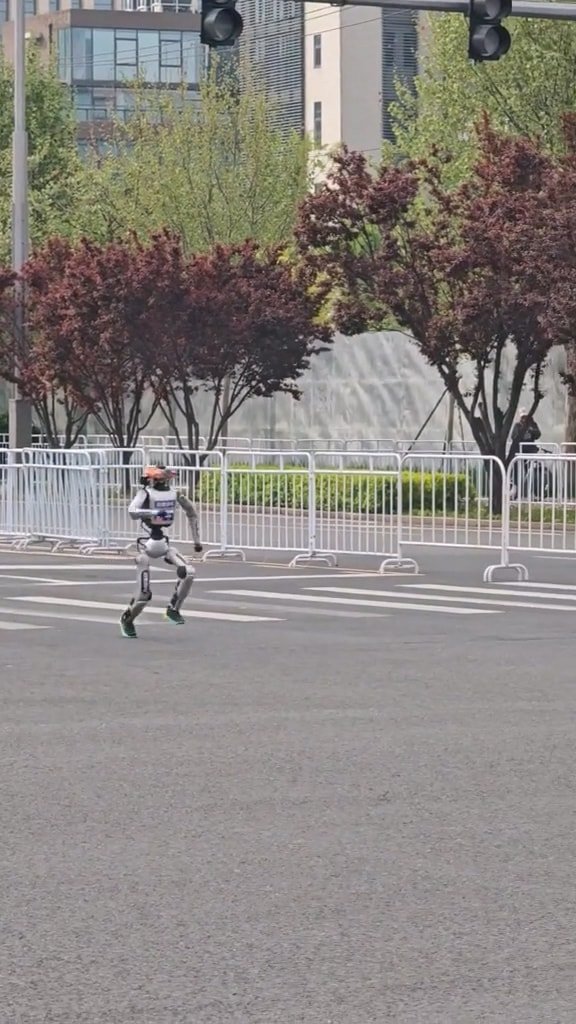
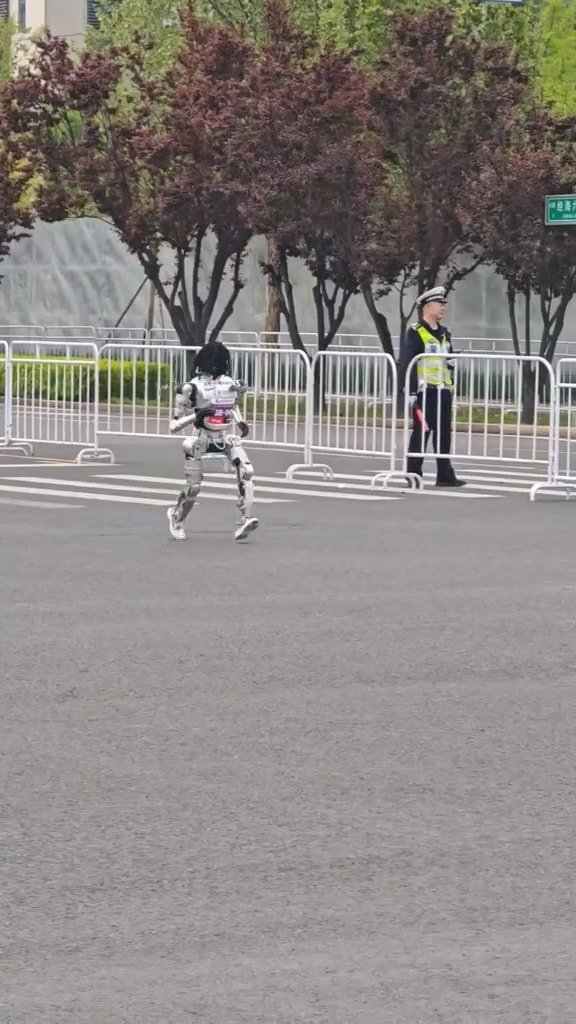
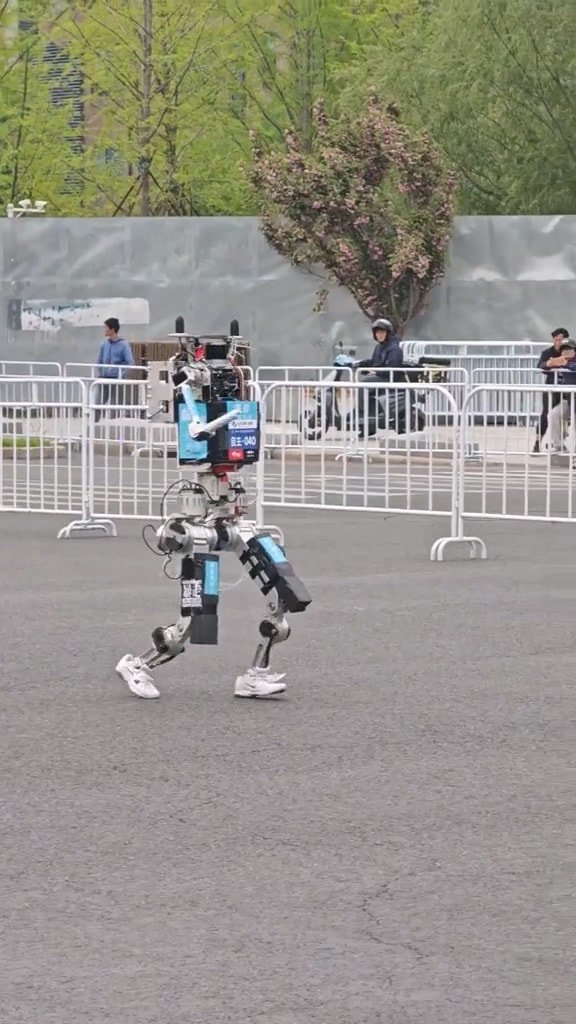
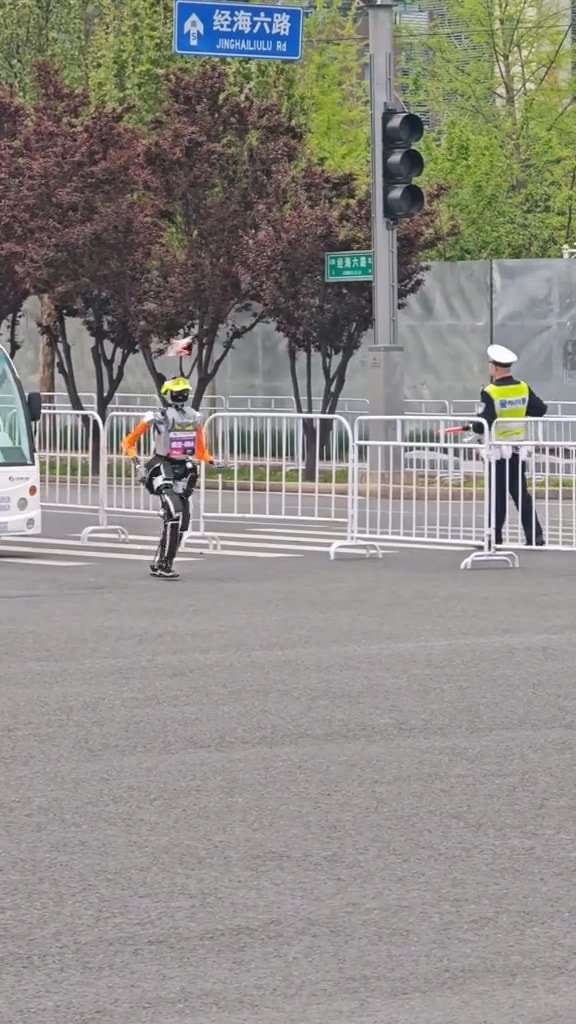
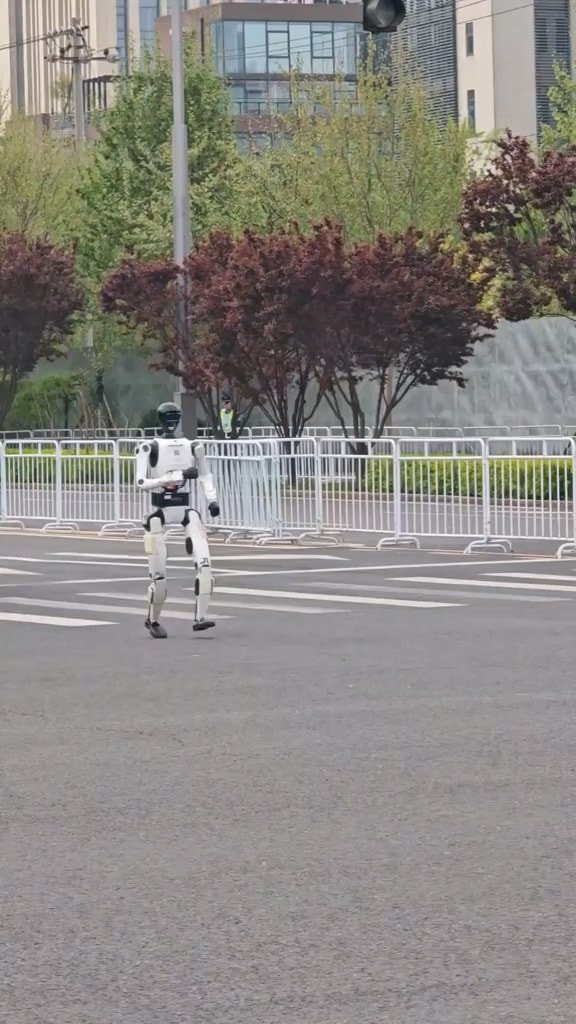
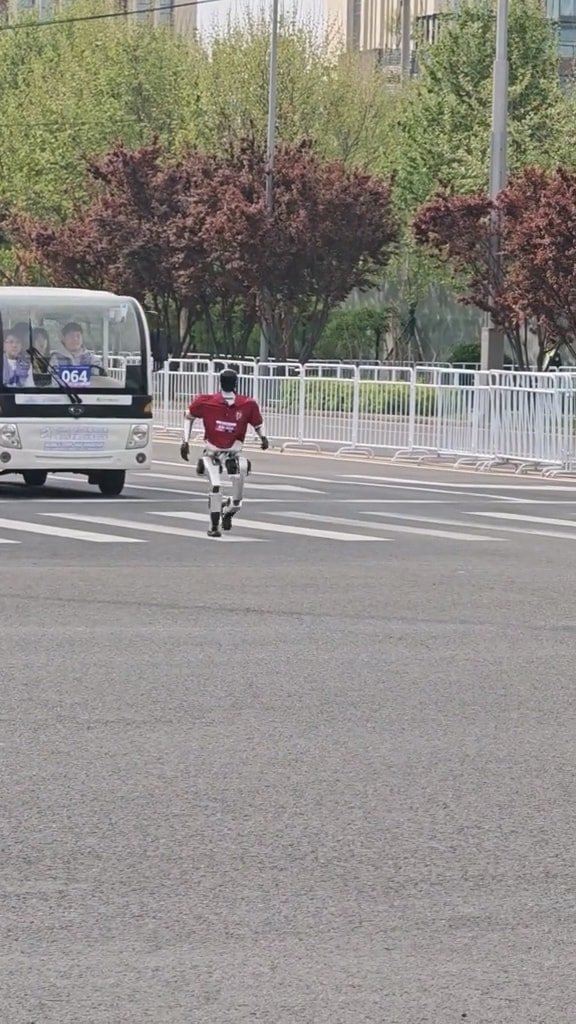
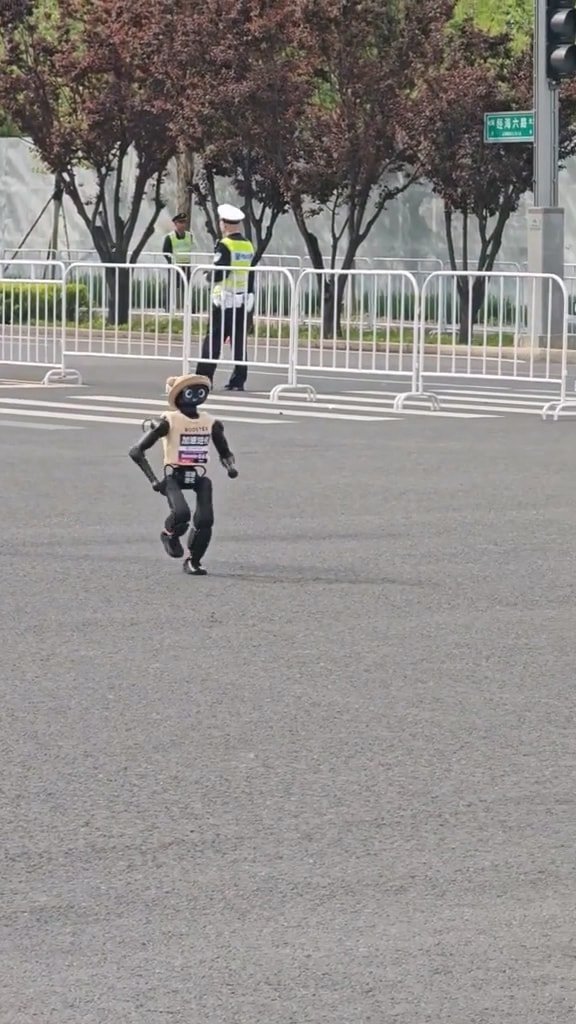
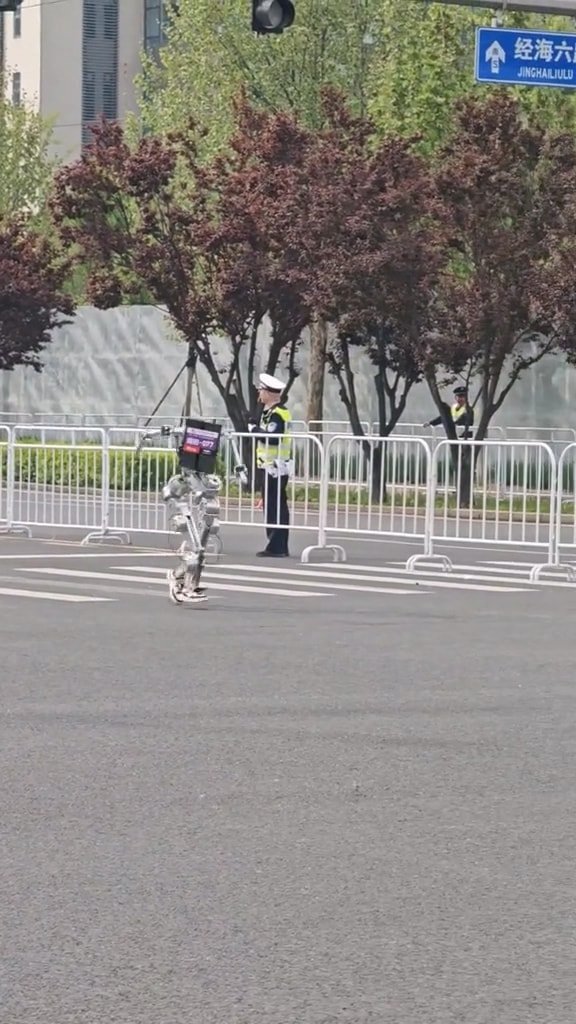
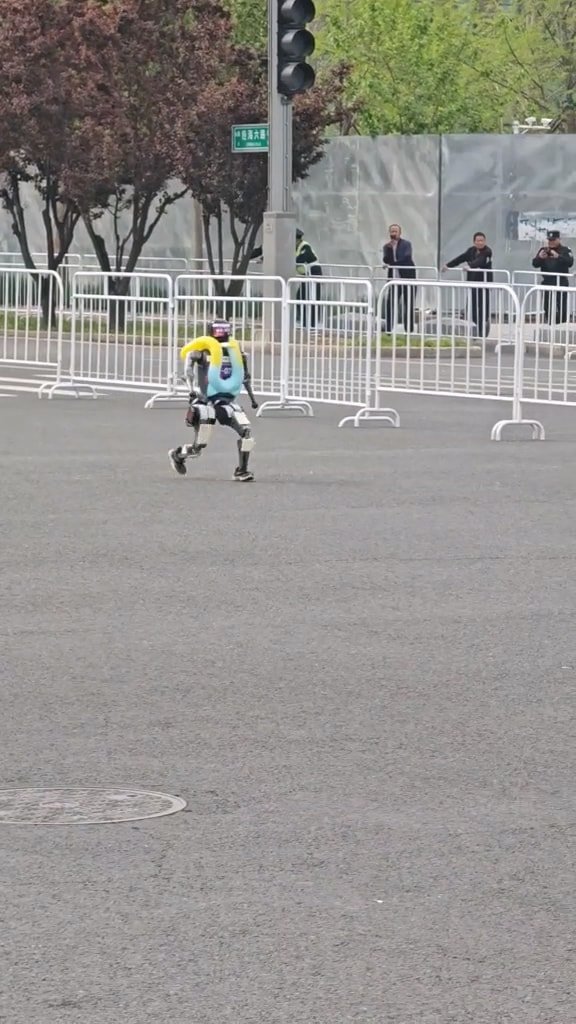
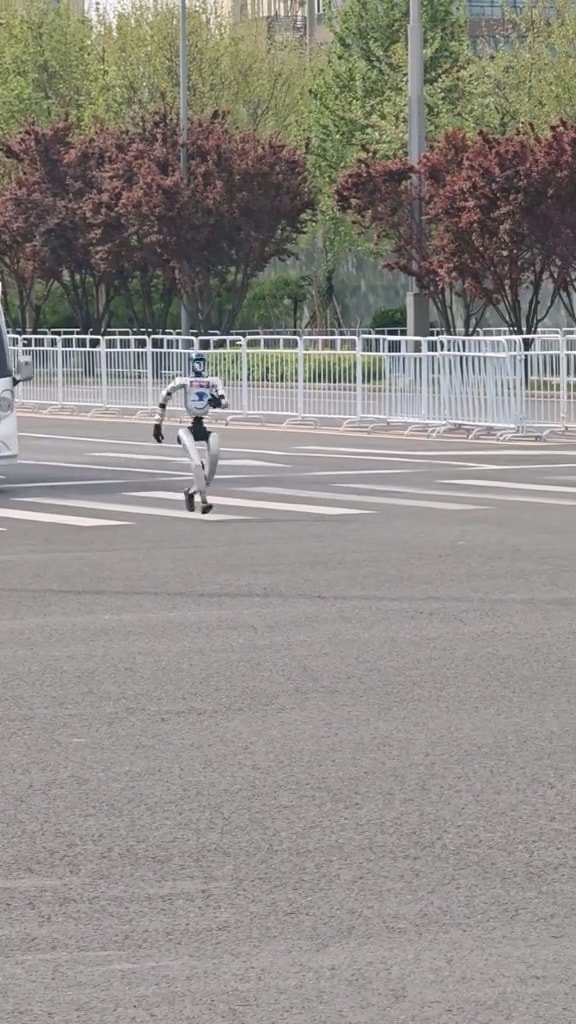
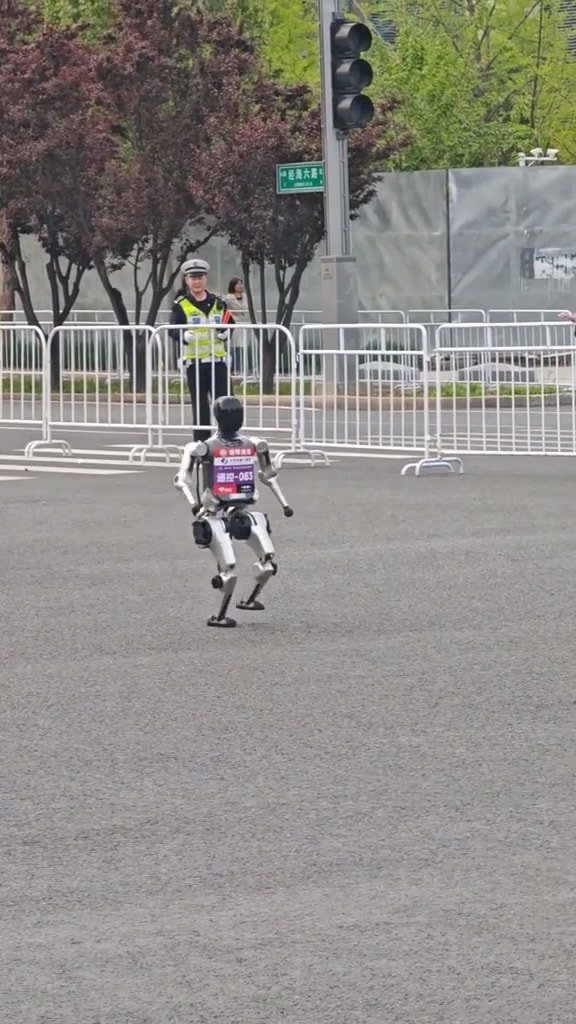
Top 3 Finishers: Full Results & Breakdown
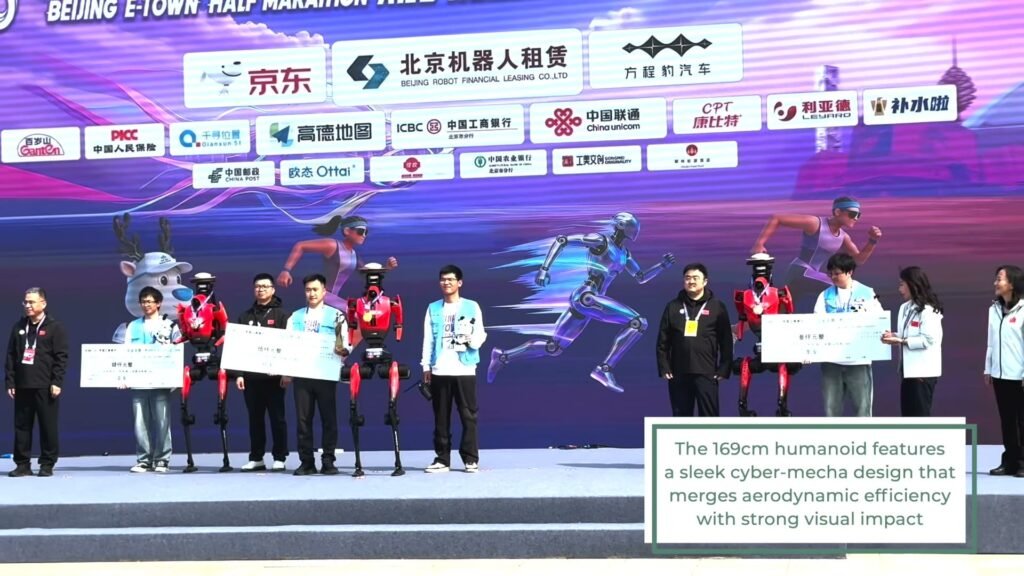
All podium spots went to autonomous (Group A) robots from Honor Smart Technology—showcasing dominant advances in end-to-end AI locomotion.
| Rank | Team | Robot Name | Division | Net Time | Weighted Score | Avg. Speed |
|---|---|---|---|---|---|---|
| 1st | RongYao-Qitian Dasheng (Honor) | Flash | Autonomous (A) | 50:26 | 50:26 | 25.0 km/h (6.94 m/s) |
| 2nd | RongYao-Leiting Flash (Honor) | Thunder | Autonomous (A) | 50:56 | 50:56 | 24.7 km/h |
| 3rd | RongYao-Xinghuo Liaoyuan (Honor) | Spark | Autonomous (A) | 53:01 | 53:01 | 23.8 km/h |
Historical Context: The 2025 champion (Tien Kung Ultra) finished in 2:40:42—meaning robot performance improved by nearly 1 hour 50 minutes in just 12 months.
Technical Breakthroughs: How Robots Ran Faster Than Humans
1. Core Hardware: Power & Lightweight Design
- High-torque density joints: Custom actuators (189 N·m/kg torque density) delivering 360 N·m peak torque per leg joint—enough for explosive strides and stable landings.
- Materials: Carbon-fiber exoskeletons (40% lighter than aluminum) with aerospace-grade alloys; Flash weighed just 28 kg.
- Thermal management: Liquid-cooled joints and smart heat dissipation to sustain high output for 50+ minutes.
2. AI Control & Autonomy (The “Robot Brain”)
- OmniXtreme control framework: Combines Model Predictive Control (MPC) and Whole-Body Control (WBC) to compute gaits 1,000 times per second—correcting balance within 80 ms of foot strike.
- Multi-sensor fusion: 3D LiDAR, high-frequency IMU, 6-axis foot force sensors, and stereo vision build a real-time terrain map.
- Reinforcement learning: Trained on 100+ million simulation steps to adapt to bumps, slopes, and sudden obstacles.
- Self-recovery: Can fall and fully re-standing autonomously in <3 seconds—critical for race continuity.
3. Energy & Endurance: No More “Dead Batteries”
- Dual-battery hot-swapping: Teams completed battery changes at 2.5 km and 15 km stations in <60 seconds—no power loss, no reboot.
- Efficiency optimization: Bio-inspired gait (long stride, low vertical oscillation) reduced energy use by 35% vs. 2025 designs.
- Flash’s secret: Single-battery finish (no swaps) using high-density solid-state cells (320 Wh/kg).
Expert Analysis: What This Means for Robotics & AI
Dr. Elena Marquez (Robotics Ethicist, MIT)
“This is not just a speed record. It’s proof that embodied AI systems can master real-world physical intelligence at a level we once thought exclusive to humans. For industry, this means humanoids will soon handle 24/7 logistics, construction, search-and-rescue, and precision manufacturing—tasks requiring both strength and sustained fine control.”
Prof. Li Weiguang (Beijing Humanoid Robot Innovation Center)
“The jump from 2:40:42 (2025) to 50:26 (2026) shows exponential progress driven by AI software, not just hardware. When robots learn like athletes—through practice and adaptation—they break limits. Expect full marathons and obstacle courses by 2027.”
Chen Hao (Unitree Tech CTO)
“Endurance was the last big barrier. Now that we’ve solved balance, heat, and energy for 50+ minutes, humanoids move from lab demos to real work. The next frontier: human-robot collaboration—robots that respond to voice and gesture mid-task.”
Key On-Course Moments & Surprises
- Flash’s near-crash recovery: At 19 km, Flash clipped a barrier and fell—but autonomously righted itself in 2.1 seconds and resumed pace.
- International challengers: Germany’s Kronos finished 4th (57:11)—just outside record pace.
- Youth division: Mini-humanoid (1.1 m tall) Little Pioneer completed the race in 2:15:30—a record for sub-120 cm robots.
- Most improved: Tien Kung Ultra 2026 cut its 2025 time by 72% (from 2:40:42 to 44:55—but placed 5th due to penalties).
Industry Impact: Beyond the Race
The 2026 robot half-marathon is a catalyst for commercialization:
- Manufacturing: Factories (e.g., Nanchang tablet plants) already deploy AgiBot Genie G2 for 8-hour assembly shifts.
- Logistics: Robots moving 20+ km daily in warehouses by late 2026.
- Search & Rescue: Earthquake/disaster response robots entering field trials in 2026 Q4.
- Consumer: Early home-assistant models (cleaning, fetching) launching 2027.
What’s Next? Future Race Goals (2027–2028)
- Full marathon (42.195 km): Target sub-2 hours by 2028.
- Obstacle course half-marathon: Stairs, mud, snow, and barriers.
- Team relays: Human–robot mixed teams.
- Global expansion: Races in Tokyo, Berlin, and Boston by 2028.
Final Verdict: A New Era of Physical AI
The 2026 Beijing E-Town Humanoid Robot Half-Marathon is more than a competition—it’s a paradigm shift. When an autonomous robot can run a half-marathon faster than any human, we cross a threshold: machines now match elite biological performance in sustained, dynamic physical tasks.
For engineers, researchers, and industries, the message is clear: The age of useful, capable, high-endurance humanoids is here.
Reference:


hello world
hello world