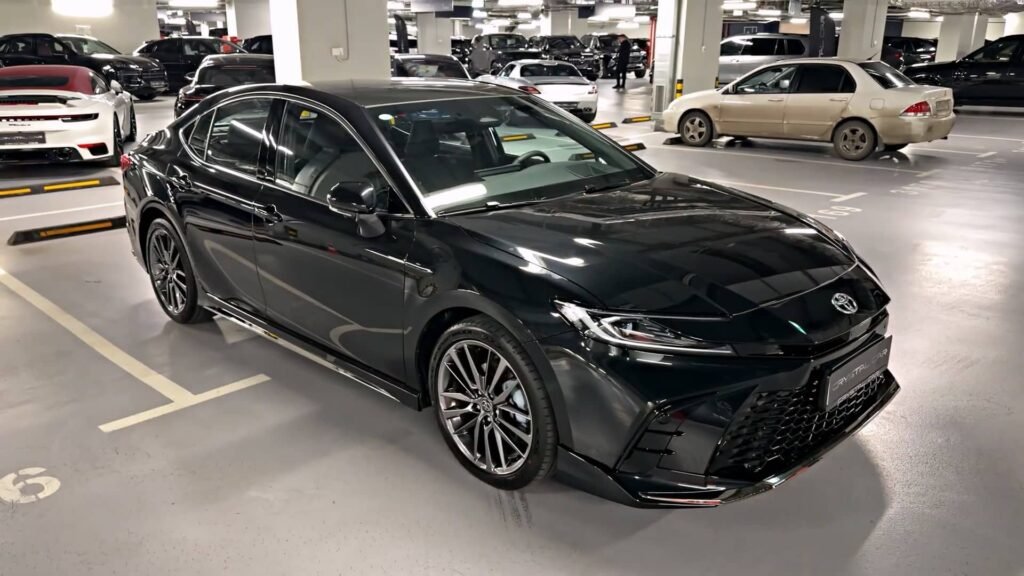
When I look at the 2025 Toyota Camry, what strikes me — as someone familiar with vehicle powertrains and packaging — is how deliberately and carefully Toyota engineered this generation. Camry no longer tries to be equally all things to all people. Instead, with 2025’s shift to a fully hybrid‑only lineup, the Camry doubles down on what matters for the majority: fuel efficiency, reliability, usable performance, and everyday practicality. It’s a mature, pragmatic design for contemporary driving demands.
Camry may not feel like a sports sedan — but then again, that isn’t its job. Its mission is to deliver balanced performance, efficiency, comfort, and flexibility for typical buyers. And by most measures, it succeeds.
Powertrain & Efficiency — Hybrid First, Smart Engineering
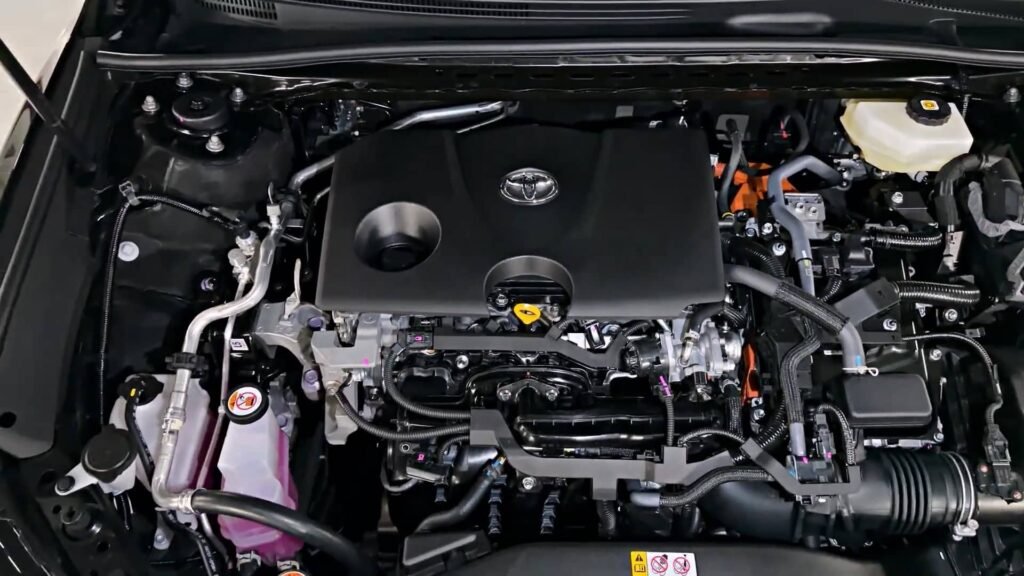
From a mechanical and systems‑design perspective, the 2025 Camry represents a decisive evolution. Key engineering highlights include:
- A 2.5‑liter 4‑cylinder gas/electric hybrid powertrain (HEV) — married to an electronically controlled continuously variable transmission (ECVT) with sequential‑shift mode.
- Output: 225 net combined horsepower in Front‑Wheel Drive (FWD) versions; 232 net combined horsepower when equipped with the optional electronic on‑demand All‑Wheel Drive (AWD).
- Drivetrain flexibility: buyers can choose FWD or AWD. The addition of AWD (with hybrid powertrain) is new for 2025 — a meaningful step for those in variable climates or needing extra traction.
This configuration reflects a sensible trade‑off: rather than chase maximum horsepower, Toyota deploys hybrid efficiency and usable performance. For daily commuting, highway driving, or family duties — the result is a car that feels “right‑sized.”
Fuel Economy & Real‑World Value — Efficiency That Makes Sense
Perhaps the most compelling reason many drivers will consider a 2025 Camry is its fuel economy. According to EPA estimates and manufacturer data, Camry’s hybrid system delivers:
- LE FWD: ~ 53 mpg (city) / 50 mpg (highway) / 51 mpg (combined)
- LE AWD (optional): ~ 51 / 49 / 50 mpg (city / highway / combined)
- Other trims (SE, XSE, XLE) — depending on FWD/AWD and wheel/option packages — deliver mid‑to‑high 40s mpg combined, still very competitive for a mid‑size sedan with hybrid power.
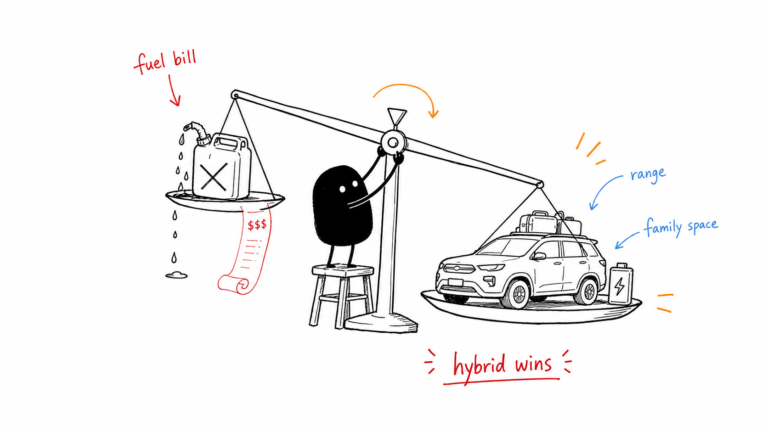
In real‑world usage, this means lower fuel costs over time — a strong selling point, especially for high‑mileage drivers or those commuting daily. It also reflects a design philosophy targeting long‑term ownership value, not just upfront purchase price.
Trim Strategy & Versatility — Catering to Different Needs
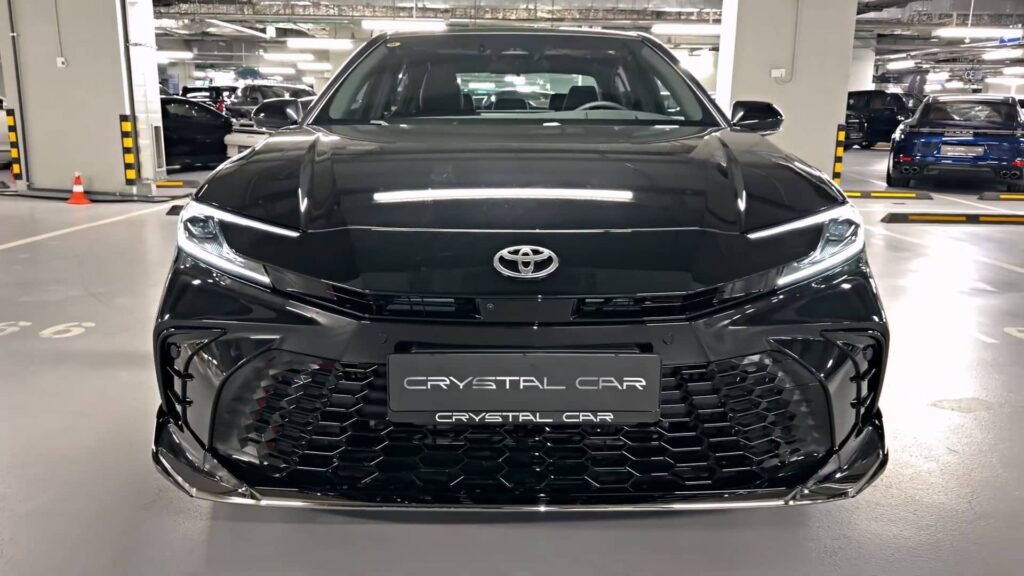
Toyota’s 2025 trim and configuration strategy for Camry shows a clear understanding of buyer diversity. Every trim — from base to more premium — uses the same hybrid foundation; what changes is feature set, drivetrain (FWD vs AWD), and user focus.
Benefits of this strategy:
- Simplicity & consistency: a single powertrain architecture simplifies manufacturing, reduces complexity, and ensures consistent hybrid behavior across trims.
- Flexibility for buyer needs: budget‑conscious buyers can opt for LE FWD for maximum efficiency; buyers in cold or variable climates can choose AWD; others can prioritize features or comfort by selecting higher trims.
- Balanced feature spread: Camry doesn’t force high-end features only into expensive trims; hybrid efficiency remains standard, giving value across the lineup.
This balance helps Camry appeal to a broad swath: commuters, families, cost-conscious buyers, or anyone wanting a reliable, efficient sedan without unnecessary complications.
Key Specifications — 2025 Camry At‑a‑Glance
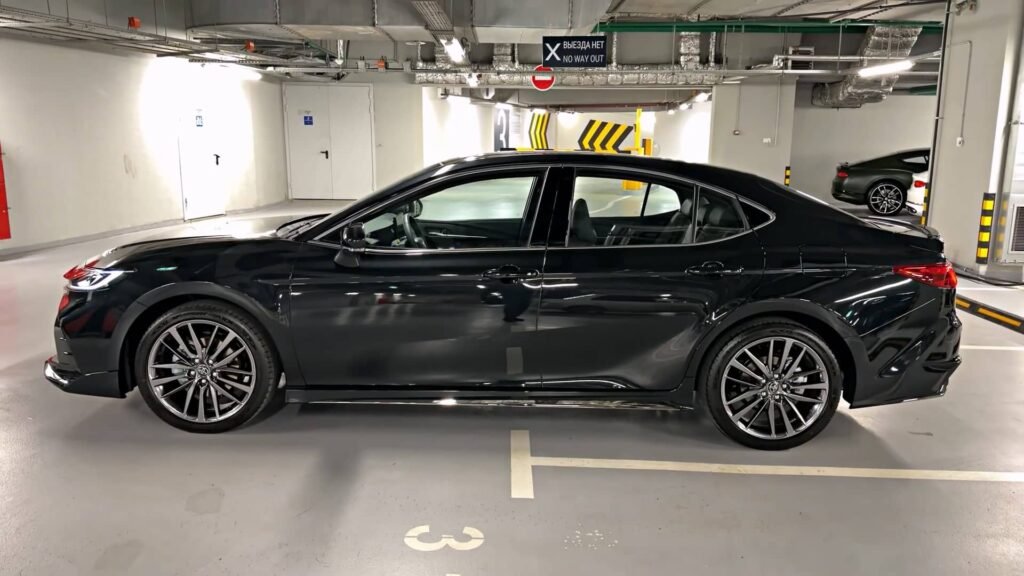
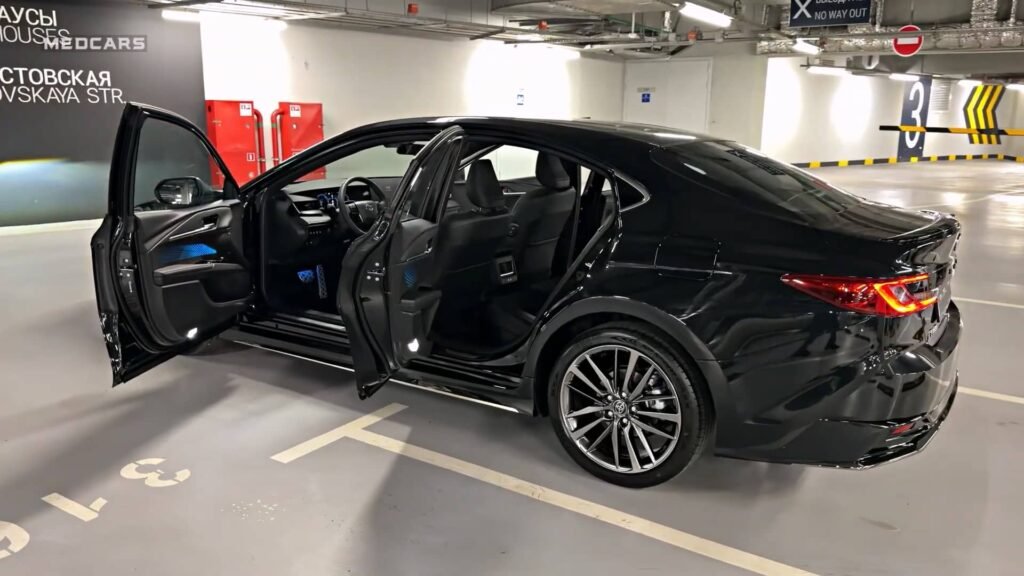
Below is a specification table summarizing the core mechanical data, fuel economy, and dimensions for the 2025 Toyota Camry. Useful for quick reference or comparison.
| Category | Parameter / Specification |
|---|---|
| Engine & Hybrid System | 2.5‑liter 4‑cyl gas + electric motor (Hybrid) |
| Combined Power (FWD) | 225 net combined hp |
| Combined Power (AWD) | 232 net combined hp (with AWD) |
| Drivetrain / Transmission | Front‑Wheel Drive (FWD) or optional Electronic On‑Demand All‑Wheel Drive (AWD), ECVT transmission |
| Fuel Economy (EPA, LE FWD) | 53 mpg (city) / 50 mpg (hwy) / 51 mpg (combined) |
| Fuel Economy (LE AWD) | 51 / 49 / 50 mpg (city / hwy / combined) |
| Fuel Economy (Other trims, typical) | ≈ 48 / 47 / 47 mpg (FWD trims) or slightly lower when AWD / heavier trims. |
| Cargo Capacity | 15.1 cu.ft. (trunk) |
| Seating Capacity | 5 passengers standard |
| Drivetrain Modes | Normal / Eco / EV‑Hybrid / Sport modes available |

Strengths & Trade‑Offs — What 2025 Camry Does Well, and Where It Makes Compromises
From an engineer’s and long-term user’s perspective, here’s how I assess the 2025 Camry’s strengths — and also its realistic trade‑offs.
Strengths
- Efficiency + practicality: Hybrid architecture with strong mpg ratings makes it excellent for city driving, commuting, and long-term fuel savings.
- Flexibility / appeal to wide audience: With FWD and AWD options across trims, it meets needs of buyers in different geographies and climates.
- Balanced performance: 225–232 hp combined output gives adequate power for daily driving, highway merging, and carrying moderate loads — without the fuel penalty of a pure gas engine.
- Simplicity & reliability: A unified hybrid platform reduces complexity compared to offering multiple completely different powertrains; less variation means easier maintenance and likely better long-term durability.
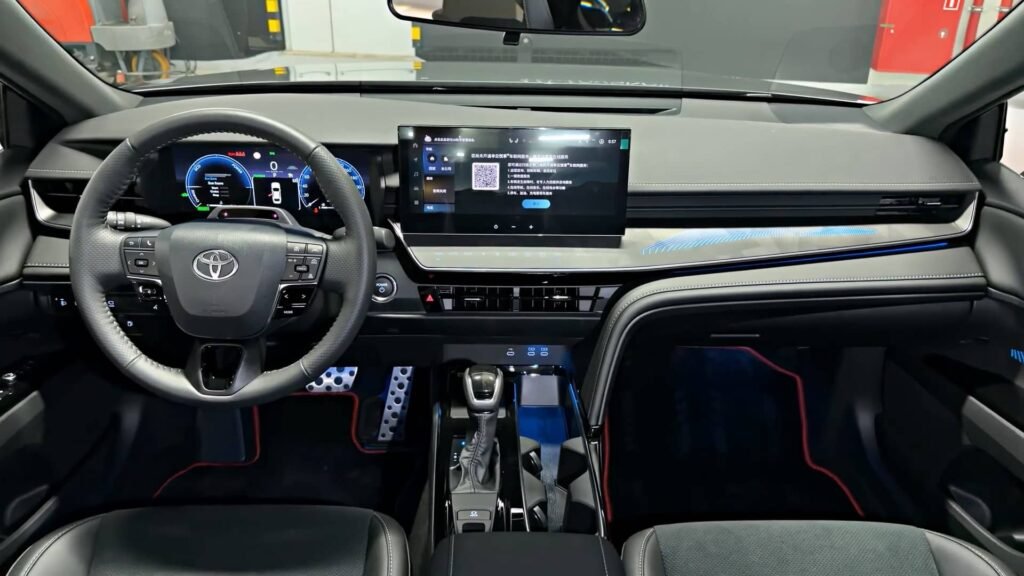
- Good value proposition: With hybrid efficiency, reasonable base pricing, and modern feature sets (infotainment, safety, comfort) the Camry offers an attractive package for many mainstream buyers.
Trade‑Offs / Limits to Be Aware Of
- Not a performance sedan: The focus on hybrid efficiency and smoothness means Camry doesn’t deliver “sports‑car” dynamics — it’s tuned for balance, not aggressive performance.
- Hybrid compromises: For some drivers, CVT + hybrid behavior might feel less engaging than a traditional gas‑auto setup, especially in heavy acceleration or spirited driving.
- Sedan‑class constraints: As a mid‑size sedan, Camry’s cargo and passenger space are limited relative to SUVs / crossovers — makes it less suitable for large families needing lots of storage or towing capacity.
- AWD fuel economy hit: AWD versions show slightly lower mpg — the trade‑offs between traction and efficiency must be accepted.
These trade‑offs are not flaws — they reflect design decisions. The 2025 Camry privileges long‑term value, broad usability, and low operating cost over niche performance or luxury pretension.
2025 Camry: A Sensible, Modern Sedan for Today’s Realities
In my professional judgment: the 2025 Toyota Camry stands out not by chasing extremes — but by embracing balance. Its hybrid‑only powertrain, combined with flexible drivetrain options and modern packaging, make it a strong candidate for everyday drivers, commuters, small families — anyone who prioritizes reliability, efficiency, and sensible value.
The Camry doesn’t pretend to be a sports sedan or a luxury flagship. Instead, it seeks to excel where many mainstream sedans falter: fuel economy, total cost of ownership, and real-world usability.
If you want a vehicle that will reliably carry you for tens of thousands of miles, sip fuel instead of guzzling it, offer acceptable performance for highway and city, and remain versatile enough for varied road conditions — 2025 Camry is very hard to dismiss.
Reference: