Small SUVs have dominated the U.S. market for a decade, offering the ideal combination of space, visibility, efficiency, and versatility. Data from IHS Markit (retail registrations to individuals only) shows clear shifts in buyer preferences between 2016 and 2025.
Toyota has steadily strengthened its leadership, Honda and Jeep have competed fiercely for regional dominance, Nissan has declined sharply, and Tesla has transformed from a non-factor into a consistent top-three player.
Year-by-Year Top 5 Small SUV Brands (Retail Registrations)
| Year | Rank 1 | Rank 2 | Rank 3 | Rank 4 | Rank 5 |
|---|---|---|---|---|---|
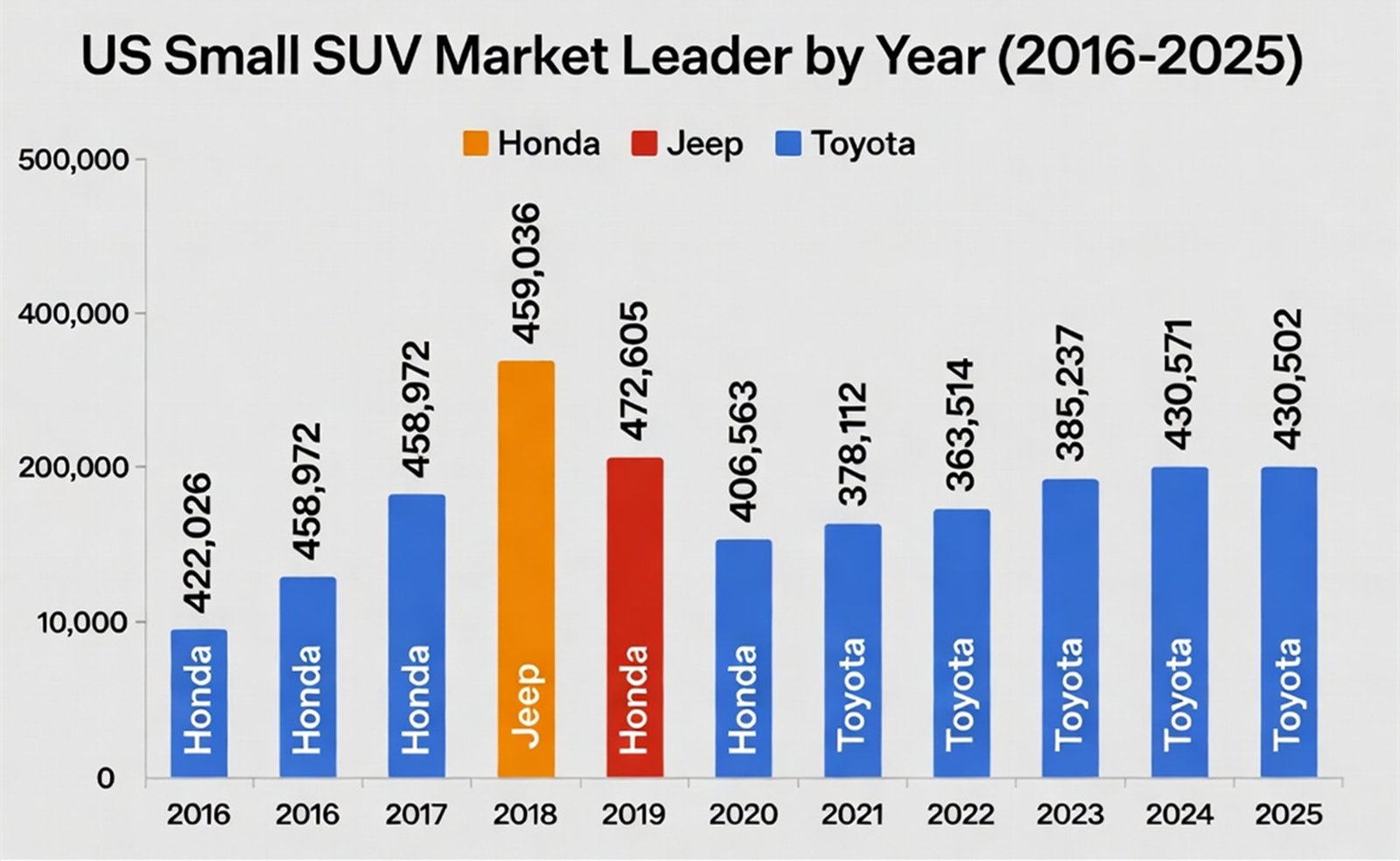
| 2016 | Honda (422,026) | Jeep (414,037) | Toyota (324,551) | Nissan (272,897) | Chevrolet (261,210) |
| 2017 | Honda (458,972) | Jeep (393,431) | Toyota (382,413) | Chevrolet (308,963) | Nissan (307,517) |
| 2018 | Jeep (459,036) | Honda (453,869) | Toyota (387,196) | Chevrolet (347,988) | Nissan (299,211) |
| 2019 | Honda (472,605) | Toyota (408,078) | Jeep (374,253) | Chevrolet (368,287) | Subaru (294,354) |
| 2020 | Honda (406,563) | Toyota (383,514) | Chevrolet (337,979) | Jeep (282,046) | Subaru (276,599) |
| 2021 | Toyota (378,112) | Honda (364,821) | Jeep (280,656) | Nissan (198,843) | Hyundai (163,890) |
| 2022 | Toyota (363,514) | Honda (230,185) | Tesla (206,817) | Jeep (204,020) | Ford (201,390) |
| 2023 | Toyota (385,237) | Tesla (364,792) | Honda (349,220) | Hyundai (203,324) | Ford (192,540) |
| 2024 | Toyota (430,571) | Honda (390,702) | Tesla (360,951) | Hyundai (222,046) | Ford (198,649) |
| 2025 | Toyota (430,502) | Honda (392,019) | Tesla (335,553) | Hyundai (257,771) | — |
Key Trends and Major Shifts (2016–2025)
| Period | Dominant Brands | Key Changes | Major Driver |
|---|---|---|---|
| 2016–2019 | Honda, Jeep, Toyota | Honda peaks in 2019; Jeep strong in Northeast and Midwest | Traditional volume battle |
| 2020 | Honda, Toyota, Chevrolet | Sharp drop across all brands due to pandemic | COVID-19 impact |
| 2021–2022 | Toyota, Honda, emerging Tesla | Toyota takes clear national lead; Tesla enters top 5 | Hybrid demand + early EV adoption |
| 2023–2025 | Toyota, Tesla, Honda | Tesla becomes consistent #2 or #3; Hyundai returns to top 5; Nissan exits | Electrification acceleration |
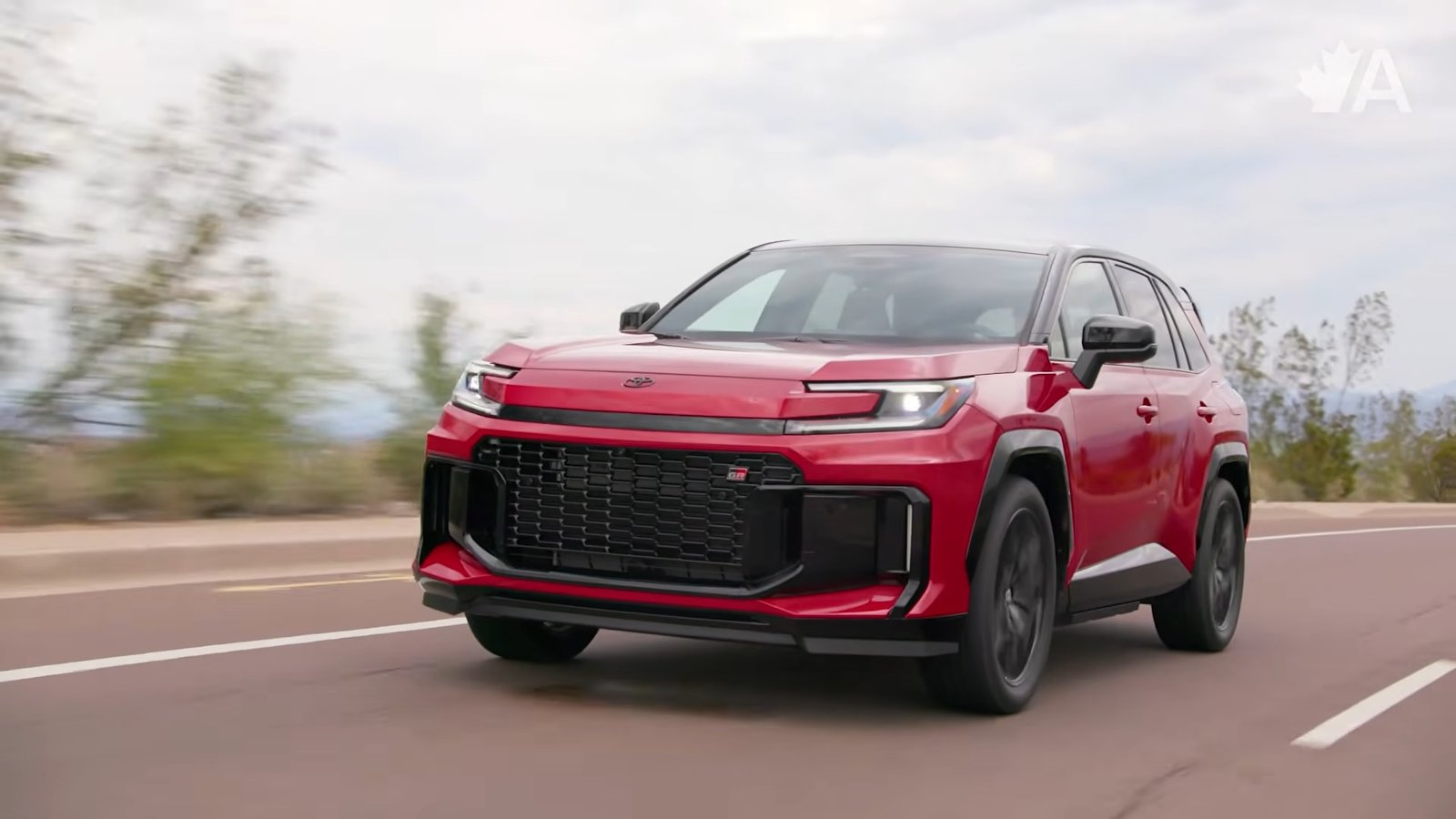
Toyota’s Long-Term Leadership
Toyota moved from a consistent top-3 finisher to undisputed #1 by 2021 and has held that position through 2025. Its hybrid lineup (especially RAV4) proved highly resilient during and after the pandemic.
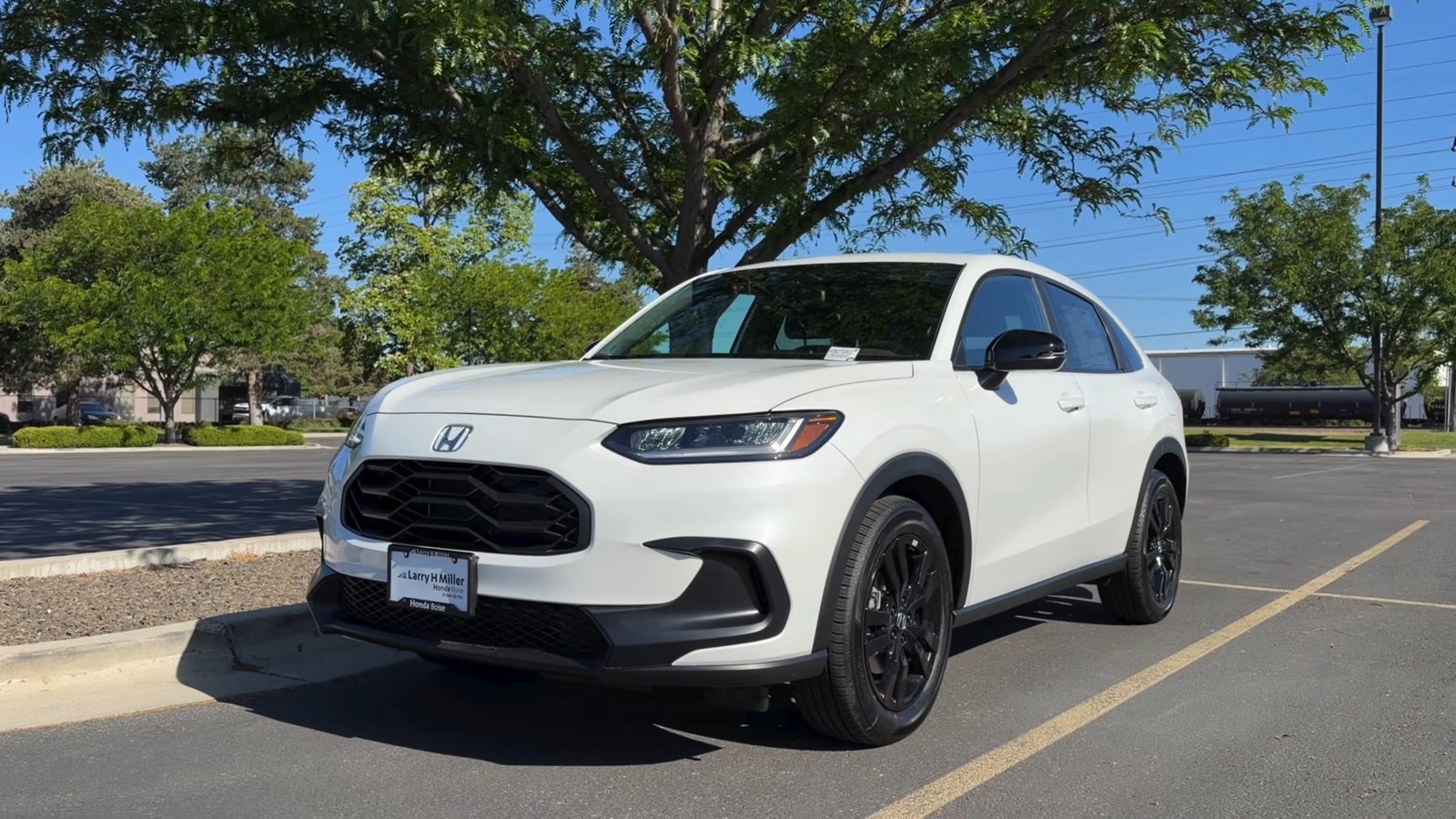
Honda’s Peak and Relative Decline
Honda led or finished second in most years through 2020 but has since lost ground to both Toyota and Tesla. It remains very strong regionally, particularly in the Northeast.
Tesla’s Dramatic Rise
Tesla was not in the top 5 until 2022. By 2023–2025 it had become a permanent top-three brand, driven by Model Y popularity and strong Western state adoption.
Nissan’s Fall and Hyundai’s Return
Nissan dropped out of the top 5 after 2021. Hyundai re-entered the top 5 in 2023 and climbed to 4th by 2025.
Some Takeaways
- Toyota sold the most small SUVs in 2025 for the fifth consecutive year.
- Honda maintained strong second-place volume but could not close the gap with Toyota.
- Tesla established itself as a consistent top-three brand from 2023 onward.
- Chevrolet dropped out of the top 5 after 2020 and has not returned.
- Hyundai returned to the top 5 in 2023 and took 4th place by 2025.
- Nissan fell out of the top 5 after 2021 and has not recovered.
- Ford dropped out of the top 5 after 2022, with Hyundai taking its place.
- Toyota achieved clear national map dominance (blue across most states) from 2021 onward.
Conclusions, Predictions and xcarspace View
| Area | Conclusion | Prediction (2026–2030) | xcarspace View / Implication |
|---|---|---|---|
| Market Leader | Toyota has adapted best by combining reliability with strong hybrid offerings | Toyota is expected to maintain its lead, supported by expanded hybrid and electric models | Chinese exporters should study Toyota’s balance of efficiency, reliability, and value |
| New Challenger | Tesla has proven that technology and performance can quickly reshape buyer preferences | Tesla should continue growing and may challenge for #1 in certain years | Opportunity and threat: Tesla shows demand for tech-forward vehicles; Chinese brands must match or exceed on features and brand perception |
| Traditional Brands | Honda remains regionally strong but has lost national momentum; Nissan has been largely displaced | Honda may stabilize but is unlikely to regain outright leadership without stronger electrified models | Value-focused Chinese models have an opening in segments where Honda has weakened |
| Overall Direction | The segment is moving from “space and price” to “efficiency, technology, and driving character” | Electrified powertrains (hybrids near-term, full EVs longer-term) will dominate | Global buyers sourcing through xcarspace should prioritize vehicles that deliver strong real-world efficiency and modern technology at competitive total cost of ownership |
References
- IHS Markit – S&P Global
- Top 3 Best Small Performance SUVs of 2026
- Top 5 Best Small 3-Row SUVs of 2026 & 2027
- Top 10 Best Small Luxury SUVs of 2026 & 2027
- Top 19 Best Compact SUVs of 2026 & 2027
These tables provide a clear, at-a-glance view of how buyer preferences in the small SUV segment have evolved over ten years. Toyota has navigated the transition most effectively so far, but Tesla’s momentum indicates the next chapter will be even more dynamic.