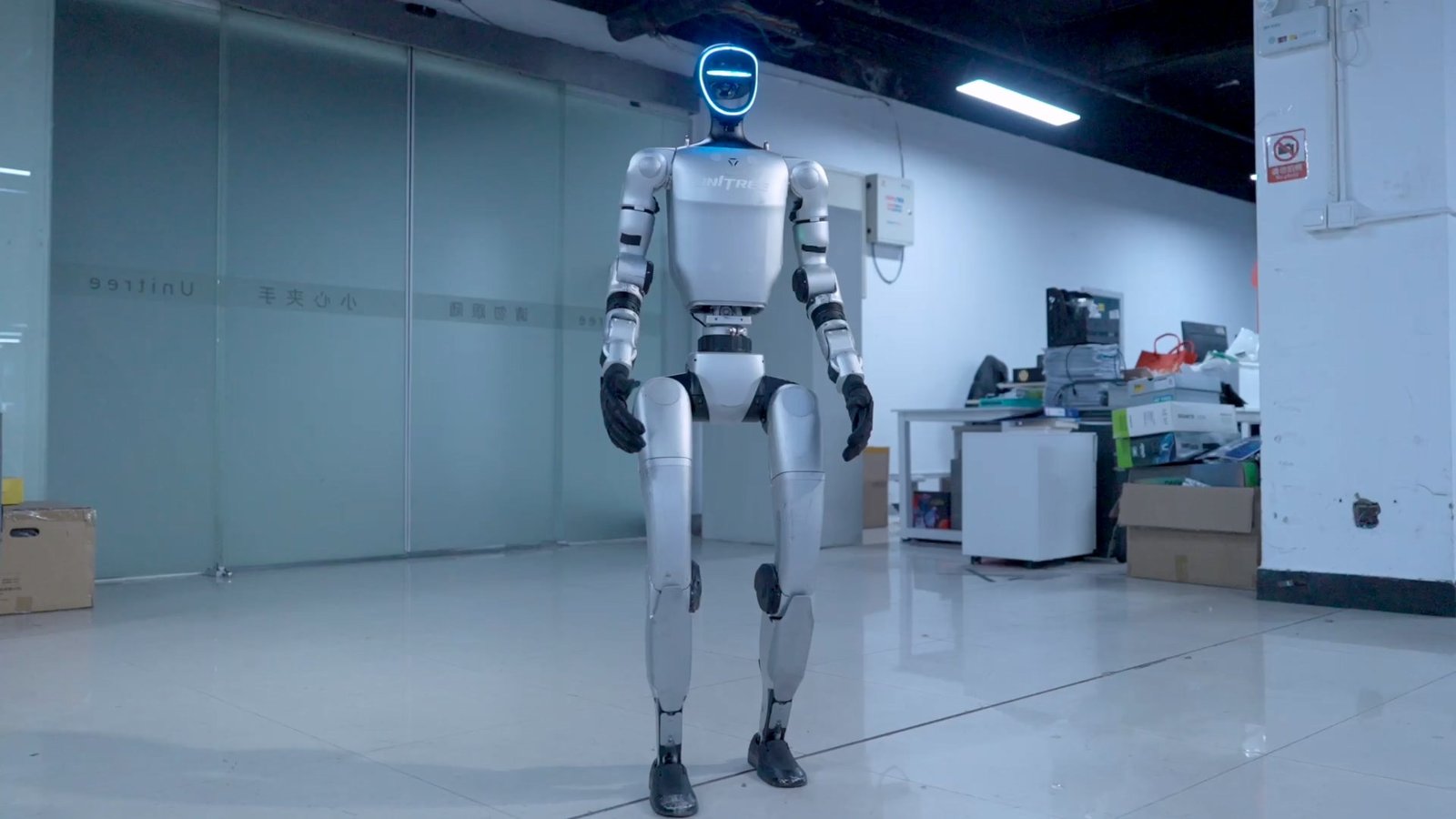
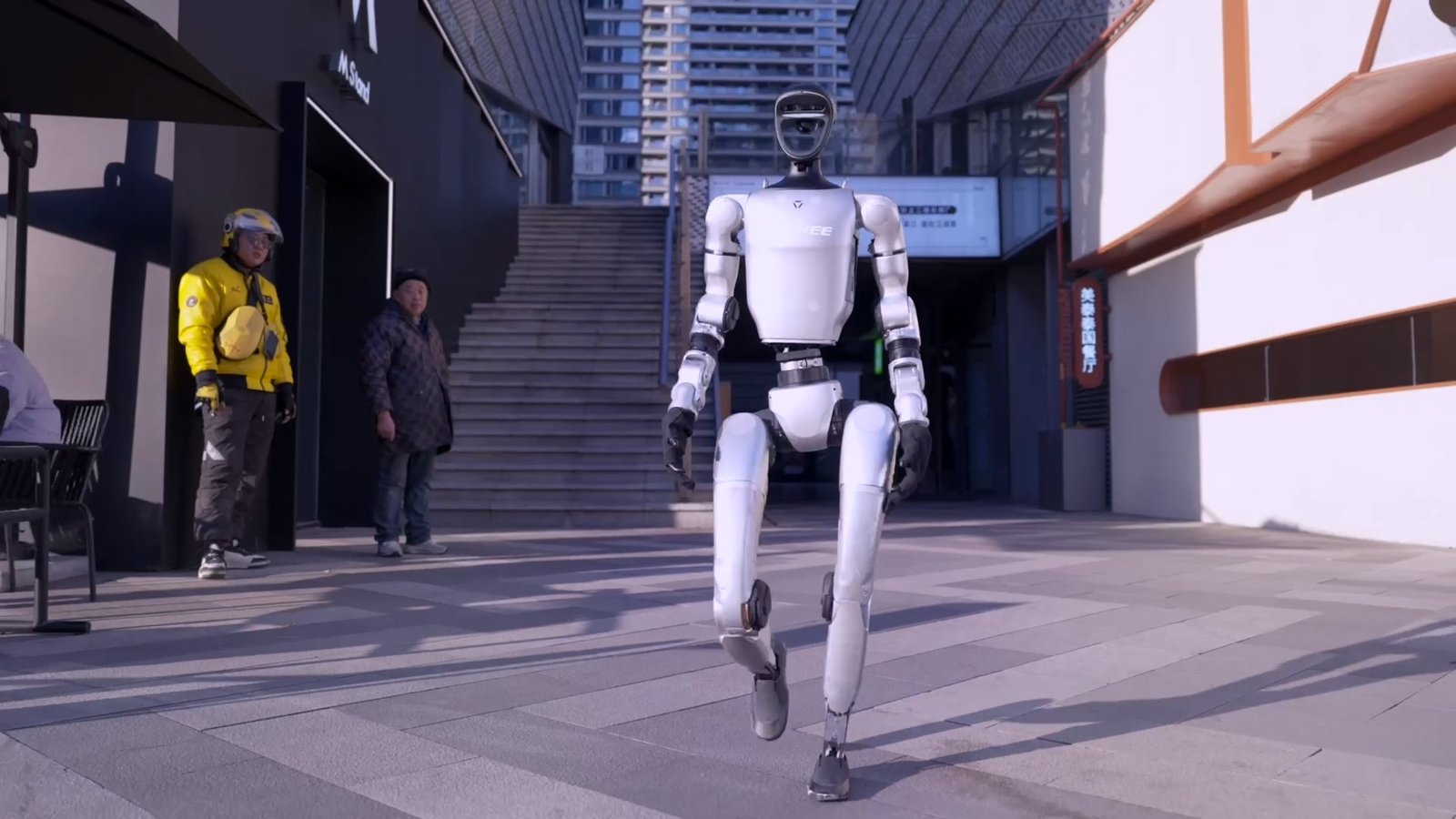
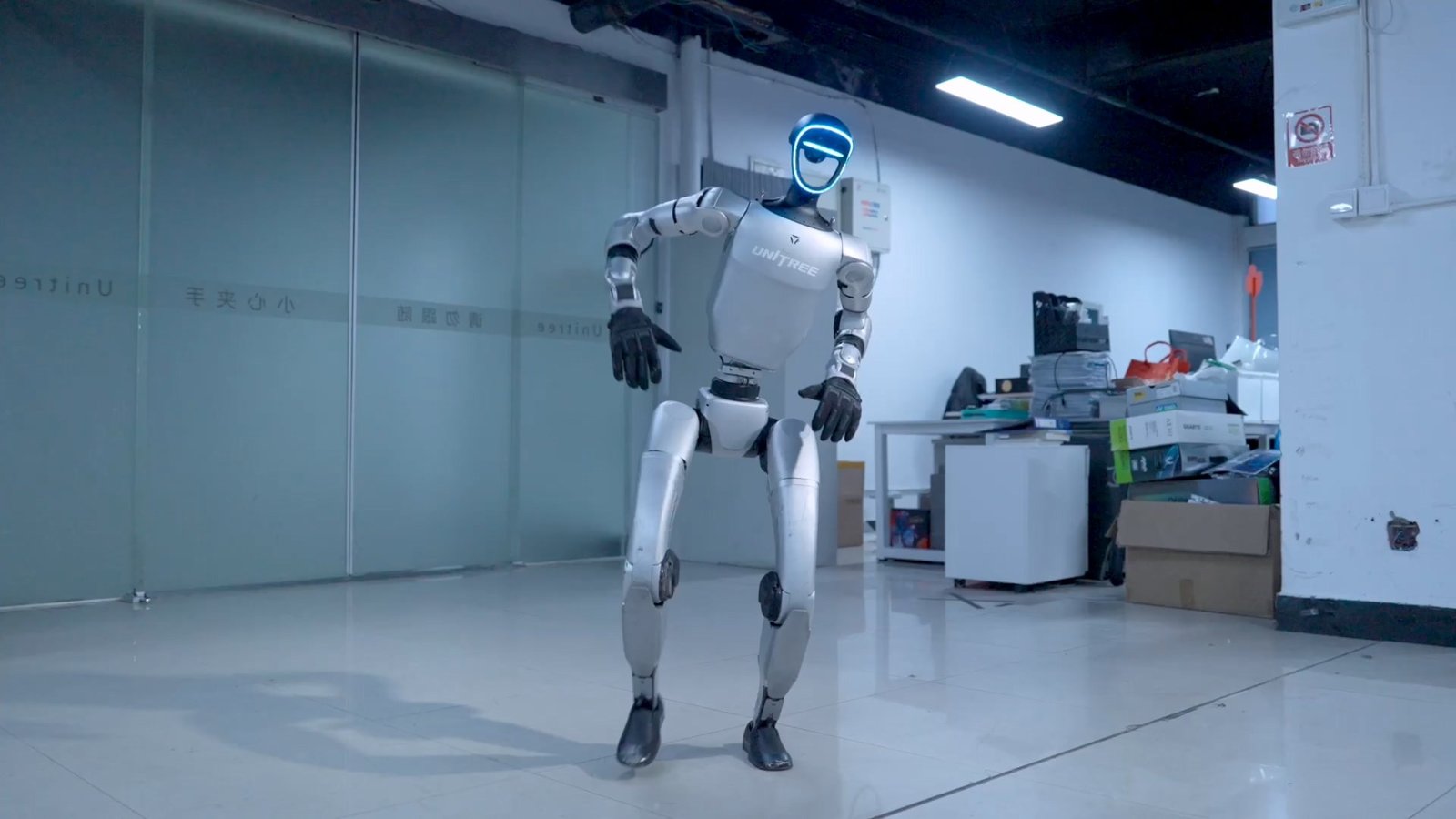
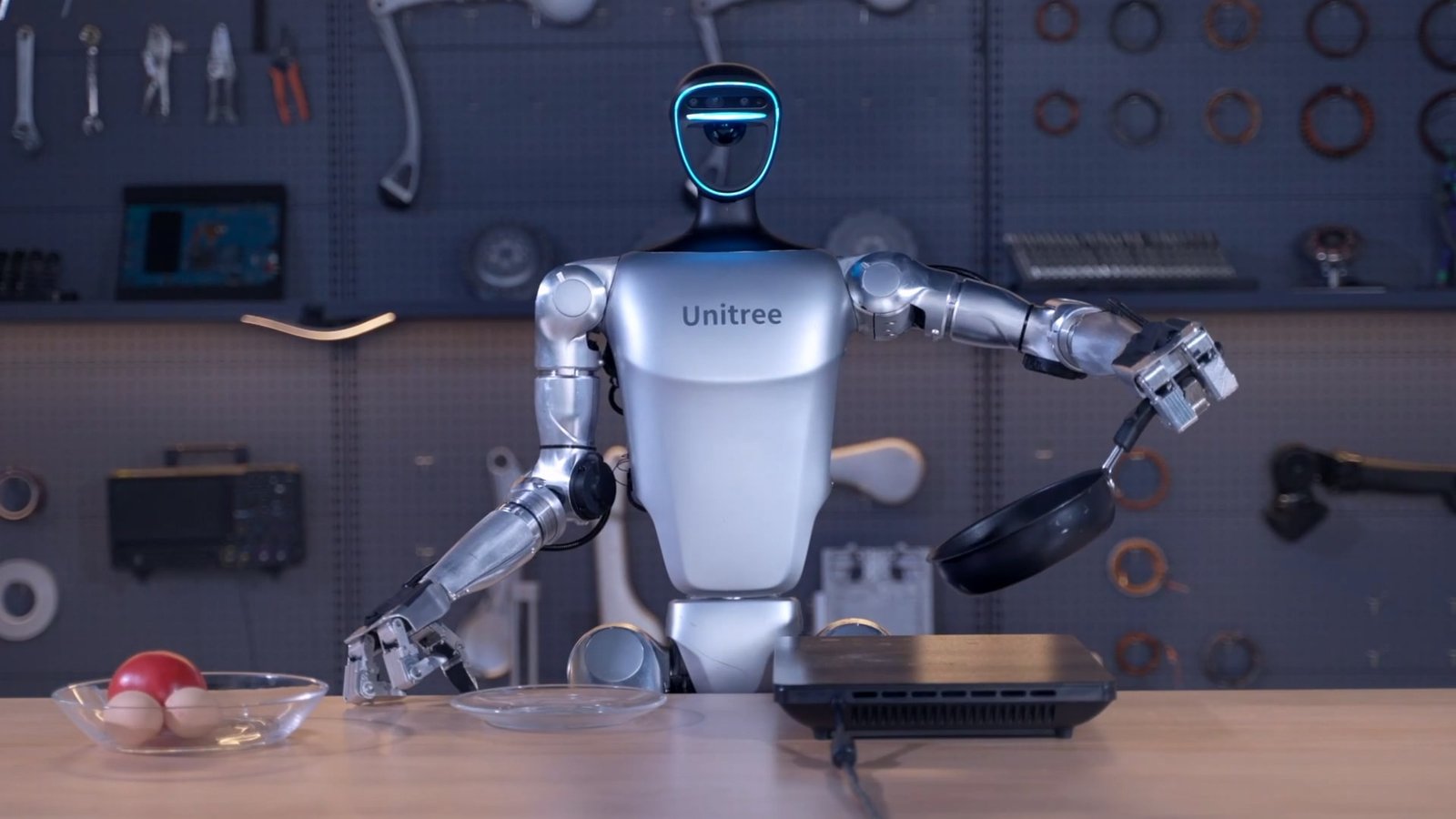
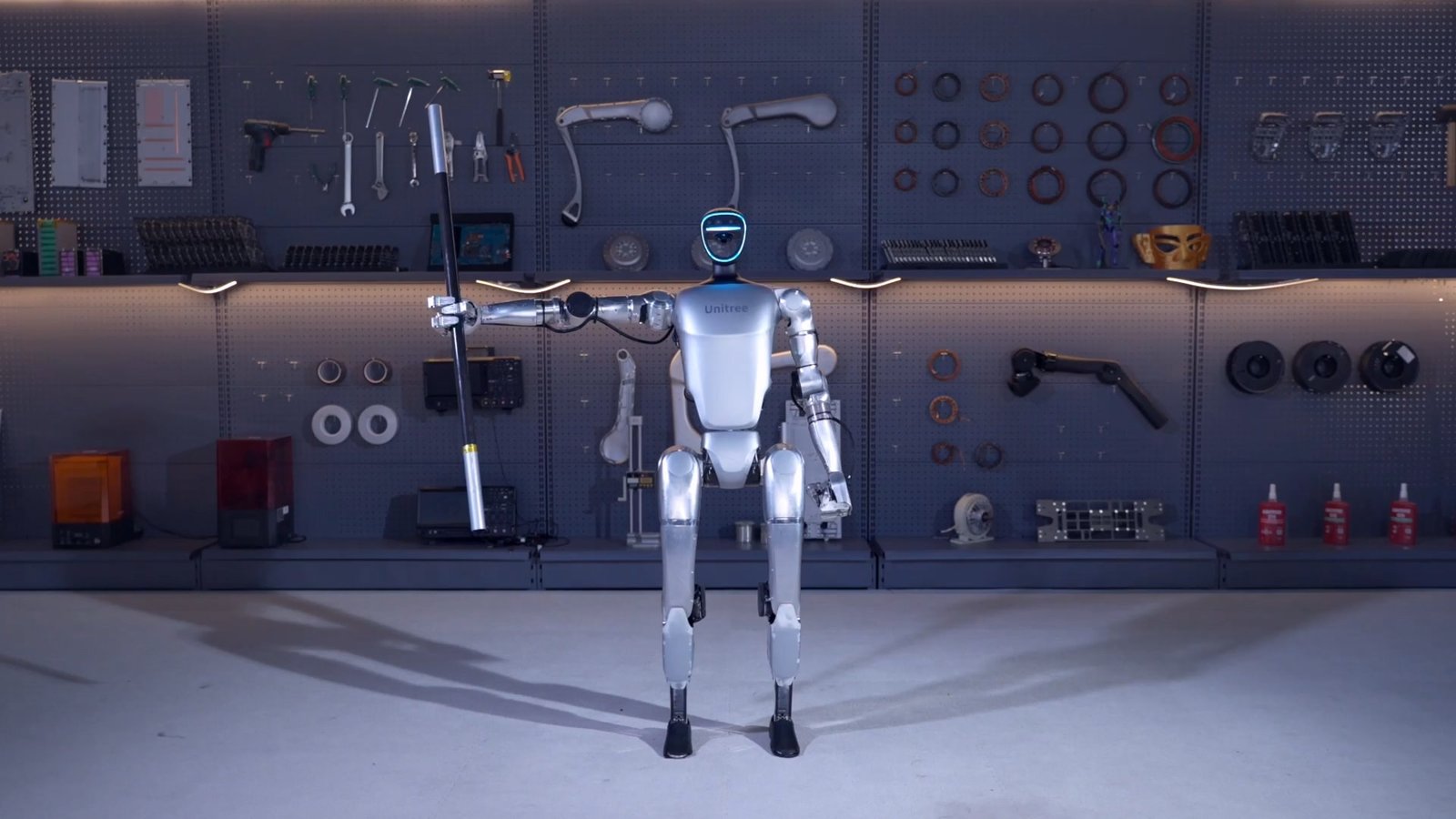
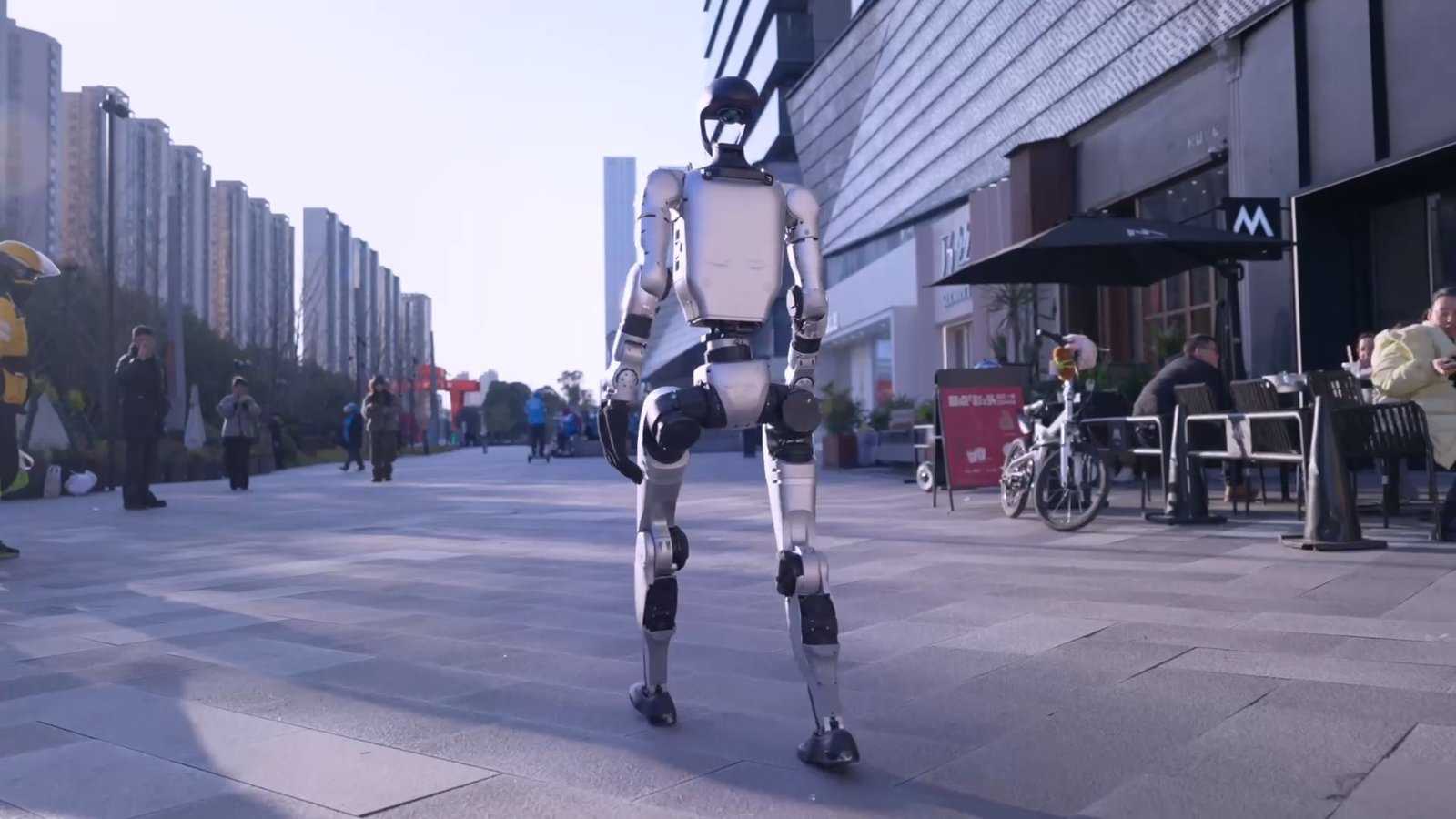
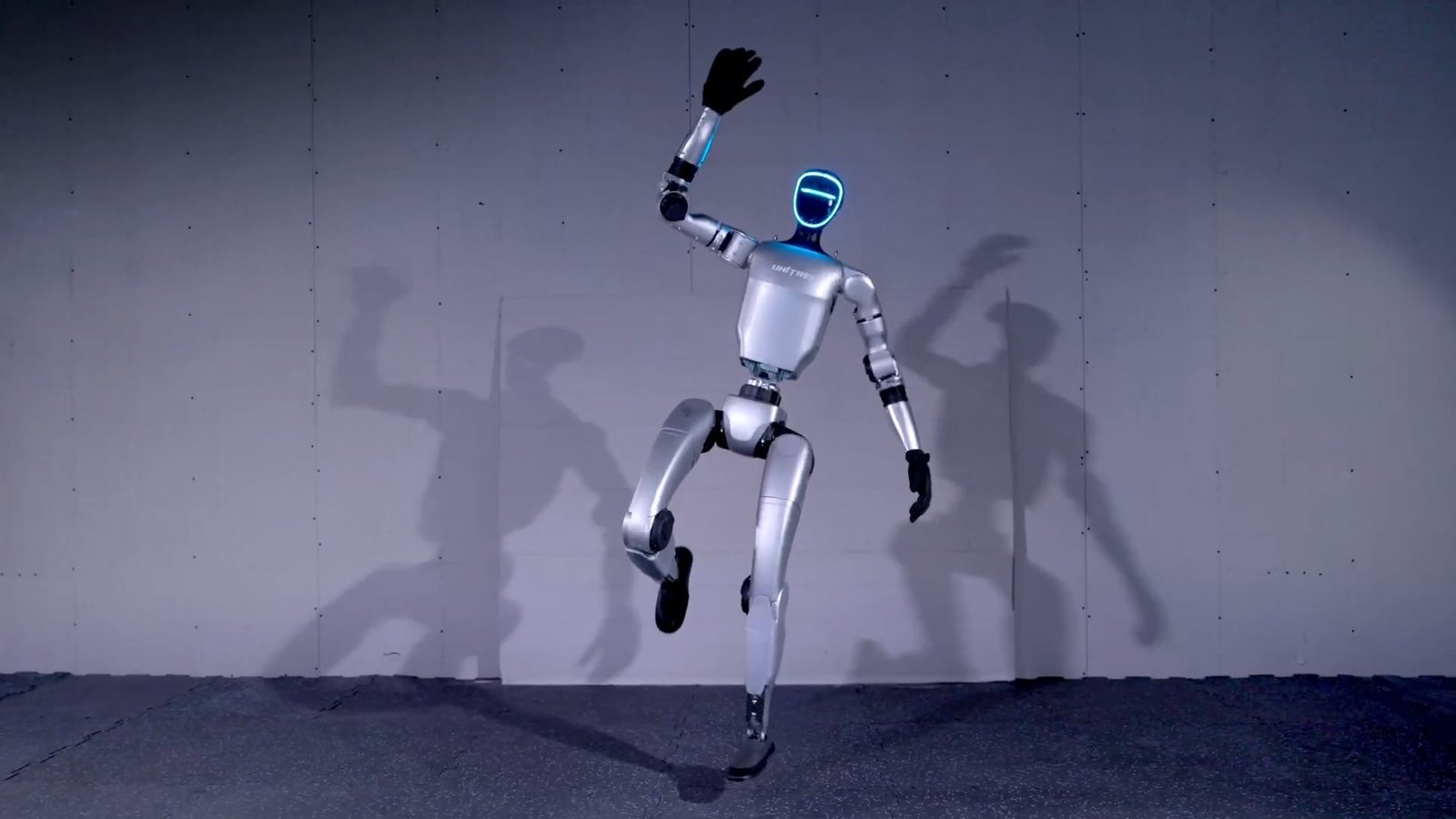
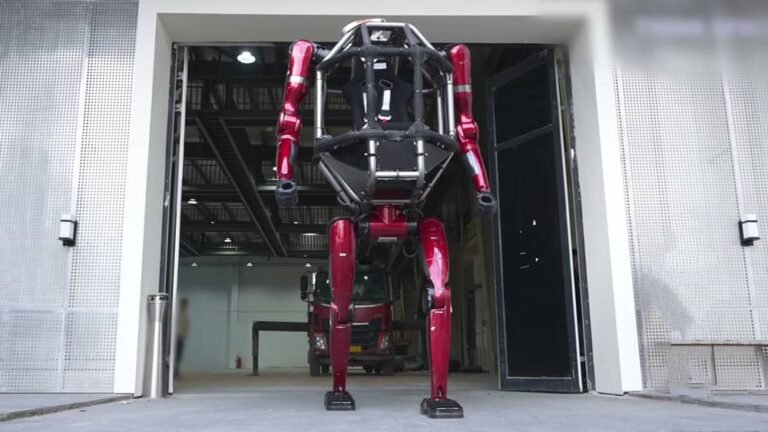
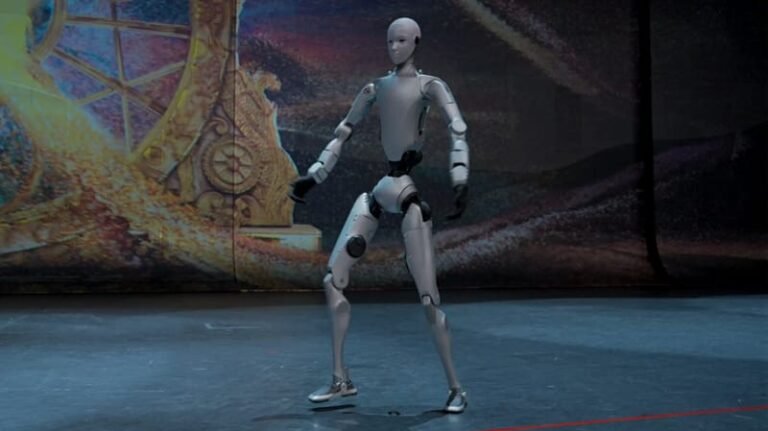
Unitree G1 marks the world’s first mass-produced humanoid robot to break the $14,500 price barrier, built upon Unitree’s decade of quadruped robot motion control engineering. Unlike large heavy-duty humanoids such as Unitree H1 and Tesla Optimus Gen 2 built for factory heavy material transport, the G1 uses a compact 1.27m lightweight frame that balances fluid athletic movement and affordable entry costs for university labs, AI startup developers, event exhibitions and basic household auxiliary work.
All core actuators, motion control firmware, multi-modal perception hardware and proprietary UnifoLM robot large language model are fully in-house developed by Unitree, removing third-party core component supply risks. Its defining market edge is modular DOF expansion and unrestricted full-stack developer SDK, cutting embodied AI research hardware entry costs by over 70% compared to Western humanoid competitors.
Key Specifications
Full Spec Comparison (USD Pricing Included)
Spec Parameter
Unitree G1 Base
Unitree G1 EDU Standard
Unitree G1 EDU Advanced
Unitree G1 EDU Flagship
Official Robot Name
Unitree G1 Base
G1 EDU Standard
G1 EDU Advanced (Dex3-1 Hand)
G1 EDU Full Expand Flagship
Developer
Unitree Robotics
Unitree Robotics
Unitree Robotics
Unitree Robotics
Country of Manufacture
China
China
China
China
Robot Type
Compact Biped General Humanoid
Research Expandable Humanoid
High-Precision Research Humanoid
Full-Modular Lab Grade Humanoid
First Public Announcement
May 13, 2024
May 13, 2024
May 13, 2024
May 13, 2024
Mass Prototype Reveal
Q4 2024
Q4 2024
Q4 2024
Q4 2024
Standing Dimensions H×W×D
1270mm × 450mm × 200mm
1320mm × 450mm × 200mm
1320mm × 450mm × 200mm
1320mm × 450mm × 200mm
Folded Transport Dimensions
690mm × 450mm × 300mm
690mm × 450mm × 300mm
690mm × 450mm × 300mm
690mm × 450mm × 300mm
Total Weight (Including Battery)
35 kg
35 kg
36 kg
36 kg
Single Arm Static Payload Limit
3 kg
3 kg
4 kg
4 kg
Full Body Back Static Load Capacity
8 kg
10 kg
10 kg
10 kg
Maximum Forward Walking Speed
2 m/s (7.2 km/h)
2 m/s
2.4 m/s (custom gait module)
2.4 m/s
Peak Knee Joint Torque
90 N·m
120 N·m
120 N·m
120 N·m
Single Hand Base DOF
7 DOF Force Control Gripper
7 DOF Gripper
12 DOF Dex3-1 Dexterous Hand
12 DOF Dex3-1 Hand
Total Machine Base DOF Count
23 Fixed DOF
23 Expandable DOF
35 Modular DOF
43 Max Modular DOF
Primary Locomotion Modes
Walk, Jump, Roll, Self-Righting
Walk, Jump, Custom Gait Dev
Flip, Spin, Obstacle Traversal
Full Custom Motion Programming
Core Power Architecture
54V 13S Lithium Pack
54V 13S Lithium Pack
Large Capacity 13S Pack
Dual Power Supply Support
Standard Battery Capacity
9,000 mAh
9,000 mAh
18,000 mAh Extended Battery
18,000 mAh + External Power Port
Standard Continuous Runtime
~2 Hours
~2 Hours
~4.2 Hours
~4.2 Hours
Onboard AI System
Lightweight Edge UnifoLM
Full UnifoLM Embodied Model
UnifoLM + Jetson Orin Slot
Full UnifoLM V2 Preinstalled
Primary Target Use Cases
Exhibitions, Hobby R&D, Campus Teaching
University Robotics Labs, Vocational Training
Embodied AI Algorithm Research, Robot Competitions
Enterprise R&D, Industrial Simulation
Official China Retail Price (CNY)
¥99,000
¥169,000
¥209,000
¥309,000
Global Pre-Tax USD Equivalent Price
$14,200
$24,300
$29,900
$44,500
Walking – Unitree G1
Design, Hardware and Engineering
1. Body Material & Structural Breakdown
Body Section
Material Composition
Core Engineering Benefit
Main Torso Frame
Aerospace Grade Hollow Aluminum Alloy
High tensile strength, 30% weight reduction vs solid metal frames
One-click batch task deployment across fleets of G1 robots
Mid 2027
Unity & ROS Full Native Plug-In Adaptation
Lower barrier for industrial digital twin simulation development
Long-Term Market Industry Impact Summary
Industry Analyst Claim
Supporting Technical & Commercial Evidence
G1 reshapes global embodied AI research hardware market
$14,200 entry price cuts lab hardware budgets by 70% vs Western competitors, accelerates humanoid commercialization by 2–3 years
Global university lab hardware standardization trend
Thousands of academic institutions replacing high-priced imported humanoids with Unitree G1 EDU variants
Segmented humanoid market split permanent
Compact low-cost research humanoids (G1 product line) separate from large industrial heavy-load humanoids (H1, Optimus) with no direct overlap
FAQ (12 Detailed Questions & Answers)
Question
Detailed Answer
What core differences separate Unitree G1 from the high-end Unitree H1 humanoid?
G1 is a compact, low-cost research/education robot optimized for flexible athletic movement and developer secondary development, starting at $14,200 USD. The H1 is a full-size heavy industrial humanoid with a 20kg lifting capacity built exclusively for factory logistics, priced near $99,000 USD; the two target completely separate market verticals with no overlapping use cases.
Can Unitree G1 run fully autonomously inside residential homes without human remote oversight?
Pre-programmed simple household tasks like fetching objects or clearing tableware run fully automatic. Complex multi-room long-distance navigation still requires human supervision for safety risk mitigation.
What is standard battery runtime for the base G1 model, and do batteries support hot-swapping?
The base 9,000mAh battery delivers roughly 2 hours of continuous operation. Manual battery removal and replacement is supported; true hot-swap functionality is exclusive to EDU Advanced and Flagship models only.
Do users need professional programming experience to operate Unitree G1 out of the box?
No coding knowledge is required for pre-built dance, patrol, grasping task packages via mobile phone App. Custom deep algorithm development provides full Python/C++ SDK access for professional robotics engineers.
What is the minimum operating temperature the Unitree G1 can sustain continuous operation?
Official field testing confirmed stable walking at -47.4°C in snowfield environments, making it suitable for cold-region warehouse and low-temperature outdoor inspection deployments.
What is the maximum stable weight the G1 can lift with a single arm?
Base G1 single arm steady payload is 3kg; upgrading to the EDU Dex3-1 dexterous hand raises the single arm maximum load to 4kg.
Does Unitree G1 support OTA remote updates for motion algorithms and the UnifoLM AI model?
Yes, full-stack OTA upgrades cover balance control firmware, perception sensor calibration and the embodied large model, no factory return required for software upgrades.
What key advantages does Unitree G1 hold over Tesla Optimus Gen 2?
The G1 retails for 1/7 the USD price of Optimus, offers fully open developer SDK access, delivers far superior athletic dynamic movement (flips, jumps, spins), and is mass-produced with global inventory available; Tesla Optimus remains a lab prototype with zero commercial sales as of mid-2026.
Can the G1 walk reliably on slippery ice and uneven gravel ground surfaces?
Yes, the MPC dynamic balance controller auto-adjusts joint torque to compensate for low-friction and irregular terrain, validated in official snow and gravel field test footage.
What warranty coverage comes with the entry-level Unitree G1 base model?
The base robot carries an 8-month full machine warranty, all core servo actuators have a separate 12-month warranty term, and unlimited global remote technical support is included with all purchases.
Does Unitree G1 feature waterproofing for outdoor operation in rain?
Only IP54 dust resistance is standard; sustained rainfall operation will damage internal joints and electronics. Custom sealed waterproof housings are available as a paid add-on for specialized inspection orders.
What is the maximum expandable DOF count for the top-tier EDU Flagship G1 model, and what value do extra degrees of freedom provide?
The flagship variant expands up to 43 modular DOF total. Higher DOF counts replicate complex human fine motor movement, critical for advanced grasping research, robot combat development and human-like athletic motion study.
Xcar Comment
From XcarSpace’s long-term ongoing humanoid robot industry tracking coverage, the Unitree G1 is a landmark product that splits the commercial humanoid robot market into two distinct eras: pre-G1 high-cost lab-only hardware, and post-G1 mass-accessible embodied AI platforms.
Its core competitive edge extends far beyond the eye-catching $14,200 base price tag. The robot leverages Unitree’s mature quadruped robot motion control stack fully rebuilt for bipedal humanoid hardware, with zero reliance on overseas core motion component suppliers. Unlike Tesla Optimus, which remains trapped in prototype validation with no mass shipping capacity, the G1 has stable mass production lines and thousands of real-world deployments generating commercial revenue across education, event display and light inspection verticals.
Objectively, the G1 carries clear hard limitations: its compact frame rules out heavy industrial factory workloads, battery endurance remains a universal bottleneck for all current generation humanoids, and fully unattended whole-home autonomous service requires at least one more hardware iteration cycle to reach consumer-ready maturity. Even so, for university research labs, small commercial service operators and independent embodied AI developers, there is no comparable cost-effective biped humanoid hardware platform available on the global market in 2026.
Looking forward over the next 2–3 years, battery energy density upgrades and UnifoLM large model iterative improvements will allow the G1 product line to capture growing market share previously reserved for expensive Western research humanoid platforms, establishing Unitree as the global standard supplier for basic embodied AI algorithm training hardware. For mainstream everyday consumers, the G1’s biggest industry takeaway is definitive proof general humanoid robots are no longer limited to closed laboratory prototypes — mass-produced civilian intelligent bipedal machines have formally entered commercial market deployment.