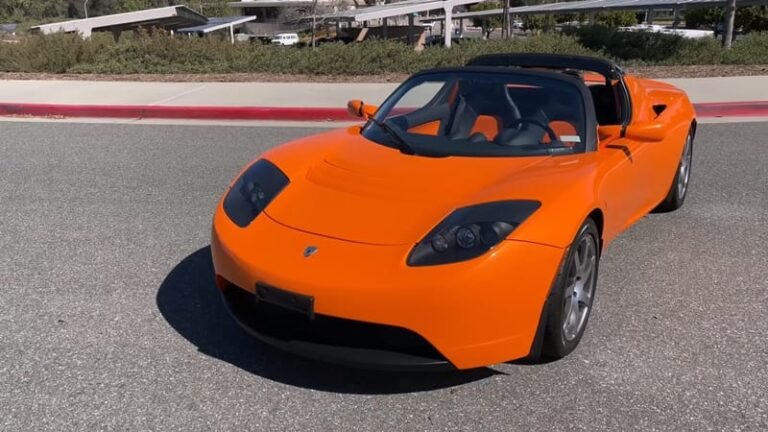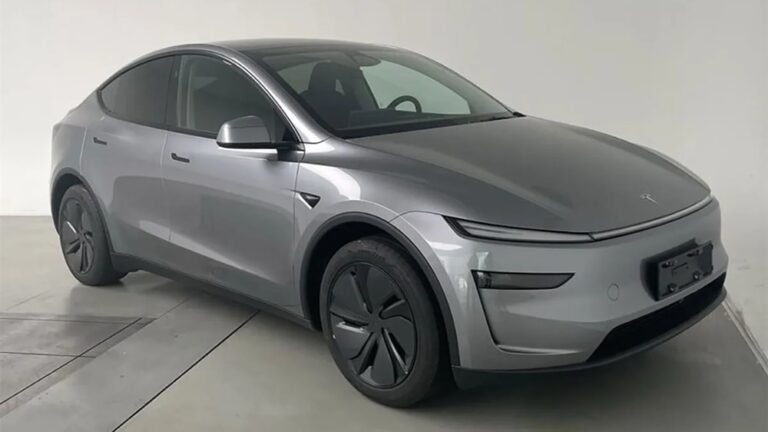
If you look at the raw numbers on a spec sheet, the Tesla Model Y should be losing in China. It has a minimalist interior that critics often call a “construction site,” it lacks the 800V architecture found in rivals, and it offers fewer “party tricks” than domestic competitors like Xiaomi or Nio. Yet, as of early 2026, Tesla remains a dominant force. In February 2026 alone, sales surged by over 90%, with the Model Y reclaiming the top spot in the SUV segment.
Why does a car with “low specs” continue to sell out in the world’s most cutthroat automotive market? The answer lies in a shift from hardware wars to software stability, a masterclass in supply chain localization, and a brand ecosystem that has successfully inoculated itself against the “commodity trap.”
The “Safe Harbor” Effect: Rationality Over Specs
In a market flooded with over 200 EV models, Chinese consumers are suffering from “spec fatigue.” For years, domestic brands have engaged in a “spec war,” piling on features like fridge-sized screens, zero-gravity seats, and complex air suspension. However, a distinct segment of the Chinese middle class is pivoting back to rationality.
Tesla’s sales success is largely driven by the “Safe Harbor” effect. Consumers view Tesla not as a gadget, but as a mature, industrial product.
- The “Three-Electric” Trust: While competitors boast about 0-100 km/h acceleration, Tesla owners prioritize the Battery Management System (BMS). Tesla’s algorithm for estimating range is widely considered the most accurate in the industry. In a country with diverse climates, “virtual range” (the gap between displayed and actual range) is a major pain point that Tesla has solved better than anyone else.
- Resale Value as a KPI: In the volatile Chinese EV market, where price cuts can decimate a car’s value overnight, Tesla holds the highest resale value among pure electric vehicles. For a family spending 250,000 RMB, knowing they won’t lose 50% of their investment in two years is a stronger selling point than a massage seat.
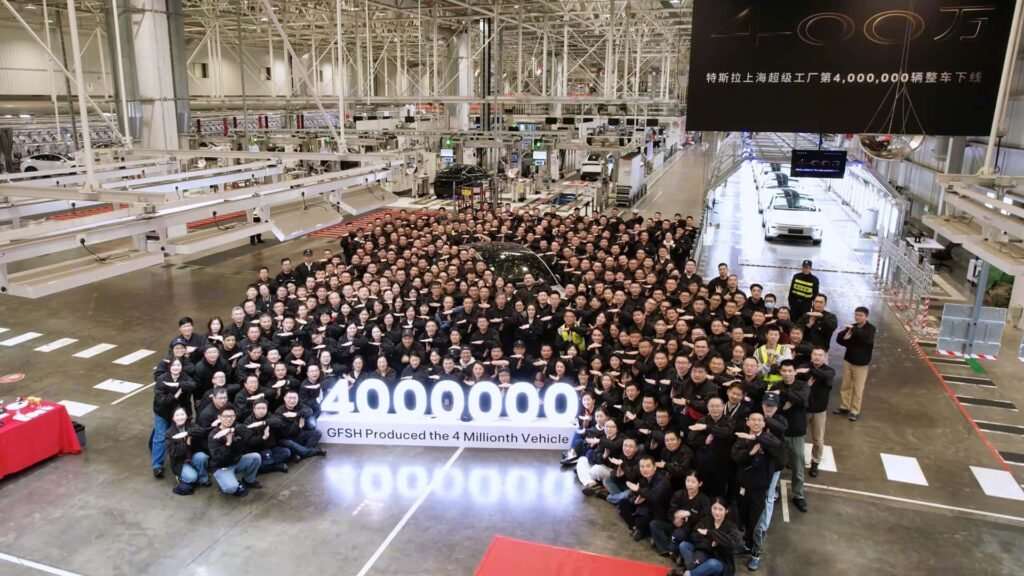
The Shanghai Factor: A Masterclass in Localization
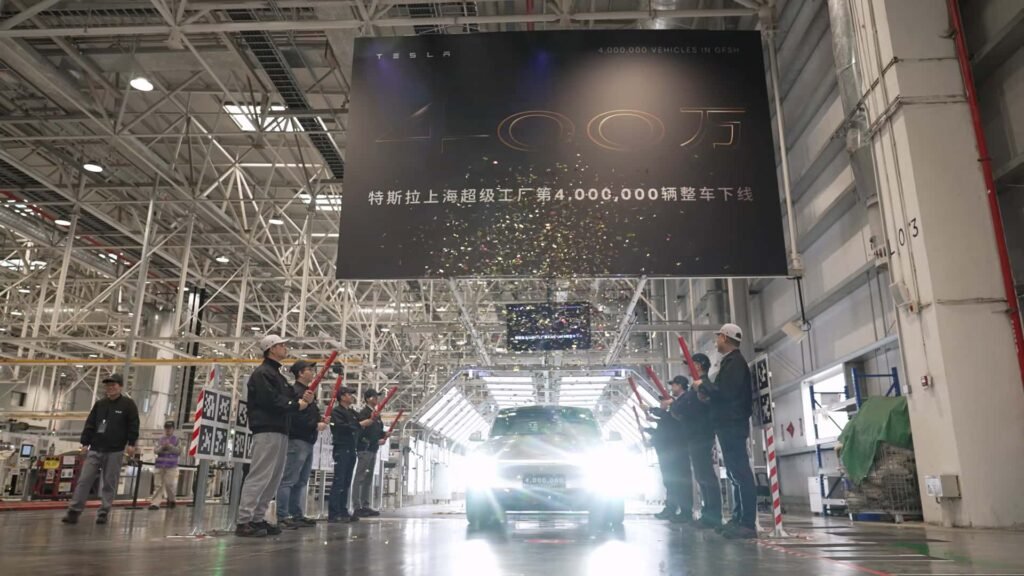
Unlike foreign competitors of the past who treated China as a dumping ground for legacy tech, Tesla integrated itself into the Chinese industrial fabric. The Shanghai Gigafactory is not just an assembly plant; it is the company’s global export hub.
This localization strategy achieves two things: it insulates Tesla from trade wars and allows for rapid production scaling that foreign rivals cannot match.
| Feature | Tesla (Shanghai) | Traditional Foreign JV (e.g., VW/BMW) |
|---|---|---|
| Supply Chain | >95% Localized (4-hour industry circle) | Mixed Global/Local |
| OTA Updates | Weekly/Monthly (Active Development) | Rare (Static Software) |
| Price Control | Direct (Can cut prices instantly) | Restricted by Dealer Networks |
| Consumer Perception | “China-Made Global Standard” | “Foreign Tech Adapted for China” |
By sourcing over 95% of its parts locally, Tesla utilizes the “Yangtze River Delta 4-Hour Industrial Circle.” This means if a part is needed, it can be sourced within a four-hour drive. This efficiency allows Tesla to maintain healthy margins even while engaging in price wars, a feat that is financially impossible for many startups.
The Ecosystem Moat: Supercharging and FSD
While domestic rivals are scrambling to build charging networks, Tesla is reaping the rewards of a decade-long head start.
- The Supercharger Network: With over 2,500 Supercharger stations in China, the “charging anxiety” that plagues other EV owners is significantly lower for Tesla drivers. The reliability of the network—where a user plugs in and it just works—is a massive retention tool.
- FSD as a Psychological Anchor: Even if the Full Self-Driving (FSD) capability is not fully utilized by every user daily, its presence sells the car. It signals technological superiority. As the industry observer notes, consumers are buying into the “Silicon Valley” narrative. They aren’t just buying a car; they are buying a ticket to the AI future.
The “Xiaomi” Challenge: Navigating the Mid-Life Crisis
It is impossible to discuss Tesla’s success without addressing the elephant in the room: The Xiaomi SU7. In 2025, the Xiaomi SU7 delivered over 240,000 units, outselling the Model 3 in its segment. This proved that Tesla is no longer the undisputed king of the 200,000-300,000 RMB sedan market.
However, Tesla’s sales remain robust because it has successfully segmented the market.
- The “Tech-First” Buyer: Buys Xiaomi/Nio for the cabin experience, voice assistants, and interior luxury.
- The “Driver-First” Buyer: Buys Tesla for the handling, the energy efficiency (kWh/100km), and the brand status.
Tesla has stopped trying to compete on “luxury” (a losing battle against Chinese interiors) and doubled down on “efficiency.” The data shows that while the Model 3 faces stiff competition, the Model Y remains a juggernaut because it lacks a direct, equally efficient electric SUV competitor at its price point.
Strategic Pricing: The Art of the “Fake” Discount
Tesla’s pricing strategy in China is aggressive and psychological. Rather than permanent price cuts that damage brand equity, Tesla utilizes:
- Insurance Subsidies: Offering 8,000 RMB insurance rebates.
- Low Interest Rates: Introducing 5-year low-interest loans with down payments as low as 79,900 RMB.
This strategy lowers the barrier to entry without officially dropping the sticker price, maintaining the car’s residual value perception while stimulating immediate demand. It creates a sense of urgency—”buy now before the subsidy ends”—that drives the monthly sales spikes we see in Q1 2026.
The Verdict: Why the “Low Spec” Car Wins
Ultimately, Tesla sells well in China because it occupies a unique psychological space. It is not “foreign” enough to be rejected by nationalists (thanks to the Shanghai factory), and it is not “generic” enough to be commoditized by spec-hunters.
Chinese consumers have realized that while a “smart cockpit” is nice to have, the core fundamentals of an EV—energy management, thermal efficiency, and charging infrastructure—are what make the car usable every day. Tesla sells the “boring” stuff better than anyone else, and in 2026, boring is selling like hotcakes.