Safety is no longer a “nice to have.”
In today’s market, it is the single most important decision factor for families, commuters, and long-distance drivers alike.
Modern crash tests go far beyond airbags and steel strength. The safest cars in 2025–2026 are evaluated on collision avoidance, driver-assistance intelligence, structural integrity, and how well they protect real people in real traffic.
This list focuses on vehicles that consistently score at the top in:
- Crash protection (front, side, rollover)
- Active safety systems that actually intervene
- Pedestrian and cyclist protection
- Real-world accident reduction performance
These are not marketing picks. These are cars that save lives.
Safety Comparison Table — Key Parameters
| Model | Body Type | Standard Active Safety | Structural Strength | Pedestrian Safety | Overall Rating |
|---|---|---|---|---|---|
| Volvo XC90 | SUV | Extensive (Standard) | Excellent | Excellent | ★★★★★ |
| Subaru Outback | Wagon | Extensive (Standard) | Excellent | Very Good | ★★★★★ |
| Tesla Model Y | SUV (EV) | Advanced (Standard) | Very Good | Good | ★★★★★ |
| Mercedes-Benz E-Class | Sedan | Advanced (Standard) | Excellent | Very Good | ★★★★★ |
| Genesis G80 | Sedan | Advanced (Standard) | Excellent | Very Good | ★★★★★ |
| Toyota Camry | Sedan | Strong (Standard) | Very Good | Good | ★★★★★ |
| Honda CR-V | SUV | Strong (Standard) | Very Good | Good | ★★★★★ |
| Mazda CX-5 | SUV | Strong (Standard) | Good | Good | ★★★★☆ |
| BMW 5 Series | Sedan | Advanced (Standard) | Excellent | Good | ★★★★☆ |
| Lexus RX | SUV | Strong (Standard) | Very Good | Good | ★★★★☆ |
Individual Model Analysis (Short, Decisive, Human)
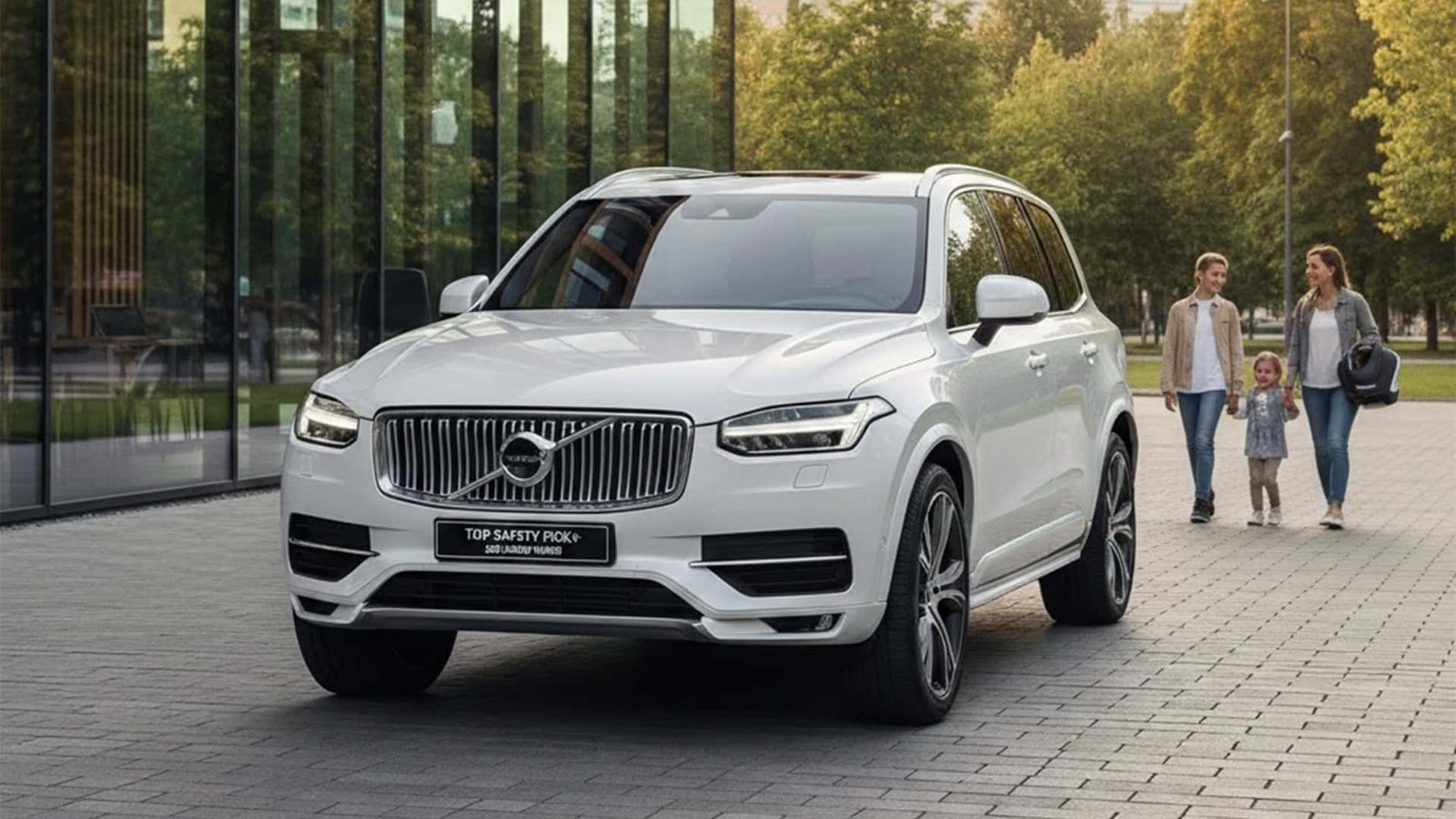
1. Volvo XC90 — The Gold Standard of Automotive Safety
Volvo doesn’t chase trends; it chases zero fatalities. The XC90’s reinforced safety cage, industry-leading collision avoidance, and calm, predictable handling make it the safest family vehicle money can buy. It doesn’t just score well in tests — it performs in real emergencies.
Safety Verdict: The reference point. Everything else is measured against it.
2. Subaru Outback — Everyday Safety, Every Mile
Subaru’s philosophy is simple: safety should not be optional. With standard all-wheel drive, excellent visibility, and one of the most refined driver-assist systems on the road, the Outback quietly prevents accidents before they happen.
Safety Verdict: One of the smartest safety buys at any price point.
3. Tesla Model Y — Technology-Driven Protection
The Model Y’s structural battery pack lowers the center of gravity, reducing rollover risk. Combined with fast-reacting automated braking and lane control, it excels in accident avoidance — though its safety strength relies heavily on software intelligence.
Safety Verdict: Outstanding active safety, especially in urban traffic.
4. Mercedes-Benz E-Class — Predictive Safety at Its Best
Mercedes focuses on anticipating danger. The E-Class monitors surrounding traffic continuously and intervenes smoothly, not abruptly. In critical situations, it feels like the car is thinking ahead of the driver.
Safety Verdict: Exceptional for highway and long-distance driving.
5. Genesis G80 — Luxury Without Safety Compromise
Genesis integrates advanced safety seamlessly into the driving experience. Blind-spot intervention, cross-traffic braking, and lane-centering work quietly but decisively, creating a sense of confidence rather than intrusion.
Safety Verdict: One of the safest luxury sedans available today.
6. Toyota Camry — Mass-Market Safety Done Right
The Camry proves that top-tier safety doesn’t require a premium badge. Its standard safety suite is effective, well-calibrated, and reliable. For families and commuters, it delivers peace of mind at scale.
Safety Verdict: A safety leader in the mainstream segment.
7. Honda CR-V — Smart Protection for Daily Life
The CR-V excels in real-world family driving: school zones, parking lots, unpredictable traffic. Its driver-assist systems are conservative and accurate, reducing fatigue while keeping control firmly with the driver.
Safety Verdict: Ideal for families who value consistency and clarity.
8. Mazda CX-5 — Strong Structure, Clear Feedback
Mazda prioritizes body rigidity and driver awareness. The CX-5 may not overwhelm with tech, but its chassis strength, steering feedback, and effective braking make it inherently safe.
Safety Verdict: Old-school engineering meets modern safety tech.
9. BMW 5 Series — High-Speed Stability and Control
Designed for autobahn conditions, the 5 Series offers excellent high-speed stability and advanced crash protection. Its safety systems favor confident drivers who want assistance without interference.
Safety Verdict: Best for experienced drivers who travel fast and far.
10. Lexus RX — Calm, Predictable, Protective
The RX focuses on smoothness and reliability. While not the most aggressive in accident avoidance, its consistent behavior and strong crash protection make it a dependable safety choice.
Safety Verdict: Quiet, controlled safety for everyday driving.
How to Choose the Safest Car for Your Needs
- Families with children: Prioritize structural strength and rear-seat protection (Volvo XC90, Subaru Outback).
- Urban commuters: Look for strong pedestrian detection and auto-braking (Tesla Model Y, Toyota Camry).
- Highway drivers: Predictive systems and stability matter most (Mercedes E-Class, BMW 5 Series).
- Value buyers: Safety should be standard, not optional (Honda CR-V, Toyota Camry).
Final Verdict
The safest cars today share three traits:
- Strong physical structure
- Smart, well-calibrated active safety
- Predictable behavior under stress
Technology alone does not make a car safe. The best vehicles combine intelligent systems with sound engineering and thoughtful human-machine interaction.
If safety is your top priority — and it should be — these ten cars represent the highest level of protection currently available.
Reference: