Electric vehicles can cost more to insure, but “EV” is not a universal surcharge. Your price depends on the exact VIN, vehicle value, repair and parts costs, location, driver record, annual mileage, insurer and coverage choices. The only decision-grade comparison is two quotes for the same household with identical liability limits, deductibles and optional coverages. Get those quotes before leaving a deposit. A $50 monthly EV premium becomes $3,000 over five years; a $100 difference becomes $6,000—enough to erase a meaningful share of the fuel and maintenance savings that attracted you to the car.
EV insurance cost: the 30-second answer
| Shopping situation | Likely insurance result | Best next step |
|---|---|---|
| New EV costs much more than the gas or hybrid alternative | Collision and comprehensive may be higher | Quote both VINs with identical coverage before comparing ownership cost. |
| EV and gas vehicle have similar value and repair support | Difference may be modest or insurer-specific | Get at least three carrier quotes; do not assume the current insurer is best. |
| High-performance or luxury EV | Often a tougher comparison | Compare it with a similar-performance luxury vehicle, not an economy gas car. |
| Low-mileage driver with garage parking | May qualify for favorable mileage or usage-based pricing | Ask what data is collected and whether the discount can become a surcharge. |
| Used EV with much lower market value | Physical-damage premium may fall, but not automatically | Compare the premium with the car’s actual cash value and your deductible. |
| Quote changes after selecting the EV | The vehicle is only one possible cause | Check drivers, address, mileage, coverage, discounts and effective date line by line. |
XCarspace verdict: treat insurance as a vehicle-specific purchase cost, not a footnote. If the EV costs $60 more per month to insure, add $720 to every ownership year. The EV can still be the cheaper vehicle overall, but only after that number is placed beside energy, maintenance, financing and depreciation.
Why there is no honest national “EV surcharge”
The National Association of Insurance Commissioners’ July 2026 EV insurance overview says EVs may cost more to insure because of vehicle value, specialized repairs, battery costs, parts availability and the number of qualified repair facilities. The same page also warns that consumer estimates vary with the model, driver, coverage, state, insurer and comparison group.
That second sentence matters more than any national average. A $70,000 performance EV compared with a $32,000 compact gasoline SUV tells you little about powertrain. A used $24,000 EV and used $24,000 hybrid in the same household make a cleaner test. Even then, two insurers may price the same pair differently because each company has its own claims experience and rating model.
Insurance regulation and allowable rating factors also vary by state. NAIC lists location, age, driving experience, driving record, claims history, previous coverage, vehicle type, vehicle use, annual mileage, chosen coverage and deductibles among the major inputs. Credit-based insurance information is used in many states but is restricted or handled differently in others. This article is a shopping framework, not a premium estimate or advice about a particular state’s law.
The repair bill is only half of the insurance equation
Insurers care about two related outcomes: how often claims occur and how expensive the claims are. The Highway Loss Data Institute calls these claim frequency and claim severity. Overall insurance losses reflect both. An expensive repair does not automatically mean a high premium if claims are uncommon, and frequent low-cost claims can still create substantial losses.
A useful older HLDI study compared electric vehicles with conventional counterparts through calendar year 2019 while controlling for mileage and other factors. It found lower collision and property-damage-liability claim frequency for the EVs in the study. Earlier EV claim-severity differences had narrowed, and the modeled collision-severity increase was no longer statistically significant in the updated analysis. That is evidence against a simplistic “every EV claim is worse” story.
It is not a current rate table. The study used a limited set of paired vehicles and data ending in 2019; it did not cover every modern EV, repair network, battery design or insurer. Use it to understand why frequency and severity must be considered together—not to predict your 2026 premium.
What can make one EV expensive to insure?
Vehicle value and performance
Collision coverage pays for damage to the insured vehicle subject to the policy terms and deductible. A more valuable vehicle exposes the insurer to a larger repair or total-loss payment. Quick acceleration, expensive wheels, glass roofs and luxury equipment can further change a model’s loss experience. Compare an EV with a vehicle of similar value, size and performance before blaming electricity.
Parts, labor and repair-network depth
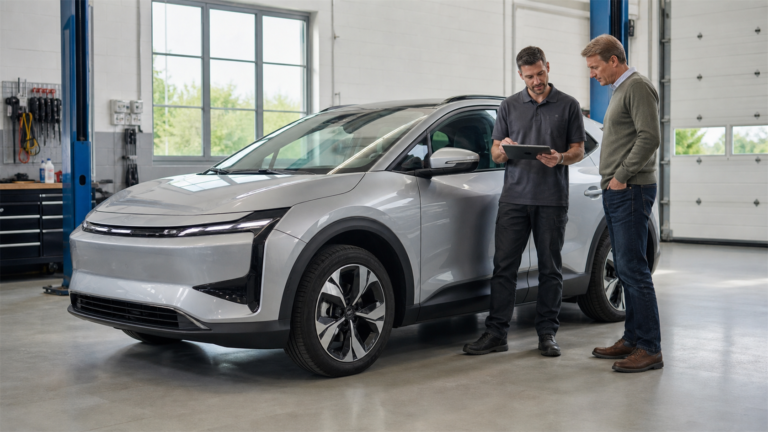
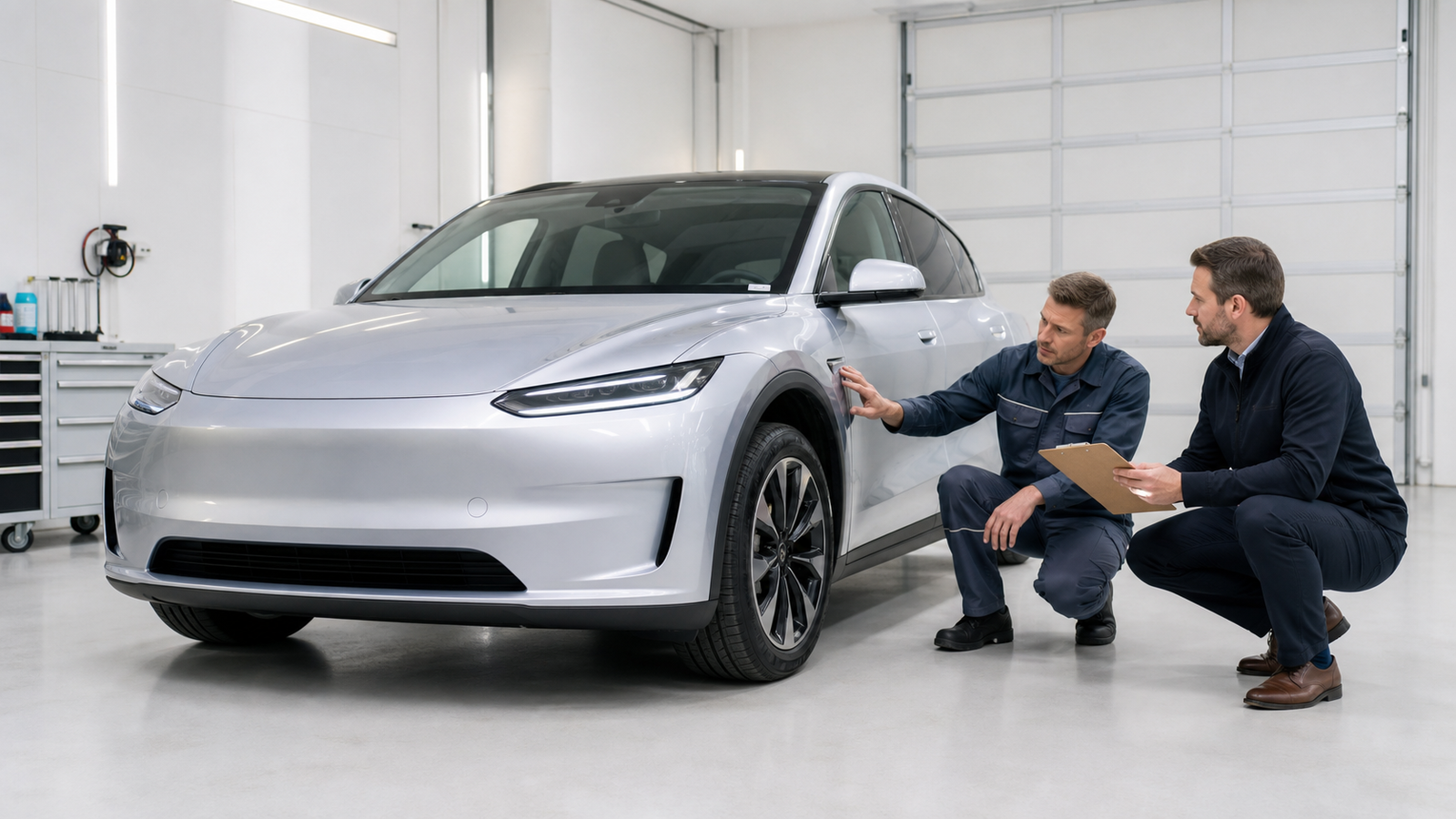
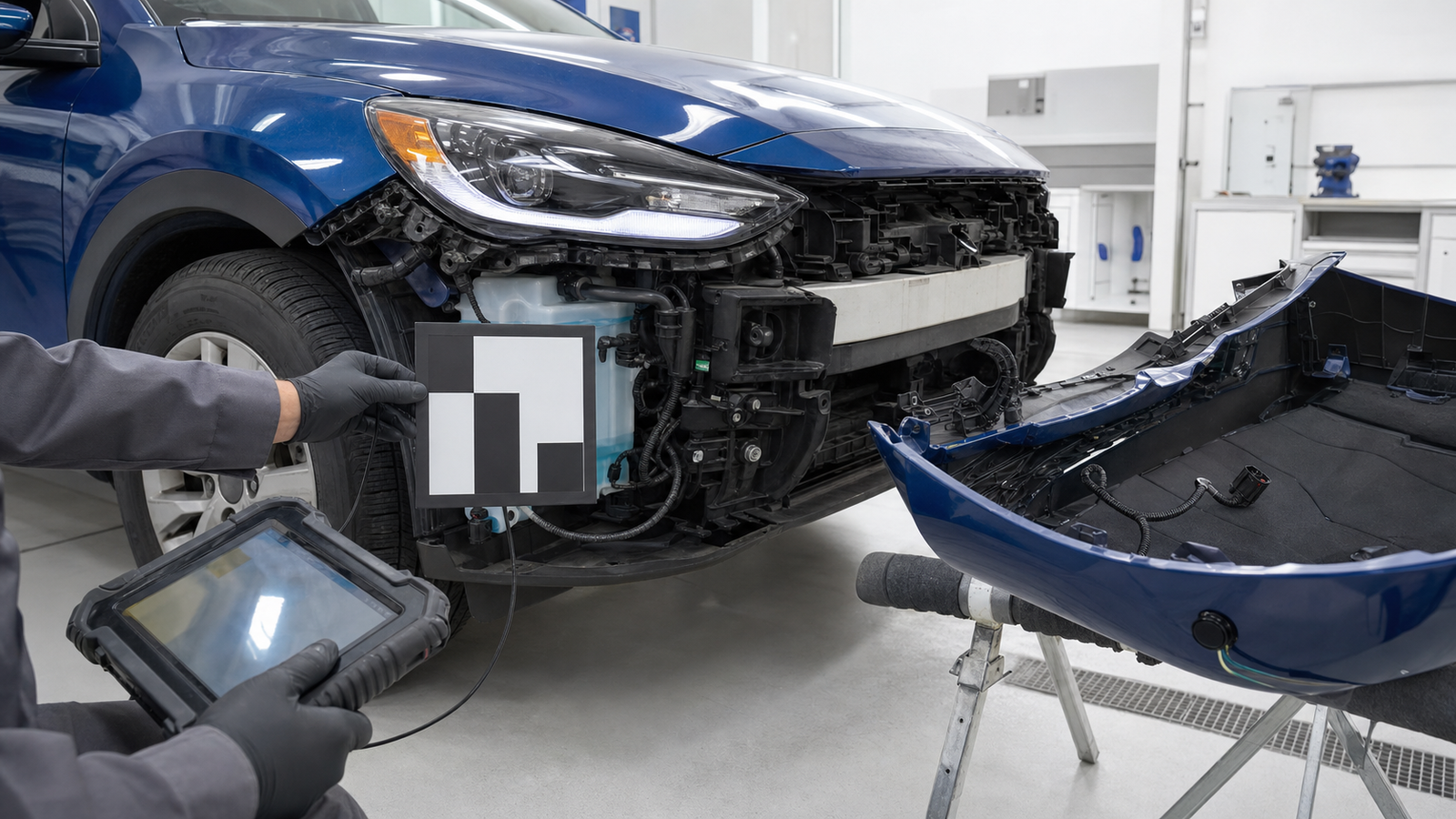
A repair can take longer or cost more when parts are scarce, procedures require brand-specific equipment or few local shops are qualified. NAIC identifies repair complexity, parts availability and the number of repair facilities as possible EV cost factors. Ask the insurer whether its preferred network has an EV-qualified shop within a practical distance and how rental coverage works when parts delay a repair.
Sensors and calibration
Cameras, radar, parking sensors and calibration procedures can turn a bumper or windshield repair into a multi-step job. This is a modern-vehicle issue, not an EV-only issue. The right comparison is the actual safety and driver-assistance equipment on both trims. A gasoline luxury SUV with the same sensor suite can be just as complicated.
Battery location and total-loss decisions
Traction batteries are expensive components mounted low in many EVs. Damage near the battery enclosure can require specialized inspection before a vehicle is returned to service. That does not mean a scratched undertray requires a new battery or that every collision totals the car. It means the shop and insurer need credible procedures for determining whether the high-voltage system is safe and repairable.
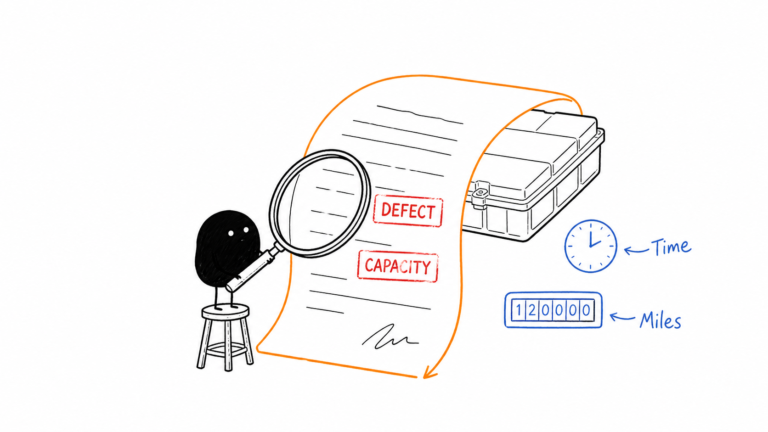
The battery’s defect warranty and collision coverage solve different problems. Do not assume a manufacturer battery warranty pays for crash damage, road debris or flooding; read the warranty and policy. If you are shopping used, the XCarspace used-EV battery inspection guide explains how to separate condition, warranty and physical-damage evidence.
Model-specific theft and claims history
Insurers price a model using their available loss experience. Two EVs with similar MSRPs can receive very different quotes. Theft frequency, glass claims, parts prices, driver demographics and total-loss patterns can matter. This is why switching brands or trims can move the premium more than switching powertrains.
Calculate the five-year insurance penalty before you buy
The first calculation is deliberately simple:
Five-year insurance difference = monthly EV quote difference × 60 months
| EV premium difference | One-year difference | Five-year difference | What it can change |
|---|---|---|---|
| $25/month | $300 | $1,500 | Usually meaningful, but unlikely to decide the entire purchase alone. |
| $50/month | $600 | $3,000 | Can offset a charger installation or several years of energy savings. |
| $80/month | $960 | $4,800 | Large enough to reverse a close EV-versus-hybrid cost result. |
| $100/month | $1,200 | $6,000 | Must be treated as a major ownership-cost difference. |
| $120/month | $1,440 | $7,200 | Worth shopping another carrier, trim or vehicle before signing. |
These are arithmetic examples, not national premium estimates. They hold the quote difference constant for five years and exclude rate changes, moving, claims, driver changes, fees and the time value of money.
Now connect insurance to the EV’s operating savings:
Monthly insurance difference that erases annual operating savings = annual energy and maintenance savings ÷ 12
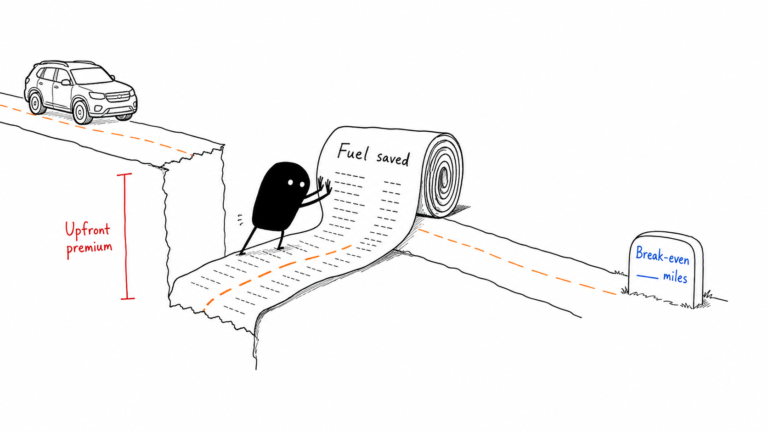
Suppose your own fuel-and-maintenance model says the EV saves $1,200 per year. A $60 monthly insurance difference costs $720 annually, leaving $480 of operating savings before purchase price and depreciation. A $100 difference costs $1,200 and erases that modeled operating advantage. This is a sensitivity example; replace $1,200 with your calculation, not a national average.
Use the XCarspace fuel-versus-electric cost calculator for the energy side, then place the real insurance quotes into the total-cost-of-ownership calculator. The Department of Energy’s vehicle-cost methodology likewise treats insurance, fuel, maintenance, financing and purchase costs as separate inputs rather than assuming one category decides the result.
How to request quotes that can actually be compared
Get the VIN for each finalist. A model name is not enough when trim, drivetrain, wheels, safety equipment and vehicle value differ. Then use one effective date and hold every household input constant.

| Quote field | Keep identical | Why it matters |
|---|---|---|
| Drivers and garaging address | Same household and address | Changing either makes the vehicle comparison meaningless. |
| Annual mileage and use | Same commute, pleasure or business use | Mileage changes exposure and may affect eligibility or price. |
| Liability limits | Same bodily-injury and property-damage limits | A cheaper quote may simply buy less protection. |
| Uninsured/underinsured motorist | Same limits and options | State requirements and choices vary. |
| Collision deductible | Same dollar amount | A higher deductible transfers more crash cost to you. |
| Comprehensive deductible | Same dollar amount | Glass, theft, weather and animal claims may sit here. |
| Rental reimbursement | Same daily and total limits | A low rental cap can matter during a long parts delay. |
| Roadside, glass and replacement options | Same options or clearly mark differences | Convenience features can hide inside the total premium. |
| Telematics and discounts | Apply consistently | A monitored-driving discount is not equivalent to a standard quote. |
| Payment plan and fees | Compare paid-in-full cost | Monthly installment fees can distort the apparent difference. |
Ask for the six- or twelve-month total, not just the monthly payment. Save the declarations or quote summary. Confirm whether the number is final or still subject to underwriting, vehicle verification or driving-history reports. NAIC advises consumers to complete applications accurately and keep a copy because misquotes can result from incorrect information.
Three buyers, three different outcomes
The family replacing a gas crossover
The EV costs $4,000 more after incentives and saves an estimated $1,100 a year in energy and scheduled maintenance. Its insurance is $45 more per month, or $540 annually. The operating advantage falls to $560 a year. That does not automatically kill the EV, but it roughly doubles the time needed for operating savings to recover the purchase premium. Depreciation and financing can still decide the outcome.
The low-mileage used-EV commuter
The used EV and hybrid cost the same, and the EV travels only 6,000 miles a year. Energy savings are modest, but one insurer quotes both cars within $8 per month. The EV can remain financially competitive because there is little insurance penalty. The buyer should focus on battery evidence, charging access, depreciation and collision/comprehensive value relative to the car’s price.
The high-performance EV shopper
The buyer compares a powerful luxury EV with a mainstream hybrid SUV and sees a $140 monthly insurance gap. Calling that an “EV surcharge” is misleading. Vehicle value, performance, wheels, glass and repair parts differ. The buyer should compare the EV with a similarly priced performance vehicle, then decide whether the extra performance is worth the full ownership cost.
Ways to reduce the quote without hollowing out coverage
- Shop several insurers: carrier models and EV claims experience differ. Include independent agents and direct insurers where available.
- Quote before buying: a VIN-level surprise is easiest to solve while you still have other vehicles on the shortlist.
- Verify annual mileage: do not pay for an outdated commute, but report use honestly.
- Ask about bundles and safety discounts: availability and value vary by company and state.
- Consider a higher deductible only if you can pay it: move the saved premium into an emergency fund; do not create a deductible you cannot absorb.
- Review duplicate extras: roadside assistance or rental benefits may overlap with another service, but confirm limits before removing anything.
- Evaluate telematics carefully: ask what behavior and location data is collected, how long it is retained, and whether poor results can raise the price.
- Re-shop after a material change: moving, adding a driver, reducing mileage or changing vehicles can alter which insurer is competitive.
Do not cut liability protection to the legal minimum merely to make an EV payment fit. That changes the risk you are buying, not the cost of insuring the vehicle. Coverage needs are personal and state-specific; a licensed agent or state insurance department can explain local options.
What changes the recommendation?
- A cheaper EV trim: lower value and simpler wheels or glass may reduce the physical-damage comparison.
- A different insurer: the same EV can price very differently across carriers.
- Falling annual mileage: energy savings shrink, but low-mileage insurance or telematics pricing may improve.
- High public-charging cost: weaker energy savings make an insurance penalty harder to absorb.
- Strong home charging economics: cheap electricity can preserve the EV’s total-cost advantage despite a moderate premium difference.
- A short ownership period: five-year arithmetic overstates costs if you sell in two years; run the actual horizon.
- A large depreciation gap: resale can outweigh both insurance and energy.
If insurance is one part of a broader powertrain decision, use the XCarspace EV-versus-hybrid buyer guide to add charging access, road-trip behavior and five-year costs.
Frequently asked questions
How much more does EV insurance cost?
There is no reliable universal amount. The result varies by VIN, driver, location, coverage, insurer and comparison vehicle. Quote the EV and alternative under identical conditions. Every $50 monthly difference equals $600 a year or $3,000 over five years if the gap stays unchanged.
Why can electric cars be more expensive to insure?
Possible factors include higher vehicle value, specialized repair procedures, parts availability, battery inspection or repair, fewer qualified shops and model-specific claim experience. Modern sensors and calibration also affect many gasoline and hybrid vehicles.
Does an EV battery warranty lower insurance cost?
Do not assume it will. A battery warranty generally addresses covered defects under its own terms; auto insurance addresses covered losses under the policy. Collision damage, flooding, road debris and degradation may be treated differently. Read both documents.
Is a used EV cheaper to insure?
It can be if the vehicle’s market value and potential claim payment are lower, but model-specific repairs, driver factors and coverage still matter. Compare the premium with the car’s actual value and the deductible you can afford.
Should I use telematics to lower EV insurance?
It may help a low-mileage, smooth driver, but programs differ. Ask what data is collected, whether location is tracked, how the score affects renewal and whether the program can increase as well as decrease the premium.
Final verdict
EVs can cost more to insure, but the useful answer is not a national percentage. It is the exact difference between two matched quotes for your household. Multiply that monthly gap by the months you expect to own the car, then place it beside real energy, maintenance, financing and depreciation estimates.
If the EV is $50 more per month, the five-year cost is $3,000. If another insurer reduces the gap to $15, it falls to $900. That is why the insurance quote belongs before the purchase contract. Shopping the vehicle without shopping its coverage leaves one of the largest ownership variables blank.
Methodology and primary sources
This guide was researched and updated August 3, 2026. Dollar tables are sensitivity examples, not estimates of national premiums. They assume the monthly quote difference stays constant for 60 months and exclude future rate changes, claims, moving, driver changes, installment fees and discount changes. Buyer scenarios are illustrative and do not describe particular models or insurance products.
- National Association of Insurance Commissioners: Electric Vehicle Insurance Rates
- National Association of Insurance Commissioners: Consumer Auto Insurance Guide
- Highway Loss Data Institute: Auto Insurance Losses Explained
- HLDI: Insurance Losses of Electric Vehicles and Conventional Counterparts
- U.S. Department of Energy: Vehicle Cost Calculator Methodology