Do not buy a used EV on the dashboard range estimate alone. The best check combines a model-specific battery diagnostic, a controlled road-and-charge test, the remaining battery warranty, a VIN recall search and an underbody inspection by an EV-qualified technician. A seller who cannot document battery condition is not automatically hiding a bad pack, but the missing evidence should lower the price you are willing to pay. The practical goal is not to find a battery showing a perfect number. It is to confirm that the car has enough usable energy for your worst regular trip, no high-voltage faults or physical damage, and enough warranty or purchase discount to cover the remaining uncertainty.
Used EV battery health: the quick buying rule
| Evidence | What you want to see | What it cannot prove |
|---|---|---|
| Manufacturer or specialist diagnostic | State-of-health estimate, no active high-voltage faults, balanced battery data where supported | That every future repair is impossible |
| Controlled drive calculation | Usable-energy estimate reasonably close to the diagnostic and sufficient for your trips | Laboratory-grade battery capacity |
| AC and DC charging test | Normal connection, stable charging and no warnings; DC test only if the car supports it | A universal peak-charge rate in every weather condition |
| Warranty and recall check | VIN-specific coverage confirmed in writing and open recalls identified | Coverage for normal capacity loss unless the warranty says so |
| Lift inspection | No impact marks, deformation, leaks, corrosion concern or improper prior repair near the pack | Internal cell condition without diagnostic evidence |
Our buying threshold: pay full market price only when the seller provides strong diagnostic evidence, the car passes a physical and charging inspection, and its measured capability comfortably covers your routine. If one layer is missing, treat that as financial uncertainty rather than filling the gap with optimism.
Battery state of health is not the range number on the screen
State of charge and state of health answer different questions. State of charge is the battery’s current fill level. State of health, or SOH, is an estimate of how the aged battery compares with its original condition, often using remaining energy capacity as a central measure. The exact calculation and what the vehicle exposes can differ by manufacturer.
The dashboard range estimate is a third thing. It predicts miles using recent energy consumption, temperature, climate-control use, route assumptions and the current state of charge. A gently driven car may show an impressive range estimate even with some capacity loss. A healthy car driven fast in winter may show a pessimistic one. The U.S. Department of Energy notes that EV range varies substantially with temperature, speed, acceleration, terrain and load. That is why one parking-lot screenshot is weak evidence.
Battery diagnostics are also estimates, not magic. The Department of Energy is funding work on faster battery diagnostics because estimating remaining capacity and useful life from limited field data is technically difficult. Use the best model-specific report available, but compare it with the car’s behavior and inspection history.
The 100-point XCarspace used-EV battery scorecard
This scorecard measures purchase confidence, not laboratory SOH. A car can have 90% estimated SOH and still score poorly because its warranty is unclear or its battery enclosure is damaged. Another car with 84% estimated SOH can be a sensible commuter if the condition is documented, the price is right and the remaining range fits the buyer.
| Category | Points | Full-credit evidence |
|---|---|---|
| Battery diagnostic quality | 30 | Recent model-specific report; no active high-voltage battery faults; test conditions and source identified |
| Warranty, recall and repair history | 20 | In-service date, mileage limit, transfer terms and capacity coverage verified; recalls checked by VIN; battery work documented |
| Controlled drive and energy check | 20 | Meaningful state-of-charge window driven in mild conditions; trip energy and miles recorded; result fits the diagnostic |
| Physical and high-voltage inspection | 20 | EV-qualified inspection finds no enclosure impact, leakage, warning codes, unsafe repair or charge-port damage |
| Charging behavior and buyer fit | 10 | AC charge succeeds; supported DC charge is stable; conservative remaining range exceeds the buyer’s requirement |
- 85-100: strong evidence. Proceed if the rest of the vehicle and price also make sense.
- 70-84: conditional buy. Require a price adjustment, more testing or meaningful warranty protection.
- Below 70: too much unresolved risk for a normal retail price.
- Automatic pause: active high-voltage warning, flood history, visible pack impact or deformation, unexplained battery repair, charging failure, or a seller who refuses an independent inspection.
Do not award points for a verbal promise. Save the diagnostic, service invoice, warranty document, VIN search result and photos with the purchase file.
Step 1: identify the exact battery and warranty
Start with the VIN, not the listing headline. Record the model year, trim, drivetrain, original battery option and current odometer. Some EVs offered more than one pack, and a replacement pack may not match assumptions based on the car’s build date.
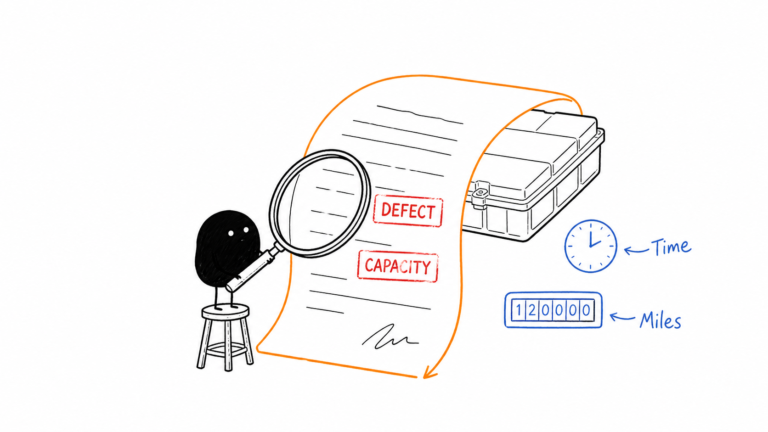
Ask an authorized service department or the manufacturer to confirm four items in writing:
- The original in-service date, which often starts the warranty clock.
- The remaining time and mileage on the high-voltage battery warranty.
- Whether coverage transfers to the next owner.
- Whether the warranty covers only defects or also promises a minimum capacity threshold.
Those four checks answer different questions. The XCarspace EV battery warranty guide compares current capacity thresholds, time and mileage limits, exclusions, transfer terms and the evidence needed for a claim.
The DOE Alternative Fuels Data Center says many manufacturers offer battery warranties around eight years or 100,000 miles, but the exact coverage varies. Never convert that common pattern into a promise for the VIN in front of you. A 90,000-mile EV may have substantial time left but little mileage coverage. A low-mileage older EV may have the opposite problem.
Run the 17-character VIN through the NHTSA recall lookup. NHTSA says a VIN search can show unrepaired recalls reported by participating manufacturers, and recall remedies are provided without charge. Also ask for completion records for earlier battery campaigns; a current “zero unrepaired recalls” result does not describe every past repair.
Step 2: demand the best diagnostic the model supports
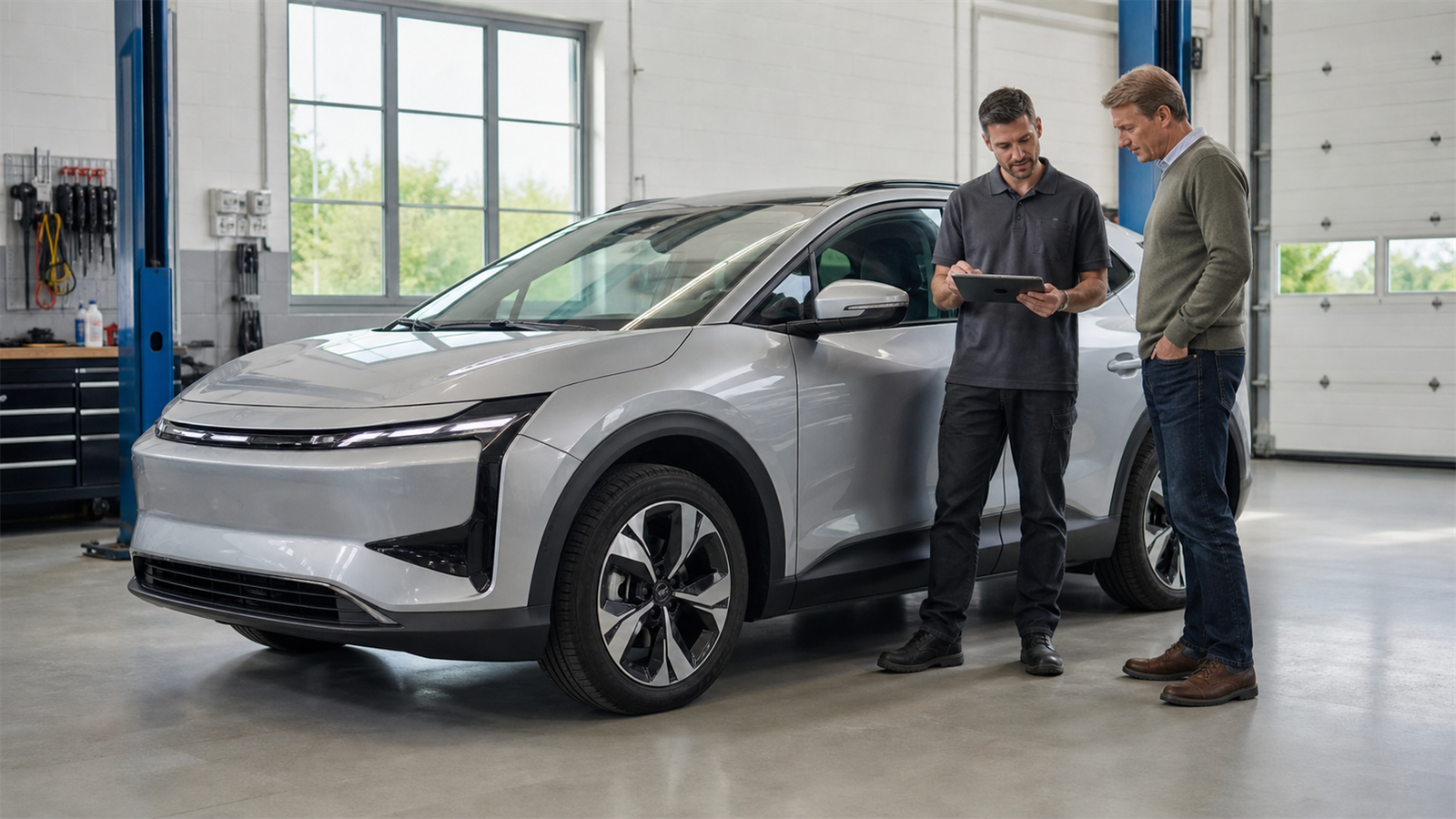
There is no single consumer procedure that reads every EV correctly. Depending on the vehicle, useful evidence may come from an in-car battery-health screen, a manufacturer service report, a certified pre-owned inspection, an EV-specialist scan tool or a monitored charge-and-drive test. Generic code readers may see powertrain faults without providing a trustworthy capacity estimate.
The report should identify the VIN, odometer, date, software or tool used and the metric being reported. Ask what “100%” means in that system. A capacity estimate, a performance score and a warranty threshold are not interchangeable.
Look beyond one headline percentage. Ask whether the scan found active or stored high-voltage battery fault codes, abnormal module or cell-voltage imbalance where the platform exposes it, thermal-management faults, isolation faults or repeated charging errors. Do not interpret raw cell data without model-specific limits; the point is to have an EV-qualified technician explain whether the pattern is normal for that vehicle.
NHTSA advises that high-voltage service should be performed by a qualified technician with EV-specific training. A pre-purchase inspection is not the time for a general repair shop to open a sealed pack or probe orange high-voltage wiring.
Step 3: estimate usable energy with a controlled drive
A road test can challenge an implausible diagnostic or sales claim. It cannot replace a calibrated capacity test, but it is much better than comparing the dashboard’s predicted miles before and after a five-minute loop.
Use this reproducible estimate when the car displays trip energy consumption in kilowatt-hours per mile:
Estimated full usable energy = trip miles x trip kWh per mile / battery percentage used
Example: the car travels 120 miles, the trip computer reports 0.25 kWh per mile, and state of charge falls from 80% to 20%. The drive used 60 percentage points, or 0.60 of the displayed usable window.
120 miles x 0.25 kWh/mile = 30 kWh used
30 kWh / 0.60 = about 50 kWh of estimated full usable energy
If reliable documentation says this version originally provided about 55 kWh usable, the rough capacity ratio is 50 / 55, or about 91%. Do not use advertised gross pack capacity in the denominator. Gross and usable capacity are different, and manufacturers do not always publish both.
Record ambient temperature, starting and ending state of charge, miles, average speed, elevation change and climate-control use. A useful test covers at least 40-60 percentage points in mild weather on a representative route. It excludes energy recorded before the test. Repeat in the other direction when elevation is meaningful.
This estimate still carries uncertainty. Trip-computer energy may not include every loss; battery percentage is rounded; software buffers can change; cold or hot cells alter available energy; and a recent battery-management reset may need time to relearn. EPA range testing uses controlled laboratory cycles and adjustments for cold, air conditioning, high speed and aggressive driving. Your road calculation is a screening tool, not an EPA test or warranty claim.
Use the XCarspace EV Real Range Calculator to stress-test the result for temperature and driving conditions. Then compare the conservative range with how much EV range your routine actually requires.
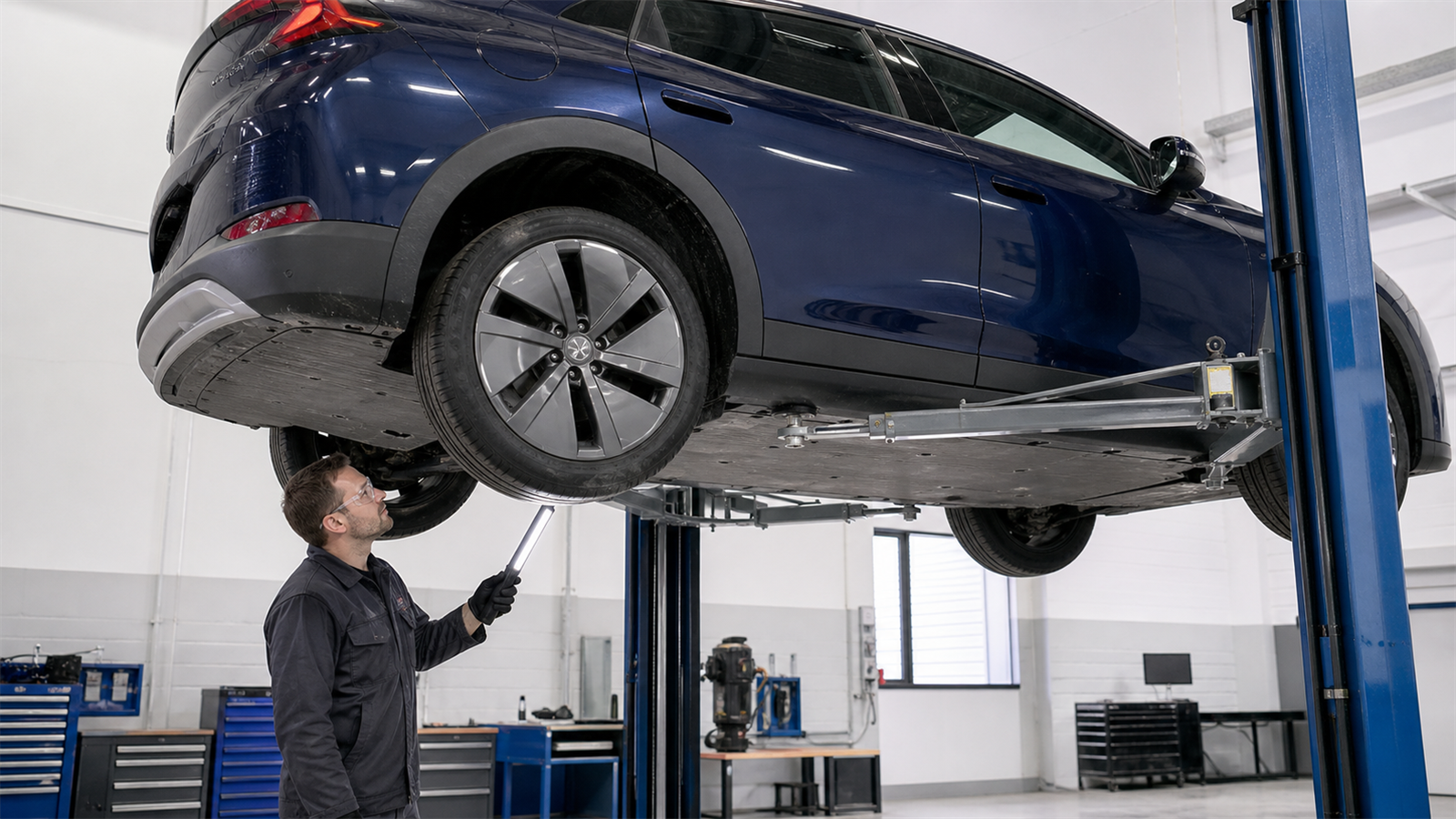
Step 4: inspect the battery enclosure, cooling system and 12-volt system
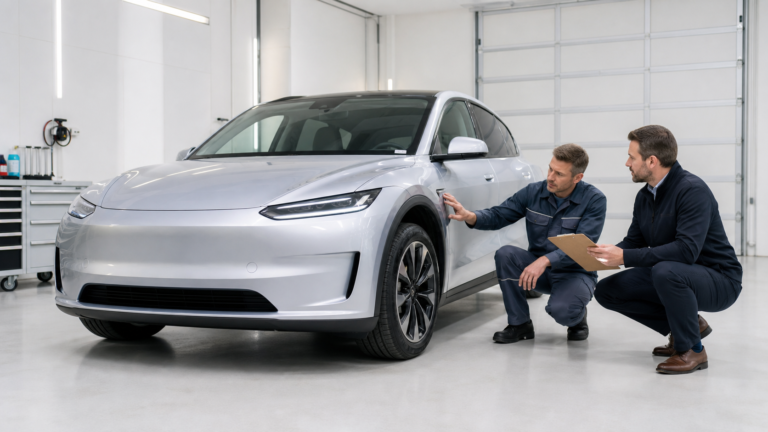
The high-voltage pack normally sits low in the vehicle, where road debris, incorrect lifting and collision damage can matter. Have an EV-qualified shop put the car on a lift and inspect the enclosure and nearby structure. You want no significant dents, punctures, deformation, fresh sealant, unexplained fasteners, corrosion concern, coolant residue or signs that lift arms contacted the wrong point.
Ask the technician to inspect the charge port, cables, protective covers and thermal-management system according to the manufacturer’s procedure. Some packs use liquid cooling and may require model-specific coolant checks. DOE notes that battery thermal systems can require inspection and directs owners to the manual for the vehicle’s requirements.
Do not ignore the ordinary 12-volt battery. A weak low-voltage battery can produce confusing warnings and prevent an otherwise healthy EV from starting its high-voltage system. Testing it is inexpensive. It should not, however, be used to dismiss persistent high-voltage alerts without a proper diagnosis.
Flood exposure is an automatic pause. NHTSA warns that submerged electrified vehicles can create high-voltage shock and fire hazards. Title history, interior moisture clues and underbody corrosion should agree. If they do not, walk away until an EV-qualified inspection resolves the discrepancy.
Step 5: test both normal charging and trip charging
Connect the car to AC charging using compatible equipment. Confirm that the port locks or latches as designed, the session begins without repeated faults, the vehicle accepts a stable charge and scheduled-charging settings work. Inspect the portable cable and adapters promised in the sale; replacements can be costly, and damaged equipment should not be used.
If the car supports DC fast charging and road-trip speed matters to you, run a paid session at a compatible station. Start at a moderate state of charge after enough driving to bring the battery toward normal operating temperature. Record starting percentage, ambient temperature, charger rating, peak power, energy delivered, time and any errors.
Do not reject the car merely because it misses an advertised peak. Charging power depends on state of charge, battery temperature, charger capability, shared-site limits and the vehicle’s charging curve. Compare the session with reliable, model-specific expectations under similar conditions. A repeatable failure to initiate, severe unexplained throttling or warning messages deserves diagnosis.
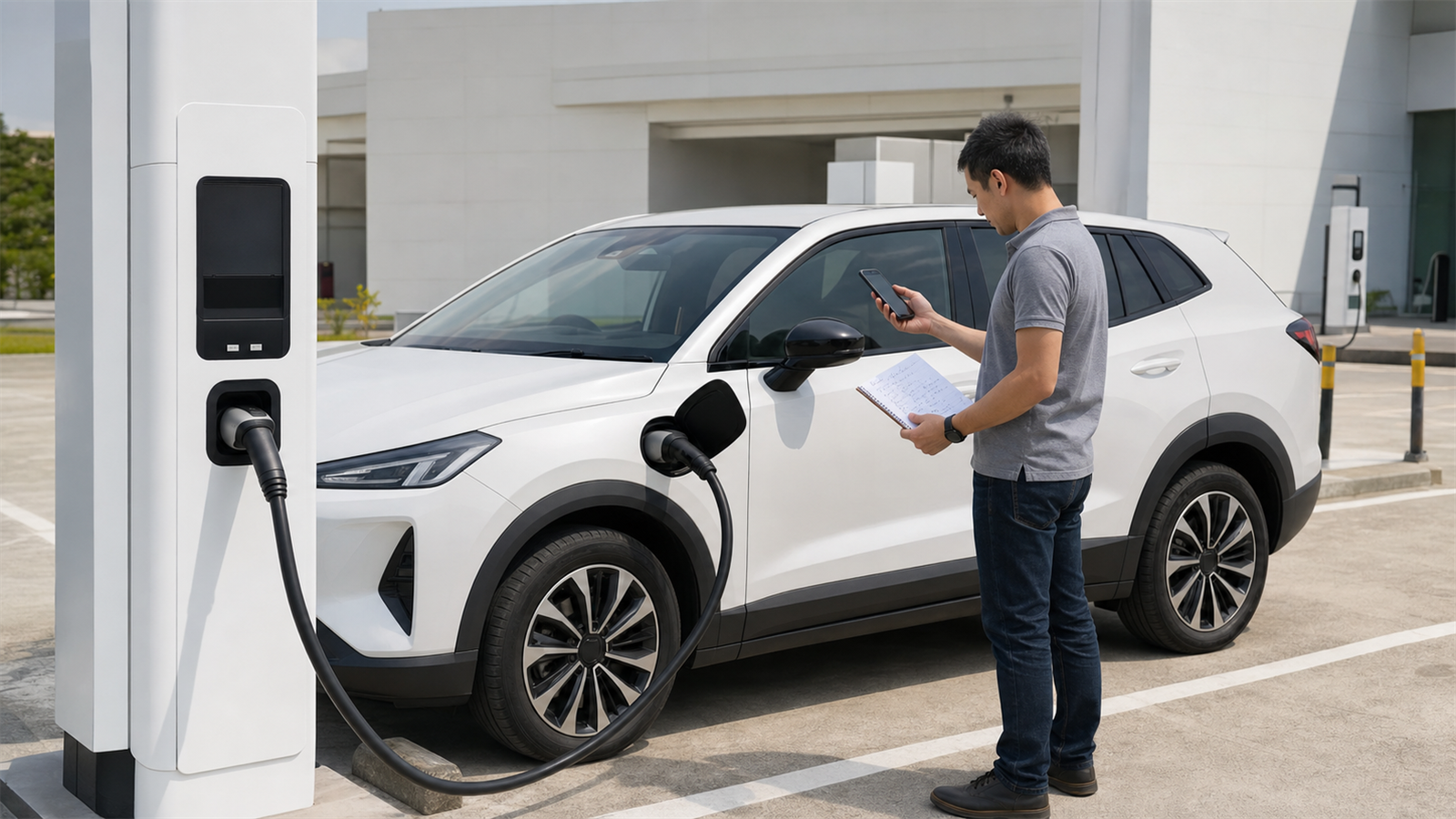
What battery-health result is good enough?
There is no universal percentage that makes every used EV a buy. Start with required range.
Conservative required full-charge range = longest routine day / maximum planned battery-use fraction
A buyer with a 90-mile longest routine day who wants to use no more than 70% of the battery in winter needs about 129 miles of conservative full-charge range: 90 / 0.70. Add a personal reserve for detours, aging during ownership and limited charging access. If the inspected car can deliver 170 miles in similar winter conditions, moderate degradation may not matter. If it barely reaches 130 miles today, the purchase has little margin.
The answer changes for a two-car household that uses the EV only for a 35-mile commute. A lower-range older EV with documented condition can be excellent value. The same car is a poor fit for an apartment resident who depends on highway fast charging. Battery health matters, but buyer fit decides how much health is enough. If charging access is uncertain, start with the broader EV vs hybrid buyer decision before shopping a specific used car.
Run the whole ownership case through the XCarspace Total Cost of Ownership Calculator. Include depreciation, insurance, tires, charging equipment and a repair reserve, not just electricity.
Questions to send the seller before you travel
- What is the VIN, current mileage and original in-service date?
- Has the high-voltage battery, a module or the battery-control unit ever been repaired or replaced?
- Can you send the latest battery diagnostic with the VIN and test date?
- Are any battery, charging or thermal-management warnings present or recently cleared?
- Which charging cables and adapters are included?
- May an independent EV-qualified shop inspect the car on a lift and scan it?
- May I perform an AC charge and, if supported, a DC fast-charge test?
- Are there open recalls, accident repairs, flood exposure or underbody impacts?
A seller who answers clearly saves both parties time. A seller who says the battery is “perfect” but refuses testing has supplied the most useful answer of all.
What changes the recommendation?
Strong remaining warranty can justify buying with less independent data, especially from a manufacturer-backed certified program. A large discount can also compensate for documented capacity loss when the remaining range still fits the job. The recommendation reverses when the car is being priced like a low-risk example but the seller will not establish its condition.
Walk away, at least temporarily, after a high-voltage warning, charging failure, evidence of pack impact, inconsistent VIN or warranty information, flood concern, unexplained module replacement or a diagnostic that cannot be tied to the car. Some findings can be repaired. None should be priced as if they do not exist.
Frequently asked questions
Can an OBD scanner check used EV battery health?
Sometimes it can provide useful model-specific data, but a generic scanner is not a universal SOH meter. Confirm that the tool and software support the exact vehicle and that an EV-qualified technician can interpret the result. Always pair the scan with warranty, physical and charging checks.
Is displayed range a reliable battery-health test?
No. Displayed range is a prediction influenced by recent driving, temperature and climate use. It can support a broader inspection, but it should not be the only evidence.
Should I avoid every used EV below 90% SOH?
No. A documented lower-capacity battery can still be a good buy when its conservative range exceeds your need, the price reflects condition and the rest of the car is sound. An undocumented “95%” claim can be riskier than a credible 85% result.
How much does an EV battery inspection cost?
There is no reliable national flat price because access to battery data and labor time vary by model and shop. Ask for a written scope: diagnostic source, fault-code scan, lift inspection, charging test and report. A cheap inspection that omits the pack and charging system is not an EV battery inspection.
Does a used EV battery warranty transfer?
It depends on the manufacturer, market, vehicle history and warranty terms. Verify the VIN, original in-service date, mileage and transfer conditions directly with the manufacturer or an authorized service department before purchase.
The XCarspace verdict
Buy the evidence, not the dashboard estimate. The strongest used EV has a traceable diagnostic, a clean underbody and charging inspection, clear VIN-specific warranty status and enough conservative range for the buyer’s hardest regular day. Battery aging is not automatically a defect. Unpriced uncertainty is the real problem.
Methodology and primary sources
This guide was researched and updated August 1, 2026. The XCarspace scorecard is an editorial risk framework, not a manufacturer test, warranty decision or safety certification. The road-test calculation shows its inputs and uses vehicle-reported trip energy; it excludes wall-charging losses and remains subject to display accuracy, temperature, terrain and battery-management behavior.
- U.S. Department of Energy Alternative Fuels Data Center: EV maintenance, battery life and safety
- U.S. Department of Energy Alternative Fuels Data Center: range factors for all-electric vehicles
- NHTSA: electric and hybrid vehicle battery, charging and safety guidance
- U.S. EPA: fuel-economy and EV-range testing procedures
- ARPA-E: battery state diagnostics research